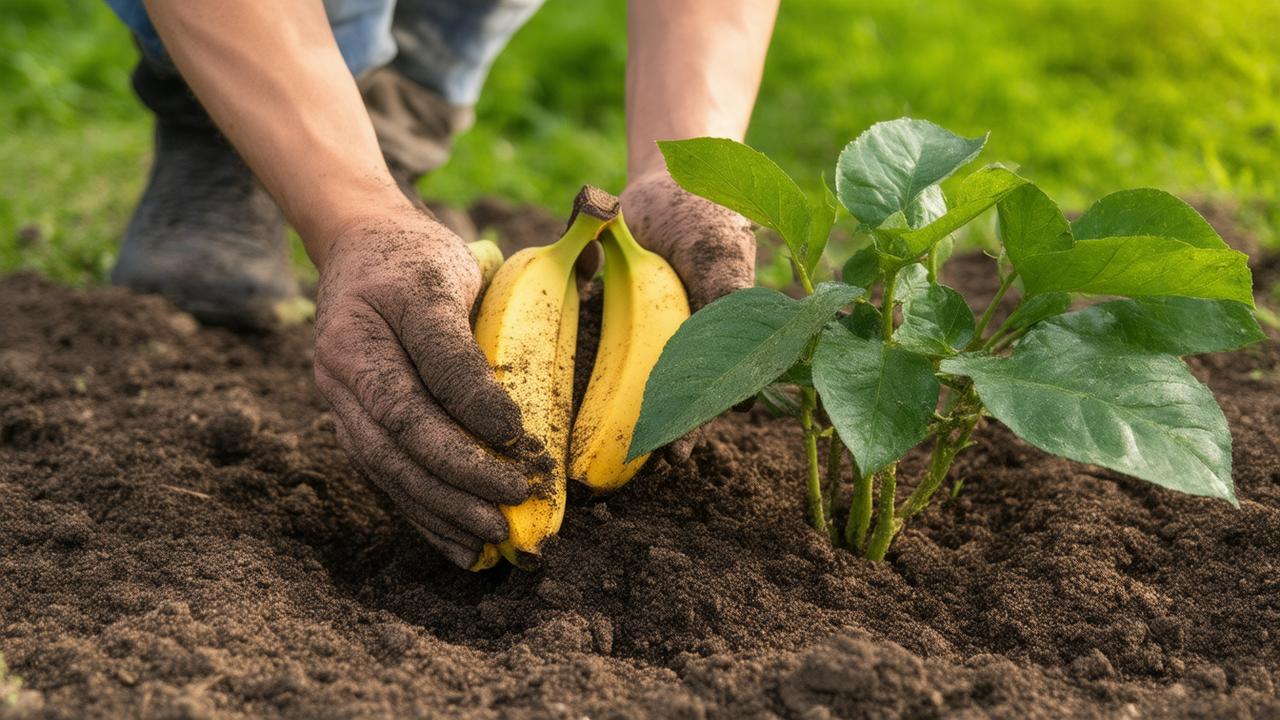
The first time I buried a banana peel, I did it the way most people do: vaguely and with hope. I dug a shallow hole somewhere near a rose bush, tucked the leathery yellow skin into the soil, and patted it down like I’d just done something brilliant. Weeks later, I crouched beside that same rose, expecting lush new growth, deeper color, maybe a little horticultural miracle. Instead, I found… not much. A slightly happier rose, maybe. Or maybe I just wanted to see a difference so badly that I imagined it.
It bothered me. Banana peels are supposed to be a superfood for plants, right? That’s what every quick tip, home gardening video, and neighbor’s cousin seems to say. But when I started looking closer—really paying attention to where I put the peels, how long they took to break down, what plants responded and which ones didn’t—I realized something: banana peels can be magic, but only if you put them in exactly the right place.
The Myth of “Anywhere in the Soil Is Fine”
There’s a kind of cozy charm to the idea that you can just toss banana peels around the garden and let nature handle the rest. It feels thrifty, circular, natural: fruit nourishes you, its peel nourishes the earth. But nature, as patient as it is, still appreciates precision.
Banana peels are rich in potassium, with a supporting cast of phosphorus, calcium, and a sprinkling of magnesium. These are nutrients plants love, but they’re locked inside a long strip of fibrous skin. They don’t just melt into the soil overnight like sugar in hot tea. Left mostly intact and buried randomly, a banana peel is more like a very slow-release capsule. And if that capsule is too far away from the plant’s active root zone, your beloved banana is basically feeding the worms, not your tomatoes.
Rubber-booted gardeners will tell you stories: peels attracting raccoons, moldy strips surfacing after a hard rain, ants building traffic highways straight to the buried gold. Others swear by them. The difference between disappointment and delight often comes down to this: location, depth, and the part of the root system you are actually aiming to feed.
The Exact Spot: Where Roots Are Hungry, Not Just Present
Walk out to a plant you care about—perhaps a tomato vine, a rose, a potted lemon tree. Imagine the roots underground, not as a giant clump right under the stem, but as a sprawling network reaching well beyond the drip line. That outer ring, where water soaks in from the edge of your watering zone, is where roots are actively searching, exploring, feeding. That is where the banana peel truly belongs.
The “exact spot” isn’t right against the stem or trunk, and it’s not way out in an empty corner of the bed. It’s in a circle just beyond the plant’s drip line—the imaginary ring beneath the outermost leaves—at a depth where the finer feeder roots live, usually in the top 10–15 centimeters (4–6 inches) of soil.
Think of it as slipping a snack directly into a searching hand, not dropping it in a random hallway. When you bury banana peels right in that active feeder root zone, decomposition and root activity overlap. Microorganisms begin to digest the peel, releasing potassium and other minerals. Nearby roots, already foraging, are perfectly positioned to absorb the nutrients as they become available.
How to Place Banana Peels So They Actually Work
This isn’t about elaborate systems or complicated devices. It’s about being intentional with something you might normally treat as trash. Here’s a simple, tactile way to handle banana peels so they truly serve your plants.
1. Prepare the Peels
Hold a fresh peel in your hand and feel the slick, slightly sticky inside. That stickiness is soft tissue waiting to decompose, but the outer layer is tougher. To speed things up:
- Chop or tear the peel into small pieces, about 2–3 cm wide.
- For even faster breakdown, snip it into thin strips with scissors.
- If you’re patient, you can even dry the peels first and crush them, but fresh works just fine if chopped.
2. Choose the Right Plants
Banana peels shine with plants that appreciate potassium for flowering and fruiting:
- Tomatoes, peppers, eggplants
- Roses and flowering ornamentals
- Fruit trees and berry bushes
- Bulbs and flowering perennials
Leafy greens do benefit a bit, but they’re usually more thrilled by nitrogen. Save your prime banana peel energy for plants that bloom and fruit.
3. Find the Feeder Root Zone
Stand over your plant and look at its canopy. Trace the outline where the leaves end—that edge is your rough drip line. Now step just beyond that line. This is your target area, the place where rain or watering tends to fall and soak in, and where roots like to gather.
For potted plants, it’s simpler: move in a ring about halfway between the stem and the pot wall, and another ring near the pot wall itself.
4. Bury at the Right Depth
With a hand trowel (or even your fingers if the soil is loose and damp), make a small trench or a series of small holes in a ring around the plant:
- Depth: about 5–8 cm (2–3 inches) below the soil surface.
- Distance: just beyond the drip line for in-ground plants; halfway out and near the edge for pots.
Drop the chopped banana peel pieces into the trench, spreading them rather than piling them in one spot, then cover them completely with soil. You don’t want any bright yellow pieces peeking through to invite animals or insects to a banquet.
What Actually Changes in the Soil When You Get It Right
Beneath the surface, the garden runs on quiet chemistry and invisible relationships. When you place banana peels in that crucial ring of feeder roots, you change the neighborhood for a while. The peel becomes a temporary resource hub.
Microbes move in first. Bacteria and fungi begin digesting the soft inner tissue, and if you listen with your imagination, you can almost hear the microscopic bustle. As they break down the peel, potassium starts to loosen its grip from the fibrous matrix, drifting into the thin films of water that cling to soil particles. Phosphorus edges in, calcium follows. If you’ve timed it with a spell of warm weather and steady moisture, this process is faster. In cooler, drier soil, it’s slower and gentler, like a slow-release fertilizer granule, but softer, more alive.
Feeder roots—those fine, hairlike extensions—reach into this zone and absorb the minerals as they become available. Potassium helps regulate water movement in plant cells and supports flower and fruit development. Phosphorus supports root growth and flowering. The effect is subtle but cumulative: richer color in blooms, stronger stems, more resilient leaves that don’t crumple at the first dry spell.
Of course, it isn’t only nutrients. The decomposing peel adds trace amounts of organic matter right where it matters. The soil becomes a touch more crumbly, more friable. Worms might pass by, nibbling at softened edges, leaving tiny casts of enriched soil in their wake. The peel disappears, but its influence lingers in the improved structure and the invisible nutrient tapestry just under your knees.
How Often, How Much, and When to Stop
There’s a temptation to overdo it with anything “natural.” But the garden, like the body, prefers balance over excess. Too many banana peels in one place can create a slimy, anaerobic mass before fully decomposing, especially in heavy clay or poorly aerated soil.
| Plant Type | Amount of Banana Peel | How Often |
|---|---|---|
| Tomatoes & Peppers | 1 peel (chopped) per plant | Every 3–4 weeks in growing season |
| Roses & Flowering Shrubs | 1–2 peels per mature plant | Once a month in spring & summer |
| Potted Plants | ½ peel per medium pot | Every 4–6 weeks |
| Fruit Trees | 3–4 peels spread around drip line | 2–3 times per season |
Watch how your plants respond. If growth is lush, leaves are deep green, flowers steady and colorful, you’re in good territory. If you start to notice fungus gnats in pots or a sour smell when you dig, ease up. Let this be a quiet, background habit, not a main event feeding program.
➡️ The simple reason some rooms echo more than others
➡️ The exact reason your phone battery drains faster at night even when you are not using it
➡️ The hidden link between eye contact and trust perception
➡️ Clocks to change earlier in 2026 with new sunset time for UK households
➡️ Yoga experts say breathing patterns matter more than poses for calming the nervous system — here’s why
➡️ The daily drink centenarians swear by: and it’s surprisingly delicious
➡️ Kiwi has been officially recognised by the European Union and the UK as the only fruit proven to significantly improve bowel transit
And remember timing. Late winter and early spring are perfect for starting the routine, giving soil life time to work before flowering and fruiting begin in earnest. Mid-summer additions keep the rhythm going. In cold climates, late fall applications decompose slowly and prime the soil for the following spring.
Banana Peels Alone Won’t Save a Struggling Plant
There’s an almost romantic desire to believe that a single kitchen scrap can rescue a wilting plant, correct poor soil, or replace an entire fertility plan. Banana peels are generous, but they’re not magic wands.
If your soil is compacted, bone-dry, or waterlogged, if your plants are starved of nitrogen or sunlight, the best-placed banana peel will barely make a dent. It might offer a small kindness, but it can’t fix the foundation.
Use banana peels as one voice in a larger chorus:
- Pair them with compost or well-rotted manure for a full nutrient spectrum.
- Mulch around the same feeder root zone with leaves or straw to conserve moisture and feed soil life.
- Water deeply and less often to encourage wide, searching root systems that can actually find and use those buried peels.
When you combine these simple practices, that single peel, placed just beyond the drip line, becomes part of something bigger—a garden that isn’t just fed, but slowly, steadily enriched.
When You Dig Back Down and See Nothing
There comes a moment, usually weeks after you’ve buried a peel, when curiosity wins. You take your trowel, slice down into the ring of soil where you remember placing it, and gently turn the earth.
Sometimes you find a faint ghost of the peel—thin, pale fibers losing their shape. More often, you find nothing at all. Just darker soil, a few energized worms, maybe the faint smell of clean earth. The banana peel has gone where all good organic matter goes: into the living system, broken into fragments so tiny that your eyes can’t detect them, but your plants can feel them as strength, color, resilience.
That’s when the simple act of “using banana peels in the garden” stops being a trick and starts feeling like a ritual. You’re not simply throwing scraps into holes. You’re learning where the plant’s hunger lives beneath the surface and meeting it there, in the quiet ring of feeder roots, in that exact spot where life leans forward to grow.
FAQ
Can I just put banana peels on top of the soil?
You can, but it’s not ideal. Exposed peels decompose slowly, can attract pests, and may grow mold. Burying them 5–8 cm deep in the feeder root zone is far more effective and tidier.
Do I need to wash banana peels before using them?
If you’re concerned about surface residues, you can rinse them quickly, but it’s not strictly necessary. Most nutrients are inside the peel, and soil microbes help break down minor residues.
Is it better to compost banana peels first?
Composting is an excellent option. Finished compost spreads nutrients more evenly and quickly than whole peels. But if you want a simple, direct method, burying chopped peels in the right spot works well.
Can banana peels replace fertilizer?
No. Banana peels offer mostly potassium with smaller amounts of other nutrients. They don’t supply enough nitrogen for vigorous growth. Use them as a supplement, not a full fertilizer replacement.
Will banana peels attract animals or insects?
If left on the surface or poorly buried, yes, they can attract pests. When chopped and fully buried below the surface in the feeder root zone, they usually decompose quietly without unwanted visitors.





