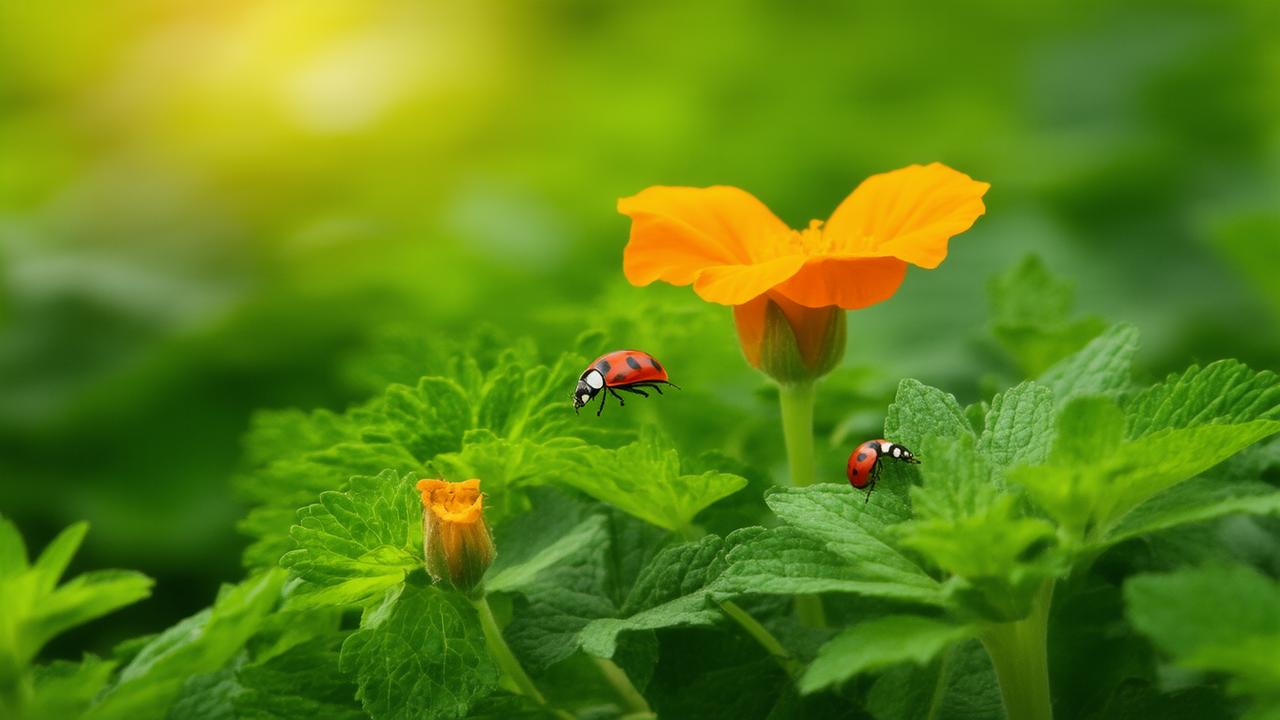
The first time I noticed the garden humming, it wasn’t from bees. It was the layered buzz of life—lacewings hovering like tiny green helicopters, ladybugs methodically pacing along stems, a quick flicker of a hoverfly mimicking a wasp but landing soft as mist on a petal. I hadn’t bought them, ordered them, or trapped them. I had simply planted a few unassuming flowers. And slowly, almost shyly, the beneficial insects came.
This is the quiet magic of certain plants: they don’t just sit in the soil looking pretty. They recruit allies. They invite pollinators and predators that keep your garden balanced, your vegetables safer, and your flowers thriving without an arsenal of sprays. These plants are like friendly hosts at a neighborhood gathering, putting out food and drink for the helpful guests—the ones who chase away the troublemakers.
The Secret Life of “Insect Hotels” in Your Garden
Imagine your garden from an insect’s perspective. You’re tiny, always on the hunt for nectar, pollen, or prey. The world is a maze of stems and shadows, and what you need most is a reliable stop: a flower with nectar close to the surface, a leaf where pests gather, a soft hiding spot under petals or in dense foliage. Some plants are built perfectly for this, like ready-made insect hotels.
These natural insect magnets do two things at once: they attract beneficial insects—pollinators and predators—and help keep plant-damaging pests under control by giving those “good bugs” exactly what they need to thrive. No chemical warfare. No complicated routines. Just smart planting.
You may already know that bees like flowers and ladybugs eat aphids. But the story is richer, more textured than that. It’s about timing, shape, scent, and even the architecture of the flower heads themselves. Let’s walk through four remarkable plants that quietly transform your space into a sanctuary for beneficial insects, while helping to keep the destructive ones in check.
1. Sweet Alyssum: The Gentle Perfume That Lures Tiny Heroes
On a warm evening, sweet alyssum smells like a memory. Its scent is light, honeyed, and just strong enough to make you pause as you walk past. To us, it’s pleasant. To beneficial insects, it’s a clear invitation: dinner is served.
Sweet alyssum (Lobularia maritima) grows low to the ground, forming cushions of tiny white, purple, or pale pink flowers. Each flower is shallow and open, making its nectar easily accessible even to the smallest insects that can’t manage deep, complex blooms. This is where hoverflies, parasitic wasps, and tiny predatory beetles show up in surprising numbers.
Hoverfly larvae, in particular, are voracious aphid hunters. You might not notice them at first—translucent, wormlike, and unassuming—but they can devour dozens of aphids a day. When you plant alyssum near your roses, tomatoes, peppers, or brassicas, you’re effectively building a buffet for these adult hoverflies so they’ll lay their eggs nearby. The result: silent, natural pest patrol, right in the middle of your garden beds.
There’s also something visually calming about alyssum. It spills gently over the edges of raised beds, pathways, or pots, softening hard lines. Beneath that softness, however, is a ruthless ally. While its blossoms charm your senses, its guests are busy clearing your plants of sap-sucking invaders.
2. Dill: The Feather-Light Umbrella for Garden Bodyguards
Dill is one of those plants that looks like it could float away. Its leaves are feathery, almost cloudlike, and its flower heads rise up like miniature yellow fireworks frozen mid-burst. To us, it’s an herb for pickles and fish. For insects, it’s a neon sign in the sky.
Dill flowers are part of the umbel family—flat-topped clusters of tiny blooms, arranged like an upside-down umbrella. This shape is perfect for small beneficial insects to land on and feed from. Parasitic wasps, lacewings, hoverflies, and ladybird beetles all frequent these airy platforms, sipping nectar while scouting for prey or hosts.
Parasitic wasps sound ominous, but in the garden they are quiet, incredible allies. Many species lay their eggs inside caterpillars, leafminers, or aphids. Their larvae then consume the pest from the inside, killing it before it can cause extensive damage. You may never see this drama unfold, but you’ll notice the results: fewer chewed leaves, fewer curled, sticky stems.
Dill also has another superpower: it draws in swallowtail butterflies who love to lay their eggs on its leaves. While swallowtail caterpillars will nibble your dill, they rarely do serious harm, and you get the reward of seeing magnificent butterflies gliding through your yard. It becomes a trade you’re glad to make—some herb leaves for a garden alive with wings.
Plant dill near other crops that suffer from caterpillars or aphids—like cabbages, broccoli, or tomatoes—and you essentially hire an air force of tiny defenders. Let a few stalks go to flower instead of harvesting them all. Those lacy yellow umbels are where the real pest management magic begins.
3. Yarrow: The Rugged Wildflower That Feeds and Shelters
Where sweet alyssum whispers, yarrow stands its ground. It’s a tougher presence in the garden: fern-like foliage that feels slightly coarse between your fingers, sturdy stems topped with flattened clusters of flowers that can be white, yellow, pink, or red. Yarrow (Achillea millefolium) looks like something you’d see along a country road—the kind of plant that survives drought, poor soil, and neglect without complaint.
This resilience makes yarrow a powerful ally in low-maintenance gardens and wildflower patches. Its flower structure, another type of composite head filled with many small florets, offers abundant nectar and pollen for beneficial insects. Ladybugs, lacewings, hoverflies, predatory wasps, and even some predatory bugs visit yarrow regularly.
Yarrow also offers physical structure. Its dense foliage and coarse stems provide hiding places for insects to rest, overwinter, or shelter from weather. In a sense, it works double shifts: diner on top, apartment complex beneath.
Because yarrow can spread, you can use it to stabilize tough spots—slopes, dry corners, or the edges of vegetable beds. There, it quietly does its work: supporting beneficial insects that fan out to patrol your more delicate crops. When you brush past it on a dry afternoon, you might notice a mild, herbal scent—slightly medicinal, grounding, earthy. There’s a reason it’s been used in folk remedies for centuries. Those same oils and compounds that made it valuable to humans also attract insect life.
4. Calendula: The Golden Workhorse with a Hidden Agenda
Calendula is the sun you can plant. Its flowers are rich orange or sunny yellow, with petals that sometimes curl at the tips like fingers reaching for the light. They open with the morning and close when evening cools the air, quietly tracking the rhythm of the day.
To pollinators, calendula is a reliable stop—a generous source of nectar and pollen. Bees of all sizes, hoverflies, and even some beetles are drawn to its bright faces. But calendula’s role in the garden is more layered than simple beauty or pollinator support.
Calendula has a reputation as a “trap crop” for certain pests. Aphids and some chewing insects often choose calendula over more valuable plants, gathering on its tender growth. At first glance, this might seem like a problem, but if you look closer, you’ll see the strategy: where aphids congregate, ladybugs, lacewings, and hoverfly larvae soon follow. Your calendula becomes a training ground and feeding station for natural predators, keeping the bulk of the damage concentrated on a plant that can tolerate it and bounce back.
➡️ Car experts share the dashboard setting that clears fog twice as fast
➡️ Neither swimming nor Pilates: experts reveal the best activity for people suffering from knee pain
➡️ I do this every Sunday”: my bathroom stays clean all week with almost no effort
➡️ Goodbye to classic high kitchen cabinets as more households switch to a space-saving, more comfortable alternative
➡️ Hair dye addiction is quietly ruining scalps everywhere but stylists still say it is safe how often is too often
➡️ Day will turn slowly to night during the longest total solar eclipse of the century occurring across several regions
➡️ Mark Zuckerberg’s AI announcement shakes the global scientific community
Scatter calendula along the borders of your vegetable beds or tuck it between rows of lettuce, cabbage, or tomatoes. As the flowers turn their golden faces to the sky, the petals catch the light like sparks. Beneath that cheerfulness, a quiet battle plays out: aphids arrive, predators follow, and the balance of the garden shifts in your favor, without you lifting more than a watering can.
How These Four Plants Compare in the Garden
Each of these plants brings its own strengths. Planted together, they form a living safety net for your garden—supporting pollination, natural pest control, and year-round interest. Here’s a simple comparison to help you decide where and how to use them:
| Plant | Main Beneficial Insects Attracted | Best Garden Use | Extra Perks |
|---|---|---|---|
| Sweet Alyssum | Hoverflies, small parasitic wasps, predatory beetles | Edge of beds, between vegetable rows, container borders | Fragrant groundcover, softens hard lines, long bloom season |
| Dill | Parasitic wasps, hoverflies, ladybugs | Near brassicas, tomatoes, and aphid-prone crops | Edible herb, attracts swallowtail butterflies |
| Yarrow | Ladybugs, lacewings, parasitic wasps, hoverflies | Wildflower areas, tough spots, perennial borders | Drought tolerant, long-lived perennial, supports biodiversity |
| Calendula | Bees, hoverflies, predatory insects following aphids | Companion in vegetable beds, border plant, trap crop | Edible petals (for some varieties), continuous color, easy to save seed |
Designing a Garden That Invites Allies, Not Problems
Think of these four plants as anchors around which you can design a more self-sufficient garden. Instead of planting in neat, isolated blocks—a row of tomatoes here, a patch of lettuce there—try weaving your allies between and around your main crops.
A line of sweet alyssum at the front of a raised bed, with calendula scattered at intervals, turns a plain rectangle into a layered habitat. A stand of dill behind your brassicas not only gives height and texture, but attracts the very insects that keep cabbage worms in check. A drift of yarrow along a fence becomes a perennial base camp for beneficial insects that will patrol the entire yard.
As the season unfolds, you’ll start to see patterns. Fewer aphids on your peppers. Less chewing damage on leafy greens. A soft uptick in the presence of bees, hoverflies, ladybugs. Once you’ve experienced this shift, it becomes difficult to go back to the old idea that you need to “fight” pests with sprays and dusts. Instead, you’re collaborating with the subtler forces that were always there, waiting for the right invitation.
And that’s what these plants truly are: invitations. To a lacewing, sweet alyssum is a welcome mat. To a parasitic wasp, dill is a waystation. To a ladybug, yarrow is both pantry and shelter. To a bee, calendula is a glowing lantern of pollen and nectar.
When you step into a garden planted with this in mind, the space feels different. There’s motion, yes, but also a kind of quiet negotiation happening all the time. Every petal, every stem, every hovering insect is part of an agreement: you provide diverse, blooming plants, and nature sends in the caretakers.
Frequently Asked Questions
Do I need to stop using all pesticides if I plant these flowers?
It’s best to drastically reduce or eliminate broad-spectrum pesticides if you want beneficial insects to thrive. Those chemicals don’t distinguish between pests and helpers. Spot-treating severe problems with targeted, minimal methods is far more compatible with a beneficial-insect garden than regular, blanket spraying.
Will these plants take over my garden?
Some, like yarrow and calendula, can self-seed or spread slowly. You can manage them easily by pulling unwanted seedlings or cutting back spent flower heads before they drop seed. In most home gardens, they’re vigorous but not unmanageable, especially if you pay attention once or twice a season.
Can I grow these plants in containers or a small balcony space?
Yes. Sweet alyssum and calendula do especially well in pots and window boxes. Dill can also grow in containers, though it may need a taller pot for its roots. Yarrow prefers being in the ground, but a deep container with good drainage can work if space is limited.
How soon will I notice more beneficial insects after planting?
In many regions, you might see increased insect activity within a few weeks of flowering, especially if there are already some beneficial species nearby. Over one or two full seasons, as these plants self-seed or return, you’ll likely notice a stronger, more stable presence of pollinators and predators.
Are these plants safe around children and pets?
Generally, these four plants are widely grown in family gardens without issue. However, pets and young children shouldn’t be encouraged to chew on any ornamental plant. If safety is a concern, supervise their time in the garden and focus on enjoying the colors, scents, and visiting insects together rather than tasting the plants directly.





