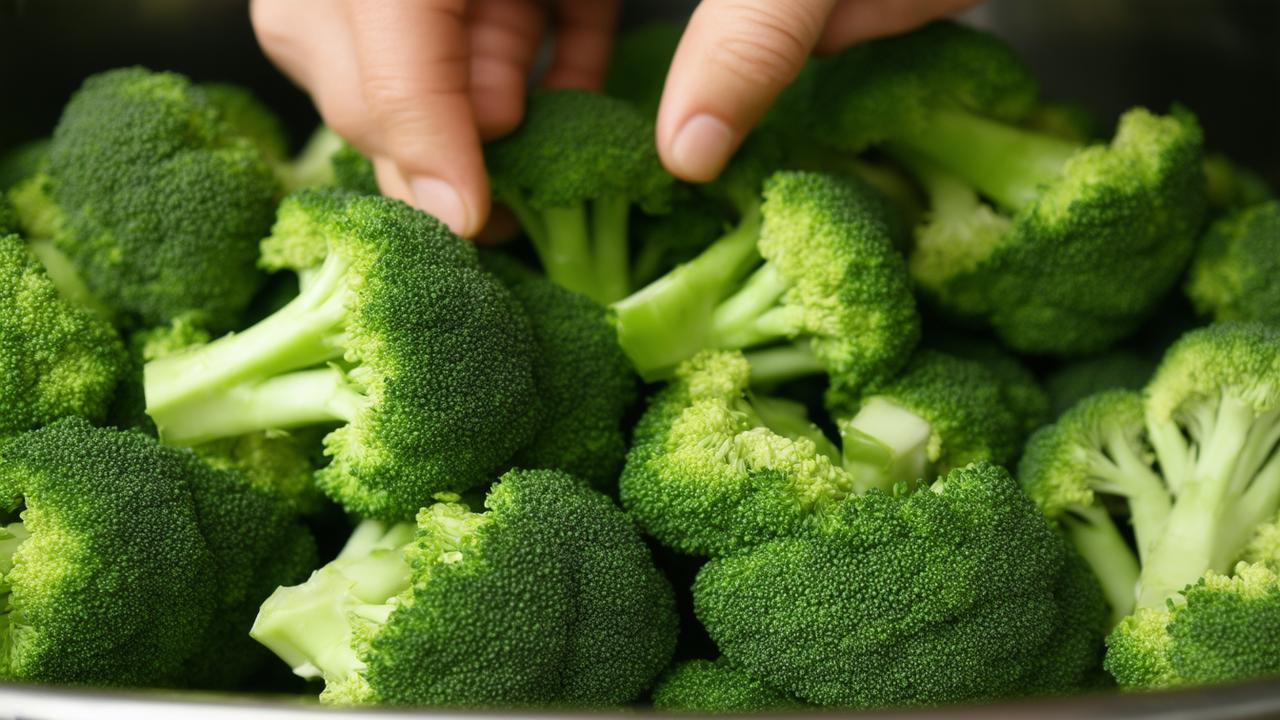
The first hint that something was wrong with my broccoli came not from my eyes, but from my nose. The steam rising from the pot smelled faintly sulfurous, a little too reminiscent of overcooked cabbage. When I lifted the lid, the florets slumped in the colander like tired umbrellas—dull olive instead of springtime green. I’d done what I was “supposed” to do: boil the broccoli until soft, drain, season, serve. But as the water swirled away, bright green and strangely vibrant, I had the sneaking suspicion that the goodness was going right down the drain with it.
The Problem with Good Intentions (and Boiling Water)
For years, boiling vegetables was the unquestioned ritual of weeknight dinners. A pan of water, a pinch of salt, a rolling bubble. Yet when we talk about broccoli—this sturdy little tree of a vegetable, with its tight green florets and pale stems—we’re often unaware of how delicate its inner life really is.
Inside each floret lives an intricate chemistry set: vitamin C sparkling in the cells like invisible crystal, folate tucked in the tissues, vitamin K, and a choir of antioxidants quietly preparing to defuse free radicals in your body. Some of the most celebrated of these are glucosinolates and their offspring, sulforaphane—compounds that scientists have linked with anti-inflammatory and potential anti-cancer effects. But these protective molecules are shy. Handle them roughly, and they vanish.
Boiling, it turns out, is one of the roughest ways to treat broccoli. Submerge it in water, especially for more than a few minutes, and many water-soluble vitamins—like vitamin C and some B vitamins—begin to migrate from the plant into the liquid. What looks like a healthy side dish becomes a nutritional trade-off: soft on the plate, but depleted under the microscope.
As the water heats, the cell walls soften, the color darkens, and those bright antioxidants begin to diminish. The greater the exposure—hotter water, longer time, more contact—the more nutrition is lost to the pot. Unless you’re sipping the cooking water like broth, a good portion of those healthful compounds wave goodbye as you pour them into the sink.
Raw Isn’t the Hero You Think It Is
Naturally, in the pendulum swing of food culture, what followed the era of boiling was the celebration of raw. Raw meant pure, unspoiled, close to the earth. Toss broccoli into a salad, snack on florets with hummus, throw it into a smoothie—the logic seemed simple: nothing cooked, nothing lost.
But broccoli is more nuanced than that. Some of its most important protective compounds aren’t fully available in their raw form. They’re locked behind plant structures that respond best to a little warmth, the way a pine cone opens in heat. Light cooking can gently crack open those structures, releasing more of what we want.
Take sulforaphane, the darling of broccoli’s health story. It isn’t sitting ready-made in high amounts inside the plant. Instead, broccoli contains a precursor called glucoraphanin and an enzyme called myrosinase, stored in separate compartments like ingredients in a clever puzzle. When you chop or chew the broccoli, they meet, interact, and sulforaphane is formed. But here’s the twist: just leaving broccoli completely raw doesn’t always give you the best yield. Small amounts are formed, yes—but some subtle cooking can create far more, provided you don’t go too far.
Raw broccoli also presents a different kind of barrier: your own digestion. Its fibers are tougher for some people to break down, leading to bloating or discomfort. For those sensitive to cruciferous vegetables, the romantic ideal of raw salads and crudité platters can end in a quietly miserable evening.
So we’re left hanging between two extremes. Boiled until limp, broccoli loses many of the vitamins and antioxidants we value. Left entirely raw, it can be both harder to digest and less generous with some of its star compounds. That leaves a question that feels like the heart of a kitchen mystery: How do we cook broccoli in a way that coaxes out its best without breaking it?
The Sweet Spot: Gentle Heat, Short Time
The answer lives in a middle ground—neither boiled nor raw. Picture a method that treats broccoli like a delicate woodland plant rather than a stubborn root: quick, moist, and hot enough to transform, but not to destroy. That method is light steaming.
Steaming broccoli is like giving it a brief sauna instead of a scalding bath. The florets sit above the water, meeting only the vapor. The heat slips between the buds and down the stems, softening the fibers and brightening the color to an electric, almost neon green. When done well, the broccoli still has a bit of snap to it—you feel the bite, a gentle crunch, a satisfying resistance—but it’s no longer raw or harsh.
From a nutritional perspective, this is where the magic happens. Short steaming times—typically around 3 to 5 minutes—preserve much of broccoli’s vitamin C, folate, and other heat-sensitive nutrients. The water-soluble compounds largely stay in the vegetable rather than leaching into surrounding liquid. At the same time, the light heat helps unlock more bioavailable antioxidants, including sulforaphane, compared with fully raw broccoli.
There’s a quiet urgency to the timing. Steam too briefly, and the broccoli tastes raw, its bitterness more pronounced. Steam too long, and the vivid green dulls; the florets turn mushy; the very molecules we’re trying to protect begin to unravel. Somewhere in that brief window, usually just after the color turns bright and the stems give way under a gentle fork press, is the sweet spot where both taste and nutrition meet.
How to Steam for Maximum Antioxidants
Your kitchen doesn’t need fancy equipment—just a pot, a steamer basket or metal sieve, a lid, and some attention.
Here’s a simple approach to aim for that sweet spot:
- Cut the broccoli into equal-sized florets so they cook evenly; trim and slice the stems, too—they’re just as nutritious.
- Add a small amount of water to a pot, just enough to sit below the steamer basket or sieve.
- Bring the water to a strong simmer or gentle boil before adding the broccoli; hot steam means shorter cooking time.
- Cover with a lid and start timing: check at 3 minutes, then every 30 seconds.
- Stop when the broccoli is bright green, tender but still slightly crisp at the core.
- Remove from the heat immediately and, if you want to be precise, spread it out on a plate so residual heat doesn’t keep cooking it.
At that moment—steaming, fragrant, vivid—the broccoli is in its prime: nutrition mostly intact, antioxidants lively, flavor lifted.
Why This Method Outshines Boiling, Microwaving, and Frying
In the quiet laboratory of your kitchen, each cooking method is an experiment in chemistry. Steaming wins because it balances energy and restraint: enough heat to soften, not so much to dismantle.
Boiling, as we’ve met, is a vitamin leak. Frying and deep-frying introduce high temperatures and added fats that quickly break down delicate plant compounds. Stove-top stir-frying or sautéing can be more forgiving if done quickly over medium-high heat with minimal oil, but they still expose the floret surfaces to direct heat that can outpace the gentle transformation we are aiming for.
Microwaving is a surprising gray area. When done for a short time with minimal water, it can actually preserve many nutrients quite well. But it’s easy to overshoot: a few seconds too long and the florets begin to shrivel, the once-bright green turning muted. You rarely get the same even tenderness and sensory pleasure as you do with steam gently curling around each floret.
Steaming also preserves the plant’s structure. That structure is more than aesthetic; it slows digestion just enough to keep you feeling steady and satisfied, rather than spiking and crashing through your meal. The firm-but-tender texture encourages slower chewing, which in turn supports better enzymatic interaction in your mouth—the first step in releasing those precious antioxidant compounds.
| Cooking Method | Vitamin & Antioxidant Retention | Texture & Flavor |
|---|---|---|
| Boiling | Low for water‑soluble vitamins; many nutrients lost to cooking water | Soft, often mushy; muted flavor, duller color |
| Raw | High in many vitamins, but some antioxidants less available | Very firm, slightly bitter; can be hard to digest for some |
| Light Steaming | High retention of vitamins; excellent preservation of antioxidants | Tender‑crisp, bright flavor, vivid green color |
| Quick Stir‑Fry | Moderate to high if heat is brief and not excessive | Crisp edges, richer flavor; risk of overcooking spots |
| Microwaving (short time) | Often good retention; depends heavily on timing and water used | Variable; can be tender or rubbery if overdone |
Little Tricks to Boost Broccoli’s Antioxidant Power
Once you’ve landed on light steaming as your go-to, there are small, almost ritualistic additions that can squeeze even more goodness from each floret—little gestures that feel more like good cooking than nutrition strategy.
Chop, Wait, Then Cook
Remember glucoraphanin and myrosinase, the puzzle pieces of sulforaphane? They need a moment to find each other. When you chop or slice your broccoli, you’re breaking the cell walls that keep them apart. If you let the chopped pieces rest for about 30 to 40 minutes before cooking, more sulforaphane can form ahead of time. Then, when you steam gently, you preserve much of what has already been created rather than hoping it forms under heat.
➡️ Day will turn to night: the century’s longest solar eclipse now has an official date
➡️ Fishermen report sharks biting their anchor lines just moments after orcas surrounded their boat in a tense marine encounter
➡️ By carving tunnels through solid rock for nearly 30 years, Switzerland has built an underground infrastructure larger than many cities above ground
➡️ Few people know it, but France is the only country in Europe capable of building fighter jet engines with such precision, thanks to the DGA
➡️ China once again makes construction history with a 22.13-kilometer highway tunnel, setting a new world record
➡️ At 2,670 meters below the surface, the military makes a record?breaking discovery that will reshape archaeology
➡️ Day will briefly turn to night as astronomers officially confirm the date of the longest solar eclipse of the century, set to create a breathtaking spectacle across multiple regions
Add a Raw Partner
If you’re not inclined to wait, there’s another path: combine your lightly steamed broccoli with a small amount of raw cruciferous vegetable. A few finely chopped radishes, some shredded raw cabbage, or a sprinkle of raw broccoli sprouts can reintroduce active myrosinase to your plate, helping form more sulforaphane as you eat.
Use a Bit of Healthy Fat
Some of broccoli’s antioxidants and fat-soluble vitamins are better absorbed when eaten with a little oil. A drizzle of extra-virgin olive oil, a spoon of tahini, or a handful of toasted nuts doesn’t just make your dish taste lush and complete; it can help escort those antioxidants across your intestinal lining, where they can go to work.
Acid and Aromatics
A squeeze of lemon, a tiny splash of vinegar, or a scatter of garlic and herbs does more than brighten the flavor. Acid tones down any lingering bitterness, coaxing you to eat more of the good stuff without effort. Garlic and herbs bring their own antioxidant stories to the table, layering plant compounds in a way the body often seems to appreciate.
Eating with Both Pleasure and Intention
In the end, the question of how to cook broccoli isn’t a clinical one; it’s deeply sensory. You can hear the soft rattle of the lid as steam builds; see the color shift from matte to shining green; feel the warmth in your palm as you lift the basket from the pot. When you sit down to eat, the fork meets gentle resistance, the florets releasing a mild, almost sweet flavor that bears little resemblance to the soggy, sulfurous broccoli that haunted so many childhood plates.
Eating for antioxidants doesn’t have to feel like a chore or a checklist. It can be as simple as paying attention—to color, to timing, to the way your kitchen smells when something is just right. Lightly steaming broccoli, neither boiled to exhaustion nor left entirely raw, is an almost poetic compromise: enough transformation to unlock what’s hidden, not so much that you lose what you came for.
When you stand at the stove, watching curls of steam rise around those green miniature trees, you’re not just cooking a vegetable. You’re deciding how much of its inner forest of vitamins, enzymes, and antioxidants will make it to your plate, and from there into your cells. In that small everyday act, you hold both science and story in your hands—a quiet, nourishing power.
FAQs
Is steaming really better than boiling for preserving broccoli’s vitamins?
Yes. Steaming keeps the broccoli above the water, so water-soluble vitamins like vitamin C and folate stay mostly in the vegetable instead of leaching into the liquid. With short steaming times, you preserve more nutrients than with boiling.
How long should I steam broccoli to keep maximum antioxidants?
Generally, 3 to 5 minutes is ideal, depending on the size of the florets. Stop when the color turns bright green and the stems are tender but still a bit crisp. Oversteaming leads to nutrient loss and mushy texture.
Is raw broccoli unhealthy or less nutritious?
Raw broccoli is still nutritious and high in many vitamins. However, some beneficial compounds, like sulforaphane, can become more available with light cooking. For many people, lightly steamed broccoli is also easier to digest than raw.
Can microwaving broccoli be as good as steaming?
Microwaving with very little water and short cooking times can preserve nutrients fairly well, but it’s easy to overcook. Steaming tends to provide more consistent texture and makes it easier to hit that tender-crisp point without guesswork.
What’s the healthiest way to season steamed broccoli?
A combination of healthy fat and bright flavors works best. Try a drizzle of olive oil, a squeeze of lemon, a pinch of salt, and maybe some garlic or herbs. The fat helps with absorption of certain nutrients, while the acid and aromatics elevate both taste and enjoyment.
Should I throw away the stems, or are they less nutritious?
Don’t toss them. Broccoli stems are rich in fiber, vitamins, and antioxidants too. Just trim the tough outer layer and slice the inner part into coins or sticks; they steam beautifully alongside the florets.
Can I prepare broccoli ahead of time without losing too many antioxidants?
You can lightly steam broccoli and store it in an airtight container in the fridge for a day or two. Reheat gently—preferably by a brief return to the steamer or a quick warm-up in a covered pan—to minimize additional nutrient loss. Avoid repeated reheating, which gradually breaks down antioxidants.





