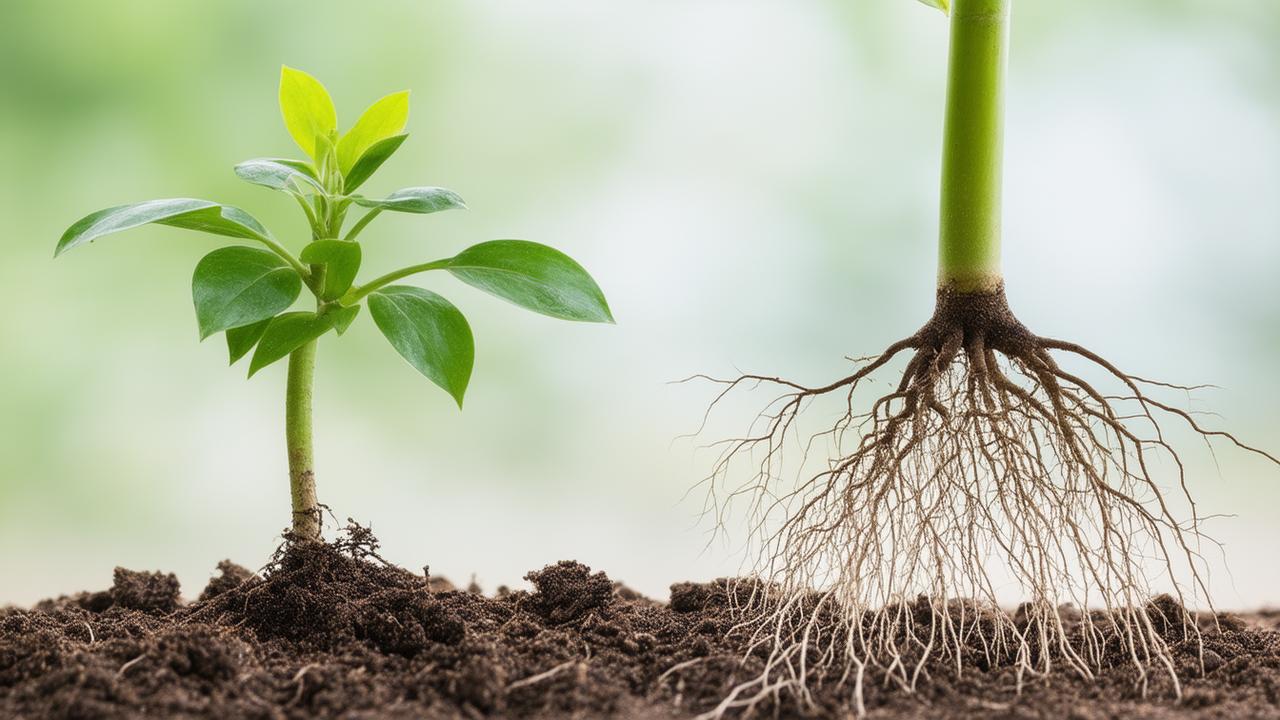
The leaves look perfect. Sunlight nets across their glossy surfaces, and every new shoot feels like a small victory. You run your fingers along the soil and it feels… fine. Not too wet, not too dry. And yet, every few weeks, something goes wrong. Fungus gnats drift lazily from the pots, a speckled leaf appears out of nowhere, or a once-bold plant suddenly slumps like it’s tired of trying. You change the watering schedule, move the pot, add a little fertilizer. The plant perks up, for a while. Then the cycle begins again. If this feels familiar, your garden may be telling you a quiet truth:
The problem isn’t on the surface. It’s under your feet.
The Underground Story Your Plants Can’t Tell You
We garden mostly with our eyes. We read leaves, flowers, and stems the way some people read faces. Is that curl a sign of thirst? Is that pale patch hunger? Aboveground is where the drama is obvious, but soil is where the plot is actually written.
Imagine peeling back the top two inches of your favorite plant’s pot, like turning a page. Beneath the dark crumbs of compost, there’s a whole, invisible city. Tiny fungal threads lace their way between particles. Bacteria hustle silently around root hairs. Minute arthropods—springtails, mites, nematodes—go about their microscopic routines. It doesn’t look like much, but this teeming world is what decides whether your “healthy” plant will resist trouble or invite it, again and again.
Many plants look outwardly vibrant while that underground city quietly falls apart. Roots circle the pot like restless animals, never finding new territory. Compacted soil suffocates pockets of air. Minerals sit locked away, chemically present but nutritionally unreachable. Pathogens linger, waiting for the moment your plant gets just a bit stressed.
The frustrating part is that aboveground, everything seems fine—right up until it isn’t. A flush of aphids, a stubborn bout of powdery mildew, a constant army of gnats: these are not merely random bad luck. They’re often symptoms that the hidden foundation of health, the soil, is out of balance.
When Pests and Problems Are Actually Messengers
It can be tempting to treat every issue as a surface-level problem. Gnats? Grab a sticky trap. Mealybugs? Dab them with alcohol. Yellowing leaves? Splash in some fertilizer. These quick fixes can feel satisfying, but they’re like turning down a smoke alarm instead of looking for the fire.
Truthfully, many recurring plant problems act less like enemies and more like messengers. They are small signals that something deeper—literally deeper—isn’t quite right.
Patterns That Whisper “Check the Soil”
Consider some familiar patterns:
- Fungus gnats that keep returning no matter how often you treat them.
- Leaf spots or mildew that fade with spraying, only to rebound a few weeks later.
- Plants that “stall”—they don’t die, but they don’t really live either, hovering between thriving and merely surviving.
- Different plants in the same soil mix keep having similar issues, while others in different soil stay trouble-free.
Each of these can point toward issues like chronically soggy soil, poor drainage, tired potting mix, imbalance in nutrients, or even a disrupted soil microbiome. To your plants, the soil is the entire world: their pantry, plumbing, oxygen supply, and neighborhood all rolled into one. When that world is hostile or depleted, pests and disease find openings.
The Secret Life of Roots (And Why It Matters So Much)
Roots are the quiet heroes of every plant story. You rarely see them, but every lush leaf and every new bud begins there. When the ground beneath is welcoming, roots spread outward like curious explorers. When it’s hostile—too wet, too tight, too barren—they shrink back, circle endlessly, or begin to rot.
If your plants seem healthy on top but constantly attract trouble, their roots may be sending silent distress calls. Gently unpot one of your plants the next time you water and take a look. Don’t tug hard—just ease the plant out and see what’s really happening down there.
What do you notice?
- Color: Healthy roots are usually white to cream-colored, sometimes with fine fuzzy hairs. Brown, mushy, or slimy roots signal rot and chronic overwatering or poor drainage.
- Shape: A dense pad of roots circling the pot means your plant is root-bound. It may still look fine, but underground it’s starving for space, oxygen, and fresh nutrients.
- Smell: Take a careful sniff. Good soil smells earthy and clean. Sour, swampy, or “old basement” smells hint at anaerobic conditions and decaying roots.
Healthy roots partner with soil microbes in a kind of secret trade deal. The plant leaks sugars into the soil, and microbes return the favor with nutrients and protective compounds. When soil is compacted, waterlogged, lifeless, or over-sanitized with harsh treatments, that partnership breaks. A plant without a thriving root-microbe alliance is like a city without services—vulnerable, even if the skyline still looks pretty.
A Simple Underground Check-In Table
Use the table below as a quick gut-check when your plant looks fine but trouble keeps circling back.
| What You Notice | Likely Underground Cause | Helpful Next Step |
|---|---|---|
| Fungus gnats keep returning | Soil stays wet too long; poor drainage or heavy mix | Lighten mix with perlite/bark; water less often; improve drainage holes |
| Leaves yellow from the bottom up despite fertilizer | Exhausted soil; weak roots can’t uptake nutrients effectively | Repot with fresh, high-quality mix; check roots and trim any rot |
| Frequent leaf spot or fungal issues | Stressed roots and poor soil biology; excess moisture around roots | Improve air flow in soil (chunkier mix); avoid constant dampness |
| Plant looks fine but growth is very slow | Root-bound or compacted soil limiting expansion | Move up one pot size; gently loosen root mass; refresh the mix |
| Pests move quickly from plant to plant | Shared, tired soil or similar underground stress making all plants vulnerable | Check and improve soil conditions across the collection; isolate and repot the worst affected |
The Quiet Power of Living Soil
We’re used to thinking of soil as “dirt”—inert, passive, a backdrop. In reality, living soil is more like an ecosystem in miniature, and a plant rooted in vibrant, living ground has a much better chance of shrugging off pests and disease before you ever notice a problem.
Run your hands through a really healthy soil mix and you’ll feel it: light, crumbly, springy. It holds water like a sponge but doesn’t stay soggy; it smells deep and foresty, like a walk after rain. This is soil with structure and life. In that kind of environment, roots can breathe. Water can move. Microbes can cycle nutrients in forms plants can actually use.
Compare that to old, compacted mix from the bottom of a pot. It often clings together in dense clods. Water slides off the top or tunnels down one side instead of soaking in evenly. Repeated fertilizing in such soil can lead to chemical imbalances, salt buildup, and more stress. The plant might look fine for a while, but it’s living on a fraying safety net.
Small Shifts That Change Everything Underground
Resilient plants often start with very simple, deliberate soil choices. A few powerful shifts:
➡️ “I blamed my workload”: but it was my routine doing the damage
➡️ This simple reset helps your body release pressure
➡️ Why your body needs regular pauses to function well
➡️ If your garden soil feels hard and lifeless, this simple test reveals what’s missing
➡️ These well-paid jobs don’t require constant meetings or office politics
➡️ This overlooked detail makes a bigger difference than deep cleaning
➡️ If you feel tension just before relaxing, psychology explains the nervous system response
- Choose the right texture: For most houseplants, a mix that includes both organic material (like composted bark or coco coir) and chunky aerators (perlite, pumice, lava rock) is far better than dense, garden soil–like blends.
- Refresh tired soil: Every year or two, remove a portion of the old mix and top up with fresh, or fully repot. This resets structure, nutrients, and biology.
- Water for roots, not for routine: Instead of watering on a fixed schedule, wait until the soil actually needs it. Let the top layer dry for most houseplants, and check several inches down with your finger for larger pots.
- Avoid constant disruption: Over-fussing—frequent repotting, stirring, poking—can disturb fragile underground networks. Make changes thoughtfully, not anxiously.
Over time, as the hidden city below becomes more balanced, you may notice something subtle above: pests show up less often, issues resolve faster, and your plants bounce back from stress with more ease. You’re not just reacting anymore; you’re gardening at the level where problems begin.
Listening With Your Hands, Not Just Your Eyes
Caring for plants becomes a very different experience when you stop seeing soil as backdrop and start treating it as a conversation partner. You begin to notice textures, smells, weight. A pot that feels unexpectedly heavy tells you the roots are sitting in water. A sour smell suggests the underground party has gone anaerobic. A plant that wobbles in its pot reveals weak anchoring roots.
The next time a familiar problem comes knocking—those tiny midges at the window, those velvety patches on your leaves—pause before you reach for the usual spray or trap. Instead, slip your fingers into the soil. Tip the plant gently from its pot. Take in the scent, the feel, the shape of the root system. Let the underground story influence what you do next.
Because often, when a plant seems healthy but trouble keeps circling back, it isn’t cursed, and you’re not a bad gardener. The real story is simply unfinished, playing out in a place you rarely look. And once you start tending that invisible world with as much care as you give to glossy leaves and showy blooms, something shifts.
Problems still come, as they always do in any living system. But now, your plants have allies below the surface—roots that can breathe, soil that can support, organisms that can defend. The garden above begins to mirror the quiet strength below. And what once felt like an endless cycle of recurring issues starts to feel like what it always was waiting to become:
A conversation between you, your plants, and the living earth beneath them.
Frequently Asked Questions
Why do my plants keep getting pests even though they look healthy?
Recurring pests often signal subtle stress below the surface—compacted soil, overwatering, weak roots, or exhausted nutrients. The plant may look fine for a while, but underground imbalance makes it easier for pests to establish and return.
How often should I change or refresh my potting soil?
For most houseplants, a full repot every 1–2 years is helpful. Heavy feeders or fast growers may need it yearly, while slow growers can go longer if the soil still drains well and roots look healthy. You can also refresh by replacing just the top third of soil annually.
What does “healthy soil” look and feel like?
Healthy soil is loose, crumbly, and slightly springy. It absorbs water but doesn’t stay soggy, and it smells pleasantly earthy, not sour or swampy. Roots can move through it easily, and water drains through without pooling for long.
How can I tell if my plant is root-bound?
Signs include roots circling tightly around the inside of the pot, growing out of drainage holes, or forming a dense pad at the bottom. Aboveground, growth may slow, and the plant may dry out very quickly after watering.
Do I always need to use fertilizer if I improve my soil?
Good soil reduces the need for frequent fertilizing, but container plants still benefit from periodic feeding because nutrients are flushed out with watering. Use gentle, balanced fertilizers and pair them with high-quality, well-structured soil for best results.





