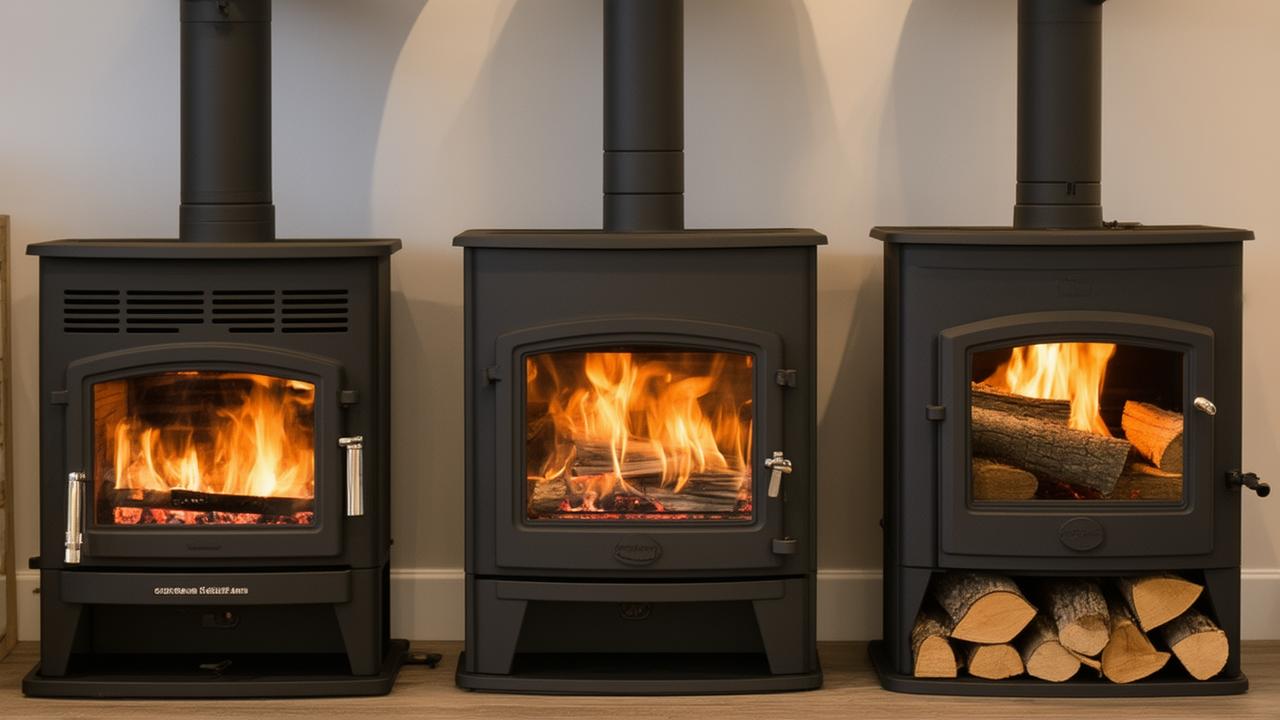
The first time you stand in front of a wall of wood stoves, they all look a bit like quiet animals waiting to be chosen. Black cast-iron bodies, big glass windows promising dancing flames, enamel finishes in forest green or deep red. You can almost feel the imagined warmth on your face, hear the faint crackle of logs, see winter evenings wrapped in a soft amber glow. Then a salesperson walks up and starts talking about BTUs, clearance codes, airwash systems, and efficiency ratings—and the dream suddenly feels more like a pop quiz you didn’t study for.
Choosing a wood stove isn’t just a shopping decision; it’s a commitment. This thing is going to sit at the heart of your home, shaping your winters, your routines, your utility bills, and even the way your house smells. Get it right, and you’ll wonder how you ever lived without it. Get it wrong, and you could end up with a smoky room, a freezing back bedroom, or a unit that eats firewood like a hungry bear and still can’t keep up.
So how do you choose the right wood stove without getting it wrong? Let’s walk through it together—step by step, one log at a time.
1. Feel the Space Before You Choose the Stove
Before looking at brands, models, or colors, stand in the room where you want your stove and just…listen. Notice how the air feels. Imagine the depth of winter: where does the cold creep in? Which rooms always feel a little chillier? Where does your family naturally gather when it’s storming outside?
Wood stoves are not like central heating. They are more like campfires: intense, localized sources of heat that radiate outward. This means the size of your room, your home’s layout, and even your lifestyle matter as much as the technical data on the brochure.
Think about:
- Room size: A tiny stove in a wide, open-plan living area will struggle. An oversized stove in a snug cottage can turn the place into a sauna.
- House shape: Long, narrow homes and multi-story houses can be trickier to heat evenly. Heat loves to rise; it’s not so keen on going around corners.
- Insulation: An old, drafty farmhouse with single-pane windows will need more heating power than a modern, well-sealed home of the same size.
Most stoves are rated by how many square feet they can heat, but that number alone is misleading. Two 1,500-square-foot homes can behave completely differently. A tight, modern home might be blissfully warm with a medium stove; an older, leaky one might need something larger or a better insulation plan.
As a rough guide, you’ll see something like this when browsing stoves:
| Stove Size | Approx. Heating Area* | Typical Home Type |
|---|---|---|
| Small | Up to 1,000 sq ft | Cabins, tiny houses, single rooms |
| Medium | 1,000–2,000 sq ft | Smaller homes, well-insulated spaces |
| Large | 2,000+ sq ft | Bigger homes, drafty older houses |
*Real performance depends heavily on insulation, ceiling height, layout, and climate.
Here’s the most common mistake people make: they intentionally buy too big, thinking “more power is safer.” But a large stove in a small or medium room often means you have to run it at a low, smoky smolder just to avoid roasting. That’s bad for your chimney, your air quality, and the stove’s lifespan. A properly sized stove is one you can run with a lively, clean-burning fire without sweating through your flannel shirt.
2. Think About Heat: Efficiency Is Invisible but Powerful
When you stand near a hot stove, what you feel is obvious. What you don’t see is the efficiency quietly deciding how many trips you’ll make to the woodpile this winter.
Efficiency is simply: how much of the energy in your wood is turned into heat in your home, instead of disappearing up the chimney as wasted smoke and gases. High-efficiency stoves burn the wood more completely and more cleanly, often with secondary or even tertiary combustion systems that re-burn the smoke before it exits.
Here’s why efficiency matters more than it first appears:
- Less wood, more warmth: A modern efficient stove can use noticeably less wood than an old box stove to produce the same comfort.
- Cleaner glass, cleaner air: Efficient combustion leads to less soot on the glass, less creosote in the chimney, and fewer emissions into the air.
- Longer, steadier burns: Well-designed fireboxes and air systems can give you those dreamy overnight burns that keep coals alive until morning.
If you’re shopping, you’ll often see efficiency ratings as a percentage. Aim for stoves in the higher range—many good modern wood stoves fall somewhere around 70–80% efficiency. The exact number varies with testing methods, but the pattern is clear: the more efficient the stove, the better your relationship with your woodpile and your chimney sweep.
Take note of emissions ratings too. Clean-burning stoves aren’t just better for the planet; they’re better for neighborhoods, for lungs, and for anyone who likes opening a window without the yard smelling like a campsite every evening.
3. Picture Your Life, Not Just Your Living Room
A wood stove is not just a pretty object sitting in your home; it’s a tiny, everyday ritual machine. How you live should guide what you buy.
Ask yourself a few lifestyle questions:
- How often will you use it? Is this an occasional mood piece for autumn evenings or your main winter heat source? Those are very different roles.
- Do you want to cook on it? Some stoves are perfect for simmering stews and heating kettles, with flat tops or special trivets. Others are more decorative, with less usable surface.
- How much work are you willing to do? Wood heat means stacking, hauling, cleaning ash, and maintaining a chimney. A stove that’s fussy to load or hard to clean will wear out its welcome quickly.
The firebox size and shape will affect your daily rhythm. A larger firebox can accept longer logs and burn longer through the night, but it will also take more wood to run at full capacity. A smaller box gives quicker, more responsive fires that suit milder climates or people who are home to tend the flame.
And then there’s the glass. Some stoves offer panoramic views of the fire, turning your living room into a live nature documentary of flames and embers. Others have smaller windows and more of a traditional, solid look. If watching the fire is part of why you want a stove—and for many people, it’s a big part—choose a design that makes that joy front and center. Just remember: more glass means it matters even more how well the stove keeps that glass clean with airwash systems and good combustion.
4. Respect the Rules: Safety, Chimneys, and Clearances
There’s a reason seasoned wood-stove owners talk so much about chimneys and clearances: the best stove in the world can’t make up for a bad installation.
When you’re imagining that golden pool of warmth around your stove, imagine the distance around it too. Wood stoves need breathing space—clearances from walls, furniture, curtains, and anything that might overheat. Those clearances are not just suggestions; they’re tested safety numbers, and they differ from stove to stove.
Key safety pieces to consider:
➡️ The streak-free window-cleaning method that still works flawlessly even in freezing temperatures
➡️ The quick and effective method to restore your TV screen to like-new condition
➡️ Thousands of passengers stranded in USA as Delta, American, JetBlue, Spirit and others cancel 470 and delay 4,946 flights, disrupting Atlanta, Chicago, New York, Los Angeles, Dallas, Miami, Orlando, Boston, Detroit, Fort Lauderdale and more
➡️ The sleep pattern that predicts alzheimer’s risk 15 years before symptoms
➡️ These zodiac signs are destined for major prosperity in 2026, according to astrological forecasts
➡️ The RSPCA urges anyone with robins in their garden to put out this simple kitchen staple to help birds cope right now
➡️ The RSPCA urges anyone with robins in their garden to put out this simple kitchen staple today
- Hearth pad: You’ll likely need a non-combustible surface beneath and around the stove to catch sparks and protect flooring.
- Wall protection: If you have tight spaces, you may need heat shields or specially rated wall protection to reduce required clearances.
- Chimney type and height: A proper chimney is the stove’s lungs. Too short, too wide, or improperly insulated—and your stove will be smoky, stubborn, or downright dangerous.
A good chimney gives you reliable draft, that invisible pull that draws smoke up and out and pulls fresh air into the fire. If you live in a very cold climate, or if the chimney runs up an outside wall, you’ll want one that’s well insulated to keep the gases hot and flowing.
For many people, this is the stage where it’s worth having a professional installer or chimney specialist visit your home before you buy. They can tell you what’s realistically possible, what it will cost, and how different stove choices might affect the installation. The most beautiful stove in the showroom is no bargain if getting it safely vented in your particular house adds a small mountain of extra cost.
5. Let Your Heart Choose the Flame, but Let Your Head Choose the Stove
Of course, there’s the practical stuff: warranties, parts availability, and build quality. But at some point, you are going to stand in front of a couple of contenders, and one of them will just feel more like your stove.
Maybe it’s the curve of the legs, the heft of the door handle, the way the firebox opens just so. Maybe it’s a simple black cast-iron box that looks like it’s always been part of some winter story. Or maybe it’s a sleek steel unit with a giant glass window that makes the fire look like a moving painting.
It’s okay to care about looks. You’re going to see this thing every single day for half the year.
But before you let your heart run away with it, check a few final details:
- Controls: Are the air controls intuitive and easy to reach? Can you imagine adjusting them with gloves on or late at night?
- Door swing: Does the door open from the right or the left, and does that fit your room layout and loading habits?
- Ash management: Is there an ash pan? How easy is it to empty without painting your living room in a fine grey dust?
- Glass size and cleaning: How easy is it to access and clean the glass if needed?
In the end, the right stove will sit at the intersection of five things: appropriate size, good efficiency, a match with your lifestyle, safe and sensible installation, and a design that makes you actually want to light it every cold evening.
Imagine it again: a deep winter morning, blue light outside, frost pressed up against the windows. You pad out to the stove, open the door to find a bed of coals still glowing softly, add a couple of split logs, and watch as the fire wakes up with a gentle roar. The room brightens. The air thickens with warmth. In that moment, every thoughtful decision you made before buying it will feel like a quiet gift from your past self.
Frequently Asked Questions
How do I know what size wood stove I need?
Start with your home’s square footage, but don’t stop there. Consider insulation quality, ceiling height, and layout. A well-insulated 1,500-square-foot home may only need a medium stove, while a drafty older house of the same size might benefit from something larger. When in doubt, slightly undersizing and burning a lively, clean fire is usually better than constantly running an oversized stove at a smolder.
Can a wood stove heat my whole house?
It can, but it depends on the home. Open layouts with good air movement are easiest to heat from a single stove. Long hallways, closed-off rooms, and multiple floors may need fans, door grilles, or even a secondary heat source. Many people happily use a wood stove as their main heat and keep another system as backup or for distant rooms.
Is a modern wood stove really that much better than an old one?
Yes. Modern, certified stoves are designed to burn wood more completely, which means more heat from the same amount of fuel, less smoke, and less creosote build-up in the chimney. They’re also kinder to neighbors and local air quality, and often give longer, steadier burns.
What kind of wood should I burn?
Dry, seasoned hardwood is usually best—species like oak, maple, ash, or beech where available. The key is dryness: wood should be split, stacked, and dried for at least 6–12 months, often longer in damp climates. Wet wood wastes energy boiling off moisture, smokes more, and builds creosote.
Do I really need a professional to install my wood stove?
In many places, professional installation is strongly recommended or even required by building codes or insurance policies. A pro will ensure correct clearances, chimney sizing, and safe venting—things that directly affect performance and safety. Even if you’re handy, having an expert at least inspect your planned setup can prevent expensive or dangerous mistakes.





