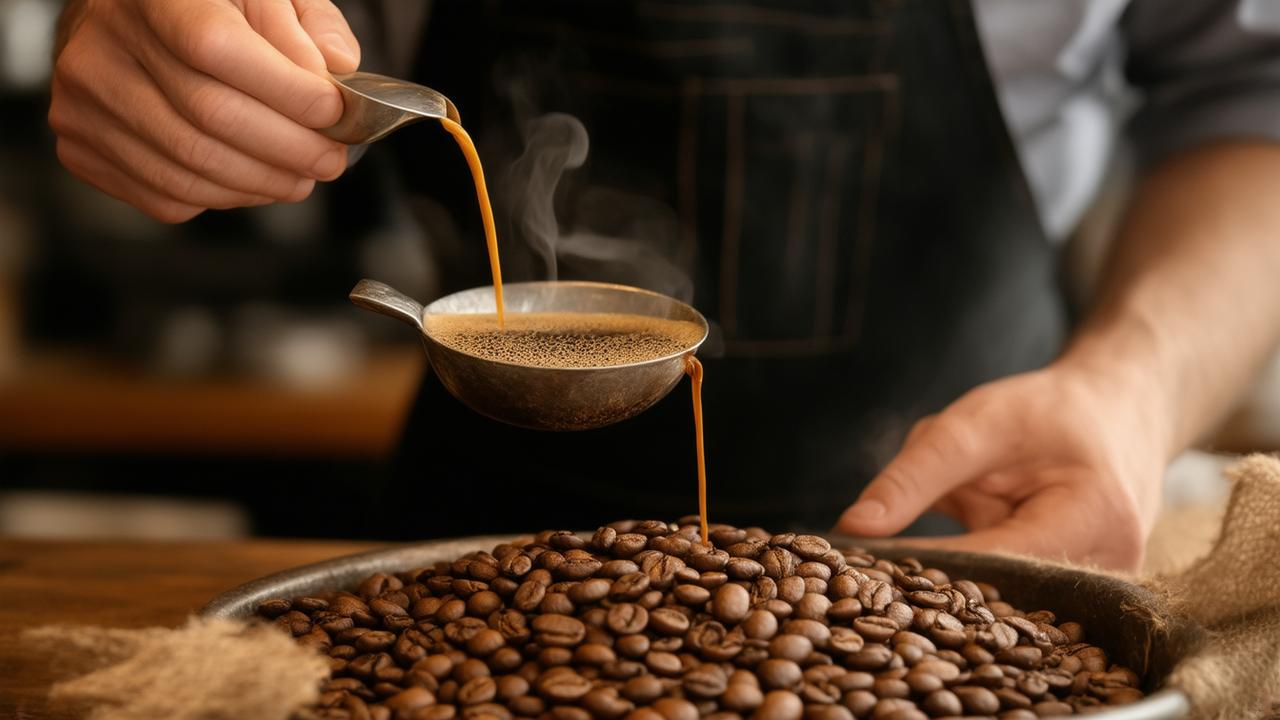
The sound hits you first: a soft hiss from the steam wand, the burr of a grinder, the shy clink of ceramic on wood. It’s 7:12 a.m. in a small laneway café in Melbourne, and the city is still waking up. Condensation beads on the window, catching the weak autumn light. A barista, sleeves pushed to his elbows, leans over the espresso machine with a concentration that borders on reverence. To anyone watching, this scene is classic, familiar, almost timeless. Yet somewhere between the portafilter and the porcelain cup, something fundamental is shifting—quietly, steadily—inside Australia’s beloved coffee culture.
Whispers in the Grind: Baristas Feel the Change First
The first clues arrive not as headlines or policy changes, but as subtleties on the tongue. A regular leans on the counter, orders the usual, and pauses after the first sip.
“Tastes a little different today,” they say. Not bad. Just… different.
Behind the machine, the barista already knows. They’ve spent the week altering grind size, tweaking extraction times, nudging temperatures by a fraction of a degree. The beans coming in from overseas are changing. The same origins on the bag; different realities in the cup.
Heat waves in Brazil, erratic rainfall in Colombia, unseasonal storms in Ethiopia—places that once provided dependable flavour profiles are now producing beans with subtle inconsistencies. Slightly more acidity one month, flatter sweetness the next. Not enough to alarm a casual drinker, but unmistakable to those who build their lives around crema and ratio.
Australia’s coffee culture, long famed for its meticulousness, is adapting. But this isn’t the loud, dramatic shift of menus suddenly going meat-free or latte art competitions disappearing overnight. It’s more like a background hum rising in volume: new blends creeping in, origins rotating faster, baristas quietly rewriting the recipes they thought they’d perfected years ago.
A Nation of Coffee Purists Meets a Warming Planet
Australia’s relationship with coffee is almost mythic. European migrants in the 1950s brought their machines, their rituals, their tiny cups of concentrated bitterness, planting the seeds of a culture that now feels inseparable from the country’s urban identity. Flat whites, long blacks, and meticulously poured tulips and swans became shorthand for a certain standard of living: modern, discerning, comfortably cosmopolitan.
But that culture was built on an assumption that the world’s coffee-growing regions would remain stable. That the supply of quality Arabica beans would flow, year after year, from equatorial mountains to Australian ports, as reliable as the morning alarm.
Climate change doesn’t negotiate with assumptions. Coffee is notoriously sensitive: Arabica, the golden child of specialty coffee, thrives only within narrow temperature ranges and depends on predictable rainfall. A shift of one or two degrees might sound trivial on a weather forecast, but to a coffee plant it can mean stress, disease, or outright failure.
In countries like Brazil and Vietnam, where entire economies lean on coffee, farmers are being pushed to higher elevations or forced to consider more resilient, but often less flavourful, varieties. Meanwhile, pests like the coffee berry borer are expanding into previously safe zones as temperatures climb. The result trickles down to Australian cafés in the form of unstable supply and volatile prices.
On the other side of the counter, customers still expect a $4.50 flat white that tastes like it always has. The friction between that expectation and the changing earth is where Australia’s coffee story is starting to fracture—and evolve.
New Origins, New Stories: Australia Looks Closer to Home
Step into some of the more forward-leaning roasteries in Sydney, Brisbane, or Hobart, and you might notice small signs taped near the till or printed on bags: “Featuring Australian-grown beans” or “North Queensland origin.” What used to be a rarity—an oddity you tried once out of curiosity—is slowly becoming part of the everyday line-up.
As traditional coffee regions struggle with climate pressures, Australian-grown coffee is emerging from the shadows. North Queensland, with its subtropical humidity and fertile soils, hosts a quiet network of farms experimenting with varieties, shade trees, and processing methods. The Northern Rivers region in New South Wales, too, has pockets of coffee weaving between macadamia farms and rainforest remnants.
The flavours can surprise people used to the punchy complexity of Ethiopian or Colombian beans. Australian coffees often lean toward the gentle side: nutty, mild, sometimes tea-like, with a softness that doesn’t shout but lingers. They don’t always fit the old narrative of specialty coffee bombarding the palate with tropical fruit and jasmine. Instead, they offer something more local, more grounded, like rain on warm asphalt or the smell of eucalyptus on a humid afternoon.
To help make sense of this emerging landscape, it’s useful to think of how the bean supply is quietly diversifying:
| Bean Source | Climate Pressure | Impact on Australian Cafés |
|---|---|---|
| Traditional origins (Brazil, Colombia, Ethiopia) | Heat, irregular rainfall, pests, yield variability | Price volatility, changing flavour profiles, supply uncertainty |
| Emerging origins (Rwanda, Papua New Guinea, Peru) | Expanding suitable highland areas but greater risk exposure | Broader menus, more experimental blends, storytelling around traceability |
| Australian-grown beans (North QLD, Northern NSW) | Borderline suitable climate, cyclone risk, higher production costs | Premium pricing, “local origin” appeal, softer flavour profiles |
| Resilient varieties (robusta & hybrids) | Better heat tolerance, disease resistance | Used in blends, evolving attitudes towards “lower status” beans |
These aren’t radical menu overhauls—not yet. They’re quiet adjustments: a house blend that now includes a small share of Australian beans, a single origin from Papua New Guinea replacing a Brazilian mainstay, or a seasonal release that carries a higher price tag but a story anchored in climate resilience.
Behind the Bar: Innovation in the Age of Uncertainty
In a warehouse in inner-west Sydney, a roaster leans into a swirling puff of smoke as a batch of beans cracks loudly in the drum. He’s working with a new lot from North Queensland, trying to coax out its shy sweetness without tipping it into flatness. Every ten seconds, he pulls a sample, examines the colour, listens, smells.
Roasters have become interpreters of climate data whether they asked for the role or not. Green bean samples arrive with notes on rainfall patterns, delayed harvests, or unexpected frost. Contracts are no longer just about flavour and price; they’re about risk and resilience. When a harvest comes in low, roasters have to decide: reformulate the blend, increase the price, or both.
This pressure is seeding a wave of innovation. Some cafés are investing in better equipment to extract more consistent flavours from less predictable beans. Others are experimenting with brewing methods that highlight nuance rather than brute strength—filter coffee flights, cold brews, and single-origin pour-overs gaining subtle ground alongside the ever-present flat white.
There’s also a quiet reappraisal of robusta, a species of coffee long maligned as cheap and harsh. As climate stresses Arabica, carefully grown and processed robusta and hybrid varieties are starting to slip into blends more respectfully. They bring body, crema, and resilience. For many drinkers, the change is imperceptible—just a touch more backbone in their morning cup.
What emerges from all this tinkering and adaptation is not a sense of panic, but a kind of experimental humility. The old certainty—this is how this coffee should taste—is giving way to a more fluid understanding: this is how coffee can taste now, in this new climate, from these new places.
From “What’s the Origin?” to “What’s the Story?”
At a café in Brisbane, a small chalkboard stands near the counter. It doesn’t shout about notes of blueberry or bergamot. Instead, it tells a short story: a farm at the edge of rainforest, shade trees planted between rows of coffee, a grower experimenting with water-saving techniques as summers lengthen and intensify.
➡️ Across Australia scientists are mapping a silent rise in urban heat islands
➡️ Why Australian sleep researchers are rethinking blue light guidance for modern households
➡️ Inside the Kimberley where ancient rock art is reshaping Australian heritage protection debates
➡️ Australia’s coastal planners are revising sea wall strategies as storm surges intensify
➡️ What Australia’s bushfire science reveals about the future of smoke exposure in cities
➡️ How Australian marine biologists are tracking coral recovery after repeated bleaching events
➡️ Researchers identify a specific type of adult stem cell with exceptional potential to regenerate human teeth and repair bone
The quiet shift in supply is also reshaping how cafés talk about coffee. For years, Australian coffee culture prided itself on origin specifics—regions, altitudes, processing methods. Those details aren’t disappearing, but they’re now joined by new questions: How is this farm adapting to changing rainfall? What does “sustainable” actually mean when climate extremes are the new normal?
Some cafés are starting to frame their menus not just in terms of taste, but in terms of impact. A slightly more expensive espresso might support a cooperative that’s replanting forests or diversifying crops to weather climate shocks. A seasonal blend may rotate origins not just to chase flavour, but to spread economic support across regions riding out difficult years.
Customers, too, are subtly shifting. There’s a growing willingness—especially among younger drinkers—to pay a little more when they understand where that money goes. Questions like “Why has the price gone up?” are increasingly answered not with apology, but with context: drought in a growing region, crop disease, transport delays from flooded roads.
Australia’s café counters have long been places of small talk and routine comfort. Now, quietly, they’re becoming places where the global realities of climate change are translated into something immediate and tangible: the cost, flavour, and availability of the beverage cupped in two waking hands.
The Future in Your Cup: Accepting Change Without Losing Ritual
On a cool morning in Hobart, a customer sits by a fogged-up window, hands wrapped around a flat white made with a blend of PNG, Peru, and a whisper of Australian-grown beans. Outside, the Derwent is a pewter streak, and the air smells faintly of salt. The coffee tastes familiar yet not identical to the one they remember from a few years ago. Maybe there’s a little more brightness, a little less chocolate, a finish that feels softer, like the edge of a cloud.
This is how cultural shifts often arrive—not as a single, dramatic break, but as a series of tiny recalibrations, barely perceptible day to day. Climate pressures are rewriting the script for coffee growers, traders, roasters, and baristas. Australia, so used to seeing itself as a distant but enthusiastic participant in the global coffee story, now finds its own landscapes and decisions braided more tightly into that narrative.
The rituals remain: the morning walk to the café, the quiet minute before the first sip, the way people hold their cups as though they’re anchoring themselves to the day. But the beans inside those rituals are increasingly shaped by new weather, new farming decisions, new calculations of risk and resilience. The menu of the future may lean more heavily on local origins, mixed-species blends, and rotating, story-rich coffees that ask drinkers to meet change with curiosity rather than resistance.
In the end, the quiet shift in Australian coffee culture isn’t about losing something sacred. It’s about recognising that the comfort we find in a cup has always depended on a delicate chain of climates, soils, and human choices. As that chain strains and reforms under the weight of a warming world, the question for Australia is not whether coffee will survive—but how we will choose to drink it, understand it, and honour the changing lands that make it possible.
FAQ
Is climate change really affecting the taste of my coffee in Australia?
Yes, though often in subtle ways. Climate pressures in major growing regions can alter bean density, sugar development, and harvest timing. Roasters and baristas adjust their methods to compensate, so you may not notice dramatic changes, but over time, flavours and consistencies are shifting.
Why are some cafés starting to use Australian-grown coffee?
Australian-grown beans help diversify supply in a time of global uncertainty and reduce reliance on long, vulnerable supply chains. They also offer cafés a chance to tell local stories and support farmers adapting to climate change within Australia.
Will coffee become much more expensive in the future?
Prices are likely to rise gradually as climate impacts reduce yields, increase farming costs, and add risk to supply chains. Some of this is already visible in specialty coffee. However, innovation in farming, roasting, and blending may soften the impact for consumers.
Does choosing “sustainable” coffee actually make a difference?
It can, especially when sustainability claims are backed by transparent relationships with growers. Paying a bit more for coffee that supports climate adaptation—like shade-grown farms, diversified crops, or water-efficient processing—helps keep producers viable as conditions change.
Will my favourite coffee origins disappear?
Some regions may become less suitable for coffee as temperatures rise and weather becomes less predictable. Others might shift coffee production to higher altitudes or different varieties. While specific farms or flavour profiles may change or vanish, new origins and styles are likely to emerge to take their place.





