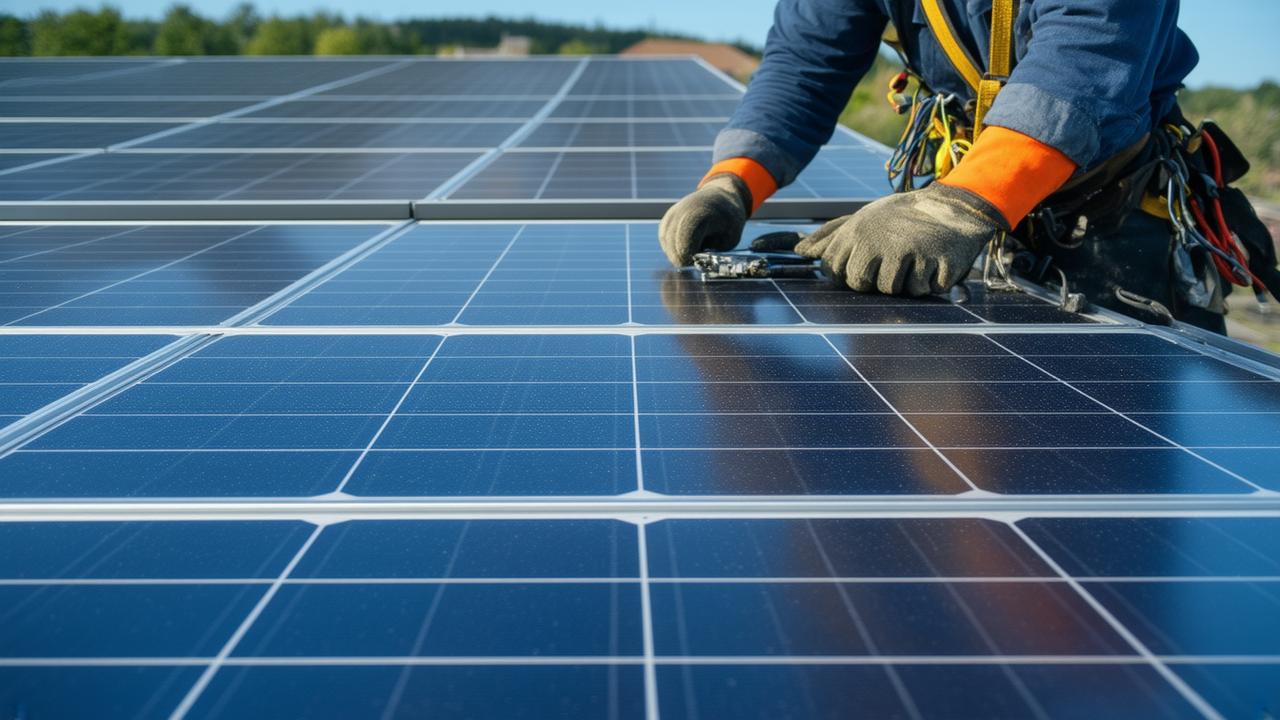
The first time you notice it is from the passenger seat of a car at a red light. Your eyes drift over the neighborhood and suddenly, almost startlingly, you see them: blue-black rectangles glinting on roof after roof, like quiet, modern sunflowers turned flat against the sky. A decade ago, they were rare, a curiosity. Now they’re everywhere—on bungalows, warehouses, apartment complexes, barns at the edge of town. It feels like a silent revolution has already happened above our heads while we were busy scrolling through our phones.
We’re told this is what progress looks like. Panels soaking up sunlight, homes generating their own power, bills shrinking, emissions falling. But beneath that clean, gleaming surface, something far messier hums and sputters—the grid that is supposed to carry this new wave of energy. It’s old, it’s crowded, and in many places, it’s overwhelmed. The sun keeps rising. The panels keep producing. And yet, in too many neighborhoods, the wires can’t keep up.
The Quiet Roar on the Rooftops
Stand on a suburban street just after sunrise and listen. The neighborhood might sound the same—sparrows, a lawn sprinkler ticking somewhere, a truck shifting gears in the distance—but electrically, everything is changing. As the first rays hit the panels, inverters click on one by one. Invisible rivers of electrons start flowing, reversing decades of one-way motion from power plant to home.
On a clear summer morning, whole blocks are waking up as tiny power stations. A house that used to be simply a consumer is now both user and supplier. Curtains stay drawn, coffee remains unbrewed, and still the panels begin quietly overachieving, pumping more electricity into the grid than the house itself requires. Across thousands of roofs, the collective effect is astonishing. In some regions, afternoon peak demand from utility-scale power plants has been shaved down dramatically because rooftops are doing so much of the work.
But that same success is exactly where things begin to snag. Grids were never designed for this kind of two-way conversation. They were built like megaphones—loud, one-directional, centralized. Now they’re being asked to behave like telephones: interactive, flexible, talkative in every direction. And the transition is not going smoothly everywhere.
When Too Much Sun Becomes a Problem
It feels almost wrong to say it: sometimes there is too much solar power—for the grid as it exists today, at least. Not too much for the climate, not too much for our long-term goals, but too much for the wires, transformers, and substations that were sized and planned for a different era.
Picture a bright spring afternoon in a residential neighborhood where nearly every south-facing roof sports panels. Air conditioners are off; it’s not hot yet. People are at work or school. TVs are dark. Dishwashers are silent. But the sun? The sun is in overdrive. Those panels start generating more than the houses need. That surplus must go somewhere, usually back out to the distribution grid.
Yet local lines can carry only so much power safely. If voltage rises too high, equipment can be damaged. If backfeed climbs beyond what transformers are designed for, protective devices step in. In some regions, the result is curtailment: the utility tells inverters to dial back, or even shut off, because the grid can’t safely accept all that solar. Perfectly good sunlight, available for free, gets refused at the door.
It’s like having a neighborhood full of backyard gardens at peak harvest season and only one narrow lane for food trucks. The tomatoes are ripe, the peppers glowing, the herbs fragrant—and yet there’s a traffic jam so severe that half the produce never makes it to the market.
Grid Congestion in Everyday Numbers
To understand the mismatch, it helps to see how different pieces compare in scale—rooftops, neighborhood demand, and grid capacity. While exact numbers vary widely by region, the rough contrast is striking:
| Element | Typical Scale | What Often Happens in Practice |
|---|---|---|
| Single home solar system | 3–10 kW | Midday output can exceed the home’s use several times over. |
| Small neighborhood (50–100 homes) | 150–600 kW of rooftop solar | Collective production sometimes surpasses local demand plus safe feeder limits. |
| Local transformer capacity | Often sized for one-way flow near historic peak use | May overload or trigger protective cutoffs when power flows back out. |
| Distribution line voltage | Kept within a narrow safe band | Solar surges can push voltage high, risking damage without control systems. |
| Customer solar benefit | Lower bills, credits for exports | Curtailment or export caps can limit savings despite abundant sun. |
In some sunny regions, this congestion has led utilities to pause or slow new rooftop approvals, or to allow connections but limit how much power can be exported. Panels still work, but their potential is shackled by the very system meant to welcome them.
The Human Side of an Invisible Bottleneck
For homeowners, installers, and small businesses, grid bottlenecks don’t feel abstract. They arrive as emails, engineering reports, frustrating phone calls. A family invests in solar, imagines decades of lower bills, maybe an electric car charged largely from their own roof—and then finds out they’re not allowed to export as much power as they’re able to make, or must pay extra for a grid upgrade on their street.
Solar installers tell stories of projects delayed not by hardware shortages or bad weather, but by paperwork and long utility queues. In some cities, the time between signing a contract and flipping the switch can stretch into many months, largely because the local grid needs analysis, reinforcement, or both. The sun, indifferent, keeps shining on the rooftops that are already connected, while would-be participants wait in line.
Communities that dreamed of energy independence discover that independence is never absolute. Even when you make your own electricity, you lean on that shared web of lines and transformers whenever your panels sleep under clouds or darkness. Rooftop solar and the grid are not rivals; they are reluctant partners still learning how to dance together.
Why the Old Grid Struggles with New Power
The trouble is rooted in history. The grid evolved around large, centralized power plants—coal, gas, hydro, nuclear—feeding power through high-voltage transmission to cities and towns, then down to local networks and homes. The flow pattern was simple: big to small, far to near, one to many.
That design locked in a particular mindset: utilities control the generation, customers simply consume. Wires, transformers, and control systems were sized with that one-way assumption. Regulations, tariffs, and business models followed the same script.
Rooftop solar shatters the script. Now there are millions of tiny generators, each controlled not by a utility but by individuals and companies, doing their own math on payback periods and environmental values. These systems switch on and off based on sunlight, not on centrally dispatched commands. The grid is being asked to be a flexible canvas for countless small decisions rather than a rigid pipeline from a few big sources.
In that sense, rooftop solar is less like adding a new power plant and more like turning every driveway into a mini freight depot in a system that assumed only giant cargo hubs. You don’t just need more roads; you need smarter logistics, better traffic signals, and new rules of the road.
Smarter Grids, Not Just Bigger Wires
To unlock the full benefits of all those rooftop panels, the answer isn’t simply thicker cables or more substations—though upgrades to physical infrastructure are essential in many places. The deeper shift is about turning the grid from a rigid machine into something closer to an ecosystem: responsive, distributed, and alive with information.
Smart inverters, for example, can automatically adjust how much power they push onto the grid, support voltage control, and even provide reactive power services that once came only from big plants. Instead of shutting off abruptly when the grid wobbles, they can help steady it. When coordinated, millions of these devices become not a problem but a resource.
Then there’s demand flexibility. If your water heater, EV charger, or home battery can be nudged to soak up excess solar during the brightest hours, a local glut becomes an opportunity, not a liability. Programs that reward customers for shifting when they use power—charging a car at noon instead of midnight, running the dryer when the sun is blazing—turn everyday appliances into quiet partners in balancing the system.
Even the rules that shape our bills can evolve. Time-based pricing, export limits that change based on local conditions, community storage that absorbs neighborhood solar spikes and releases energy later—these tools, when designed fairly, can keep more solar electrons working instead of being turned away.
➡️ Climate driven rainfall shifts are forcing new wheat forecasts across the inland belt
➡️ A boom in indoor plants is changing the emotional feel of apartment living
➡️ Burnout is being reframed as a workplace risk rather than a personal weakness
➡️ Convict era research is entering a new phase through forensic reconstruction methods
➡️ Mortgage stress is reshaping household routines as more families cut back on essentials
➡️ Bulk billing clinics are under pressure as patient demand outpaces available appointments
➡️ Regional renters are facing a new squeeze as vacancy rates tighten outside capitals
Community Stories Emerging from the Transition
Across the world, you can already find glimpses of what a more adaptable grid looks like. In some towns, neighbors share a communal battery tucked into a substation building, quietly charging when solar peaks and discharging during the evening rush. In others, schools with big roofs and big arrays become miniature energy hubs, feeding the grid on weekends and holidays, then relying on it when the bells ring and classrooms fill.
There are experiments with “virtual power plants,” where hundreds or thousands of rooftop systems, batteries, and smart appliances are coordinated by software to act like a single plant in the eyes of the grid operator. On a hot evening, instead of firing up another gas turbine, the operator sends a signal, and homes collectively reduce demand or tap into stored solar in their batteries. No one house bears the full burden. Together, they ease the strain.
These stories are still early drafts. For every neighborhood enjoying such benefits, many more are dealing with simple constraints: “We can’t connect your system this year,” or “You can only export half of what you produce,” or “We need to rebuild this feeder before we approve more solar.” But the direction is clear. The question is how quickly the underlying infrastructure and policy can catch up to the panels already shining on the rooftops.
Why This Moment Matters
The flood of rooftop solar is not a fad; it’s a turning point. Every year, installation costs keep edging down. Every year, more households and businesses decide they want a slice of the sun. At the same time, the urgency of cutting emissions grows sharper. Rooftop solar is one of the most visible ways ordinary people can participate in that effort, transforming their private spaces into parts of a shared solution.
But participation without preparation breeds frustration. When people discover that their panels are being curtailed, or that grid limits block their neighbors from joining in, trust can erode. It’s hard to rally behind a transition that feels stuck in its own bureaucracy.
Upgrading and modernizing the grid is not glamorous. It looks like crews digging trenches, replacing poles, installing cabinets of electronics in nondescript buildings. It looks like engineers rethinking protection schemes and planners redrawing maps of where new solar can safely go. It looks like regulators revisiting old rules and utilities learning to partner with their customers instead of simply serving them.
Yet all of that quiet work is what turns shining rooftops into real climate progress. Without it, we have a patchwork of small victories hampered by invisible walls. With it, we have a living network that can catch every photon the panels can harvest and carry that energy to where it’s needed most.
So the next time you’re stopped at a red light, look up again. See the panels not just as symbols of individual choice, but as nodes in a vast, evolving system. Their story isn’t just about technology or economics; it’s about how quickly we can reshape the hidden infrastructure beneath our feet to match the hope glinting above our heads.
Frequently Asked Questions
Why can’t the grid just take all the solar power my panels produce?
Local wires, transformers, and substations are built for certain limits. When too many homes export power at once, voltage and equipment loading can exceed safe levels. To prevent damage and outages, utilities sometimes cap exports or curtail production during peak solar hours.
Does curtailment mean my solar system was a bad investment?
Not necessarily. Many systems still deliver strong savings even with occasional curtailment, especially if most of your solar is used directly in your home. However, heavy or frequent curtailment can reduce financial returns, which is why grid upgrades and smart controls are important.
How can I reduce the impact of grid bottlenecks on my solar benefits?
Using more of your solar power on-site helps. This might mean shifting activities like EV charging, laundry, or dishwashing into sunny hours, or adding a battery that can store excess energy. Some regions also offer programs that pay you for flexible use of electricity.
What is a “smart grid,” and how does it help rooftop solar?
A smart grid uses sensors, communication networks, and intelligent devices to monitor and adjust power flows in near real time. With tools like smart inverters, automated voltage control, and coordinated demand response, a smart grid can safely accommodate much higher levels of rooftop solar.
Will upgrading the grid make electricity more expensive?
Grid upgrades cost money, but they can also avoid more expensive options like new fossil fuel plants, high fuel costs, and frequent outages. When done thoughtfully, modernization can keep long-term costs in check while improving reliability and making better use of local renewable energy.





