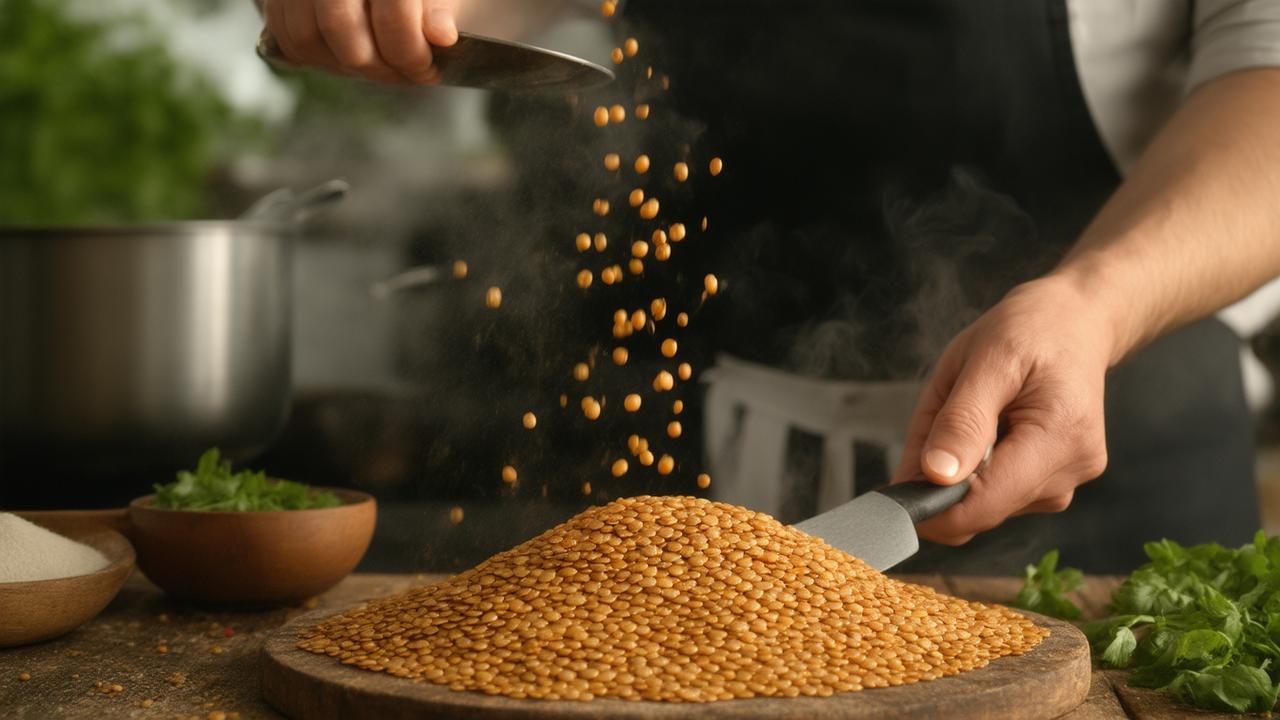
The smell of onions hits the pan first, sweet and sharp, curling up through the small Melbourne kitchen. A wooden spoon scrapes along the bottom as red lentils tumble from a jar in a soft, earthy rush. Outside, traffic hums and a distant magpie calls, but inside it’s just the hiss of oil, the steam, and the quiet certainty that this simple pot of lentil bolognese will stretch across three dinners for the price of one takeaway burger.
The Quiet Revolution Simmering on the Stove
Across Australia, a quiet revolution is happening not in parliament or on the news, but in kitchens like this one—over cutting boards, under flickering range hoods, in the clink of jars and the rustle of paper bags. It’s there in the chickpeas rinsed in strainers, the split peas poured into slow cookers, the black beans simmering gently on Sunday afternoons.
More and more Australians are swapping meat for legumes, and the reasons are as layered as a well-made stew. There’s the blunt force of cost-of-living pressures—skyrocketing rents, grocery bills that seem to climb every week, power prices that pinch at both ends of the day. There’s the growing weight of health advice, too: lower cholesterol, better heart health, more fibre, fewer processed meats. And then there’s something quieter but just as powerful—the feeling that this shift, humble as it sounds, might add up to something meaningful for the planet.
Walk into any major supermarket and you can see the evidence right there on the shelves. The canned bean aisle—once the sleepy end of the store—now feels busier, better stocked, more colourful. Lentils in every shade, chickpeas in brine, butter beans, kidney beans, pre-cooked pouches of mixed legumes with names like “super meal base” or “plant power blend.” Dry bags of yellow split peas and adzuki beans squat in wire baskets, their price tags startlingly low compared with the meat fridge a few metres away.
The New Weekly Shop: Counting Coins and Counting Nutrients
For many families, the shift began with simple maths. When a tray of mince starts to nudge into double digits, while a kilo of dried lentils still costs just a few dollars and expands to feed an entire table, it’s not a difficult equation.
In the glare of supermarket lights, people pause longer over unit pricing. Fingers trace along labels: dollars per 100 grams, grams of protein per serving, how many meals a single packet might become. A bag of dried chickpeas might look modest in its crinkled plastic, but soak them overnight and they bloom, soft and plump, ready to be stirred into curries, blitzed into hummus, or roasted with paprika until they crunch like tiny golden pebbles.
What’s quietly astonishing is just how well legumes stack up against meat when you strip things back to basics: protein, cost, and satiety. A bowl of black bean chilli with rice doesn’t just fill a stomach; it lingers, the fibre working slowly, the energy release steady and calm rather than spiky and sudden. For parents watching kids’ lunchboxes come home half eaten, or older Australians managing diabetes or heart conditions, that steadier energy can feel like a blessing.
| Food (approx. per 100g cooked) | Protein (g) | Estimated Cost* |
|---|---|---|
| Beef mince (regular) | 24–26g | High |
| Chicken breast | 23–24g | Medium–High |
| Lentils | 8–9g | Low |
| Chickpeas | 8–9g | Low |
| Black beans / Kidney beans | 8–9g | Low |
*Relative to common Australian supermarket prices; legumes are typically far cheaper per cooked serving than meat.
The trade-off is no longer about sacrificing satisfaction in order to save money. Instead, it’s about learning a different rhythm in the kitchen—how to soak, how to season, how to give beans and lentils the time and flavour they deserve.
From Meat-and-Three-Veg to Dahl and Beyond
For generations, the Australian dinner plate was a predictable arrangement: a slab of meat, some boiled vegetables, maybe a scoop of mash. Legumes were often relegated to baked beans on toast or the occasional three-bean salad at a summer barbecue, glistening under too much dressing.
That’s changing. Young adults who grew up with global food at their fingertips—Turkish gözleme from food trucks, Indian dhal from neighbourhood takeaways, Vietnamese noodle soups fragrant with herbs—are reclaiming legumes not as a sacrifice, but as a flavourful centrepiece. Red lentils simmer into a lush, golden dahl perfumed with cumin and turmeric. Black beans find their way into burritos rolled with avocado and lime. Chickpeas go smoky and tender in tomato-rich stews flecked with coriander.
Even among older Australians, the shift is underway, sometimes out of curiosity, sometimes at the gentle insistence of a GP. There’s the retiree on the Central Coast learning to make minestrone packed with cannellini beans instead of beef. The tradie in Adelaide who started adding lentils to his usual bolognese to cut costs and now swears it tastes better. The young family in Perth who declared “Meat-Free Monday” as a budget experiment and discovered the kids devour lentil tacos faster than the beef version.
Legumes carry with them the flavours of the world and the comfort of home—spooned into bowls, ladled over rice, dunked into with crusty bread. They don’t feel like a diet choice so much as an invitation to eat in a way that is slower, more intentional, quietly abundant.
Listening to the Body: Health in Every Spoonful
Underneath the clatter of pots and the clink of budget-conscious shopping baskets, another conversation is happening—this one in waiting rooms, across GP’s desks, through dietitians’ gentle advice. Australia’s health profile, with its rising rates of heart disease, type 2 diabetes, and bowel cancer, has placed our plates under closer scrutiny.
Legumes, long under-appreciated, suddenly seem like the food equivalent of finding twenty dollars in an old coat pocket. They’re dense with fibre, which helps lower cholesterol and keeps digestion running more smoothly. They offer plant-based protein without the saturated fat content of many meats. They can help keep blood sugar from spiking wildly, something that matters deeply to people quietly counting their carb exchanges every day.
Of course, the body doesn’t speak in numbers and studies. It speaks in feelings. In the worker who notices they don’t crash as hard at three in the afternoon when last night’s dinner was chickpea curry. In the older woman who realises her digestion has eased since swapping two red-meat-based dinners a week for lentil soups. In the young man who wants to keep lifting at the gym but finds his wallet can’t keep up with steak; beans step in to quietly do the job.
Health professionals are increasingly nudging patients towards what they call “plant-forward” or “Mediterranean-style” eating—plates full of vegetables, whole grains, olive oil, nuts, and yes, a riot of legumes. Not necessarily a full abandonment of meat, but a rebalancing: less centre-stage steak, more supporting cast of beans.
➡️ A quieter housing revolution is unfolding through passive cooling design and smarter shading systems
➡️ New long COVID clinics are reshaping how chronic illness is diagnosed and managed
➡️ Desalination plants are becoming central to water security plans despite energy concerns
➡️ New shark tracking data is changing safety planning at popular swimming beaches
➡️ A revival of handwritten learning is gaining momentum in schools wary of screen overload
➡️ Wildlife carers are warning of a tougher year as habitat loss meets extreme weather
➡️ A new generation of museum curators is revisiting repatriation and colonial collecting ethics
Earth Underfoot: Farms, Droughts, and the Future of Food
Beneath the supermarket shelves and kitchen benches, another story unfolds far from the fluorescent lights—out in the fields where the soil crumbles under dry fingers and the sky is watched as closely as a bank account. Australia’s farmers know better than anyone how fragile our food systems can be, buffeted by drought, flood, global prices, and shifting appetites.
Legumes have their own quiet magic in this story. They can help fix nitrogen into the soil, which means they often need less synthetic fertiliser. They can be part of rotations that keep land healthier over time. Some varieties cope relatively well in dry conditions, and when used wisely, they can be a farmer’s ally instead of just another input to manage.
For consumers thinking beyond tonight’s dinner to the bigger picture—the emissions wrapped up in each bite, the water used, the land cleared—legumes offer a way to feel slightly more at ease. Replacing even a couple of meat-heavy meals a week with lentil or bean dishes can gently lower a household’s environmental footprint. It’s not a silver bullet, but it is a step. Multiply that by millions of Australians, and those steps start to sound like a soft but insistent march.
There’s a certain comfort in knowing that the same humble chickpeas simmering on your stove might also be supporting more resilient farming practices, that the lentils you stir into soup are part of a larger shift towards a food system that works a little more kindly with the land beneath our feet.
FAQs: Legumes, Meat, and the Australian Plate
Are legumes really cheaper than meat in Australia?
In most cases, yes. Dried legumes are among the most affordable protein sources you can buy, especially when you calculate cost per cooked serving. Even canned beans and lentils usually work out cheaper than fresh meat, particularly when you stretch them across soups, stews, curries, and bulk dishes.
Can legumes fully replace meat nutritionally?
Legumes provide protein, fibre, iron, and a range of minerals, but they don’t contain all essential amino acids in the same proportions as animal meat. Pairing legumes with grains (like rice, bread, or pasta) across the day can create a complementary protein profile. Many Australians are choosing to reduce meat rather than eliminate it entirely, using legumes to replace some—but not all—animal protein.
What about gas and bloating from beans?
It’s common to experience extra gas when you first increase legume intake. Rinsing canned beans well, soaking dried legumes and discarding the soaking water, and increasing portion sizes gradually can all help. Over time, most people’s digestive systems adapt, and discomfort lessens.
Do legumes take too long to cook for busy people?
Not necessarily. Canned legumes are ready to use straight from the tin after a quick rinse. Red lentils cook in as little as 15–20 minutes. Batch cooking dried beans on weekends and freezing them in portions is another way to have them on hand without long weeknight cooking times.
Is this shift away from meat just a trend?
Rising legume consumption is being driven by enduring forces—cost-of-living pressures, health advice, and environmental awareness. While specific recipes and food fads may come and go, the broader move towards more plant-based, legume-rich eating looks less like a fleeting trend and more like a long-term adjustment in how Australians put dinner on the table.





