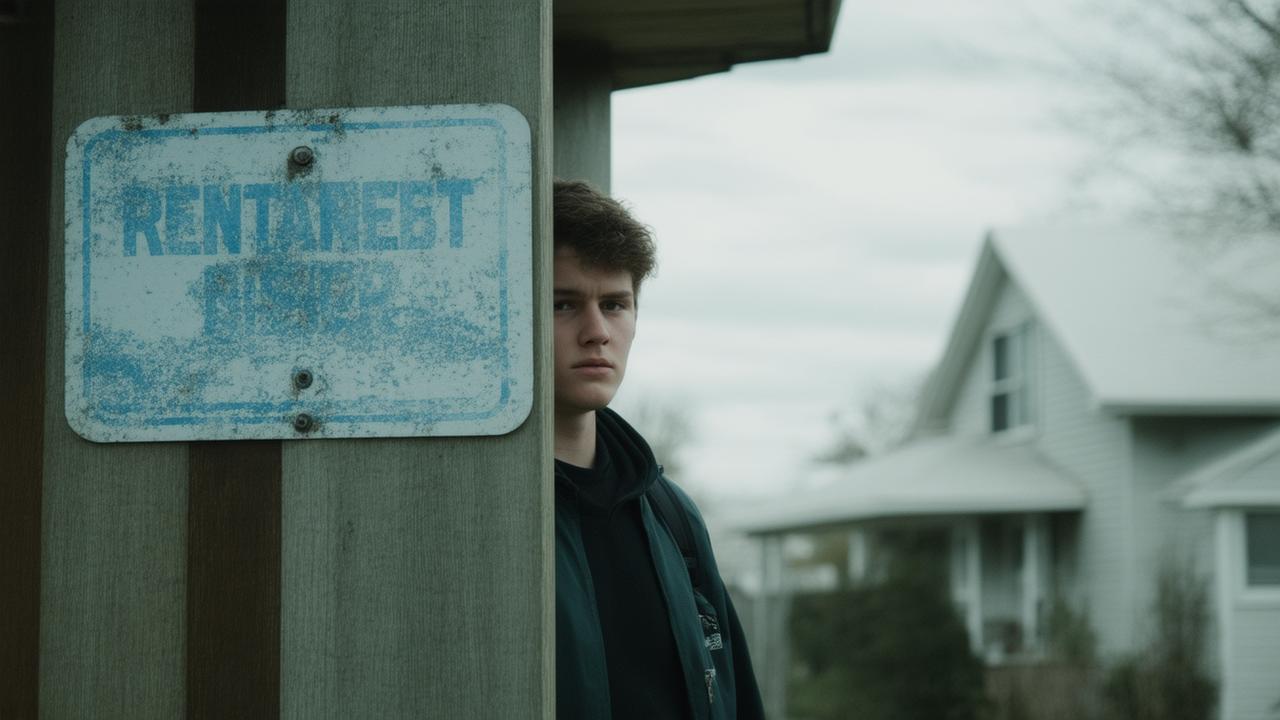
The sun is only just up when the first car pulls into the gravel carpark outside the real estate office. Mist hangs low over the paddocks at the edge of town, the kind that turns everything silver and soft. In the quiet main street, the bakery’s neon “Open” sign flickers to life. A magpie whistles from the overhead powerline. And on the footpath, two young parents in fleeces and muddy work boots rock a pram back and forth as they rehearse, in low, anxious voices, what they’ll say to the property manager when the doors finally open.
The waiting list on the veranda
By half past eight, the veranda outside the agency looks like the waiting room of a regional dentist, if the stakes were much higher. A retired couple lean on their walking sticks. A backpacker cradles a takeaway coffee, scrolling through job ads for farm work. A nurse in a navy uniform stands off to one side, her lanyard swinging in the breeze.
They’re not here for a bargain or a special deal. They’re here for something far more basic: a place to live.
Across regional Australia, scenes like this are playing out in towns that once promised slower rhythms, cheaper rents, and the easy generosity of space. For years, people fleeing the capitals came in search of bigger skies and smaller costs. Now, vacancy rates in many of these same towns have slipped below one percent, and the dream of a simpler regional life is colliding with a brutally simple reality—there just aren’t enough homes to go around.
What was once a quiet line on a spreadsheet—“vacancy rate: tightening”—is suddenly vivid and human. It sounds like a mother quietly weeping in a parked car after yet another unsuccessful application. It looks like a tradie couch surfing with his toolkit in the back of his ute. It feels like the stiffness in your shoulders when your lease renewal email lands and you hesitate before opening it.
The invisible tide moving out of the cities
Step back from the real estate office veranda, and you can almost trace the invisible tide that helped create this squeeze. During the pandemic, “work from anywhere” sounded like a liberation anthem. City renters, weary of tiny balconies and windowless studies, looked up coastlines and river valleys on real estate apps. Many moved. Some bought. More rented.
The story had an easy logic at the time. House prices in the capitals were eye-watering, but a modest cottage in a regional town still felt attainable. Even if you stayed a renter, the numbers looked better: lower rent, a garden, maybe even a shed out the back. The regional move was sold—and bought—as a kind of life hack.
But towns aren’t spreadsheets. They’re delicate ecologies of people and services and buildings and budgets. When thousands of people spill out of major cities in just a few seasons, everything bends. Some things snap.
Landlords realised they could charge more. Investors who once ignored “sleepy” towns began circling. Locals who’d never thought of their town as a “hot market” started hearing bursts of real estate language—yield, growth corridor, capital gain—over their coffee at the bakery.
At the same time, construction costs climbed; builders were booked out; supply chains stuttered. New housing—which might have softened the impact—lagged far behind. The tide of new residents crashed into a shoreline of limited stock. The water had to go somewhere. It spilled out in rent hikes, bidding wars for rentals, and longer and longer lines outside agencies every inspection day.
What the squeeze actually feels like
It’s one thing to speak in trends; it’s another to sit in the living room of someone who has lived through three rental increases in eighteen months.
Picture a timber cottage in a river town, where the floorboards carry the faint, salty smell of old floods and eucalyptus polish. The tenant—let’s call her Marina—has a mug of tea clutched in her hands as though it’s the only warm, solid thing she’s certain of. She works at the local aged-care home, caring for people who built this town. Her job is permanent, her hours long, her pay steady but modest.
When she moved here four years ago, her rent was low enough that she could save a little each fortnight. Since then, the monthly email from her property manager has become a source of dread. Another increase. Another notice that the landlord is “reviewing the current market”. Another reminder that “demand for rentals in the region remains very high.”
Her budget—carefully notched around groceries and fuel and a phone for her teenage son—has no more room to give. The river outside her front door still looks wide and generous, but possibility feels like it’s narrowing to a single anxious question: stay and sink deeper into stress, or pack up and try her luck in another town that might not want her, either.
Numbers behind the nervous laughter
Talk to renters in regional areas and there’s a dark kind of humour that surfaces. Jokes about needing to submit a blood sample and your firstborn along with your rental application. Stories of lining up for inspections that feel more like auditions. Nervous laughter when someone admits how much of their wage goes straight from their bank account into their landlord’s.
Behind the laughter sits a sharper edge: vacancy rates scraping along the bottom, and rents rising faster than incomes in places that once prided themselves on being affordable.
Imagine a simple, pocket-sized snapshot of what’s happening in many regional markets:
| Region (Example) | Vacancy Rate | Typical Weekly Rent (2‑bed) | Change in 3 Years |
|---|---|---|---|
| Coastal town | 0.7% | $520 | +35% rent, vacancies halved |
| Inland service hub | 0.9% | $460 | +28% rent, vacancies down 40% |
| Tourist region | 0.5% | $600 | +45% rent, vacancies near record lows |
Stats vary from town to town, but the pattern is stubborn: vacancy rates that once hovered in the two–three percent “healthy” range have fallen to levels where any disruption—one major employer closing, a flood, a sudden industry boom—can push people out of housing altogether.
In big cities, tight vacancy rates make the headlines. In regional areas, they echo in other ways: a local café that has to close two days a week because staff can’t find a place to live; a hospital struggling to attract doctors; a school losing a beloved teacher who simply can’t afford the rent anymore.
When the town relies on people who can’t afford to stay
Walk down the main street of a regional centre and look carefully at the people who keep it moving. The childcare workers sweeping sand from the kindy doorway. The supermarket staff stacking crates of apples. The disability support workers guiding clients carefully across the zebra crossing.
In many towns, these are the people most acutely feeling the rental squeeze. Their wages were never built for bidding wars. They are the scaffolding around which community life hangs—and yet they are increasingly locked out of the very communities they serve.
There’s a quiet, painful irony in hearing local leaders talk proudly about attracting new residents while long-time locals drift away because their rent has surged beyond reach. You can measure economic growth in glossy brochures and new shopfronts. It’s harder to measure what’s lost when the local footy coach, the librarian who knows everyone by name, or the elder who led welcome ceremonies at the school is forced to move two towns over.
Communities feel that loss in subtle ways. The crowd at the weekend markets is a little thinner. The volunteer rosters at the fire brigade are a little harder to fill. The stories that used to swirl between generations find fewer places to land.
The cul-de-sac of “just move somewhere cheaper”
There’s a well-worn suggestion tossed around whenever housing becomes tight: “If it’s too expensive, just move somewhere cheaper.” But what happens when the “somewhere cheaper” is no longer cheap, no longer available, or no longer within reach of work and support networks?
For regional renters, that cul-de-sac comes up fast. The next town over might be an hour’s drive away on narrow, flood-prone roads. Public transport might be a single bus that arrives after your shift starts and leaves before it ends. Moving might mean switching schools, losing childcare places, or saying goodbye to the grandparents who spell you on difficult days.
Once upon a time, a regional renter under pressure could hop along a chain of ever-cheaper towns, moving successively further out until the numbers finally worked. Now, as vacancy rates tighten right across many regions, that chain is frayed. In some directions, it’s gone altogether.
➡️ A quieter housing revolution is unfolding through passive cooling design and smarter shading systems
➡️ New long COVID clinics are reshaping how chronic illness is diagnosed and managed
➡️ Desalination plants are becoming central to water security plans despite energy concerns
➡️ New shark tracking data is changing safety planning at popular swimming beaches
➡️ A revival of handwritten learning is gaining momentum in schools wary of screen overload
➡️ Wildlife carers are warning of a tougher year as habitat loss meets extreme weather
➡️ A new generation of museum curators is revisiting repatriation and colonial collecting ethics
The result is a kind of stuckness that doesn’t show up clearly in data. People stay put in homes that don’t fit—too small, too far, too mouldy, too expensive—because the alternatives are worse or non-existent. The idea of “choice” becomes something of a mirage; you can choose between stress and upheaval, but not between two genuinely viable options.
Finding room to breathe in a thin market
In a market this tight, every “For Lease” sign attracts a swarm. Yet even in that scramble, there are pockets of creativity and resistance, small efforts to carve out space for renters to breathe.
Some local councils in regional areas are experimenting with gentle infill—encouraging small granny flats, dual occupancies, or conversions of unused commercial buildings into long-term rentals. Community housing providers are quietly buying or building wherever they can, offering rentals pegged more closely to income than to market frenzy. Grassroots advocacy groups are forming, driven by renters who’ve had enough of feeling like collateral in someone else’s investment story.
These efforts are modest against the scale of the problem, like planting saltbush along a coastline that’s steadily eroding. But they matter. Each home that stays in the long-term rental pool instead of tipping into short-stay holiday use can mean one less family couch surfing. Each town that plans for growth with housing at its heart—rather than tacked on at the end—gives its future residents a better shot at security.
Most of all, each conversation that centres the lived reality of regional renters—beyond the graphs and the market updates—pushes back against the idea that this is just an unfortunate side effect of progress. It reminds us that housing isn’t a lifestyle accessory. It’s the ground under everything else.
A different way of looking at the same paddock
As the day warms, the mist lifts from the paddocks at the town’s edge. From a distance, they look empty—just rough grass, thistles, a few cattle flicking their ears at the flies. For years, they’ve been easy to overlook.
But the pressure radiating inward from the rental market is slowly changing the way locals see these spaces. They start to imagine small, thoughtfully designed clusters of homes instead of endless storage yards. They wonder about cooperative models, land trusts, medium-density street corners with verandas and shade trees and kids’ bikes in the front yard.
This isn’t about blanketing farmland in concrete, or erasing the very landscapes that draw people here in the first place. It’s about recognising that the story of a regional town isn’t just told in its main street and its scenery; it’s told in the quiet, domestic corners where people sleep and cook and pay their bills and decide whether they can afford their kids’ sports fees this term.
Regional renters are feeling a new squeeze as vacancy rates tighten outside capitals. You can see it in the early-morning lines outside real estate offices, in the nervous thumbing of keyrings as inspections end, in the tremor of uncertainty that runs underneath conversations about the future. But you can also see, in scattered pockets, something else: a refusal to accept that this is how the story has to go.
On the veranda, the real estate office finally opens. The parents with the pram step inside, shoulders squared, application folders thick with pay slips and references. Behind them, the nurse checks the time, knowing she’ll have to leave soon for her shift. The retired couple lean a little heavier on their sticks.
The rental market may be tight, but the question hanging in the morning air is larger than supply and demand: what kind of towns do we want to be, and who gets to belong in them when the tide of change runs this hard?
Frequently Asked Questions
Why are vacancy rates so low in regional areas right now?
A mix of factors are at play: more people moving out of cities, limited new housing construction, rising construction costs, and some properties shifting into short-stay or holiday accommodation instead of long-term rentals. All of this has pushed demand up while supply struggles to keep pace.
Are rents rising faster in regional towns than in the capitals?
In many cases, yes. Because regional rents started from a lower base, percentage increases can be sharp. While capitals remain expensive in absolute terms, some regional areas have seen faster growth in rent prices over a short period, putting pressure on local wages that were never designed for big-city housing costs.
Who is most affected by tightening vacancy rates outside capitals?
Low and moderate-income renters are hardest hit—hospitality workers, aged-care and disability support workers, retail staff, cleaners, childcare workers, and many long-term locals. Young people, single-parent households, and older renters on fixed incomes are particularly vulnerable.
What can regional communities do to ease the rental squeeze?
Options include encouraging more long-term rentals over short-stays, supporting community and social housing projects, allowing modest increases in housing density where infrastructure can support it, and planning growth around affordable housing from the outset. Local advocacy and renter voices in decision-making are also crucial.
Is moving further out still a realistic solution for struggling renters?
For some, it may work, but the “move somewhere cheaper” advice is less effective as more regional markets tighten at once. Longer distances can mean higher fuel costs, less access to jobs and services, and greater social isolation. For many renters, the options are narrowing, not expanding, which is why a broader, community-level response is needed rather than relying on individuals to simply move on.





