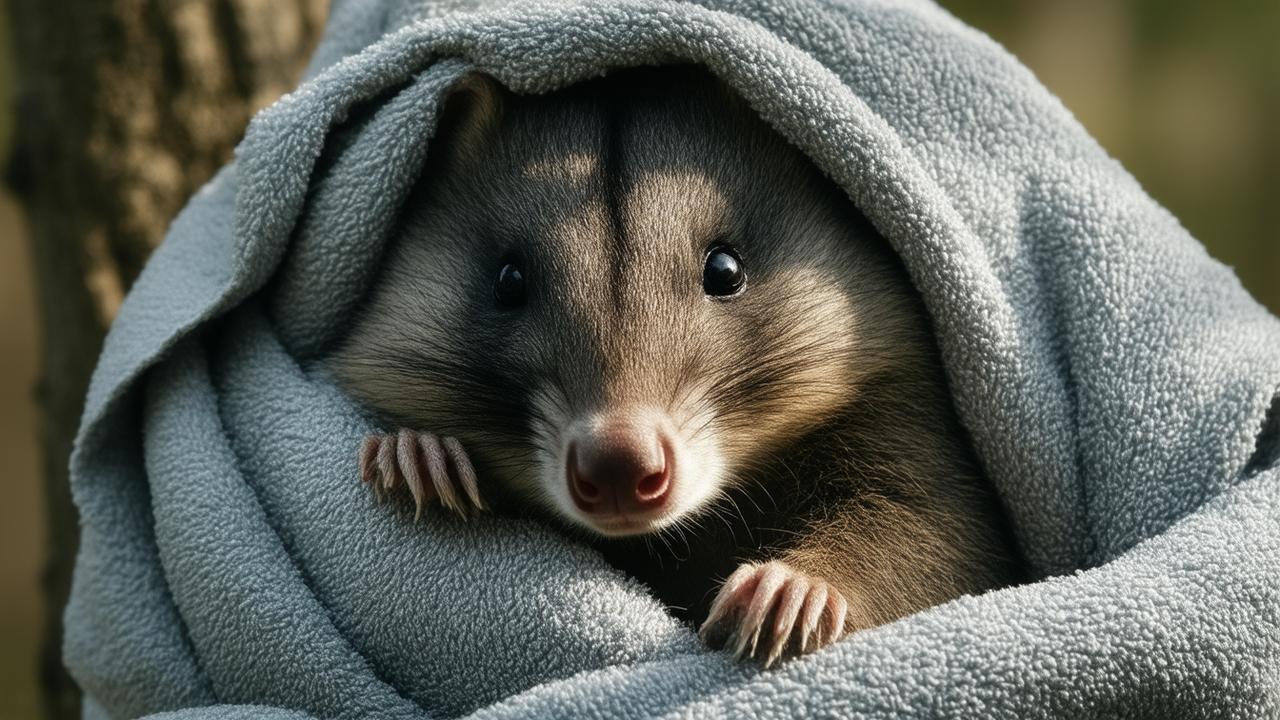
The joey’s heartbeat was a thunder in Sarah’s hands. Barely the size of a kitten, pink-skinned and furless, it shivered against the towel as wind rattled the iron roof of the rescue shelter. Outside, the sky had turned the colour of bruised steel. Again. Bushfire weather. Flood weather. Take-your-pick weather. Sarah glanced at the thermometer already pushing past 40°C and muttered, “It’s only January.”
This was supposed to be the quiet month, the weeks when wildlife carers restocked formula, washed blankets, and caught up on sleep. Instead, the phones had not stopped. Heat-struck possums cupped in esky lids. Koalas crawling onto back decks in the middle of the day in search of water. Wallabies hit by cars on roads that used to be forest tracks. Each call landed with the same quiet dread: it’s getting worse.
The Year the Seasons Went Missing
The first thing many wildlife carers say now is that they don’t trust the calendar anymore. “We used to know when baby season started,” says Mark, a carer with twenty years of experience. “We had rhythms. You could breathe between the waves. Now it’s just one long emergency.”
Habitat loss used to be the slow, creeping threat, measured in new fence lines and distant bulldozers, in the tidy squares of fresh housing estates. You’d hear a chainsaw in the next valley, notice one more paddock cleared for grazing, feel a kind of background grief. But the animals, somehow, adapted—until the weather began to warp.
These days, summer doesn’t just arrive; it slams. Hot winds roar down from the interior, sucking the moisture from leaves, from soil, from fur and feather. Grass that was green last week crisps to khaki. Then, sometimes within the same month, the sky opens and dumps a season’s rain in a night. Creeks leap their banks. Burrows flood. Nest hollows become traps. Whole families of animals vanish between dusk and dawn.
For carers, this collision of habitat loss with violent, unpredictable weather feels like stepping onto a playing field where the rules change hourly. The animals that do reach them are arriving sicker, weaker, more traumatised. It’s not just “more” casualties—it’s harder ones.
When Your Home Disappears Twice
To understand why wildlife carers are bracing for an especially harsh year, you have to picture what’s happening at ground level. Imagine you’re a small glider, wings of skin stretched between your ankles and wrists. Your world is the canopy, a map of old eucalypts that your great-grandparents used. You know every hollow, every flowering tree. Then the logging trucks come.
Your home forest is reduced to a patchwork: here a plantation, there a bare hillside, here a neat grid of houses, driveways curling like pale snails across what used to be understory. Your range shrinks, but you make do. You learn to cross open ground, gliding a little further, taking more risks. A few of your kin end up electrocuted on powerlines or slammed by cars on new roads. Still, you breed. You coax a life from the leftover spaces.
Then the heatwaves arrive. Flowers crisp and drop before they can set seed. Insects disappear. The sap runs slower. Food that used to last through the dry spells is gone in a week. Without deep, connected habitat, there’s nowhere else for you to go. No cool ravine a few valleys over, no untouched ridge with shade and water. Those places have been cleared too.
So you push further into town. You raid backyards, drink from birdbaths, cling to sapling trees that bend and crack in storms. When an extreme event hits—a firestorm, a night of hail the size of marbles, a flood that turns the world into a single churning river—your chances plummet. If you survive, exhausted and burned or waterlogged, it’s people like Sarah and Mark you will eventually reach, often via the shaking hands of a stranger at a rescue centre door.
The Silent Overflow of Wildlife Shelters
Inside the low buildings and back-room clinics of wildlife carers, the crisis is visible in rows: rows of crates, of heat pads, of hand-written labels taped onto containers. Kookaburra, concussion. Ringtail, cat attack. Koala, dehydration and chlamydia. Roo joey, orphaned—vehicle collision. It’s like an emergency ward with feathers, fur, and a permanent shortage of staff.
During heatwaves, carers set alarm clocks through the night to drip-feed fluids to heat-stressed animals. During storms, they’re on call for flooded burrow rescues and birds blown from nests. During fire seasons—or what we used to call “summer”—they drive into smoke, carrying gas masks and burn cream in the same crate as the joey milk and bandages.
What they whisper now, over coffee gone lukewarm on the kitchen counter, is that their capacity is thinning. Personal savings drained by years of fuel, formula, vet bills. Sleep deficits measured not in hours but in seasons. An accumulation of grief: the ones that didn’t make it, the calls they had to say no to because every spare corner of their house was already humming with life.
On a whiteboard near the shelter door, someone has started a tally. It’s not just the number of animals admitted; it’s the number turned away because there was nowhere left to put them. Each mark is a small heartbreak. Each one represents a failure that isn’t really theirs—but feels like it anyway.
Numbers That Don’t Tell the Whole Story
Supporters often ask for data: How many animals did you save this year? What species are you seeing more of? What’s the release rate? These are important questions, but they flatten the story into neat columns of numbers. They can’t capture the feel of a sugar glider’s fingers curling around your thumb, or the way a tawny frogmouth stares at you, unblinking, as if it’s trying to remember the shape of a tree.
Still, some trends are unmistakable. Across many regions, carers report sharp increases in animals affected by heat stress, dehydration, vehicle strikes on newly busy roads, and displacement due to land clearing. They’re also seeing more “stacked” injuries—an animal that isn’t just orphaned, but also malnourished, parasite-ridden, and traumatised by extreme weather.
Here is a simplified snapshot that carers describe, year on year:
| Type of Case | Before Intensified Extremes | Recent Years |
|---|---|---|
| Heat stress & dehydration | Occasional spikes in summer | Frequent, severe waves every hot season |
| Displacement from habitat loss | Gradual increase | Constant background pressure on all species |
| Injuries + chronic stress combined | Less common, more isolated | Regular; complex cases harder to rehabilitate |
| Release-ready animals | Higher proportion fit for wild return | More individuals too compromised to survive outside care |
Behind each line in that table is a story: a black cockatoo with singed wings; a koala that survived a fire but has nowhere leafy left to go; a python rescued from a flooded paddock, muscles weak from months of prey scarcity. The numbers merely outline the shadow; carers live inside it.
Carers on the Edge of Burnout
It’s impossible to talk about the coming “tough year” without talking about the humans holding it up. Wildlife carers are usually volunteers. They do this between shifts at other jobs, between school drop-offs, between looking after elderly parents. The work is not gentle. It is blood, faeces, needles, bites, talons, and the endless grind of laundry. It is also joy: the first time an orphaned joey bounds away from you instead of towards you; the moment a rehabilitated owl lifts from your glove into the dusk and does not look back.
But as disasters stack, so does emotional weight. When fires roll through the same valley twice in five years, carers are not just treating fresh burns; they’re reliving the last time. They remember which animals they saved and which they didn’t. They remember the sound of a forest burning—the crack of trunks, the whine of wind, the roar that drowns out thought.
They also remember the quiet days that no longer come. The old pattern of “busy season” and “rest season” has dissolved into a steady thrum of crisis. Many speak, in hushed tones, of wondering how long they can keep going. They worry about the future of their local populations of gliders, koalas, quolls, and birds—but also about the future of the people who have devoted their lives to them.
When Rescue Becomes the Last Line of Defence
In a landscape where forests shrink and weather swings from brutal heat to sudden flood, wildlife rescue has become less of a safety net and more of a last, fragile wall. It was never meant to hold up an entire ecosystem. Carers were supposed to catch the outliers: the odd injured owl, the joey whose mother was hit on the highway, the bat tangled in barbed wire.
Instead, they’re increasingly catching systemic failure—species pushed to the brink by decisions made far upstream of any rescue hotline. Habitat corridors not protected. Wetlands drained. Old-growth trees felled. Climate warnings ignored until storms grow teeth.
➡️ Nightlife venues are adjusting as sober socialising becomes a mainstream choice
➡️ Farmers are experimenting with regenerative grazing to rebuild soil after decades of depletion
➡️ Ocean chemistry data is pointing to faster acidification along sensitive marine habitats
➡️ Fashion labels are returning to wool as demand grows for durable climate smart fabrics
➡️ Archaeologists are returning to old shipwreck sites with new imaging technology
➡️ Households are embracing minimalism as rising costs challenge traditional consumer habits
➡️ Space startups are expanding beyond satellites as deep tech exports gain momentum
Ask a seasoned carer what scares them most, and it’s rarely the fires or the floods themselves. It’s the narrowing of options. The places left to release animals are smaller, more fragmented, more exposed to the next extreme event. “We can get them through the crisis,” one carer says quietly, “but I’m scared of the world we’re sending them back to.”
What It Means to Help, Really
So what does helping look like in a year like this—one where every forecast seems to hold another record-breaking possibility? It starts much closer to home than most people think.
For wildlife, the line between survival and collapse often runs through someone’s backyard. A single mature tree spared from the saw becomes a food source, a nesting hollow, a shady refuge in a blistering heatwave. A small, chemical-free native garden becomes a microhabitat, a step in a corridor that stretches between two fragments of forest. A bowl of water placed in the shade during a heatwave can mean the difference between life and death for a parched bird or lizard, especially when so many natural water sources have been altered or paved over.
On another level, help looks like showing up for the people who are already in the thick of it. Donating to local rescue groups. Offering lifts, fuel vouchers, clean towels. Writing to decision-makers when critical habitat is under threat. Listening to carers when they say: “We are at capacity.” Because when they warn that this year looks tougher than the last, they’re not forecasting from a distance—they’re standing in the floodwater, the smoke, the heat haze, with a joey pressed against their chest.
Listening to the Land’s First Responders
Wildlife carers are, in many ways, the land’s first responders. They notice when a species of frog stops calling. They see when a once-common possum becomes rare on their night drives. They record the quiet vanishing of insects, of small birds, of the subtle, everyday wild that never makes the headline footage of burning ridgelines or flooded highways.
When they say the year ahead will be hard, they’re reading signs long before they appear in official reports. They’re noticing how early the heat set in, how dry the soil feels under fallen leaves, how little blossom is on the trees. They’re watching satellite images of fire danger indices, river gauges, wind patterns. Above all, they’re watching the animals.
Back in Sarah’s shelter, the storm finally breaks. The rain arrives in thick, rushing sheets that drum on the roof so loudly she has to raise her voice to be heard on the phone. Another call: a soaked, shivering magpie dragged from floodwater by children playing in their cul-de-sac. She hangs up, tucks the tiny joey deeper into the crook of her arm, and reaches for her keys.
“It’s going to be a long year,” she says, almost to herself. Then she smiles—tired, but still bright around the edges. “But while they keep coming, we’ll keep trying.”
Frequently Asked Questions
Why are wildlife carers expecting a tougher year ahead?
They’re seeing the combined impact of ongoing habitat loss and increasingly extreme, unpredictable weather. This means more animals are displaced, injured, or stressed at the same time, and the cases that reach carers are often sicker and more complex than in the past.
How does habitat loss make extreme weather more dangerous for animals?
When forests, wetlands, and scrublands are cleared, animals lose the safe places they once used to escape heat, fire, flood, and storms. With fewer connected habitats, they have nowhere to retreat when an extreme event hits, making them more vulnerable and leaving carers to deal with the fallout.
Are more animals being rescued now than in previous years?
Many carers report rising numbers of rescues, but also more animals they can’t take in because shelters are full. They’re seeing surges during heatwaves, fires, and floods, and a steady background flow of displaced and injured wildlife even in what used to be quieter months.
What challenges are wildlife carers themselves facing?
Most carers are volunteers juggling rescue work with jobs and family responsibilities. They face financial strain, lack of sleep, emotional burnout, and limited space and resources. As disasters become more frequent, the usual recovery time between crises has almost disappeared.
What can individuals do to support wildlife in extreme weather?
Small actions at home help: keep mature trees, plant native species, avoid poisons, provide shaded water sources in heat, and keep pets under control. Supporting local rescue groups with donations, supplies, or volunteer time also strengthens the safety net for wildlife during tough years.





