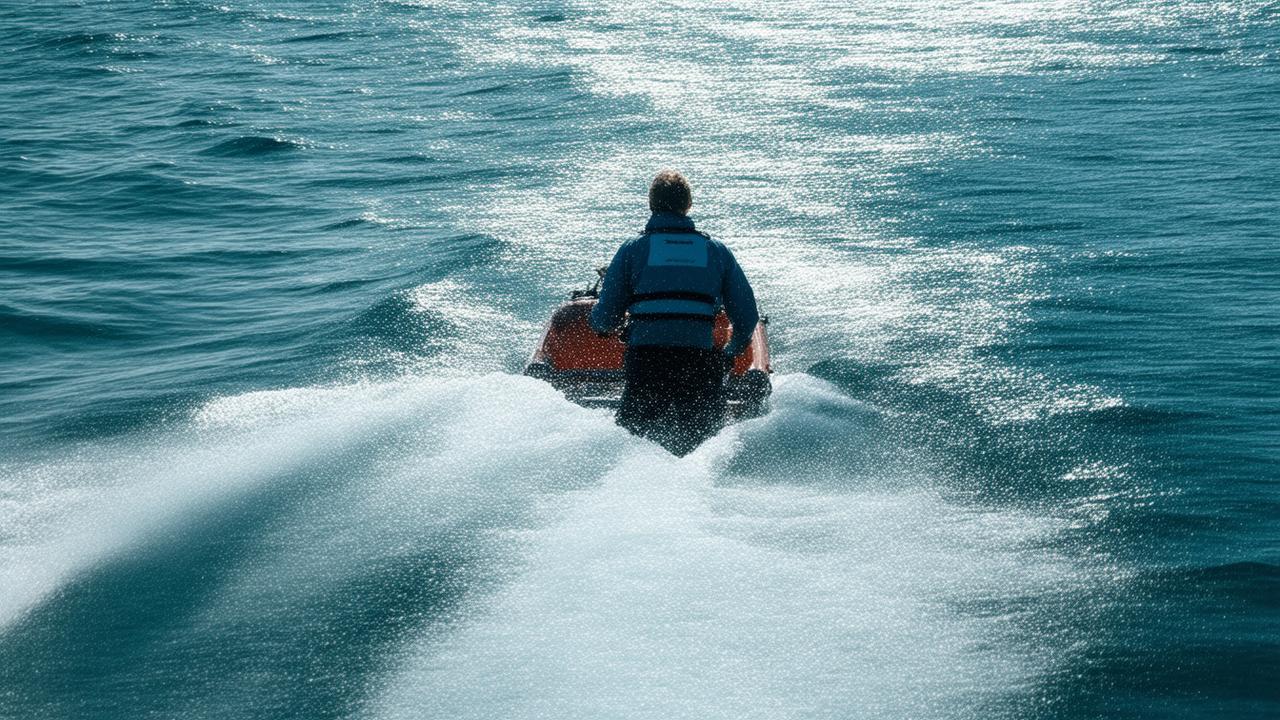
The lifeguard sees it first—just a thin, slow-moving line on the tablet screen, a soft pulse of color sliding along the coastline. Out beyond the bobbing shapes of swimmers and rented paddleboards, a tagged shark is making its way along the outer sandbar, unhurried, invisible in the glitter of mid-morning waves. No one on the crowded beach notices the subtle tightening of the lifeguard’s jaw, or how their eyes flick from the screen to the horizon and back again. But within minutes, a quiet choreography begins: a whistle blast, a calm announcement over the loudspeaker, a few red flags raised at the waterline. Parents coax their kids out of the surf. A pair of surfers paddle closer to shore. There’s no panic, because there’s no surprise. The shark was expected. Data said it might come.
The Coastline Is Talking, and We’re Finally Listening
On summer days, popular beaches carry a particular soundtrack: seagulls, squealing kids, the slosh of waves against inflatable unicorns. But lately, there’s another layer to the coastal soundscape—soft electronic pings from underwater receivers, faint buzzes from satellite tags, the quiet murmur of tablets and radios up in the lifeguard towers. The ocean, in its own language of movement and migration, is suddenly speaking in data points.
For decades, shark safety at swimming beaches relied on a kind of seasonal folklore. “They’re more active at dawn and dusk.” “They come closer when seals are around.” “They don’t like murky water.” Some of that is true, some overblown, and much of it only half useful when a shoreline is packed with thousands of people and the tides are pulling them in all directions.
Now, new shark tracking programs are turning that folklore into something far more precise. Acoustic and satellite tags attached to sharks—often great whites, tiger sharks, or bull sharks—are feeding real-time movement data to researchers and, increasingly, to the people tasked with keeping swimmers safe. It’s changing not just how officials respond to shark sightings, but how they plan for an entire season of beach safety.
Under the waves, small listening stations sit strapped to buoys or anchored to the seafloor. Each time a tagged shark passes within range, the station picks up its unique ID, like a toll booth logging license plates. Some of those stations are now connected directly to lifeguard towers or coastal management centers, delivering near real-time alerts that a known shark has entered the neighborhood.
How Sharks Turned into Moving Weather Systems
One marine biologist I spoke with described sharks on her local coast the way a meteorologist talks about summer storms. “They have patterns and seasons. Some individuals are like thunderstorms—quick and intense. Others are more like long, slow weather fronts.” When enough data is collected, those patterns start to show clearly on digital maps: favorite feeding corridors, seasonal hotspots, migration timing, offshore detours that rarely intersect with swimmers.
In places where this tracking has been going on for years, beach managers can now look at the calendar and tides with an almost weather-like confidence. They know, for example, that between mid-July and late August, juvenile white sharks tend to cruise within a kilometer of certain sandbars in the late morning. Or that after a big run of baitfish, a cluster of tags starts lighting up just beyond the wave break for three or four days.
The result is that sharks, once considered unpredictable visitors, are starting to look more like moving systems to be monitored and planned around. Beach towns are using shark data the way they’ve long used rip current forecasts or UV indexes: to decide how many lifeguards to put on duty, whether to deploy drones, when to schedule surf camps, or whether to close certain sections temporarily after repeated close passes.
| Shark Tracking Insight | How It Changes Beach Safety |
|---|---|
| Hourly movement patterns near shore | Adjusting swimming hours or advising against dawn/dusk swims when activity is highest |
| Seasonal migration routes and timing | Scheduling extra lifeguards, patrols, and drone flights during peak shark presence |
| Preferred feeding hotspots | Creating “no-swim” or “surf-only” zones near seal colonies or baitfish aggregations |
| Individual shark behavior (bold, shy, coastal, offshore) | Tailoring responses—for example, repeated close passes by one individual might trigger short-term closures |
| Overlap with popular recreation areas | Relocating swim lines, race courses, or surf competitions to lower-risk areas |
Listening Towers, Flying Cameras, and a Quieter Kind of Alert
On certain coasts now, a lifeguard’s gear list is starting to sound like something from a science fiction film: binoculars, rescue tube, radio, tablet, drone. The old model of shark safety was mostly reactive: someone saw a fin, word spread, and the water emptied in a blur of splashing and shouts. The new model, powered by tracking data, is more of a slow exhale than a gasp.
A tagged shark pings a receiver as it passes a headland a few miles up the coast. The data jumps to a central system and, almost instantly, to the screen in the lifeguard tower at your beach. A small icon appears—Shark #217, 2.3 kilometers north, traveling south at 3 kilometers per hour. No need for sirens yet. But maybe the patrol drone goes up, its camera sweeping the blue-green gradient where the sandbar drops away.
From the drone, the shark is a sharp, grey shape rolling along the edge of a darker band of water. It doesn’t deviate toward the clusters of swimmers; it stays fixed on its own route, skirting the commotion like a commuter ignoring a crowded festival. The lifeguards watch the feed and keep an eye on the shark icon as it moves parallel to the beach, then veers offshore and fades into deeper blue. No closure needed, just a note in the daily log: Tag 217 passed outside main swim area. No interaction observed.
When the shark does come too close—a recurring visitor that’s grown bold in shallow water, or a sudden convergence of seals, baitfish, and surfers—the response is more tailored than ever. Instead of shutting down an entire coastline, data makes it possible to close a single cove, a single swimming lane, or a stretch of beach for just an hour or two. The rest of the shore stays open. Vacation days aren’t ruined; businesses don’t lose a whole weekend’s income. The ocean remains accessible, with just a slice of it temporarily off-limits for reasons that can now be explained with evidence rather than rumor.
From Fear to Familiarity: What We’re Learning About Sharks
Spend enough time watching shark tracks on a map, and something surprising happens: the icons begin to feel less like villains and more like individuals with routines and rhythms. Shark #104 comes close after every big swell. #338 likes that one sandbar and nowhere else. #502 passes by twice a year, almost to the day, as if guided by an invisible calendar stamped into its bones.
This shift—from mystery to familiarity—matters for safety in ways that go beyond logistics. Public fear has always been one of the hardest currents to manage. A single dramatic headline about a rare shark bite can overshadow a decade of quiet, uneventful summers. But as communities get accustomed to seeing shark data displayed on public boards or local apps, the narrative starts to change.
Instead of, “There are sharks everywhere,” the story becomes, “Sharks use this stretch of water mostly in September, usually farther offshore, but sometimes closer when baitfish are running.” That level of specificity doesn’t erase risk, but it reframes it. Danger goes from feeling random and omnipresent to something that can be watched, understood, and navigated—just like lightning storms or rip currents.
Some beaches now hold pre-season community nights where scientists and lifeguards stand together in front of animated maps, pressing play on a year’s worth of shark movements. The room watches colorful tracks loop and zigzag along the coast. Kids squint at the screen, tracking their favorite shark the way they’d follow a migrating bird. Parents ask practical questions: “So, is morning or afternoon better for swimming?” “What happens if one of those gets right into the shallows?” The answers are no longer guesses. They’re backed by thousands of recorded passes, time-stamped and tide-matched.
Planning Summer with Sharks in Mind
For coastal towns that depend on tourists and local families crowding their beaches, planning for shark season now looks a lot like planning for anything else that comes with summer. The difference is that, until recently, sharks were treated as an unpredictable wildcard—something you simply hoped wouldn’t appear on your busiest weekend.
With robust tracking data, beach managers can sketch out a season with more confidence. If the last five years show that shark activity spikes around the same time as the annual music festival, maybe that’s the year to invest in extra drone patrols and a backup swim area farther down the coast. If a new cluster of tagged sharks has been favoring a previously quiet cove, maybe that’s where new signage goes up and where junior lifeguard camps are moved slightly inland.
➡️ Nightlife venues are adjusting as sober socialising becomes a mainstream choice
➡️ Farmers are experimenting with regenerative grazing to rebuild soil after decades of depletion
➡️ Ocean chemistry data is pointing to faster acidification along sensitive marine habitats
➡️ Fashion labels are returning to wool as demand grows for durable climate smart fabrics
➡️ Archaeologists are returning to old shipwreck sites with new imaging technology
➡️ Households are embracing minimalism as rising costs challenge traditional consumer habits
➡️ Space startups are expanding beyond satellites as deep tech exports gain momentum
In some regions, this planning has led to redesigned swim zones—roped-off areas nudged away from known shark corridors, floating platforms moved closer to shore, kayak routes adjusted to avoid deep trenches that sharks favor. The small shifts rarely register with the average beachgoer, who just sees that the buoys seem a little closer this year. But under the surface, the alignment is different: people and predators are given more room to pass by each other without overlap.
There’s a deeper psychological planning happening, too. When communities know sharks are part of the seasonal rhythm, safety messaging can be woven into everyday life instead of rushed out in panicked bursts after an incident. Schools near the coast teach kids how to read shark flag systems the same way they teach them about sunscreen and hydration. Surf instructors include a short, calm briefing about local shark patterns before handing over boards. It all becomes part of a shared understanding that this isn’t just “our” beach. It’s our section of a much larger, moving, breathing ecosystem.
Looking Ahead: Smarter Oceans, Safer Shores
As shark tracking technology gets more sophisticated, the picture is only going to sharpen. Smaller tags, longer battery life, and better networks of receivers promise to fill in gaps we still have in understanding how sharks move and why. One day, you might check a coastal “marine conditions” report and see, alongside surf height and water temperature, a simple line: “Shark activity: moderate offshore, low in designated swim areas.”
Of course, even the best data won’t erase all risk. The ocean has always been a place where certainty dissolves with each wave. But the new era of shark tracking is shifting the balance—from reacting in fear to planning with knowledge; from seeing sharks as intruders to recognizing them as residents whose routes can be mapped and respected.
Back on that busy summer beach, the lifeguard’s tablet screen dims in the bright sun. For now, the tagged sharks are distant lines sliding along the far edge of the map. Kids shriek as a cold wave smacks their knees. A surfer paddles out toward the break, glancing once at the horizon. The flags flutter quietly in the onshore breeze. The water is open, but it is no longer unknown. Someone is listening, and the coastline is, at last, learning to answer.
FAQ
Are beaches actually safer because of shark tracking?
Yes, in many areas. Tracking allows lifeguards and coastal managers to detect patterns, anticipate periods and locations of higher shark activity, and respond more quickly when tagged sharks approach swim zones. It doesn’t eliminate risk, but it makes decisions about closures, patrols, and swim areas more informed and targeted.
Does tracking mean there are more sharks now than before?
Not necessarily. In many cases, tracking simply reveals sharks that were always present but rarely seen. The increase is in our awareness, not always in their numbers. Long-term data sometimes shows stable or even declining populations, depending on the species and region.
Can shark tags hurt the animals?
Modern tags are designed to minimize impact. Scientists use carefully tested methods to attach them, often to the dorsal fin, where they don’t impede swimming or feeding. Tagging is usually done under strict animal welfare protocols and reviewed by ethics committees.
Why don’t beaches just use nets or culling instead of tracking?
Nets and culling can kill sharks as well as dolphins, turtles, and other marine life, and they often don’t guarantee safety. Tracking, combined with surveillance and smart planning, aims to reduce risk while preserving marine ecosystems and the important role sharks play in them.
How can beachgoers use this information to stay safer?
Visitors can pay attention to local advisories, shark flag systems, and any apps or notice boards that display shark activity information. Avoid swimming near seal colonies, schools of baitfish, or at dawn and dusk if local data shows high activity during those times. Ultimately, informed choices and listening to lifeguards remain the most effective personal safety tools.





