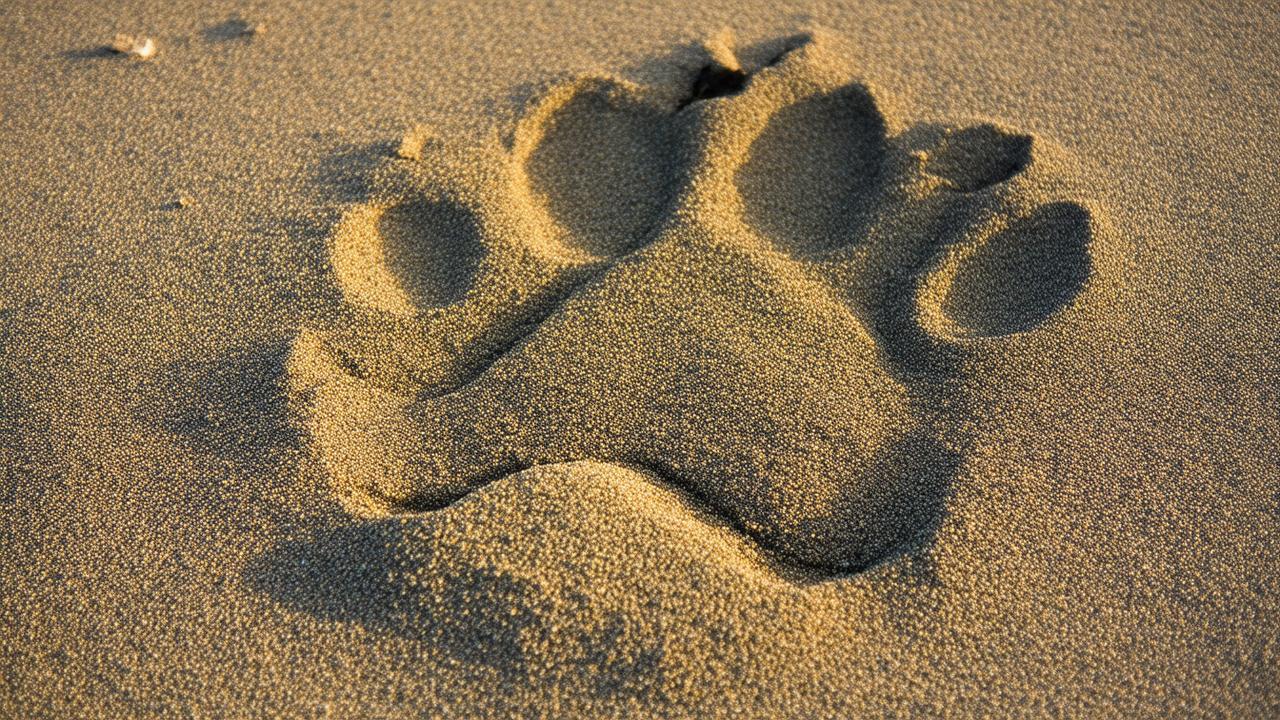
The first thing you notice is the sound. Not the roar of engines or the shrill of excited human voices, but the shuffle of hooves in dust, the thrum of wings above a mangrove, the wet exhale of a whale at the surface. After two quiet years, the animals never stopped moving. We did. Now, as the world is traveling again—with a kind of pent-up urgency that feels almost wild in itself—guides, lodge owners, and tour captains are asking a different question: not just how to bring people back, but how to bring them closer without crossing the line.
A Return, But Not to “Normal”
On a cool, salt-scented morning off the coast, a small boat drifts with its engine whispering in neutral. A few years ago, the captain might have idled closer to the whales, chasing that perfect shot—tail flukes framed against sunrise, tourists leaning over the rail, phones up like a forest of small, glowing totems.
Today, everyone on board is sitting back, cameras resting in their laps. The whales are there, enormous shadows just below the rippling skin of the ocean, surfacing at their own pace. The difference is invisible in photos, but palpable in the silence: the boat is farther away. The rules have changed.
Across the globe, from Botswana’s floodplains to the rainforest edges of Costa Rica, tourism operators are quietly rewriting the script of wildlife encounters. The pandemic cracked open an uncomfortable truth. With fewer vehicles and boats, fewer hands reaching out, fewer drones overhead, many animals changed their patterns. Skittish species emerged in places they’d long avoided. Beaches emptied of loungers became nesting grounds again. Forest paths were once more the domain of paw, hoof, and claw.
As visitor numbers rebound—sometimes surpassing pre-2020 levels—the industry stands at a threshold. Go back to the old habits, or seize the chance to craft something more careful, more spacious, more respectful. Increasingly, those who work closest with nature are choosing the latter.
From Spectacle to Stillness
In a scrubby savanna in South Africa, a guide named Lindiwe folds her binoculars and whispers to the guests in her open vehicle, “We wait here.” Ahead, a pair of rhinos graze, dust ghosting off their broad backs like smoke. Before, she might have edged the vehicle closer, jostling for the perfect angle with other operators. Now there’s an unspoken pact among the local lodges: fewer vehicles at a sighting, more distance, more time.
The change began when the lodges were empty. Guides who stayed on as caretakers found themselves watching the same animals, again and again, without the pressure of a radio crackling with requests for sightings. They started to see patterns: the way a mother rhino used a specific acacia tree as a scratching post, how a nervous herd of antelope shifted their grazing route when disturbed too often. Those quiet years became a field course in animal tolerance.
When visitors finally returned, something felt wrong about crowding back in. The most forward-thinking operators began trading spectacle for stillness. Instead of rushing between “tick-box” moments—lion, leopard, elephant, done—they started carving longer pauses into their drives. They nudged guests to notice smaller things: a dung beetle laboring across the track, the brief, electric flare of a lilac-breasted roller taking flight.
As one lodge owner put it to her staff, “We’re not selling sightings; we’re offering time in nature. Those are different products.” It’s the sort of quiet evolution that doesn’t make glossy brochures, but it’s changing how people feel when they step off the vehicle at the end of the day: less like spectators of a show, more like visitors in someone else’s home.
Setting New Boundaries in Old Places
Boundaries are rarely beloved. They tell us where we can’t go, how far we must stay back. But for wildlife, lines on maps and rules in briefing folders can mean the difference between a thriving population and a stressed one.
In a coastal town that once prided itself on “up-close” dolphin encounters, operators now begin each trip with a frank conversation. No more swimming directly through pods, no more chasing with high-speed boats, no more touching. Instead, the boats drift at a respectful distance while dolphins decide whether to approach. Sometimes they do. Sometimes they don’t.
The early months of this transition were rocky. Some travelers protested: hadn’t they paid for the once-in-a-lifetime selfie? There were refunds, angry emails, social-media rants. But something else happened too. The travelers who stayed started reporting a different kind of awe. They witnessed dolphins surfing their own waves, not the wake of an engine. They listened to the water, not only to their own voices.
Behind the scenes, collaboration has become a survival skill. National parks, private guides, community conservancies, and small local businesses sit around wooden tables and share what they’re seeing: nest failures in a popular turtle-watching bay, changes in the flight paths of birds near busy drone-launch sites, unusual stress behavior in primates exposed to too much human noise.
From these gatherings, new codes of conduct emerge—some written into law, others enforced by social pressure. A guide who edges in too close on a popular game drive road might get a quiet warning over the radio. A dive company that ignores agreed-upon limits on shark baiting might find themselves gradually cut out of cooperative marketing or research partnerships.
Slow Travel, Fuller Encounters
“We don’t guarantee sightings,” reads a small, almost defiant sign at the reception desk of a forest ecolodge. The manager smiles when asked about it. “We used to,” she admits. “Or at least, we implied it in the way we spoke. We’d say, ‘We’ll find the orangutans,’ as if they were items in a store.”
Now, the lodge has redesigned its entire experience around the idea that wildlife encounters are a privilege, not a product. Guests stay a little longer on average—a shift actively encouraged by package pricing. Instead of three frantic days chasing a checklist, they might spend five or six days wandering the same trails, learning how to read the forest’s rhythms.
This slower pace does something subtle but powerful. When you spend enough time in a place, a missed sighting isn’t a failure—it’s a chapter in a larger story. Maybe it rained heavily and the animals stayed hidden. Maybe the fruiting trees are active further uphill. Guests start asking different questions: not “Where are the animals?” but “Why do they move the way they do?”
For operators, slow travel isn’t only a philosophy; it’s a protective mechanism. Fewer, longer-staying guests mean reduced pressure on trails and viewing platforms. Boats leave the harbor less often. Vehicles make fewer circuits. The land and water get micro-moments of rest.
In return, those who do come often leave with richer stories. They might not have a video of a leopard’s full-body yawn, but they’ll remember the blue fog of early morning in the forest, the distant bark of a deer, the way their own impatience faded into something like attentiveness.
Technology: Not the Villain, Not the Savior
It’s easy to blame the tech—drones buzzing over nesting sites, camera flashes that slice through darkness like lightning, GPS tags posted in real time on social media. But tools are rarely good or bad by nature; it’s the intention—and the restraint—behind them that matters.
Some operators are quietly harnessing technology to reduce disturbance. In busy marine areas, for instance, radar and AI-assisted software help boats detect and avoid sensitive animal groups before they even breach. In dense forests, long-lens camera traps at research stations capture intimate portraits of shy species without a single bootprint near their dens.
At the same time, there’s a growing movement to separate “being there” from constant documentation. On certain safaris and guided walks, guests are invited—politely but firmly—to put their phones away during key moments. Some lodges even offer “camera-free hours,” explaining that bright screens at night can alter animals’ behavior, especially nocturnal species.
Paradoxically, these limits can make the encounter feel more intense. Without a lens between you and the moment, your awareness sharpens. You notice the tiny, nervous flick of a monkey’s tail, the change in the wind that carries the low musk of elephant. You also notice your own heartbeat.
For operators, technology remains a balancing act. GPS helps guides avoid repeatedly crossing the same sensitive areas. Digital booking platforms allow better control of daily visitor numbers. But many are learning that the most important innovation might be the simplest: the courage to say “no” to certain requests, even when it means forfeiting a sale.
Local Voices, Shared Guardianship
In many of the wild places tourists most long to see, someone’s great-grandparents once hunted, fished, or foraged where today’s visitors raise binoculars. For decades, those local communities were often shut out of decisions about tourism, treated as labor rather than partners.
That, too, is changing. As demand for wildlife encounters has surged back, more operators are aligning with community-led initiatives. They’re inviting local knowledge holders onto planning committees, sharing revenue transparently, and building joint rules for when, where, and how visitors can approach wildlife.
On one island known for its nesting seabirds, it was the fishers who first noticed that too many flashlights on the beach disoriented chicks on their maiden flights. Now they co-guide the nighttime walks, gently steering guests to darker vantage points and explaining why a little less visibility for humans can mean a much higher chance of survival for a bird.
➡️ Everyday language is shifting as migration reshapes identity in suburbs and workplaces
➡️ Defence planners are recalibrating strategy as submarine procurement reshapes regional security
➡️ Old maps and coastal records are changing the story of early contact in the north
➡️ Portion sizes are shrinking in supermarkets while prices hold steady on the shelf
➡️ Ice shelf monitoring is intensifying as Antarctic systems show worrying instability
➡️ Native ingredients are becoming everyday staples in kitchens and fine dining alike
➡️ Mining towns are grappling with sudden growth as critical minerals attract global investors
These collaborations create a different kind of narrative for visitors. Wildlife isn’t just part of a distant, pristine “nature” separate from human life. It’s woven into local economies, songs, taboos, and stories. When a guide points out a bear’s claw marks on a tree and follows it with a tale their grandmother told about respecting the forest, ethical guidelines stop feeling like rules on a handout and start feeling like part of a living culture.
Tourism operators who embrace this shared guardianship find that it resonates deeply with guests. People come away not just with memories of animals, but with a sense of having briefly joined a community of care—a web of relationships that existed long before they arrived and will continue long after they depart.
A New Kind of Wild Memory
What, then, does a wildlife encounter look like in this reimagined era of tourism?
Sometimes it’s spectacular: a breaching whale silhouetted against a bruised-purple sky, a leopard melting out of tall grass at dusk, a sea turtle heaving herself up a moon-brightened beach. But just as often, it’s understated: the whisper of bat wings in a jungle canopy, a line of ants ferrying leaf fragments down a tree, the split-second eye contact with a fox before it turns and is gone.
As operators rethink how they frame and facilitate these moments, they’re leaning into what can’t be bought or guaranteed. Uncertainty. Chance. The possibility that the animal won’t appear—and that the experience can still be meaningful.
In practice, this rethinking shows up in small but telling ways. Briefings that used to focus on safety and schedule now make room for ethics and empathy. Guest questionnaires quietly ask not only “What do you hope to see?” but “How close do you think is too close?” Guides are trained not just in identification, but in interpretation: connecting the dots between a single sighting and the larger ecological story.
Many visitors, weary of crowded cities and curated digital lives, are ready for this. They’re less interested in “collecting” animals, more drawn to feeling part of something unpolished and real. They understand, at least intuitively, that true wildness isn’t a backdrop to human adventure; it’s a reality that exists with or without us, and that we can damage far more quickly than we can repair.
In this shared, fragile space, tourism’s role is shifting—from consumer to caretaker, from front-row audience to respectful guest in a home that isn’t ours. The encounters that stay with us longest may be the ones where we remember not how close we got, but how carefully we stayed back, allowing a whale to choose her path, a bird to choose its branch, a herd to choose its shade.
How Wildlife Tourism Is Quietly Changing: At a Glance
Here’s a compact look at how tourism operators are reshaping wildlife encounters as travel surges back:
| Before | Now |
|---|---|
| Chasing close-up sightings and “guaranteed” encounters | Emphasizing respectful distance and natural behavior |
| High visitor volume, short stays, checklist itineraries | Fewer visitors, longer stays, slower and deeper experiences |
| Individual operators working in isolation | Collaborative codes of conduct and shared monitoring |
| Technology used mainly for marketing and real-time posting | Tech applied to reduce disturbance and manage pressure |
| Communities as background labor | Communities as co-designers and guardians of wildlife experiences |
In the end, the most powerful shift isn’t in policy documents or marketing slogans; it’s in the stories travelers bring home. The ones that begin not with “You won’t believe how close we got,” but with something quieter:
“We waited. We listened. And for a moment, the wild carried on around us, almost as if we weren’t there at all.”
Frequently Asked Questions
Why are tourism operators changing how they offer wildlife encounters?
The pandemic pause revealed how sensitive many species are to human presence. As travel rebounds strongly, operators have seen that returning to old, high-pressure practices risks stressing wildlife and degrading habitats. They’re shifting toward models that protect animals, support local communities, and still offer meaningful, authentic experiences for visitors.
Does keeping a greater distance make wildlife encounters less special?
Often, it does the opposite. When animals behave naturally—feeding, socializing, resting—rather than reacting to humans, encounters feel more authentic. Many travelers report deeper, more emotional experiences when they observe from a respectful distance and give animals space to choose whether to come closer.
Will these new practices make wildlife trips more expensive?
In some cases, yes. Limiting group sizes and visitor numbers can raise costs per person. However, many operators balance this by encouraging longer stays and offering richer, more educational experiences. Travelers tend to receive more value in terms of learning, connection, and memory, even if they see fewer “big moments.”
How can I be a more responsible wildlife tourist?
Ask operators about their wildlife-watching guidelines, group sizes, and partnerships with local communities. Respect distance rules, avoid touching or feeding animals, keep noise low, and limit flash photography or bright screens at night. Choose tours that prioritize animal welfare and habitat protection over guaranteed close encounters.
Are wildlife encounters still safe for animals with visitor numbers rising?
They can be—if managed carefully. Strong regulations, well-trained guides, strict caps on visitor numbers, and community involvement help keep encounters safe for wildlife. The current shift among tourism operators is precisely about putting these safeguards in place so that growing demand doesn’t translate into growing harm.





