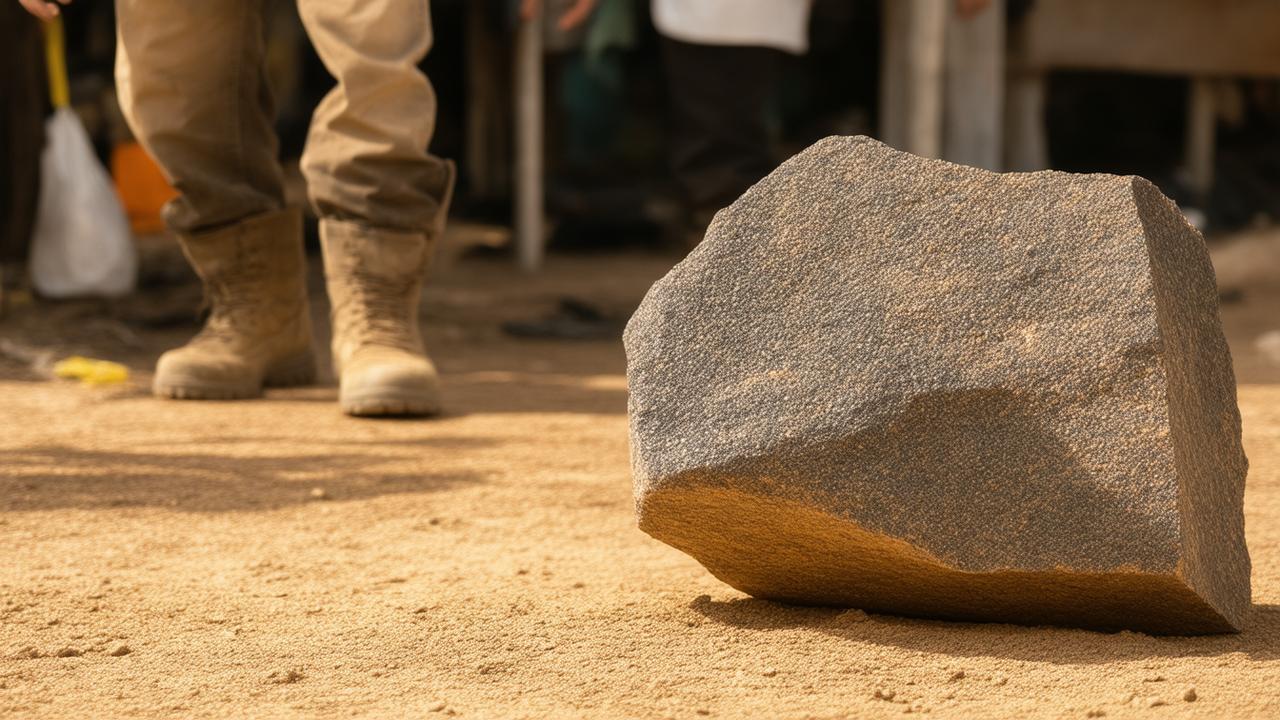
The first thing you notice is the dust. It hangs in the air like a rumor, a fine red film that settles on windshields, porch rails, and the backs of young miners lining up for coffee at six in the morning. Engines idle in the chill before dawn, their low growl folding into the hum of a town that, until recently, wasn’t supposed to be awake anymore. This was a place people used to pass through on their way to somewhere else. Now, they come here on purpose—with suitcases, contracts, high-vis gear, and dreams of lithium, cobalt, nickel, graphite, and rare earths buried in the hills.
The New Gold Rush Without the Glitter
In many ways, this new era of critical minerals feels like a gold rush with fewer pickaxes and more spreadsheets. The trucks no longer carry sacks of ore lashed with rope; they haul sealed containers tracked by satellite. Investors don’t roll into town with whiskey on their breath and cash in their boots; they arrive with battery market forecasts, ESG briefings, and flights back to London, Shanghai, or Sydney.
Yet the energy—raw, taut, uncertain—is unmistakable. Ask anyone leaning on the bar at the only pub in town on a Friday night, and they’ll tell you: things are happening.
For decades, many mining towns were ghost stories in slow motion. Their economies rose and fell with the price of coal or iron ore, swelling in booms, shrinking in busts. Then came the global pivot toward clean technology: electric cars, massive battery farms, wind turbines, solar panels, and the invisible web of transmission lines and data centers that feed the modern world. Behind all that green promise lurks an old truth: you still have to dig stuff out of the ground.
Geologists had known for years that certain forgotten deposits of lithium, niobium, manganese, and rare earths lay beneath scrubby hillsides and quiet valleys. What changed was the world’s appetite. Suddenly, those sleepy ridges contained “strategic assets.” Governments drafted critical minerals strategies; companies raced to lock in supply. And out in the dust and heat, small towns found themselves in the path of a global scramble.
“We Weren’t Ready for This”
In one such town—call it Red Valley, though it could be anywhere from the Australian outback to the high desert of Nevada or a windswept plateau in South America—population signs at the roadside are already out of date. Locals joke that you could double the number every six months and still underestimate it.
“We weren’t ready for this,” admits Ellie, who runs the general store that used to close at five sharp. Now her lights burn late into the night. She sells everything from instant noodles and sunscreen to steel-toed boots and SIM cards. Construction workers crowd the aisles, radios crackling from their belts. Behind the register, a handwritten sign reads: No housing available. Don’t ask.
Housing, more than anything, defines the new frontier of critical minerals. When the first exploration teams arrived, they squeezed into motels, campgrounds, and spare rooms. Then came the drill rigs and the engineers, followed by full-time workers and contractors. Rents doubled, then tripled. Long-term residents who once paid modest sums for small weather-beaten homes suddenly found themselves staring down city-level prices.
“My landlord could make more renting to the mine,” says Carlos, a mechanic whose family has lived here for three generations. “You can’t blame him. But where are we supposed to go?”
Where the Boom Outruns the Blueprint
Town councils and local planning departments, often understaffed and overworked, are trying to keep pace with a demand curve that feels like a vertical line. There are zoning meetings that stretch late into the evening, maps spread out across folding tables, and arguments over where to put temporary worker camps versus permanent housing.
At the same time, mayors are fielding calls from national governments and multinational companies. A project that once seemed far off—a line item in a mining company’s “future assets” presentation—is now on every political desk labeled “urgent.” Critical minerals, after all, are no longer something only miners talk about. They’re the bones of entire climate pledges. Without them, there are no affordable electric vehicles, no grid-scale storage, no fast-tracking away from fossil fuels.
Yet on the ground, urgency looks far less glossy. It’s traffic jams on roads built for a quieter era. It’s primary schools scrambling for portable classrooms as new families arrive. It’s hospitals hiring travel nurses because no one can afford to live nearby. And it’s the older residents, who remember tougher, slower times, watching the town morph in ways they never imagined.
Dust, Data, and the Daily Life of a Boomtown
Walk Red Valley’s main street at midday and you can see the collision of worlds in real time. The bakery—previously kept afloat by pensioners and passing tourists—now does a roaring trade in pre-dawn meat pies and takeaway coffees. Next door, a small coworking space has sprung up, its glass walls reflecting the faded façade of the old post office.
Inside, consultants on short-term contracts balance laptops on reclaimed timber desks, video-calling colleagues across continents. Outside, a line of utes and pickup trucks bearing numbered mine stickers crowd the curb. Somewhere in the distance, a blast echoes—a reminder of why everyone is really here.
It’s here, in the mixing of the local and the global, that the human scale of the transition comes into focus. The battery inside a car in Berlin, or the magnets inside a wind turbine off the coast of Scotland, feel impossibly far away. But in a mining town, they’re as close as the mud on someone’s boots.
Local governments and community groups are acutely aware they’re now at the center of something much larger than themselves. They’re also aware this has happened before, and not always with happy endings. Old photographs in the town museum show black-and-white crowds outside shafts that later shut down, leaving rusting headframes and shattered livelihoods.
People here have learned to ask: How long will this last? And what will be left when it’s over?
Counting the Costs and the Promises
To some, these new projects are lifelines. To others, they’re ticking clocks. For many, they are both at once—a promise wrapped around a warning. The table below captures the contrast that residents discuss over kitchen tables and council benches alike.
| Aspect | Opportunities | Challenges |
|---|---|---|
| Local Economy | New jobs, higher wages, business growth, increased tax revenue | Inflation, boom–bust cycles, dependence on single industry |
| Housing | Incentives for new construction and infrastructure upgrades | Rent spikes, displacement of long-term residents, overcrowding |
| Social Fabric | New cultures, skills, and services; more activities and amenities | Strain on schools, healthcare, and services; community tension |
| Environment | Chance to fund restoration, monitoring, and cleaner mining tech | Land disturbance, water stress, habitat loss, long-term impacts |
| Long-Term Legacy | Infrastructure, skills base, diversified local industries | Abandoned sites, unemployment if demand drops, social scars |
In community halls and school gyms repurposed for town meetings, the same topics come up over and over: water security, Indigenous land rights, fly-in fly-out work arrangements, benefits agreements, and whether local youth will have a future here that isn’t tied to the next commodity curve.
Land, Memory, and the Price of Transition
Outside town, where the asphalt ends and the dirt tracks begin, the mines themselves spread like geometric puzzles over the landscape. Haul roads are etched into hillsides; tailings storage facilities rise where there was once only scrub. On still days, a haze of fine particles hangs above pits, diffusing the light in a way that’s almost beautiful—if you forget what you’re looking at.
For Indigenous communities and long-term residents, the land is more than a backdrop to an economic story; it’s a living archive of memory. Old route markers, seasonal waterholes, gathering sites, and burial grounds lie within or near concession boundaries. Negotiations around access, compensation, and stewardship can be fraught, layered with histories of displacement and marginalization.
Some companies are trying to rewrite the script: incorporating traditional ecological knowledge into mine planning, engaging in early consultation, setting aside no-go zones, and drafting joint management agreements. Others still treat engagement as a legal checkbox. The difference between those approaches will shape whether these mining booms become stories of shared benefit or fresh chapters of extraction without consent.
➡️ East coast councils are rewriting heat plans as pavement temperatures climb year after year
➡️ Ancient rock shelters in the Kimberley are forcing new debates about heritage enforcement
➡️ Seawall upgrades are accelerating as coastal communities brace for stronger storm surges
➡️ Small coral recovery zones are giving reef scientists a rare moment of cautious optimism
➡️ Coffee roasters are quietly adjusting blends as climate shocks disrupt bean supply lines
➡️ Public health campaigns are shifting tone as vaccine confidence becomes more uneven
➡️ Loneliness is being treated less as a feeling and more as a measurable health threat
The Hidden Infrastructure of a Battery
When people talk about a “just transition” to clean energy, what they often picture are solar panels on tidy rooftops and gleaming wind farms offshore. It’s harder to picture the tailings dam at the end of a dusty road, the diesel tanks that power the giant trucks, the cafeteria feeding hundreds of workers on rotating shifts.
Yet that is precisely where the transition lives and breathes—in conveyor belts and crusher plants, in processing facilities that separate out the elements on which our low-carbon ambitions now rest. For mining towns, the word “critical” cuts both ways. These minerals are critical for climate goals, yes. But the decisions made here are also critical for the people who must live with the consequences long after the last excavator crawls away.
Some regions are experimenting with conditions on licenses: mandating value-added processing locally, requiring companies to fund retraining programs and environmental monitoring long after closure, insisting on transparent community benefit agreements. Done well, such measures can help turn a volatile boom into a foundation for something sturdier. Done poorly—or not at all—they risk entrenching the familiar pattern of take, profit, and leave.
Trying to Build a Future While the Ground Shifts
Back in Red Valley, the school parking lot is full of vehicles that didn’t exist when the town was founded. There are hybrid SUVs with corporate logos, dusty sedans with kids’ drawings taped inside, and a scattering of brand-new electric pickups—rolling advertisements for the very minerals being hauled out of the hills.
Inside the classrooms, teachers are juggling larger student numbers and a changing roster of surnames and accents. Some children will be gone in a year, moved on when their parents’ contracts end. Others may stay and become the next generation of locals, inheriting both the promise and the uncertainty of a town still tethered to the global appetite for what lies underground.
Community organizers talk about using this moment—this surge of revenue and attention—to invest in things that will outlast the mine: vocational training centers, small-scale renewable projects, tourism ventures, arts programs, and local agriculture. They know that the most sustainable mineral in any transition might be resilience: the ability of a place to absorb change and come out the other side with more options than it had before.
On a warm evening, as the sun slides behind the hills and the day shift swaps out with the night, the town feels suspended between eras. You can taste the metallic tang of dust on your tongue, hear the rumble of haul trucks in the distance, and see stars bright enough to remind you how small this town is on the map—and how enormous its role has become.
Somewhere, an investor scans a spreadsheet, an engineer optimizes a processing line, a consumer plugs in a car. The chain between them runs through places like this, where the ground has always been both a blessing and a question. As critical minerals pull global attention into forgotten corners of the map, mining towns are left to figure out how to live with that gaze, and how to turn a sudden rush into something resembling a future.
Frequently Asked Questions
Why are mining towns suddenly growing again?
Many mining towns sit atop deposits of critical minerals—such as lithium, cobalt, nickel, rare earth elements, and graphite—that are essential for batteries, electric vehicles, and renewable energy technologies. As global demand for these minerals surges, companies and investors are rapidly expanding exploration and production, bringing new jobs, workers, and capital into towns that were previously stagnant or declining.
What are “critical minerals,” exactly?
Critical minerals are raw materials that are economically important and at risk of supply disruption. They play crucial roles in modern technologies, from smartphones and wind turbines to electric car batteries and defense systems. Because many countries rely on imports for these minerals, securing reliable and responsible supply has become a strategic priority.
How does this growth affect local housing and cost of living?
Sudden economic booms often push housing demand far beyond what small towns can supply. Rents and home prices rise quickly as workers arrive, sometimes displacing long-term residents and low-income families. Basic goods and services can also become more expensive, increasing the cost of living and putting pressure on those not directly benefiting from mining wages.
Can mining for critical minerals ever be environmentally friendly?
No mine is impact-free, but practices can range from destructive to comparatively responsible. Better site selection, reduced water use, improved waste management, rehabilitation plans, and close engagement with local and Indigenous communities can all minimize harm. Some projects also integrate renewable energy on-site and stricter monitoring. The key issue is whether the rush for minerals outpaces these safeguards.
What happens to these towns when demand or prices fall?
If a town relies too heavily on one mineral or one company, it becomes vulnerable to market downturns, policy changes, or technological shifts. When prices drop or a deposit is exhausted, jobs can vanish quickly, leaving behind unemployment, empty housing, and environmental legacies. That’s why many communities and policymakers are trying to use current booms to invest in skills, infrastructure, and new industries that will endure after the last truck leaves.





