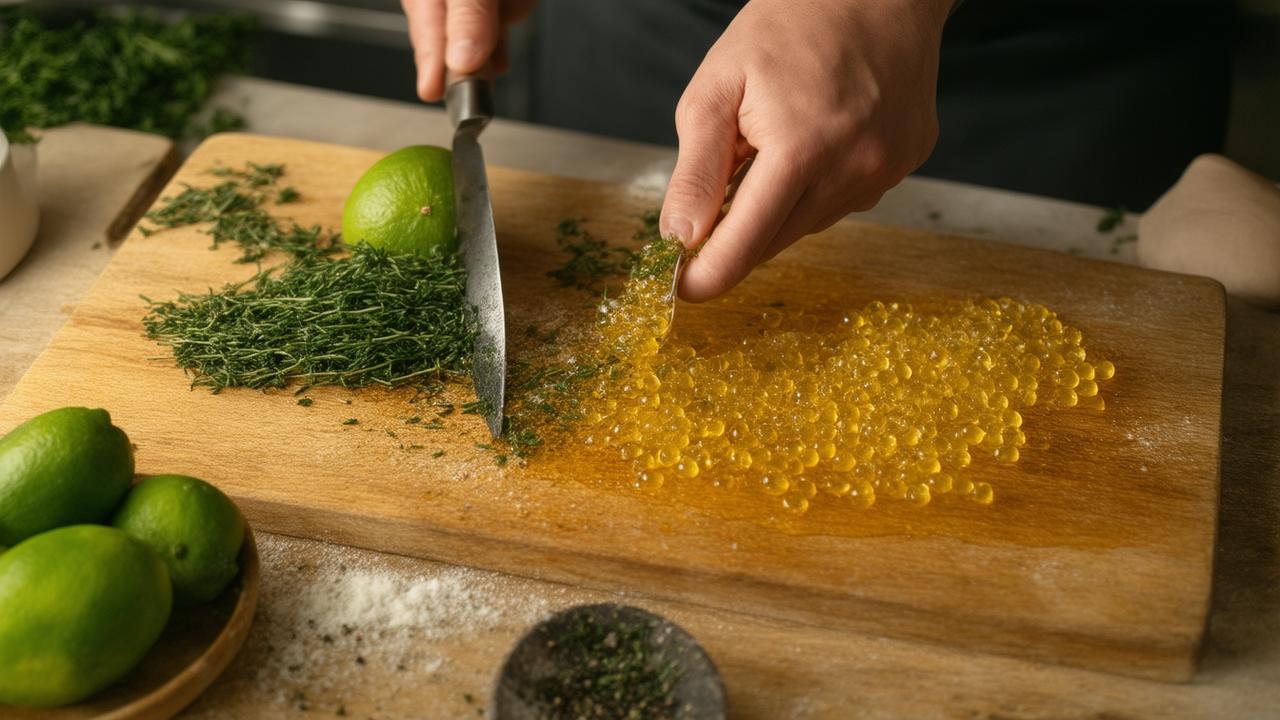
On a warm evening in Melbourne, the air inside a small laneway restaurant smells faintly of lemon and rain. A plate lands on the table with a soft clink: ruby-red kangaroo, fire-seared and rested, nestled beside a glossy puddle of Davidson plum jus. Scattered across the top, tiny green leaves of native river mint radiate a bright, peppery scent. None of it feels like a gimmick. It tastes like place, like country—vast and ancient and unexpectedly new.
A New Hunger for Old Flavours
For decades, Australian restaurant menus spoke with borrowed accents: French butter sauces, Italian ragù, Japanese sashimi, American smokehouses. The food was often excellent, but the sense of local identity was blurred around the edges, as if the country were borrowing someone else’s cookbook to tell its own story.
Now, something has shifted. Chef by chef, dish by dish, a quiet revolution is changing what it means to “eat Australian.” Finger limes pop like citrus caviar over oysters in Hobart. Wattle seed lends a coffee-and-cocoa warmth to tiramisu in Perth. In Brisbane, sorbets churned with native lilly pilly carry a perfume that feels like standing in a subtropical garden after rain.
Australia’s new appetite for native ingredients isn’t a fleeting trend; it is a reorientation. Cooks are no longer treating the continent’s bush foods as curiosities to be sprinkled on a plate for novelty. They are using them as core building blocks—foundations of flavour that define dishes from the ground up. And as they do, the nation’s restaurant menus are being rewritten, guided by Country and led increasingly by First Nations knowledge holders.
From Bush Tucker Sideshow to Centre Stage
For much of the 20th century, “bush tucker” occupied the fringes of mainstream Australian dining. Native ingredients were framed as survival food, tourist experiences, or garnish-level novelties. Recipes were passed around campfires or kept within communities, but they rarely crossed the threshold of white-linen restaurants.
That began to change as chefs, foragers, and Indigenous custodians started having deeper conversations. For some, it was sparked by a personal sense of disconnection from place—an awareness that their menus, no matter how refined, could be transplanted practically anywhere. What did it mean to run a restaurant in Sydney, Darwin, or Adelaide and barely speak the language of the land beneath their feet?
So they started to listen. They walked with Indigenous elders on Country, tasting leaves, nibbling seeds, smelling crushed bark. They learned that the sharp citrus notes of lemon myrtle could pierce through rich sauces; that the resinous character of strawberry gum could make dairy sing; that saltbush, with its silvery leaves and gentle salinity, could stand in for salt itself. Flavour profiles that had sat quietly in the landscape for millennia were suddenly stepping into the pass, ready for service.
Menus followed. Kangaroo, once relegated to the “exotic meats” section of supermarket freezers, appeared in delicate tartares dressed with native pepper berries. Barramundi was steamed with paperbark and anointed with a broth infused with anise myrtle. Even the drinks lists changed: cocktails scented with wattleseed bitters, shrubs made from quandong, sodas tinted with rosella flowers.
How Native Ingredients Are Shaping the Plate
Across the country, a new lexicon of flavour is being written. Instead of simply swapping parsley for river mint or lemon for finger lime, many chefs are redesigning dishes around the character of specific native ingredients. They are asking, “What does this ingredient want to be?”—and then building supporting roles around it.
| Native Ingredient | Flavour Profile | Typical Menu Use |
|---|---|---|
| Finger Lime | Sharp, zesty, citrus “caviar” | Garnish for seafood, desserts, cocktails |
| Lemon Myrtle | Intense lemon with herbal depth | Infusions in sauces, oils, ice creams |
| Wattle Seed | Nutty, roasted, coffee-like | Breads, desserts, spice rubs |
| Saltbush | Gentle, earthy salinity | Seasoning for meats, crackers, vegetables |
| Davidson Plum | Tart, winey, deeply fruity | Sauces, jams, glazes, sorbets |
In regional New South Wales, you might find a lamb shoulder rubbed with ground saltbush and smoked over river red gum, the meat carrying a whisper of the inland. In inner-city Sydney, a neat rectangle of cured kingfish may arrive under a drift of native sea succulents and tiny bursts of finger lime, each bite tasting like standing waist-deep in an estuary at dusk.
It is not only about flavour. Texturally, native ingredients bring surprises: the delicate pop of finger lime pearls, the gentle crunch of roasted wattleseed folded through brittle, the denser chew of kangaroo compared with beef. Aromatically, too, there is intrigue. Crush a leaf of lemon myrtle between your fingers and the scent is so bright it almost crackles—a reminder that this continent’s pantry has always been here, just underused.
Listening to Country, Respecting Knowledge
In the rush of excitement around native ingredients, an important question hangs over the pass: who gets to tell these stories, and who benefits? Increasingly, the most thoughtful restaurants are framing their use of native foods not as a discovery, but as a collaboration.
In many kitchens, recipes now begin far away from the stainless-steel bench, out on Country with Indigenous knowledge holders. Elder-guided walks introduce chefs to plants not as products, but as relatives within a living ecosystem—with roles, histories, and responsibilities attached. A shiny green leaf might be medicine, food, or both; a berry might be a seasonal signpost, appearing just as certain fish move along the coast.
These conversations shape more than menu items. They influence how ingredients are harvested, which suppliers are chosen, and how profits circulate back into communities. Some restaurants now highlight Indigenous-owned producers on their menus. Others host guest chef collaborations where First Nations cooks lead the design, telling stories of their Country course by course.
The language is changing too. Rather than simply listing “native herbs” or “bush spices,” many menus now name ingredients in Indigenous languages where appropriate, with permission. A diner might read about gubinge instead of just “Kakadu plum,” or bunya nuts alongside more familiar pine nuts. These names carry memory, geography, and culture into the dining room, asking guests to taste more attentively.
Beyond Fine Dining: Native Flavours in Everyday Eating
While high-end restaurants often lead the headlines, the shift towards native ingredients is quietly happening in more casual corners of the food scene as well. Cafés fold macadamia and wattleseed into granola. Breweries experiment with lemon myrtle pale ales. Bakeries sprinkle native pepper berries into pies that otherwise look like any classic country bake.
Street food markets now feature kangaroo skewers slicked with bush tomato glaze, and food trucks sling saltbush-dusted fries. In suburban backyards, home cooks are planting finger lime trees and native thyme, curious to taste the flavours they’ve seen celebrated on TV and in cookbooks. The notion of “Australian flavour” is starting to feel less like a generic barbecue sauce and more like a living spectrum of regional possibilities.
Importantly, many Indigenous-led enterprises are stepping into this space on their own terms, supplying restaurants and home cooks alike with native ingredients grown and harvested with cultural and ecological care. This adds another layer to the story: it’s not only what is being eaten that’s changing, but who controls the means of production and how land is treated in the process.
Growing a Sustainable Native Pantry
This nationwide appetite for native ingredients carries promise—and risk. Demand is surging for certain products: Kakadu plum, for instance, prized for its vitamin C content, or wild-harvested herbs with highly specific growing conditions. Without thoughtful management, the pressure on wild populations could become intense.
➡️ Why Australian psychologists are studying loneliness as a measurable public health risk
➡️ The surprising role of Australian wetlands in buffering floods and storing carbon
➡️ How Australia’s migration story is influencing modern identity and everyday language
➡️ Australia’s renewed interest in nuclear submarines is reshaping Indo Pacific strategic planning
➡️ What Australian historians now believe about the early contact period along the northern coast
➡️ How Australian supermarkets are quietly changing portion sizes without changing prices
➡️ Why Australian scientists are watching Antarctic ice shelves with growing urgency
Many producers are addressing this by moving from opportunistic wild harvest to carefully managed cultivation. Bush tomato and quandong orchards are being trialled; saltbush is planted in dry, marginal country where conventional crops struggle. Some farmers are integrating native plants into regenerative systems, using them as windbreaks, fodder, and soil stabilisers as well as food crops. In doing so, they’re rediscovering land management principles that First Nations people have practiced for countless generations: working with Country rather than against it.
This shift is also physical on the plate. Native ingredients often come from plants evolved to thrive in Australia’s tough conditions—poor soils, irregular rainfall, blistering sun. As climate patterns grow less predictable, these resilient species may prove crucial in shaping a more sustainable food system. Diners who choose dishes starring saltbush-fed lamb or native grain breads are not just trying something novel; they are voting for a different kind of agriculture.
Yet sustainability is not just ecological—it is cultural. True respect for native ingredients means supporting Indigenous land rights, knowledge systems, and businesses. It means crediting the sources of knowledge, compensating appropriately, and resisting the urge to reduce deep traditions to fashionable buzzwords. Australia’s most forward-thinking chefs are starting to understand that their menus are part of a much older story, and they are choosing to honour that lineage rather than overwrite it.
What It Feels Like to Taste a Place
Order a tasting menu at one of the country’s new-wave restaurants and you might notice a change not only in flavour, but in feeling. There’s a different kind of intimacy in eating food that could not have come from anywhere else in the world—food that tastes like the sandstone escarpments, eucalyptus forests, and tidal flats that define this continent.
There might be a course that smells like the bush after a summer storm: grilled fish brushed with lemon myrtle oil, served on a warm stone, eucalyptus smoke curling upward. Another plate may hum with the deep, sour-sweet complexity of Davidson plum, dark sauce shining against charcoal-roasted root vegetables. Dessert might be unexpectedly restrained: soft wattleseed custard with shards of macadamia praline, a quiet, toasty finish that lingers long after the last spoonful.
These flavours do more than delight the senses; they gently reorder a diner’s mental map. Australia ceases to be a blank canvas for imported culinary ideas and becomes, instead, a richly storied pantry. You start to imagine the river where the saltbush grows, the red earth where the wattleseed is harvested, the forest where lemon myrtle leaves flicker in the wind. Eating becomes a form of listening—to Country, to history, to the people who have always known how to live and cook here.
Australia’s new appetite for native ingredients is not about inventing a cuisine from scratch. It is about finally paying attention to what has been here all along and allowing those flavours to lead the way. As more restaurants weave these ingredients into their menus with care, curiosity, and respect, the country’s food culture is changing—from the soil to the plate, from the oldest stories to the freshest dishes. And for anyone who pulls up a chair and leans in, it tastes like a future that is, at last, unmistakably and unapologetically Australian.
Frequently Asked Questions
Are native Australian ingredients only used in fine dining restaurants?
No. While many high-profile fine dining venues helped popularise native ingredients, they are increasingly found in cafés, bakeries, pubs, street food, and home kitchens. From wattleseed in brownies to lemon myrtle in salad dressings, native flavours are moving into everyday eating.
Is it ethical to forage native foods myself?
Foraging on public or private land without permission can be harmful or illegal, and incorrect identification can be dangerous. Ethically, it is better to buy from reputable, preferably Indigenous-owned suppliers or to grow approved native plants at home, and to seek guidance from local experts or Traditional Owners.
Are native ingredients better for the environment?
Many native plants are well adapted to Australian conditions, needing less water and fewer inputs than introduced crops. When grown and harvested responsibly, they can support biodiversity and soil health. However, sustainability also depends on scale, management practices, and fair partnerships with Indigenous communities.
Can people with allergies safely try native ingredients?
As with any new food, there is a small risk of allergic reaction. People with nut or seed allergies should be cautious with ingredients like macadamia or wattleseed. It is wise to inform restaurant staff of allergies and to introduce new ingredients gradually at home.
How can I start cooking with native ingredients at home?
Begin with a few versatile staples like lemon myrtle, wattleseed, or finger limes. Use lemon myrtle in place of lemon zest in dressings and marinades, wattleseed in baking and coffee, and finger lime as a garnish for seafood or desserts. Build slowly, tasting as you go, and look for guidance from resources that credit Indigenous knowledge and producers.





