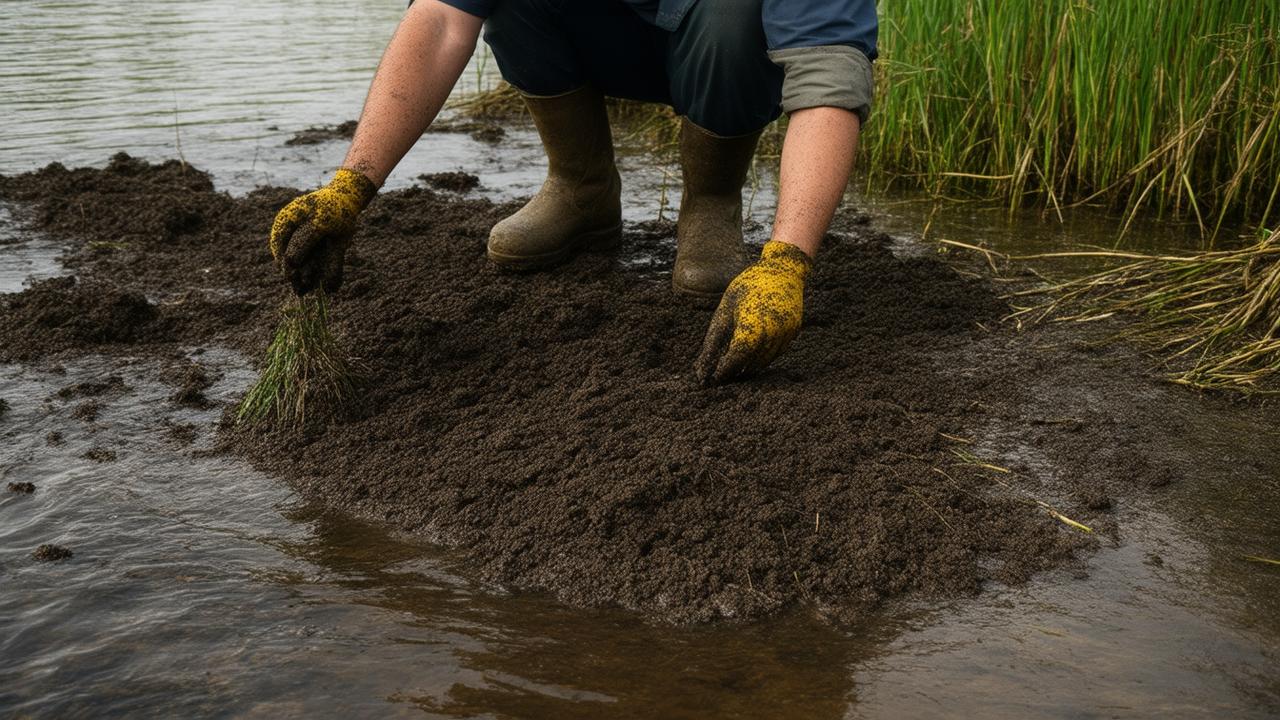
The first thing you notice is the sound. Not the crash of waves or the roar of a river in flood, but a softer conversation: the cluck of waterhens, the whisper of reeds rubbing together, a distant frog calling from somewhere in the green. The air is heavy with the scent of mud and tea-tree, and the ground beneath your boots is not quite stable – that faint, springy give of soil that has long been saturated, storing more than just water. This is an Australian wetland, and although it looks quiet, almost sleepy, it is working constantly – breathing in carbon, slowing floodwaters, and quietly reshaping the fate of the landscapes around it.
The Wetlands We Don’t Notice
Across Australia, wetlands have a habit of hiding in plain sight. You pass them on the highway as a blur of reeds and paperbark, barely registering the glitter of still water between trunks. In the Murray–Darling Basin, they spread as labyrinths of billabongs and floodplains, where red gums stand ankle-deep in chocolate-brown water. On the coastal fringe, mangroves knit a dense, knuckled mesh where land and sea bargain with one another twice a day.
For a long time, many of these places were treated as nuisances or wasted space – something to be drained, filled, channelled, or fenced out. They were cleared for agriculture, cornered by urban sprawl, sliced through with roads and levees. Yet, as fire seasons lengthen and storms hit harder, Australia is slowly rediscovering that these “messy” edges of the landscape are not an inconvenience. They are infrastructure – just not the kind poured in concrete.
Walk into a wetland during or just after a heavy rain and its quiet, tireless work becomes easier to sense. Water that would otherwise roar down a creek, gouging banks and tearing at bridges, is being swallowed, spread, slowed. Floodwaters that might flatten crops and overtop levees are instead pausing, pooling out across floodplains and marshes, trading destructive power for gentle seepage and quiet evaporation. In this patient choreography, wetlands perform a service that cities spend billions of dollars trying to replicate with dams, channels, and stormwater pipes.
The Slow Art of Holding Water
Imagine a summer storm rolling inland from the coast. The sky turns that bruised purple-grey, the air goes metallic, and when the rain finally breaks, it sheets down in torrents. In a hard-edged landscape of asphalt, rooftops, and compacted soil, that water becomes a rush – a dangerous surplus that must go somewhere fast. It races through gutters and culverts, pours into rivers already carrying the memory of past floods.
Now imagine the same storm falling on a healthy wetland: a saltmarsh shimmering behind a coastal dune, or a chain of ephemeral claypans in the outback. The first drops soak directly into spongy soils studded with roots and tiny cavities. As the deluge continues, water spreads laterally rather than vertically, guided not by concrete but by gentle gradients of land and layers of vegetation. Grasses, reeds, and sedges knot the flow, snagging leaves and sediment, turning velocity into stillness.
Australian wetlands, from Kakadu’s vast floodplains to the peat swamps of Tasmania, work as natural flood buffers because of three simple, powerful traits: they are flat, they are porous, and they are patient. Instead of sending water racing downstream, they store it in soil, in plant tissue, and in the shallow basins and channels that lace through them. Flood peaks are shaved off; the same volume of water moves, but more slowly, with less fury.
For communities living downstream, this can mean the difference between a river that swells and a river that swallows houses. In some catchments, intact wetlands have been estimated to reduce flood heights by significant margins – not with machinery, but with reeds and mud and time. Even when they flood, wetlands transform what might be disaster into renewal, delivering nutrient-rich silt to floodplain forests and recharging aquifers that will quietly leak cool water back into streams months later.
How Wetlands Turn Chaos into Calm
There is a tactile, almost bodily quality to the way wetlands handle excess water. Press your heel into the damp edge of a paperbark swamp and feel how the ground compresses and rebounds. That bounce is the signature of organic matter — decades, sometimes centuries, of plant material accumulating, half-decomposed, forming a matrix that acts like a giant, living sponge.
In northern Australia, monsoonal rains arrive in dramatic bursts. Rivers spill over their banks and spread into vast floodplains, where sedges and grasses sway in slow, chest-high waves. For weeks or months, much of the landscape stands under shallow water. Yet once the monsoon withdraws, the floodplains give back their borrowed water gradually, leaking it into creeks and underground stores. Instead of a boom-and-bust hydrological cycle – bone-dry, then catastrophic flood – wetlands stretch wetness out, sustaining wildlife and human communities through the baking dry season.
On the heavily populated east coast, the pattern is similar but the stakes feel more immediate. Urban wetlands – sometimes restored from old industrial sites or former farmland – act like pressure valves for storm systems. When extreme rain falls, these green depressions take the first hit, absorbing inflows before they can overwhelm drainage networks. For residents, they may look like quiet neighbourhood lagoons or scrubby marshes on the city fringe. In reality, they are working quietly during the worst hours of a storm, buying time for rivers and streets to cope.
Where Water Meets Carbon: The Hidden Storehouse
Stand at the edge of a mangrove forest at low tide and the air smells both sour and salty, rich with the sweetness of decay. Mud pops quietly as bubbles of gas reach the surface. The trees rise from the substrate on wiry stilts and knobbled roots, their leaves thick and waxy. To the casual observer, it looks like a tangle of vegetation clinging to a harsh edge. To climate scientists, it looks like a vault.
Wetlands, particularly coastal ones like mangroves, seagrass meadows, and saltmarshes, are among the most efficient natural carbon stores on Earth. The secret lies in the same waterlogged conditions that make them squelchy underfoot. When plant material falls into wetland soils, lack of oxygen slows decomposition. Instead of breaking down completely and releasing carbon dioxide back into the atmosphere, much of that carbon becomes locked away in the mud.
Unlike many forests, where most of the carbon is held above ground in trunks and branches, wetlands stash much of their carbon below the surface. Layer upon layer of leaves, roots, and microscopic life is pressed into anoxic soils. In some Australian coastal wetlands, these layers run several metres deep, quietly holding centuries of atmospheric history in their dark, silty memory.
Blue Carbon and the Australian Edge
Along Australia’s 34,000-kilometre coastline, mangrove forests and saltmarshes fringe estuaries and sheltered bays. Here, waves lose their punch as they pass through living barriers of trunks and roots, and sediment that might otherwise cloud offshore reefs settles out, trapped in the tight weave of vegetation. Buried with that sediment is carbon captured from the atmosphere by photosynthesis – so-called “blue carbon,” tied to the watery world rather than the uplands.
In certain parts of northern Queensland and the Northern Territory, you can walk from open ocean, across a band of mangroves buzzing with insects, into saltmarsh flats speckled with low herbs and succulents, then finally into melaleuca wetlands further inland. Each zone is a different type of wetland, and each is quietly banking carbon. Estimates suggest that, per square metre, these systems can store far more carbon than many terrestrial forests.
Yet here’s the catch: disturb them – drain a coastal wetland for development, dig a channel through a saltmarsh, clear mangroves for a boat ramp – and much of that locked-away carbon can be released. The vault door swings open. Soils that have been anoxic for centuries are suddenly exposed to air; microbes surge into action; carbon that was safely buried becomes climate-active again, contributing to the problem we most need wetlands to help solve.
Why Losing Wetlands Hurts Twice
When a wetland is filled, drained, or polluted, the loss is immediately visible: fewer birds, less fish, a sudden quiet where there used to be frog choruses at dusk. But the damage also runs along two invisible lines – flood buffering and carbon storage – and that makes the loss hurt twice.
First, the landscape becomes hydrologically brittle. Without wetlands to act as shock absorbers, stormwater moves more violently through catchments. Rivers rise faster, banks erode more quickly, and downstream communities are exposed to higher, sharper flood peaks. Infrastructure built on the assumption that floodplains would soak up excess water finds itself facing sudden surges instead.
Second, carbon that was securely locked away for centuries can be speedily liberated. Draining a peat swamp or clearing a mangrove stand is not just removing future carbon-capture capacity; it is actively turning old storage into new emissions. In a warming, flooding world, this is a cruel irony: we are erasing some of our most effective natural climate buffers at the very moment we most need them.
➡️ Why Australian psychologists are studying loneliness as a measurable public health risk
➡️ How Australia’s migration story is influencing modern identity and everyday language
➡️ Australia’s renewed interest in nuclear submarines is reshaping Indo Pacific strategic planning
➡️ What Australian historians now believe about the early contact period along the northern coast
➡️ How Australian supermarkets are quietly changing portion sizes without changing prices
➡️ Why Australian scientists are watching Antarctic ice shelves with growing urgency
➡️ Australia’s new appetite for native ingredients is transforming restaurant menus nationwide
Wetlands, Climate, and the Australian Imagination
Despite this, something is shifting in how Australians see wetlands. Community groups, Traditional Owners, farmers, and councils are beginning to look again at boggy corners and tidal flats with a new kind of respect. Where once people saw problems to be engineered away, many now see opportunities: to restore floodplains so that rivers can safely spread during high flows, to replant mangroves along eroding shorelines, to rehabilitate urban swales into biodiverse wetland parks.
This change is not only technical; it is cultural. Wetlands are, by nature, messy and in-between. They blur boundaries between dry and wet, land and sea, river and plain. For First Nations peoples across Australia, these places have always been storied – sites of food and ceremony, woven tightly into songlines and seasonal calendars. Modern restoration efforts that draw on this knowledge often find that the most effective solutions involve working with, rather than against, the slow intelligence of water.
Seeing Wetlands as Living Infrastructure
If you look at a map of a catchment that still has its wetlands intact, it resembles a body with healthy organs. Rivers branch like arteries and veins, and at the edges – where systems need to filter, store, and regulate – the swamps, marshes, and floodplains sit like soft, vital tissue. Remove them, and the body may keep moving, but it becomes fragile, reactive, prone to extremes.
Urban planners and climate scientists are increasingly using language that, a few decades ago, might have sounded poetic rather than practical: wetlands as “green infrastructure,” “natural capital,” “ecosystem services.” It can feel a little clinical, but beneath the jargon lies a simple recognition: these systems do real, measurable work that our built environments desperately need.
In some Australian cities, new developments now incorporate constructed wetlands designed to mimic their natural counterparts. They may not be perfect replicas, but they repeat the essential pattern: shallow basins, plants that thrive with wet feet, soils that can hold water and nutrients. During storms, water shifts into these spaces like a temporary guest, resting and settling before continuing its journey downstream. At the same time, these wetlands – both natural and constructed – quietly tuck carbon into their soils, turning stormwater treatment ponds into modest climate allies.
Every Puddle Tells a Bigger Story
Next time you encounter what looks like a scruffy patch of swamp – a floodplain billabong ringed with casuarinas, a mangrove strip humming with mosquitoes, a seasonal claypan in the red centre – it might be worth pausing before you pass it off as “just a bit of bog.” Under your feet, there may be centuries of carbon resting in dark, oxygen-poor silence. Around you, the shape of the land may be guiding future floodwaters into a path of gentleness rather than destruction.
Australia’s wetlands are not just pretty backdrops for birds and evening walks. They are busy, breathing systems that soften the blows of a harsher climate and quietly bank carbon for a future we are still trying to imagine. To protect them is not an act of sentimentality; it is a pragmatic decision about how we want water – and heat – to move through this continent in the decades to come.
| Wetland Type | Main Flood Role | Carbon Storage Features |
|---|---|---|
| Inland floodplain wetlands | Spread and slow river floods across wide, flat areas | Organic soils and deep root systems trap sediment and carbon |
| Coastal mangroves | Buffer storm surges and dampen wave energy | Thick, anoxic mud stores large amounts of “blue carbon” |
| Saltmarsh and seagrass meadows | Stabilise shorelines and reduce erosion | Capture fine sediments rich in carbon and bury them long-term |
| Peat swamps | Hold water in thick peat layers, moderating stream flows | Accumulated plant material forms deep carbon-dense peat |
| Urban constructed wetlands | Capture and detain stormwater before it reaches rivers | Vegetation and sediments sequester carbon over time |
Frequently Asked Questions
Why are Australian wetlands so effective at reducing flood impacts?
Australian wetlands are typically flat, vegetated, and underlain by porous soils rich in organic matter. During heavy rain, they spread water out across large areas and slow its movement with dense vegetation. This reduces the speed and height of flood peaks downstream, giving rivers and built drainage systems more time to cope and lowering the risk of damaging floods.
How do wetlands store carbon differently from forests?
Forests store most of their carbon above ground in trunks and branches, while wetlands store a large proportion below ground in waterlogged soils. Because these soils lack oxygen, plant material decomposes very slowly, allowing carbon to accumulate over centuries as thick layers of organic-rich sediment or peat. This makes wetlands extremely efficient long-term carbon vaults.
What is “blue carbon” and why does it matter in Australia?
Blue carbon refers to carbon captured and stored by coastal and marine ecosystems such as mangroves, seagrass meadows, and saltmarshes. Australia has extensive coastlines where these ecosystems thrive, so protecting and restoring them can significantly contribute to national climate goals while also guarding shorelines from erosion and storm surges.
What happens when a wetland is drained or cleared?
Draining or clearing a wetland usually leads to two major impacts: floodwaters move more quickly and violently through the landscape, increasing flood risk downstream, and the previously waterlogged soils are exposed to air, allowing trapped carbon to oxidise and escape as greenhouse gases. This turns a natural climate and flood buffer into a source of emissions and vulnerability.
Can constructed wetlands really replace natural ones?
Constructed wetlands can mimic some functions of natural wetlands, particularly for stormwater treatment and local flood mitigation, and they can also store carbon over time. However, they rarely match the full complexity, depth of carbon storage, and biodiversity of long-established natural wetlands. The most effective strategy is to protect existing natural wetlands and use constructed systems as complementary tools within developed landscapes.





