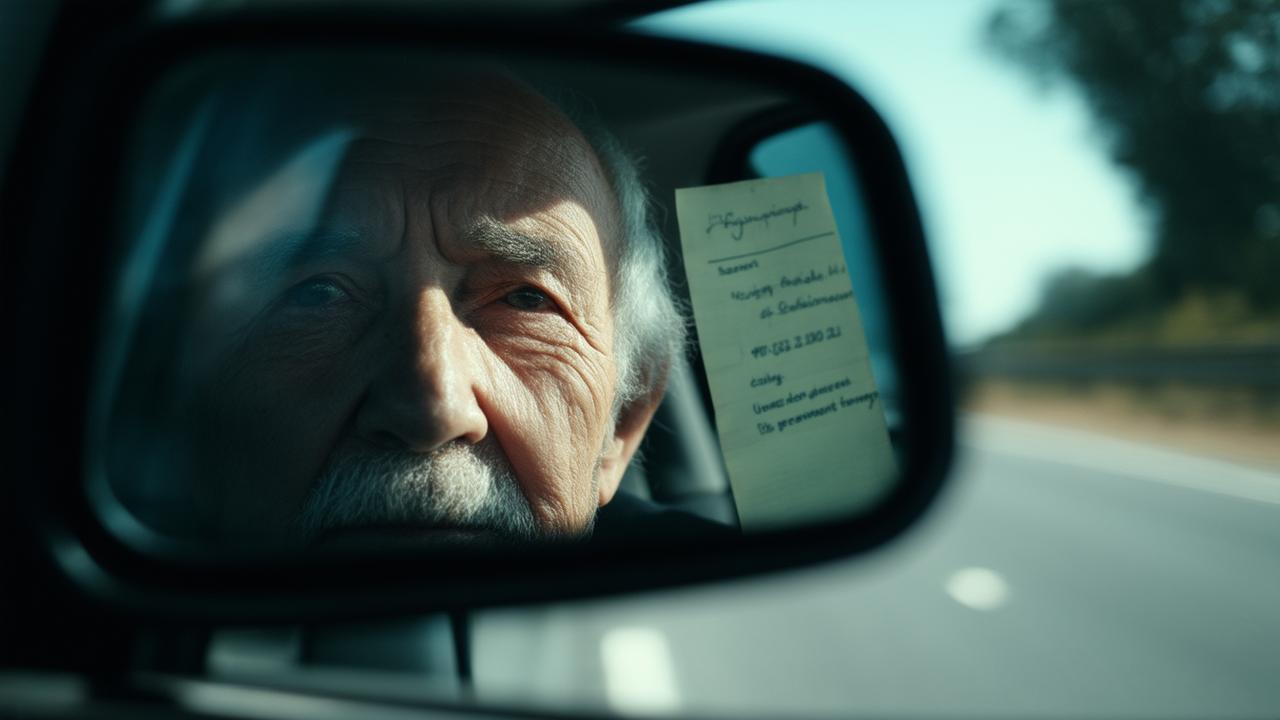
The old Holden eased along the coastal road, windows cracked just enough to let in the salt. In the driver’s seat, Margaret’s hands sat neatly at ten and two, knuckles speckled with age spots, gold wedding band glinting in the late-afternoon sun. She could feel the familiar pull of the steering wheel, the tiny vibrations of the bitumen. The same road she’d driven to work along for thirty-five years, the same curve where her kids used to squeal from the back seat, the same servo where the attendant still nodded and called her “love”. But lately, when she pulls into a car park or merges on the highway, there’s a new passenger riding shotgun: a quiet, insistent question. How much longer will they let me do this?
“Will They Just Take My Licence at 70?” – The Question Behind the Quiet
If you spend time around older Aussies, you hear it more and more, usually slipped into conversation the way you might mention the weather.
“Apparently they’ll just pull your licence at 70 now…”
“My neighbour said once you hit 75, that’s it, you’re done.”
These sentences float around like magpies in a shopping centre car park—persistent, a little shrill, and not quite trustworthy.
Here’s the thing: in Australia, your licence is not automatically taken away when you turn 70. There’s no secret switch in some government office that flicks from “OK to drive” to “Danger to society” the morning you blow out 70 candles on a sponge cake.
What does happen is more nuanced, and it depends heavily on where you live. Each state and territory has its own rules about older drivers—medical checks, eye tests, sometimes on-road assessments. Age, by itself, is not the disqualifier. Safety is. Capacity is. And often, the most important voice in the room belongs not to a bureaucrat, but to the driver themselves.
Still, that doesn’t stop the anxiety. To understand why this fear runs so deep, you have to sit in the passenger seat for a while and really look around.
The Feel of the Road When You’re Not 25 Anymore
On a crisp winter morning, the steering wheel can feel colder than you remember. Street signs, once sharp and certain, might now shimmer a little in the distance. Headlights at dusk seem brighter, harsher, pushing hard into your eyes. Pedestrians appear from between parked cars like jump cuts. Your reaction time—once quick as a kookaburra’s beak—takes just a fraction longer.
Many older drivers notice the changes before anyone else does. They quietly self-edit their habits:
- No more night driving.
- Avoid peak-hour madness on the freeway.
- Stick to familiar routes—shops, GP, grandkids’ school.
They’re not clinging to the steering wheel out of stubbornness, but because driving is woven into the fabric of their independence. In so much of Australia, the car isn’t a luxury—it’s a lifeline. It’s how you get to the GP when your knee plays up. It’s how you pick up milk, or head to bowls, or duck over to see a mate who’s just had a fall. It’s freedom, in steel and glass and petrol fumes.
Ask a 72-year-old in suburban Brisbane what they fear most about losing their licence and the answer might not be “crashing” or “coping without driving”. It’s “being stuck at home”, “being a burden”, “having to ask my kids for every little thing”. The thought of a licence being yanked away by default, just because of a birthday, hits hard.
So, What Actually Happens After 70?
Across Australia, the rules differ, but the pattern is similar: ageing is treated as a reason to check in—not a reason to automatically cut you off.
In some states, once you hit a certain age—often 70, 75, or 80—you’ll be asked to undergo regular medical checks or provide a doctor’s certificate to keep your licence. In some places, there may be on-road driving assessments for certain ages or conditions. Other jurisdictions rely heavily on self-reporting: you’re legally required to tell the licensing authority if you develop a medical condition that affects your driving, no matter your age.
Here’s a simplified snapshot, remembering that specific ages and rules can change and differ by licence class and circumstances:
| State / Territory | Older Driver Focus | What It Usually Means |
|---|---|---|
| NSW | Medical checks, possible on-road tests for very old drivers or concerns | No automatic cancellation at 70; gradual increase in monitoring with age. |
| VIC | Condition-based approach | Focus on health and fitness to drive rather than age alone. |
| QLD | Medical certificates from older age | You may need a medical certificate from your GP once you reach a certain age. |
| WA / SA / TAS / ACT / NT | Mix of age checks and condition reporting | Rules vary, but none rely on an automatic “you’re out at 70” trigger. |
What’s striking is not that older drivers are singled out. It’s that the system, in its imperfect way, tries to balance dignity with safety. The goal isn’t to shame people out of the driver’s seat; it’s to keep the wrong person from being behind the wheel at the wrong time.
Safety, Statistics, and the Stories We Don’t Tell
Numbers can be blunt instruments, but they matter. Older drivers are often involved in fewer crashes overall, partly because they drive less and self-limit risky situations. But when they are involved in crashes, they’re more likely to be seriously injured or killed. Not always because they caused the crash—sometimes simply because frailer bodies don’t take impacts well.
At the same time, we rarely talk about the quieter costs of taking a licence away. Social isolation spikes when mobility drops. Mental health can suffer. Physical health, too, as appointments, exercise, and outings get skipped. One small decision at a licensing counter can ripple out into years of subtle decline.
That’s why the question “Should licences be pulled automatically after 70?” isn’t really about paperwork. It’s about the kind of old age we want in this country. Do we picture older Australians as hazards to be managed—or citizens whose independence is worth working hard to protect, while still keeping everyone safe on the road?
The GP’s Office: Where the Road Quietly Changes
In practice, one of the biggest players in this whole drama is your GP. The waiting room, with its dog-eared magazines and faint antiseptic smell, is often where the real decisions begin.
Most doctors understand the stakes. Many of them have watched long-term patients move through the decades, seen them drive prams in and later shuffle in with walkers. When they fill out a medical fitness-to-drive form, they’re balancing:
- Your health: eyesight, reflexes, medications, conditions like dementia or heart disease.
- Your honesty: do you tell them, really, about the near-misses, the moments of confusion?
- Your life: living alone or with family, in the city or thirty kilometres from the nearest bus stop.
Sometimes the outcome is simple: “You’re doing fine, keep driving, see me again next year.” Other times, it’s more complex: “You’re OK for short trips, but I’m recommending some restrictions,” or, hardest of all, “I don’t believe it’s safe for you to drive anymore.”
These conversations are where the myth of automatic licence loss at 70 collides with reality. There is no robot in a motor registry office typing “REVOKED” the moment you blow out those candles. There is, instead, a chain of human judgments—yours, your family’s, your doctor’s, sometimes a driving assessor’s—trying to land on what’s fair and safe.
Families in the Passenger Seat
Ask any adult child of an older driver and you’ll hear the tension in their voice. They’ve sat in the passenger seat and felt their stomach drop at a missed stop sign, a near miss at a roundabout, a confused lane change in fast traffic. They’ve argued in car parks, whispered in kitchens, googled “how to tell parent to stop driving” late at night.
Few want their mum or dad’s licence ripped away by a blanket rule. But they also don’t want that phone call from the police. Or the knowledge that someone else’s life was shattered by a crash that everyone saw coming, but no one wanted to confront.
Ideally, these conversations happen early and often—and not just when there’s been a dented bumper or a panicked phone call from the side of the road. It might sound like:
➡️ Place your jade plant in this exact spot: the simple Feng Shui positioning trick said to boost wealth, harmony and lasting happiness at home
➡️ People in their 60s and 70s were right all along: 7 life lessons we’re only now beginning to understand and appreciate
➡️ Put A Lemon Slice In Your Cold Oven : Why People Are Doing It And When It Actually Helps
➡️ Plumbers reveal the half-cup household trick that clears blocked drains fast Plumbers reveal the half-cup household trick that clears blocked drains fast: without vinegar, baking soda or harsh chemicalswithout vinegar, baking soda or harsh chemicals
➡️ Psychology explains why overthinking at night is closely linked to the brain processing unresolved emotions
➡️ People who feel productive but achieve little often follow this pattern
➡️ People who follow this evening habit wake up feeling more rested
- “How are you feeling driving at night these days?”
- “Do you still feel confident on the freeway?”
- “Would it help if we set up a regular shop-and-visit day so you’re not driving as much?”
Sometimes compromise looks like shifting to a restricted licence, only driving within certain distances, or avoiding high-speed roads. Sometimes it’s slowly transitioning to other options—community buses, rides with family, taxi vouchers, local volunteer driver programs.
There’s no smooth, painless way to move from “driver” to “non-driver”. But blanket rules that strip licences at a birthday can feel like punishment, not support. As a country, we’re still learning how to handle this more gently, more honestly.
Planning Ahead for Your Own Road
If you’re nearing 70—or well past it—and this whole topic makes your chest tighten, you’re not alone. It can help to treat driving in older age as something you actively plan for, rather than something that happens to you.
Some ideas:
- Get proactive check-ups: Talk openly with your GP and optometrist about driving. Ask what they’d look for over the next five or ten years.
- Practice self-awareness: Notice when driving feels harder—fatigue, confusion, difficulty judging gaps. These are not failures; they’re signals.
- Adjust before you’re forced to: Stop night driving if it stresses you. Avoid complex intersections. Stick to familiar, well-lit routes.
- Explore alternatives early: Learn how to use local transport, community services, or rideshare while you still feel confident, so it doesn’t all hit at once later.
- Talk with family: Let them know you want honesty, not silence. Make a plan for the day you decide to hand over the keys.
There’s quiet power in choosing the curve in the road where you slow down, instead of waiting for a sign that says “END OF HIGHWAY” with no warning.
So, Will Licences Be Pulled Automatically After 70?
Strip away the rumours and the answer is clear: in Australia, licences are not automatically cancelled just because you turn 70. But your licence does become a more living, breathing thing. It may come with conditions, check-ups, medical certificates, perhaps an assessment drive. You will be asked, in subtle ways, to prove that you’re still fit to be behind the wheel.
For some, this feels like scrutiny; for others, it’s reassurance. For all of us—whether we’re the ones driving, the ones in the passenger seat, or the ones crossing at the lights—it’s part of how we share the road in an ageing country.
Margaret, in her old Holden, knows the road ahead isn’t endless. But as she signals carefully, checks her mirrors, and eases into the right lane, she also knows something else: she won’t be defined by a number on a birthday card. Her licence, like her life, will wind down in conversation—with her body, her doctor, her family, and, eventually, with herself.
Until then, the coastal air is still sweet. The wheel is still steady in her hands. And the choice, for now, is still hers.
Frequently Asked Questions
Do Australians automatically lose their licence at 70?
No. Across all Australian states and territories, there is no automatic cancellation of a driver licence purely because a person turns 70. Age may trigger medical checks or assessments, but it does not, by itself, end your licence.
What usually changes for drivers over 70?
Depending on where you live, you may be required to undergo regular medical examinations, eyesight tests, or provide a doctor’s certificate from a certain age. In some cases, there can be on-road assessments if there are concerns about your driving.
Can I keep driving if I’m healthy and over 80?
Yes, if you continue to meet the medical and licensing requirements of your state or territory. Many Australians drive safely into their 80s and beyond, often with some self-imposed limits like avoiding night or freeway driving.
Who decides if I’m fit to drive—my doctor or the licensing authority?
Your doctor provides medical advice and reports based on your health. The licensing authority in your state or territory makes the formal decision about your licence, taking that medical information into account.
What if my family thinks I shouldn’t drive anymore, but I disagree?
This is common and can be emotionally difficult. It helps to have an open conversation with your GP, who can assess your fitness to drive. You can also request a formal driving assessment to get an independent view of your capabilities.
Are there restricted licences for older drivers?
In some jurisdictions, yes. Instead of removing your licence entirely, restrictions might limit when and where you can drive—for example, only within a certain radius of home, or only during daylight hours. This can be a useful middle ground.
What alternatives are there if I give up my licence?
Options depend on where you live but may include public transport, community transport services, taxi or rideshare, volunteer driver programs, and regular lifts from family or friends. Planning for these options early can make the transition away from driving much easier.





