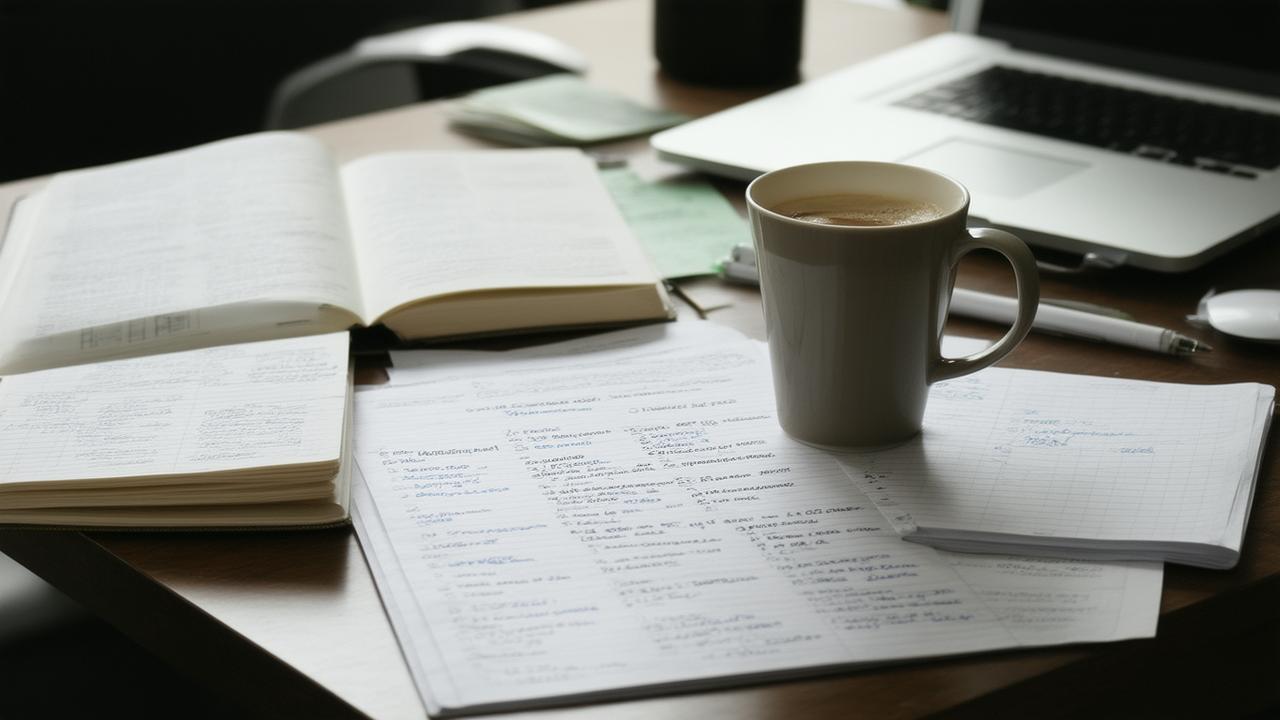
The kookaburras were already laughing when Mia opened her laptop, the early light over Brisbane River turning the glass towers rose-gold. Coffee at her elbow, inbox open, to‑do list freshly colour‑coded, she felt that fizzy sense of readiness that modern life calls “being productive.” By 9am she’d cleared emails, replied to Slack messages, “touched base” with three colleagues, skimmed two industry newsletters and added four new apps that promised to change her life. By 5pm she was wrung out, tired, wired… and quietly haunted by the same question that had been nipping at her heels for months:
Why does it feel like I’m working all the time but not actually moving anywhere?
The Illusion of Motion
If you live in Australia’s cities, you probably know this rhythm by heart. The clatter of the tram in Melbourne, the salt-slicked air off the Fremantle docks, the slow heat over Darwin – wherever you are, the feeling is the same. Life hums, notifications ping, your calendar bulges like a Woolies bag on a Sunday afternoon. You collapse on the couch at night thinking, “I smashed it today.” Yet, when you glance back over the last six months, the big things – the ones that actually matter – haven’t shifted much at all.
You still haven’t finished that course you paid for. The side project you dreamed about on a Byron Bay holiday is a half-built website and a domain debited on your bank statement each year. The novel you swore you’d write sits as a file called “Book_idea_FINAL_v7” on your desktop, more placeholder than promise.
It’s not laziness. In fact, you’re probably flat out. It’s not intelligence – you might be that person everyone leans on at work because you “get things done.” The trouble is more insidious, like a rip current you don’t notice until you’re already drifting away from shore.
People who feel productive but quietly achieve very little are often trapped in a common pattern. It’s not always obvious from the inside, because the days feel busy. But if you slow down, tune in, and watch your own habits the way you might watch a wallaby at dusk, you start to see distinct tracks in the sand.
Pattern #1: The Cult of the Small Task
There’s a particular satisfaction in ticking boxes. Australians love a list – from the classic Bunnings run scribbled on the back of an envelope to the long, neat Notes app compilation called “Life Admin.” And ticking those boxes really does release dopamine. The brain doesn’t care if you’ve just lodged your tax return or updated a colour in a PowerPoint slide. A tick is a tick.
This is where the first pattern begins: filling your day with low-friction, bite-sized tasks that are easy to start, quick to finish, and socially rewarded. Answering messages instantly. Jumping on quick calls. Fixing tiny errors. Adjusting formatting. “Circling back.” “Just touching base.” All of it creates a feeling of motion. But motion is not the same as progress.
Deep work – the kind that leads to promotions, published books, thriving businesses, or genuine lifestyle change – is often quiet, slow, and a bit ugly. It usually involves uncertainty and long stretches where nothing can be crossed off. There are no quick wins for writing chapter seven. No instant gratification for learning a new programming language or patiently building a new client base.
So we graze on small tasks instead. And at the end of the day, our brains tally all that motion and declare, “What a productive human you are.” Meanwhile, the big, important work sulks in the corner like an unwatered pot plant.
Pattern #2: Planning as Performance
Picture an evening in a share house in Adelaide. A friend sprawled on the couch, laptop open, three productivity books fanned out on the coffee table. She’s building a new system: Notion pages inside other Notion pages, Airtable boards, a calendar so colour-coded it looks like Mardi Gras confetti. There are weekly themes, daily rituals, energy trackers, habit scores. It’s impressive. It’s intricate. It’s also, for now, largely imaginary.
This is the second pattern: investing huge energy in the appearance of productivity – pristine plans, elaborate dashboards, carefully curated apps – while rarely converting that planning into actual, ugly, nose-to-the-grindstone doing. In other words, productivity as theatre.
We’ve all seen the Instagram posts: morning routine flat-lays with açai bowls and perfect Moleskine journals, or LinkedIn updates about 4am wake-ups and ice baths. None of that is inherently bad. But it’s dangerously easy to confuse talking about systems, routines, and goals with actually grinding through the unglamorous middle of them.
One simple way to tell if you’re stuck in this loop is to compare how often your system changes versus how often your results change. If your app stack changes every month but your life looks the same year on year, the “productivity” may be more costume than engine.
Pattern #3: Reacting Instead of Steering
Walk through any open-plan office in Sydney and listen closely. You’ll hear a constant stream: “Can you just…”, “Quick question…”, “Have you got five minutes…”. The modern workplace – and increasingly our private lives – nudge us into a reactive state. We become like lifeguards on a crowded Bondi beach, scanning for the next wave, the next hand in the air, the next red notification badge.
People who feel busy but achieve little are usually in permanent response mode. Email comes in, they jump. Slack pings, they answer. Phone rings, they pick up. Kids call out, they abandon the half-finished thought. It’s not that these things don’t matter – many of them absolutely do. But if your whole day is shaped by whatever arrives in front of you, you’ve effectively handed the steering wheel to other people’s priorities.
High achievers – not the loud ones, but the quiet, consistently effective ones – do something different. They treat their focused time like a scarce resource. Even in an Aussie workplace culture that often prides itself on being laid-back and “always up for a chat,” they quietly carve out non-negotiable pockets of attention. They might block two hours in the morning with their calendar set to “busy,” or head to a quieter space, or put their phone in another room. It’s not about being antisocial. It’s about deciding, in advance, what actually matters today.
The subtle pattern of low-achievers-in-disguise is the reverse: the day decides for them.
Pattern #4: Confusing Input with Impact
There’s a particular Australian badge of honour: “Mate, I’ve been flat chat.” Long hours, stuffed schedules, the tired pride in swapping war stories about late nights at the office or back-to-back Teams meetings. Busyness can become a kind of social currency. You sound important. You sound in demand. You sound… productive.
But hours worked is a terrible measure of impact. So is “number of tasks completed.” If you tally everything you did this week and ask, “Which of these things will still matter in a year?”, the list is probably painfully short.
Productive-but-not-achieving people tend to focus on inputs they can easily count: hours, emails, meetings, documents, calls. Meanwhile, the outcomes that actually matter remain fuzzy. You might work all week on “marketing” without defining what result you’re chasing – new customers, better leads, a strong portfolio piece. You might spend half your week “helping the team” without any shared understanding of what success would look like by Friday.
The people quietly building satisfying, meaningful careers – in Perth startups, Hobart consultancies, remote roles in small coastal towns – keep asking, “What is the result I’m actually responsible for here?” They’re less impressed with how tired they are, and more interested in the trail of concrete outcomes they can point to.
Pattern #5: Never Leaving the Shallows
A lot of Australian life hums on the surface: sport chat, weather jokes, the ritual complaint about traffic on Parramatta Road or the airport line. There’s a cultural ease in keeping things light, breezy, unbothered. That “no worries” energy is part of the country’s charm – and also, quietly, one of its traps.
In work and in personal projects, staying in the shallows feels safe. You can dabble in lots of things: a bit of design here, a bit of code there, a half-finished online course, a podcast idea you “still need to record.” The shallows are crowded, chatty, social. Everyone has an idea. Everyone’s “working on something.”
But real achievement – the sort you look back on years later with a deep, settled pride – almost always requires long, lonely stretches of deep water. It means committing to one direction long enough to experience boredom, doubt, and slow progress. It means missing out on other shiny options. It’s less like scrolling TikTok and more like hiking the Overland Track: there are leeches, blisters, days of rain… and then, just when you’re filthy and wondering why you bothered, you turn a bend and the view knocks the air from your lungs.
➡️ Banana peels in the garden: they only boost plants if you put them in this exact spot
➡️ Banana peels in the garden: they only boost plants if you put them in this exact spot
➡️ A retiree who lent his land to a beekeeper is told to pay farm taxes “I earn nothing from this,” he says, as the ruling sparks a heated national debate
➡️ A simple kitchen ingredient slipped down the drain and fixed everything : the plumber found nothing, skeptics call it luck while others say it’s proof
➡️ Psychologists suggest that people who feel “too much” often developed heightened perception as a form of emotional protection
➡️ Place your jade plant in this exact spot: the simple Feng Shui positioning trick said to boost wealth, harmony and lasting happiness at home
➡️ People in their 60s and 70s were right all along: 7 life lessons we’re only now beginning to understand and appreciate
The pattern of chronic busyness without big outcomes is often simply this: never staying with anything long enough, or deep enough, to break past the shallow discomfort into momentum.
Testing Your Own Pattern
You don’t need a fancy diagnostic. A simple, slightly uncomfortable audit of your week will do. Sit somewhere quiet – balcony in Cairns, park bench in Canberra, back veranda in Wagga – and list what you actually did in the last seven days. Not what you meant to do. What you did.
Then, in a separate column, write what you wanted to move forward that truly matters to you: that career leap, that qualification, that creative project, that health goal, that shift in family rhythm. Now lay them side by side and ask three blunt questions:
| Question | What to Notice |
|---|---|
| How much time went to small, reactive tasks? | If it’s more than half your week, you’re probably living in the cult of the small task. |
| Did my systems change more than my results? | Frequent new apps or plans, but few finished outcomes, suggests planning as performance. |
| Can I name 2–3 concrete outcomes from this week? | If not, you may be measuring input instead of impact. |
It’s a confronting exercise, but also tremendously freeing. Because once you see the pattern, you can choose to step out of it.
Shifting from Busy to Effective
The antidote isn’t a new app, or a stricter routine, or another productivity book propped on your bedside table under the soft buzz of a mozzie coil. It’s usually quieter and more human than that.
It starts with admitting that feeling productive is not the same as making progress. That busyness can be a shield against risk: as long as you’re rushing, nobody can accuse you of not trying. It continues with small, unglamorous changes:
- Choosing one meaningful outcome for the day and protecting an hour for it like you’d protect a medical appointment.
- Letting some low-value tasks be done imperfectly, later, or not at all.
- Saying, “I can help, but not until after 2pm,” and actually holding that line.
- Keeping your system simple enough that you spend more time doing than organising the doing.
- Committing to fewer projects, but following them deeper.
Mia, that Brisbane early-riser, eventually tried an experiment. For four weeks, she picked one thing each day that genuinely mattered to her long-term – finishing a certificate, rebuilding a portfolio, rewriting her CV, pitching a new role internally – and gave it ninety minutes before touching email or chat. The first week was rough. The temptation to “just check” her messages itched under her skin like midges. But by week three, something subtle had shifted. She was tired at the end of the day, yes, but also… satisfied. The kind of tired you feel after a long hike, not after pacing a small room.
You don’t need to move into the bush or quit your job or go off-grid to do this. You don’t need to reject all small tasks or never answer emails again. You just need to tilt the balance – to make sure that somewhere between the kookaburras’ morning chorus and the possums scrambling across the roof at night, you’ve spent a slice of your best attention on work that will still matter to you when this season of life has passed.
In a country as vast as Australia, it’s easy to lose perspective in the compressed little worlds of our screens and schedules. Sometimes, standing on a headland, watching the long, slow curls of the Pacific, you can feel how ridiculous it is to measure a life in emails sent or meetings attended. You remember that what you’re really trying to build is not a perfectly productive day, but a life you can look back on with a quiet, steady “Yeah. That was worth it.”
Frequently Asked Questions
How do I know if I’m just “busy” rather than genuinely productive?
Look at outcomes rather than effort. If weeks are passing and there’s little tangible progress on your most important goals – career shifts, major projects, skills, health – you’re likely operating in busy mode. Feeling drained is not proof of effectiveness.
Can small tasks ever be truly productive?
Yes, small tasks are essential for keeping life and work functioning. They become a problem when they consistently crowd out deeper, higher-impact work. Aim to batch small tasks and reserve protected time for more meaningful efforts.
How many big goals should I focus on at once?
Most people do better with one or two major focuses in a season, not five or six. Spread your attention too thin and you rarely move any of them far enough to matter.
What if my job is inherently reactive?
Many Australian roles – from healthcare to customer service to site management – involve constant interruptions. You may not control the whole day, but you can usually carve out at least a small, predictable window each week for proactive work that improves systems, skills, or long-term results.
Do I need complex productivity tools to fix this pattern?
No. A simple calendar, a short written list of weekly outcomes, and a commitment to protect small pockets of focused time will usually outperform any elaborate system that you rarely follow. Tools help, but clarity and consistency matter far more than sophistication.





