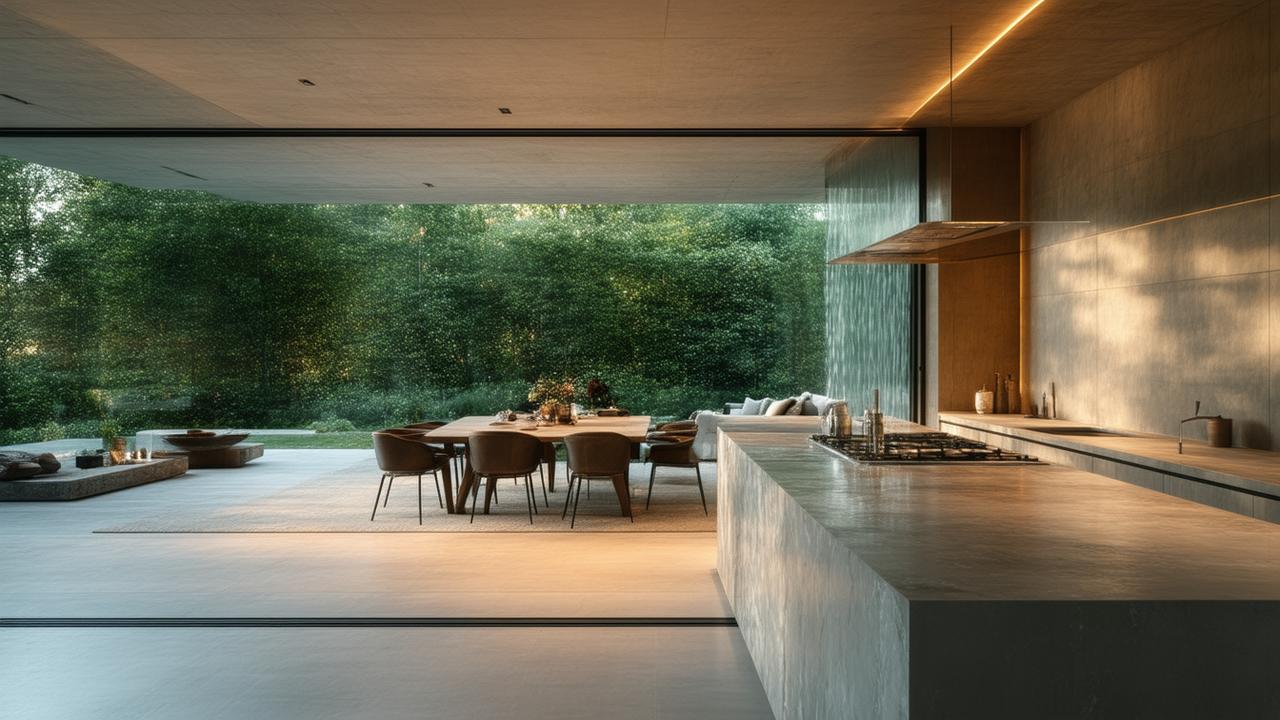
The first time I realised the kitchen island was losing its crown was in a sunlit Queenslander overlooking the Brisbane River. The owner, a ceramicist named Laura, had just finished a renovation. I walked into her new kitchen expecting the usual centrepiece: a solid block of stone, bar stools lined up like spectators, pendant lights overhead. But the middle of the room was… open. Space, light, an easy flow from back door to verandah. Instead of an island, there was something softer, smarter, more human.
“We wanted the kitchen to feel like part of our life, not a monument in the middle of it,” she said, sliding open a slim timber-topped unit on wheels, revealing hidden drawers and a cleverly tucked-away induction hob.
If you’ve been sensing that kitchen islands are starting to feel a bit, well, 2015, you’re not imagining it. As we edge towards 2026, Australian homes are quietly trading in the big, immovable island for a new trend that’s more practical, more elegant, and much better suited to how we actually live, cook, and gather.
The Quiet Goodbye: Why Aussies Are Turning Away from Big Islands
Across Australia, from compact Brunswick terraces to sprawling Perth family homes, there’s a subtle shift happening. The once-essential kitchen island is beginning to feel like a bulky piece of furniture in a room that wants to move, breathe, and flex.
For years, the island was a status symbol. It meant you had space. It meant you “entertained”. It was the spot for spreading out grazing boards at Christmas, perching kids with homework, and dropping the groceries. But as more of us work from home, live in multi-generational households, or choose smaller, more sustainable footprints, the traditional fixed island is starting to show its flaws.
It eats up circulation space. It can make an otherwise generous kitchen feel pinched and narrow, especially in older Australian homes with strong sightlines from front door to back garden. In a climate where we love to throw open the doors and spill outdoors, the big block in the middle can disrupt that easy indoor–outdoor flow we dream of.
Then there’s the practicality. Islands are often designed for show: waterfalls of engineered stone, gleaming surfaces, immaculate bar stools nobody sits in on a Wednesday night. But what many households actually need is flexibility: prep zones that move with the cook, storage that adapts as kids grow or parents move in, and multiple places for people to tuck themselves away with a cuppa or a laptop.
Meet the 2026 Replacement: The Flexible Kitchen Hub
The trend quietly taking over from the traditional island is what designers are calling the “flexible kitchen hub” – a mix of slim, moveable consoles, peninsulas, and integrated dining and prep tables that can change function across the day.
Instead of a single, chunky block in the centre of the room, you might see a long, elegant prep table aligned with a wall of cabinetry; a slender peninsula reaching out from the benchtop; or a mobile butcher’s block on castors that rolls between cooking, bar, and serving duties.
In a renovated cottage in Fremantle, a young family replaced their proposed stone island with a beautiful ash timber table, slightly taller than normal dining height. One side is for chopping and rolling dough; the other becomes a kid’s craft zone after school. Overhead, not a row of pendant lights but a slim, adjustable track that can spotlight dinner or soften into a gentle glow for late-night tea.
The flexible hub works because it answers the needs that the island was always trying to meet – extra workspace, storage, social space – but without locking the kitchen into one rigid layout. You’re not stuck with a massive square in the middle of the room for the next twenty years. You’re free to adapt.
What This New Hub Actually Looks Like
In Australian homes, the 2026 “post-island” kitchen often includes:
- A streamlined peninsula attached to one wall, doubling as breakfast bar and extra bench space.
- A freestanding prep table – lighter-looking, often with visible legs, so the room feels more like a welcoming studio than a showroom.
- Hidden or semi-hidden appliances (including induction or plug-in cooktops) that can vanish into the benchtop when not in use.
- Integrated seating nooks along windows or walls, instead of bar stools clustering around one point.
The overall impression is looser, more like a living space that happens to be perfect for cooking, rather than a kitchen locked into one role.
Form Follows Lifestyle: Why This Works for Australian Homes
Australian life is shaped by sunlight, air, and movement between rooms and outdoors. Our kitchens often face decks, courtyards, or gardens; they’re the hinge between inside and out. A hulking island can interrupt that, but a flexible hub supports it.
Think about a Saturday in Sydney’s Inner West. Morning: someone’s making coffee, another person is unloading the dishwasher, a third is rushing through with a gym bag. With an open central space instead of a fixed island, those crossing paths don’t collide. The worktop along the wall carries most of the practical load, while a slim centre table can slide slightly aside or be used from all four directions.
In the afternoon, doors open to the backyard. The mobile prep bench becomes a drinks station pushed near the threshold. Kids race in and out. No sharp island corners to dodge, no bottleneck between sink and stove.
And in the evening, without a looming block in the middle, the kitchen can visually melt into the living room. Flooring continues uninterrupted. Light bounces off open floor instead of being eaten up by stone. The space feels bigger, calmer, more like a place you want to linger after the dishes are done.
Better for Downsizers and Renters Too
Many Australians are downsizing or choosing compact, efficient homes. A big fixed island doesn’t always make sense when square metres cost what they do in Melbourne or Canberra. A graceful table-style hub or modular prep unit gives the functionality of an island without committing precious space to something you can’t reconfigure.
Even renters are feeling the shift. Portable kitchen trolleys, slimline benches on wheels, and tall counter-height tables allow you to create your own version of a hub without drilling a single hole. When you move, the heart of your kitchen comes with you.
Elegance in Lightness: How Design Is Changing
The new trend isn’t only about practicality; it’s about a new kind of elegance. Instead of the visual heaviness of monolithic islands, Australian designers are embracing lightness and transparency.
Open legs instead of boxed-in cabinetry create a sense of air. Warm native timbers – Tasmanian oak, spotted gum, blackbutt – replace endless swathes of shiny white stone. Benchtops get slimmer; edges bevel gracefully rather than crashing down in thick waterfalls.
Below the surface, storage becomes smarter instead of simply larger. Deep drawers slide out to reveal tiered inserts. Narrow racks hold pantry staples behind pocket doors. Vertical storage tucks baking trays and chopping boards beside ovens, making every centimetre count.
Integrated Dining: One Surface, Many Stories
One of the biggest evolutions in this post-island era is the merging of dining and prep. Rather than a tall island with stools on one side and chopping on the other, more kitchens now feature a stepped or continuous surface where everyone meets at the same level.
In a Hobart weatherboard, an owner-built kitchen includes a solid Huon pine table attached to the end of a stone bench. The stone handles hot pots and serious cooking; the timber feels warm under elbows, perfect for writing, reading, and long winter dinners. The connection between the two surfaces means food and conversation move naturally, without the hierarchy of cook behind the island and guests out front.
➡️ A psychologist is adamant : “the best stage in a person’s life is the one where they start thinking this way”
➡️ Goodbye steaming : the best way to cook broccoli to keep nutrients plus easy recipes to try
➡️ Goodbye hair dyes : the new trend that covers grey hair and helps you look younger
➡️ Behavioral scientists say that people who walk faster than average consistently share the same personality indicators across multiple studies
➡️ Banana peels in the garden: they only boost plants if you put them in this exact spot
➡️ Banana peels in the garden: they only boost plants if you put them in this exact spot
➡️ A retiree who lent his land to a beekeeper is told to pay farm taxes “I earn nothing from this,” he says, as the ruling sparks a heated national debate
This integrated approach is especially elegant for Australian homes that double as workspaces. One side of the hub might be all about recipes; the other becomes a makeshift office, with laptop, notebooks, and even a discreet power point tucked beneath.
| Feature | Traditional Kitchen Island | 2026 Flexible Kitchen Hub |
|---|---|---|
| Mobility | Fixed, cannot be moved | Includes movable or modular elements |
| Visual Weight | Bulky, block-like | Lighter, table-like, more open |
| Use of Space | Dominates the centre of the room | Keeps central area more open and flexible |
| Adaptability | Single, fixed layout and height | Can shift between prep, dining, and work |
| Suitability for Smaller Homes | Often too large for compact plans | Ideal for terraces, apartments, and downsizers |
Designing Your Own Post-Island Kitchen
If you’re planning a renovation in 2025 or 2026, you don’t need to cling to the idea of a big island because “everyone has one”. Start instead with how you actually live.
Do you cook elaborate meals or mostly assemble? Do you host big gatherings or prefer quiet dinners for two? Are kids doing homework nearby? Is there a back deck or courtyard you flow out to? Your answers shape the kind of hub that will serve you best.
Practical Questions to Ask Your Designer
- Can we keep the centre of the kitchen mostly open to improve circulation?
- Could a peninsula or attached dining table replace a freestanding island?
- Where do we truly need extra bench space – and could that be along a wall instead?
- Is there an option for a movable piece (like a butcher’s block or slim trolley) rather than more fixed cabinetry?
- How can we integrate seating without building a chunky island?
Many Australian designers are now sketching kitchens as a series of zones rather than one heroic centrepiece. There might be a “hard-working wall” with cooktop, sink, and tall storage; a lighter table or bench for prep and gathering; and a cosy nook under a window for coffee and quiet moments.
The result is a space that can stretch and contract around your life, instead of forcing your life to orbit a slab of engineered stone.
The Emotional Shift: From Showpiece to Sanctuary
Perhaps the most interesting part of the goodbye to kitchen islands is the emotional shift underneath. For years, kitchens were designed as stage sets: open to guests, constantly tidy, showing off square metreage and stone finishes. The island was the star of that stage.
Now, especially after the lockdown years, Australians are craving kitchens that feel more like sanctuaries than showrooms. Spaces that soothe, that welcome bare feet on timber floors, that forgive a bit of mess. The flexible hub fits that mood perfectly. It encourages you to draw close, to share space side by side, to slide from work to cooking to conversation without changing rooms or mindsets.
Back in Laura’s Brisbane home, the evening light slants across her slim timber unit as her kids wander in from the yard, scattering school bags and stories. She wheels the bench a little closer to the stove, tosses veggies into a pan, and the whole kitchen seems to breathe with them. There’s no island claiming the room. Just people, food, and a space that quietly reshapes itself around their lives.
As 2026 approaches, the message from Australian kitchens is clear: the future belongs not to the biggest piece in the room, but to the one that moves with you.
Frequently Asked Questions
Are kitchen islands completely going out of style in Australia?
Islands aren’t vanishing overnight, but they’re no longer the automatic default. More Australian homeowners are choosing peninsulas, integrated tables, or lighter, flexible hubs instead of large, fixed islands, especially in smaller or character homes.
Can I still have an island and embrace the new trend?
Yes, as long as it’s designed with lightness and flexibility in mind. A slimmer, table-style island on legs, or a smaller central unit that doesn’t block circulation, can bridge the gap between old and new approaches.
Is a flexible hub more expensive than a traditional island?
Not necessarily. You may save on stone by reducing bulky cabinetry and instead investing in a well-crafted timber table or modular units. Costs depend on materials and custom work, but you’re often reallocating budget rather than increasing it.
Will a post-island kitchen hurt my home’s resale value?
Current buyers are drawn to functional, spacious-feeling kitchens. A well-designed flexible hub with good storage and flow is just as attractive – often more so – than a large, impractical island, particularly in urban Australian markets.
How can I try this trend without a full renovation?
Remove or relocate bulky stools, add a counter-height table or slim trolley, and free up the centre of your kitchen. Experiment with portable benches on wheels or a tall dining table that can double as prep space. Small shifts in layout can give you a taste of the post-island feel before you commit to bigger changes.





