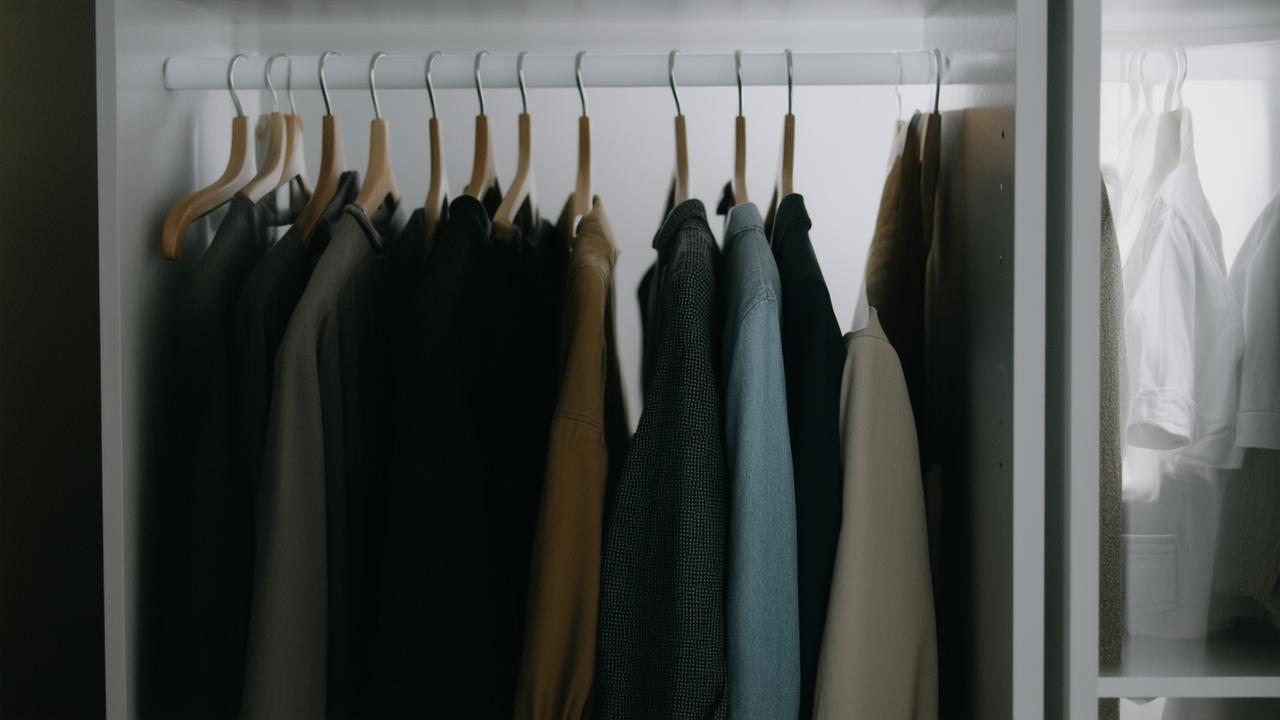
The first time I really noticed colour was on a winter morning in Melbourne, waiting for the 96 tram. The sky was the colour of dishwater, the kind that never quite rinses clean, and everybody on the platform looked like they’d conspired to dress as background characters: greys, washed-out blues, tired blacks. Then a woman stepped onto the platform in a mustard-yellow coat. Heads turned. Not in a runway way, more in a startled, almost irritated way—as if she’d broken an unspoken rule about how much space you’re allowed to take up in public. She stood there, shoulders back, completely at ease in her own brightness. And that was when it hit me: the colours we choose are not just about taste. They are tiny, walking confessions of how we feel about ourselves.
The Quiet Psychology of Colour You Wear
Psychologists have been whispering this for decades, backed by experiments, personality tests, and eye-tracking studies: we gravitate to certain colours when we don’t feel great about who we are. Not just when we’re having a bad day, but when low self-esteem settles in like long-term bad weather.
In Australia, we’re famous for pretending we’re laid-back and unbothered—“She’ll be right,” “No worries,” that whole easy-breezy national costume. But peek into a Monday morning train carriage in Sydney, Brisbane, Perth, Hobart, Adelaide, or the suburbs curling around Canberra, and you’ll see a different costume: the armour of neutrals and shadows, pulled on quietly, day after day.
Psychology research into colour and emotion doesn’t claim that one jumper can diagnose your personality. But across large groups, patterns do emerge. Some colours are magnets for people who’d rather not be noticed, who apologise when someone else bumps into them, who hesitate before speaking in a meeting, even though they know the answer. These colours send signals, often before you’ve said a word.
Three of them stand out over and over again. They’re common, socially safe, and almost invisible. You’ve worn them a thousand times. You might be wearing one right now.
The Three Colours Low Self-Esteem Quietly Loves
1. Black: The Disappearing Cloak
Black in Australia has a strangely glamorous reputation: Melbourne’s “all-black” chic, the staple black jeans, the little black dress, the black work shirt behind the espresso machine. It’s versatile, slimming, and “goes with everything”, which is probably why half the country’s wardrobes look like they’re in permanent mourning.
But psychologists have found something darker stitched into black’s appeal. Among people with lower self-esteem, black is often used as camouflage. It swallows light, hides contours, softens edges. For someone who feels “too much” or “not enough”—too big, too loud, too awkward, too visible—black offers something comforting: it makes you smaller in the room.
In study after study, people who report feeling socially anxious or self-critical are more likely to choose black clothing when they’re expecting to be judged. A job interview. A presentation. Meeting someone new. Black becomes a psychological shield: if I wear something unremarkable, maybe no one will look closely enough to see what’s wrong with me.
In a Sydney office tower lift, late afternoon, you can almost feel it. Men and women in black slacks, black dresses, black suits. Polished, professional—and yet, for many, just that little bit protected. Protected from comments about their bodies, their taste, their boldness. Black says, “Don’t worry, I won’t demand attention.”
Black in itself isn’t the problem. It’s elegant, practical, and sometimes exactly right. The question is: are you choosing it because you love it… or because you’re hiding?
2. Grey: The Safe Middle Distance
If black is the cloak, grey is the fog. You see it drifting through every Australian CBD on a Tuesday morning: charcoal blazers, soft marl jumpers, ironed grey shirts, trackies on the school run. Grey is the great compromise between dark and light—neither here nor there, quietly non-committal.
Psychologically, grey is often linked with emotional neutrality. People who feel flat, defeated, or uncertain often gravitate toward it. When self-esteem drops, the world can seem less colourful, and grey fits that internal landscape a little too well.
Low self-esteem often whispers, “Don’t stand out, you’ll get it wrong.” Grey nods along politely. A grey hoodie in a lecture theatre at ANU, a grey knit in a Fremantle café, a grey suit in a Brisbane boardroom—they blend, obediently, into the background. No loud statements, no need to defend your choices.
In some psychological studies, participants who reported feeling helpless or pessimistic chose grey cards and swatches more often than those who felt confident. It wasn’t always conscious. Grey just felt “right”. Familiar. Safe. A colour that doesn’t ask much of you.
Again, there’s nothing wrong with loving a misty, warm grey. But if your wardrobe looks like a storm cloud and you can’t remember the last time you bought anything that made you feel truly alive in your own skin, that might be a clue.
3. Brown: The Colour of “Don’t Mind Me”
Brown should be the most comforting of colours. It is the colour of eucalyptus trunks in the bush, rich soil in a veggie patch, the wooden decking outside countless Queenslanders, the coffee beans ground fresh at a corner café. It’s earthy, grounded, sturdy.
Yet in clothing, especially in urban Australian life, brown often slides toward “background”. Beige chinos, brown cardigans, tan work shoes, camel coats—sensible, safe, rarely thrilling. In colour-emotion research, brown is frequently associated with reliability and practicality, but not with confidence or vitality. Among people with lower self-esteem, brown can become an unconscious way of shrinking expectations: “Don’t look at me for anything flashy. I’m just… here.”
Think about someone you know who always insists they’re “nothing special”, the friend who never wants to choose the restaurant, the colleague who downplays every compliment. Now picture what they wear. There’s a fair chance you’re seeing some variation of brown or beige, quietly promising not to rock any boats.
In parts of regional Australia, brown tones are also tied to “not getting too big for your boots”—tall poppy syndrome stitched into fabric. Wear anything too bright in a small town pub and you feel the eyes. Wear brown, you’re one of the crowd. For someone who already doubts themselves, that’s powerful reinforcement.
It’s Not Just the Colour — It’s the Story You Tell With It
Before you start panic-donating half your wardrobe, take a breath. Colour psychology isn’t destiny. These three colours—black, grey, and brown—are not cursed. They can be chic, strong, and deeply beautiful. A black linen shirt in Darwin humidity, a grey wool coat on a Hobart pier, a caramel jumper on a cold Ballarat morning: they can feel like home.
The trouble begins when these are the only stories you’re willing to tell with your clothes. When every choice says roughly the same thing: “I’ll stay small. I won’t trouble anyone. I won’t risk being seen.” That’s when colour becomes a mirror of low self-esteem rather than a tool of self-expression.
Psychologists often talk about “behavioural confirmation” loops. The way you act, dress, and carry yourself feeds back into how others respond—and how you then feel about yourself. If you always dress to disappear, people may, quite literally, overlook you. Fewer smiles, fewer conversations, fewer opportunities. And your low self-esteem says, “See? I told you you don’t matter.”
➡️ These zodiac signs are destined for major prosperity in 2026, according to astrological forecasts
➡️ The RSPCA urges anyone with robins in their garden to put out this simple kitchen staple to help birds cope right now
➡️ The RSPCA urges anyone with robins in their garden to put out this simple kitchen staple today
➡️ What you see is not a ship : at 385 metres long, Havfarm is the world’s largest offshore salmon farm
➡️ “I used to multitask constantly,” this habit helped me stop without effort
➡️ Workers in this role often earn more by becoming specialists rather than managers
➡️ If you want a happier life after 60 be honest with yourself and erase these 6 habits
Changing this loop doesn’t require a neon wardrobe revolution. It can start as small as a single scarf or pair of socks. A soft ocean-blue tee under a navy blazer in Brisbane. A rust-coloured beanie on a cold Canberra morning. A pair of earrings in bush-greens and gold worn to Coles, just because.
One practical way to experiment is to notice how you feel in different colours across an ordinary week. Not at a festival, not at a wedding—just on a standard Thursday at work or TAFE. Do you sit differently in an olive shirt than you do in a grey one? Do you speak up more when you’re wearing that faded red flannel? Does anyone respond differently to you? This is you, quietly conducting your own field research on your nervous system.
A Simple Look at Colours and Self-Esteem
The table below gives a quick snapshot of how these three colours often show up in the inner lives of people with lower self-esteem, compared with what they can mean when worn from a place of confidence:
| Colour | Common Low Self-Esteem Use | When Chosen Confidently |
|---|---|---|
| Black | Used to hide body shape, avoid attention, blend into the background. | Symbol of strength, elegance, intention; a clear, bold choice. |
| Grey | Reflects feeling flat, cautious, unwilling to stand out or be “too much”. | Modern, minimalist, calm; a quiet backdrop that lets personality shine. |
| Brown / Beige | “Don’t mind me” energy; safe, sensible, keeps expectations low. | Grounded, earthy, connected to nature and warmth. |
Gently Rewriting Your Colour Story
In a country where the land itself is a riot of colour—the red centre, the turquoise shallows of Ningaloo, the impossible greens of the Daintree—it’s striking how many of us move through it in tones of asphalt and office carpet. Maybe that’s practical. Maybe it’s fashion. But for some, it’s also a quiet reflection of inner doubt.
If you suspect low self-esteem is driving your colour choices, you don’t have to swing from charcoal to hot pink overnight. Start small, start kind:
- Add one item that feels just a little brighter or warmer than your usual—dusty blue instead of black, soft terracotta instead of beige.
- Wear it somewhere low-risk: a walk along the beach, the local markets, a late-night Woolies run.
- Notice what your inner critic says. “Who do you think you are?” “This is too loud.” Recognise that voice—not as truth, but as habit.
- Keep going. Over time, let your colours inch closer to how you want to feel, not just how safe you think you should be.
For some Australians, especially those living with anxiety, depression, or the heavy weight of old criticism, this experiment might stir up more than you expect. If that happens, talking to a psychologist, counsellor, or GP can help untangle what lies beneath the fabric. Self-esteem is rarely about clothes alone—but clothes are a surprisingly honest doorway into the conversation.
Next time you’re standing in front of your wardrobe in the early light, listening to magpies warble in the gum trees outside, pause before you reach automatically for the usual black, grey, or brown. Ask yourself, very quietly: “If I believed, just for today, that I was allowed to take up space, what colour would I choose?”
And then, if you can, let that answer touch your skin.
Frequently Asked Questions
Does wearing black, grey, or brown mean I definitely have low self-esteem?
No. These colours are common and practical, and many confident people love them. Psychology looks at patterns across large groups, not strict rules for individuals. It’s the rigidity that matters: if you never allow yourself anything outside these shades because you’re scared of being seen or judged, that can hint at low self-esteem.
Are there “high self-esteem” colours I should switch to?
There’s no universal high self-esteem palette. Warmer, richer, or more saturated colours—like blues, greens, reds, or even warm neutrals—are often associated with greater energy and confidence, but the key is whether a colour feels like you, not whether it’s on a list. Authenticity beats trend every time.
Is this the same for men and women in Australia?
Similar patterns show up across genders, but social expectations differ. Australian men are often pushed toward darker, safer colours, so black and grey might reflect social norms as much as self-esteem. For women and non-binary people, the pressure can be about not appearing “too loud” or “attention-seeking”. What matters is your personal motivation for choosing a colour.
How can I tell if my colour choices are about low self-esteem?
Ask yourself a few questions:
– Do I avoid brighter or different colours because I’m scared of what others will think?
– Do I feel exposed or “wrong” if I wear anything outside my usual palette?
– Do I use dark or dull colours to hide my body, my age, or my personality?
If the honest answer is often “yes”, self-esteem might be playing a role.
Can changing my wardrobe really improve my self-esteem?
On its own, changing clothes won’t solve deep self-esteem issues. But it can support change. Dressing in ways that reflect how you’d like to feel—more alive, more grounded, more yourself—can give your brain new experiences to build on. Pairing this with therapy, self-compassion, and supportive relationships makes the shift far more powerful.





