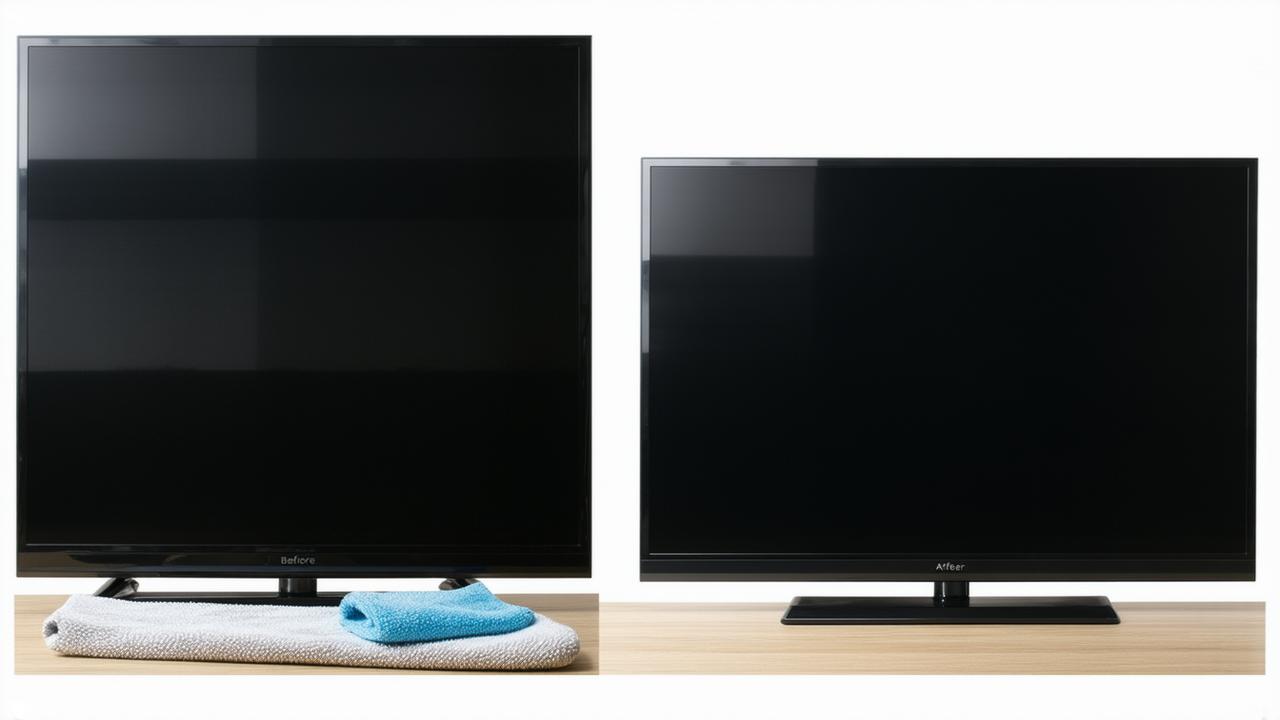
The first time you notice it, you squint. It’s movie night, the lights are low, popcorn’s just starting to crackle in the microwave, and there it is: a smudge. Then another. A faint, greasy fingerprint right across the hero’s face. You lean forward, tilt your head, and suddenly all you can see are hazy patches, dust freckles, and that one mysterious streak that looks like it’s been there since the Boxing Day Test of 2018. Your TV — once sharp and glossy — now looks tired, a little grimy, like it’s been through too many Netflix marathons and kids’ YouTube sessions. And in that moment, you want one thing: to bring it back to that crisp, like-new glory without ruining it.
The Invisible Grime That’s Ruining Your Picture
When you first unboxed your TV, it felt almost sacred. Thin, sleek, impossibly light. You peeled off that plastic screen film with the reverence of opening a new phone. Fast forward a few years, maybe less, and your once-pristine screen has lived a full life. It’s copped dust storms from open windows, coastal humidity from summer nor’easters, fingerprints from curious toddlers, and the occasional sneeze from someone who couldn’t find a tissue in time.
The funny thing is, grime on a TV creeps up like a slow sunrise. You don’t notice the moment it changes; you just wake up one day and realise the picture doesn’t “pop” like it used to. Blacks look a bit washed out. Whites seem dull. Reflections flare more, especially on those bright, sun-blasted Aussie afternoons when the living room feels like a lightbox. You might think your TV is ageing or that the panel is fading, but often it’s not electronics failing — it’s just the surface slowly building up layers of living.
Here’s where things get tricky. That slim pane of glass or plastic on the front of modern TVs isn’t as tough as it looks. It’s coated with delicate, almost invisible layers: anti-glare finishes, protective films, enhancements for colour and contrast. Use the wrong cleaner, and you can strip away or cloud those coatings permanently. One enthusiastic spray of window cleaner and a vigorous rub with a kitchen paper towel can leave fine scratches or faint patchy marks that no amount of polishing will fix.
So the goal isn’t just to clean. It’s to restore — safely. To remove the built-up oils, dust and film without attacking the delicate surface that’s doing so much hard work behind the scenes every time you power on.
Why “Quick & Effective” Doesn’t Mean Harsh
There’s something deeply satisfying about a job that’s both fast and done properly, especially when it comes to home tech. We’ve all had that moment where we grab the closest thing at hand — the hem of a t-shirt, a dishcloth, maybe even a wet wipe — and swipe it across the TV in a half-second impulse. It looks better for a heartbeat, then as the streaks dry under the glow of the screen, you realise you’ve just made things worse.
“Quick and effective” when you’re dealing with delicate screens doesn’t mean aggressive. It means smart. It means using tools and techniques that work with the material, not against it. Think of it like caring for a good pair of sunnies: you wouldn’t polish them with steel wool and Windex, because you know the lenses would end up cloudy and scratched. Your TV screen is even more sensitive.
What you really need is a method you can roll out in under ten minutes, without special gear, that leaves the screen so clean you forget it’s even there. A method you can trust enough to hand over to your teenager or partner with a simple “Just do it this way, please.”
And yes, that method exists. It doesn’t require fancy commercial sprays, expensive kits, or a trip to the electronics shop. Most of what you need is probably already in your home — or can be picked up on your next run to Woolies, Coles, or Bunnings for the price of a coffee.
The Simple Aussie-Friendly Method That Actually Works
Imagine it’s a Saturday morning. Outside, magpies are warbling, someone up the street is giving the mower a workout, and there’s that calm, slow-space feeling before the day really starts. It’s the perfect time to give your screen a reset.
First, you turn the TV off. This isn’t just about saving power. A dark, cool screen shows dust and streaks much more clearly. It also means less static, so dust won’t be magnetically attracted back as quickly. While it cools, you grab your tools:
- Two clean, dry microfibre cloths (the kind used for glasses or car detailing).
- Clean, room-temperature water in a small bowl or spray bottle.
- (Optional) A tiny splash of plain white vinegar if there are stubborn greasy marks.
That’s it. No detergents. No glass cleaner. No multi-surface sprays. No methylated spirits. These might feel efficient, but they can attack the coatings on modern panels and leave them permanently cloudy.
You start with the first microfibre cloth completely dry. Lightly, and with almost no pressure, you glide it over the screen in wide, gentle passes — side to side or top to bottom. You’re not trying to polish yet; you’re just picking up loose dust, pet fur, and any sand or grit. This is crucial for Aussie homes — fine sand from coastal breezes or dust from hot inland winds can be abrasive. If you go straight in with a damp cloth, those tiny particles can be dragged over the surface like sandpaper.
Once that loose layer is gone, you lightly dampen the second cloth. Not wet — just barely moist. If you’re using water alone, a couple of sprays onto the cloth (never directly onto the screen) is enough. If there are obvious oily marks — fingerprints, smears from kids’ hands after eating shapes or ice blocks — add a teaspoon of white vinegar to a cup of water and mix it well. This gives you just enough cleaning power without harsh chemicals.
Now, you work slowly. Small sections. Gentle circles or straight strokes. The screen shouldn’t glisten with water; it should just feel slightly cool as the moisture evaporates. Any time you see a streak forming, ease off the pressure and let the cloth do the work. Don’t scrub. Scrubbing is for BBQ plates, not TV panels.
After you’ve covered the whole screen, swap back to the first dry cloth for a final pass. This buffs away any remaining moisture and leaves the surface clear and even. Step back, let the remaining dampness evaporate for a minute or two, then turn the TV back on. That moment when the image snaps into sharp, contrasty life again — that’s the reward.
Essential Do’s & Don’ts (Quick Reference)
Here’s a quick comparison to keep you out of trouble when you’re in a rush and tempted to reach for the nearest spray bottle:
| Safe To Do | Avoid Completely |
|---|---|
| Use clean microfibre cloths only | Using paper towel, tissues, or kitchen sponges |
| Turn TV off and let it cool | Cleaning while the screen is warm or on |
| Lightly damp cloth with water (or mild water-vinegar) | Spraying liquid directly onto the screen |
| Gentle pressure and slow movements | Scrubbing, pressing hard, or “polishing” vigorously |
| Wringing cloth almost completely dry before use | Letting moisture run down into the bezel or vents |
| Using plain water as your go-to cleaner | Using window cleaner, alcohol, or ammonia-based products |
Living With Dust, Kids, Pets & Harsh Aussie Light
Australian homes ask a lot of their screens. Open-plan living, sliding doors that stay wide all day, ceiling fans chopping the air, and the kind of bright sunlight that shows every speck — it’s pretty much a recipe for dust and glare. Add kids flicking Vegemite toast crumbs around the lounge, pets shaking off after a dash in the rain, and the occasional coastal salt mist drifting in, and your TV ends up on the front line.
But small, easy habits can keep your screen closer to that like-new state for much longer. Every week or two, do a simple “dry dust” pass with a clean microfibre cloth — no moisture, no effort, just a light once-over when you’re already walking past. This stops dust binding with humidity and turning into that clingy film that needs a damp clean.
Think about your TV’s position too. In many Aussie homes, the TV sits opposite a big window or glass door. It looks great in magazines, but in reality it means baking heat, reflections, and faster build-up of airborne grime. If you can, angle the TV slightly away from direct light or use a sheer curtain in the brightest part of the day. Your eyes — and your screen — will thank you.
And then there’s the hands. Little ones love tapping the screen to show you “that one” on Bluey, and older kids might use it like a giant touchscreen when they get carried away with gaming. Setting a gentle “no touching the screen” rule (and offering up a spare remote or game controller instead) can drastically cut down how often you need a proper wet clean.
When a Deep Clean Feels Like a New TV
There’s this quiet magic in that first show you watch after a good clean. Colours feel richer. Skin tones look more natural. The grain in a movie suddenly has depth instead of fuzz. You might even wonder if you’d just become used to watching through a dirty veil.
➡️ The streak-free window-cleaning method that still works flawlessly even in freezing temperatures
➡️ Thousands of passengers stranded in USA as Delta, American, JetBlue, Spirit and others cancel 470 and delay 4,946 flights, disrupting Atlanta, Chicago, New York, Los Angeles, Dallas, Miami, Orlando, Boston, Detroit, Fort Lauderdale and more
➡️ The sleep pattern that predicts alzheimer’s risk 15 years before symptoms
➡️ These zodiac signs are destined for major prosperity in 2026, according to astrological forecasts
➡️ The RSPCA urges anyone with robins in their garden to put out this simple kitchen staple to help birds cope right now
➡️ The RSPCA urges anyone with robins in their garden to put out this simple kitchen staple today
➡️ What you see is not a ship : at 385 metres long, Havfarm is the world’s largest offshore salmon farm
A proper, careful clean won’t make an old panel perform like the latest OLED, but it can genuinely reclaim sharpness and clarity you didn’t realise you’d lost. Those subtle reflections that used to bloom across dark scenes ease off. That annoying soft haze around bright objects fades. If you watch a lot of sport — footy, cricket, tennis — the ball becomes easier to track, motion looks tidier, and your eyes feel less strained by glare bouncing off the grime.
For many people, this is the moment they decide they don’t need to upgrade just yet. What felt like “my TV’s getting old” was largely just neglect on the outside. In a world where new models tempt us every year, it’s oddly satisfying — and far cheaper — to restore what you already have with ten minutes, two cloths, and a bit of care.
Keeping Your Screen “Like-New” With Minimal Effort
If you want that fresh, clear look to last, think of your cleaning in two layers: quick touch-ups and the occasional reset.
- Weekly or fortnightly: A 30-second dry dust with microfibre.
- Monthly or when you notice fingerprints: The full quick method — off, cool, dry dust, then a light damp clean and buff.
- After big events: Post–Grand Final party or kids’ sleepover? Assume there are fingerprints and snack smears lurking and give it a once-over.
Store a small microfibre cloth in the TV cabinet or drawer, not out in the open where it can pick up dust and kitchen grease. Give it a wash every so often with mild detergent — no fabric softener, which can leave film that transfers back to the screen.
And if you ever feel tempted to “just use whatever’s under the sink,” pause and remember: the TV is one of the most expensive single pieces of kit in most Aussie living rooms. Spending a few extra seconds doing it the gentle way is far cheaper than living with a permanently damaged screen — or replacing the entire unit years earlier than you needed to.
FAQs: Restoring & Caring for Your TV Screen
Can I use window cleaner on my TV?
No. Most window cleaners contain alcohol, ammonia, or other solvents that can damage the delicate anti-glare and protective coatings on modern TV screens. Stick to water, with a tiny amount of white vinegar only if really needed.
Is it safe to use wet wipes or baby wipes?
It’s best to avoid them. Many wipes contain moisturisers, fragrances, or cleaning agents that can leave streaks or damage coatings over time. They can also be too damp, risking moisture getting into the edges of the screen.
What type of cloth is best for cleaning my TV?
Use a clean, soft microfibre cloth — the kind designed for glasses or camera lenses. Avoid paper towel, tissues, kitchen cloths, or anything abrasive. Always make sure the cloth is lint-free and freshly washed.
How often should I properly clean my TV screen?
For most Australian homes, a quick dry dust every week or two and a gentle damp clean once a month is enough. If you have kids, pets, or live in a particularly dusty or coastal area, you might need to clean it a little more frequently.
What if there are stubborn marks that won’t come off?
Try a slightly stronger mix of water with a small splash of white vinegar on a damp cloth, and use gentle circular motions. If the mark still won’t budge, it may be damage to the coating rather than dirt. In that case, contact the manufacturer or a professional rather than scrubbing harder.
Can I damage my TV by pressing too hard while cleaning?
Yes. Pressing hard can distort or damage the panel behind the surface, especially on very thin modern TVs. Always use light pressure and let the cloth and moisture do the work. If you feel any flex or give in the screen, you’re pressing too hard.
Is it okay to clean the screen while the TV is on?
It’s better to turn the TV off and let it cool. A dark screen shows dust and streaks more clearly, and a cool surface reduces the risk of moisture evaporating unevenly or reacting with heat. It’s also safer if you’re working around power points and cables.





