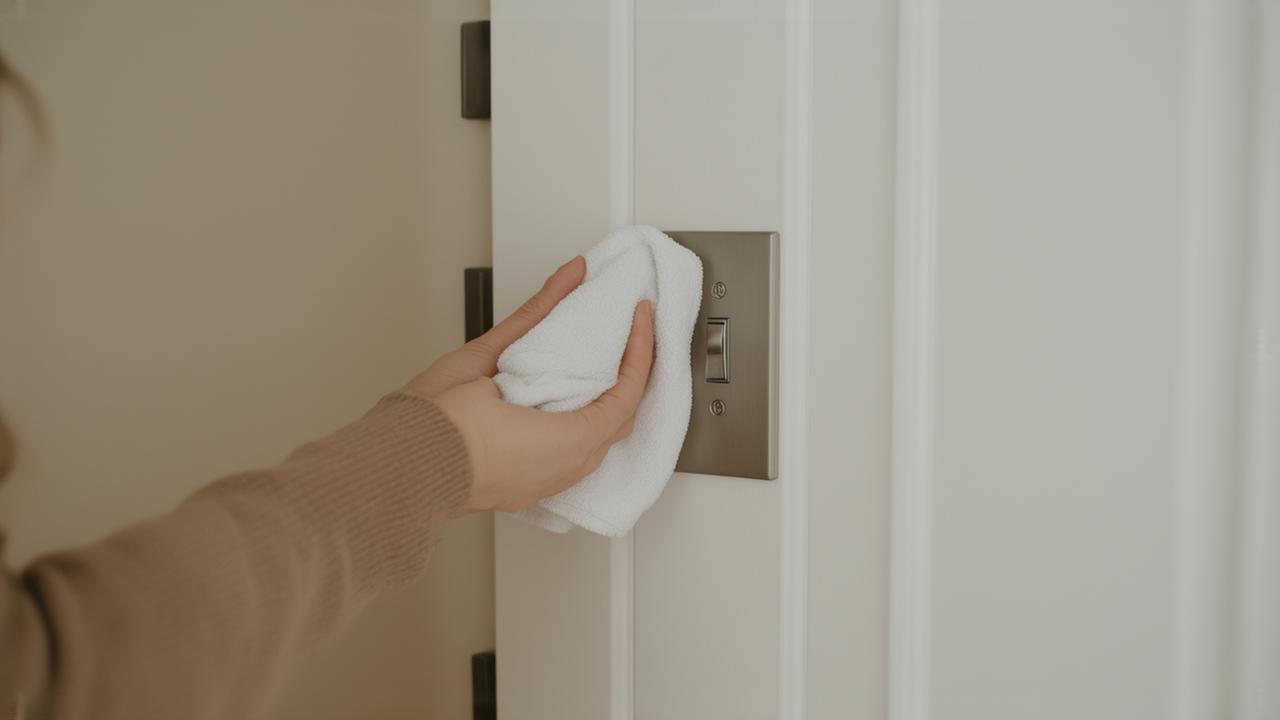
The first time you really look at a light switch, it can feel a bit like catching your own reflection in a shop window when you least expect it. You see more than you meant to. The small gray smudges where fingers have landed a thousand times. The faint halo of dust around the plate. A tiny constellation of marks that quietly records every hurried morning, every late‑night stumble to the kitchen, every child’s sticky hand. For years, these things blend into the background, part of the visual wallpaper of home. And then one day, cloth in hand, you wipe—and something almost magical happens. The room seems to exhale.
The Places Your Hands Remember
Walk through your home for a moment in your mind. Not the big, obvious things, like sofas and bedspreads and the art on the walls. Think instead of the things you touch without thinking: the cool metal of the front door handle when you come in from the cold, the familiar click of the bathroom light switch, the slightly loose knob on the bedroom door. These are the handholds of your daily life.
Every home has a rhythm, a choreography of movement etched into tiny details. The front door handle that knows your hurried twist when you are running late. The kitchen light switch, smudged by cooking oil and the shadows of a dozen family dinners. The hallway switch that glows faintly under your fingertips at midnight. These surfaces are like small diaries of touch—quiet, unassuming, but deeply personal.
When you stand close enough to really look, you notice it. The thin, dark outline where palms and fingers have painted the plastic over time. The faint stickiness that’s more sensation than sight. Maybe there’s a small chip in the paint around the plate, where a piece of furniture once bumped the wall. They are not disasters or catastrophes. They are the tiny, ordinary frays in the fabric of home. And yet, left alone, they slowly change how a room feels—sometimes in ways you only recognize after they are gone.
Why These Small Surfaces Matter So Much
It seems almost silly at first, the idea that cleaning a light switch or a door handle could change the entire feeling of a home. After all, these are small things, almost invisible in the grand scheme. But our brains are quietly brilliant at picking up what we don’t consciously see.
You walk into a room and feel something: a slight heaviness, a sense of clutter, a background noise of visual stress. You might blame the furniture arrangement or the wall color or the pile of mail on the counter. But often, the unease comes from a collection of tiny, unattended details that signal neglect. Smudged switches. Cloudy door handles. Dust-softened corners. Your eyes skim right past them, but your nervous system doesn’t.
A clean light switch plate has sharp edges again. The bright rectangle stands out crisply against the wall. A door handle free of dull fingerprints catches light differently, quietly gleaming when the sun hits it. These are subtle changes, but they reframe your experience of a space. They whisper, instead of shout. They say: someone cares about this place. Someone tends to it. Someone is paying attention.
The Silent Emotional Weight of Grime
Grime is not just a hygiene problem; it is an emotional one. A spotty switch or a sticky handle is a tiny unresolved thing. It’s a task you passed a dozen times and didn’t do. It’s the small tug of “I should get to that” collecting dust in the back of your mind. Individually, they’re negligible. Together, they become a hum of low‑level guilt.
Cleaning them is not just about restoring shine. It is about interrupting that hum. About answering the quiet call for care that every home makes over time. When you wipe away the buildup, you are not just removing dirt; you are erasing a backlog of small, whispered shoulds that cling to surfaces and to your thoughts alike.
The Sensory Shift When You Finally Clean Them
There is a moment, rag in hand, when you feel the texture change. At first the surface under your fingertips has a slight drag, a tackiness where oils and dust have joined forces. The cloth snags in the tiniest way as it moves. Then, after a few passes, it glides. Your hand feels the difference before your eyes do.
You step back and notice the light catching the switch plate cleanly for the first time in months, maybe years. The small circle of brightness seems to lift the wall around it. The door handle, now clear of dull prints, feels smooth and cool when you twist it, instead of faintly sticky or vague. You don’t just see the clean; you feel it in the intimacy of your palm closing around a handle that now feels somehow new.
This is where the shift happens. Not in grand gestures, but in the quiet recalibration of everyday contact. Every time you reach for that switch, some subconscious part of you registers that the world is slightly more ordered than it was before. That someone—maybe you, just an hour ago—has already done a small kindness on your behalf.
A Tiny Ritual of Attention
Cleaning switches and handles can become a kind of ritual, a way of pausing to reconnect with your space. It doesn’t require heavy lifting or a whole weekend. Just a damp cloth, a bit of mild cleaner, and five minutes of gentle presence.
You move from room to room like a quiet inspector of thresholds. The entrance. The bedroom. The bathroom, where the light is a little harsher and the flaws a little more obvious. Every wipe is a moment of noticing: this is where we come in late, this is where the kids burst through with wet hair, this is where someone once leaned and laughed so hard they left a handprint. These surfaces remember us. When we clean them, we are not erasing that memory—we are refreshing the page.
The Surprising Power of Thresholds
Handles and switches are threshold objects. They sit between spaces and moments: outside and inside, dark and light, public and private. We touch them in motion, on our way somewhere else. But that is exactly why they matter so much. Every transition you make in your home begins or ends with them.
The way a threshold feels has a quiet influence on how you experience what comes after it. A sticky, slightly grimy bathroom doorknob sets a tone before you even see the room. A greasy kitchen switch carries a hint of fatigue, of too many meals and not enough rest. Subtle, but real. In contrast, a clean, smooth handle feels like permission to reset. You open the door and there is no small friction tugging your attention sideways.
How a Clean Threshold Changes a Room
Imagine two identical rooms. Same furniture, same color, same amount of natural light. In one, the light switches and door handles are grubby. In the other, they’re utterly clean. You might think you wouldn’t notice—but step into each space after a long day, and your body tells a different story. The clean thresholds make the second room feel more open, lighter, more thoughtfully kept, even if nothing else has changed.
This matters for guests, too. Visitors may not put a name to it, but when they press a clean door handle or flick a spotless switch, it sends a wordless signal: this home is loved. It’s a bit like the difference between being handed a freshly washed glass of water and one with faint fingerprints at the rim. The water is the same; the feeling is not.
The Unexpected Calm of Micro‑Cleaning
There is a particular kind of peace that comes from tending to small things. Life can feel relentlessly big—big responsibilities, big news, big changes you can’t quite contain. In the middle of that, there is something profoundly grounding about picking a single, tiny piece of the world and making it unquestionably better in under a minute.
Cleaning light switches and door handles is a perfect example of what could be called micro‑cleaning. You don’t reorganize the whole closet—you just wipe the knob. You don’t deep clean the kitchen—you just shine the switch plates. The job is small enough that starting doesn’t feel like a negotiation with your energy levels. But the effect is disproportionate to the effort.
➡️ The new hair coloring trend that naturally covers grey while creating a softer, more youthful appearance than traditional dye
➡️ Legendary Rock Band Concludes 50-Year Career, Retiring the Anthem That Defined Them
➡️ Inheritance: the new law coming into force in January that changes everything for descendants
➡️ Inheritance: the new law coming into force in January that changes everything for descendants
➡️ Psychologists identify subtle, unconscious phrases that frequently appear in the speech of deeply self-centered individuals
➡️ The neighbor hasn't seen her for two years: a retiree uses her social housing as a second home and contests her eviction
➡️ People who snack constantly often confuse boredom with hunger
| Small Action | Time Needed | How It Changes the Feel of Home |
|---|---|---|
| Wipe a single light switch plate | 30–60 seconds | Sharpens the look of the wall, adds a tiny spark of “newness.” |
| Polish a front door handle | 1–2 minutes | Makes every arrival feel more welcoming and intentional. |
| Clean bathroom light and fan switches | 3–4 minutes | Softens the sense of “wear” in a high‑use, vulnerable space. |
| Do a quick “switch and handle walk” through the house | 5–10 minutes | Creates a house‑wide feeling of clarity and care. |
There is also a rhythm to it. The little squirt of cleaner, the circular motion of the cloth, the way you brace a plate gently with your other hand. The click of the switch as you test it afterward, just because. Done slowly, it becomes more than a chore. It becomes a way of reclaiming authorship of your space in very small, manageable strokes.
When Clean Feels Like Breathing Room
After a round of switch‑and‑handle cleaning, your home does not look dramatically different at first glance. But move through it, and you start to notice a change in how your body moves. You are less snagged by small irritations. Your fingers don’t recoil slightly at unexpected stickiness. Your eyes aren’t catching flashes of gray smudges in the corners of your vision.
Instead, there is a sense of unobstructed passage—from room to room, from task to rest. The thresholds are clear. You may find that you sleep a little easier, or that sitting on the couch at the end of the day feels a touch more deserved, because you have quietly told your home: I am here, and I am caring for you, even in the smallest ways.
Inviting a New Relationship With Your Home
In the end, cleaning light switches and door handles is really about relationship. Homes are not statues; they are living, breathing ecosystems of use. They age where we touch them most. The wear on a handle is an imprint of your life, yes—but it is also a question: will you tend to this?
You don’t have to answer with perfection. No one’s home is spotless all the time. But choosing these humble objects as a place to begin changes the story you tell yourself about both your space and your capacity. It says: I may not be able to fix everything today, but I can make the small moments of contact softer, kinder, cleaner.
So the next time you pass a light switch, let your eyes linger for just a second. Notice the faint halo, the soft grime at the edges, the residue of days and nights layered so thin it almost disappears. Then, when you have a minute, come back with a cloth. Press it to the plastic, feel the little resistance, the way it gives. When you step away, pay attention not only to what looks different, but to what feels different.
Because somewhere between the before and after of that simple gesture, your home shifts—almost imperceptibly—from a place you move through on autopilot to a place you are actively, gently shaping. And that, in its quiet way, changes everything.
Frequently Asked Questions
How often should I clean light switches and door handles?
For most homes, a gentle wipe every one to two weeks is enough to keep switches and handles looking and feeling fresh. In high‑traffic areas—like entryways, bathrooms, and kitchens—weekly attention can make a noticeable difference, both in hygiene and in how the space feels.
What’s the safest way to clean light switches?
Always avoid spraying cleaner directly onto the switch. Instead, lightly dampen a soft cloth with a mild, non‑abrasive cleaner, wring it out well, and then wipe the switch plate and surrounding wall. Follow with a dry cloth. This keeps moisture away from the electrical components while still lifting grime.
Can I damage door hardware by cleaning it too often?
You are unlikely to damage door hardware if you use gentle methods. Avoid harsh abrasives or strong chemicals that can strip finishes. A soft cloth and a mild cleaner—or even just warm, soapy water, well wrung out—are usually enough. For specialty finishes like brass or antique hardware, use cleaners made for that specific material.
Why do cleaned switches and handles make my home feel different even if nothing else changes?
Because these are things you touch constantly, your body registers their condition even when your eyes don’t. Clean, smooth contact points reduce subtle sources of irritation and signal care and order. The effect is cumulative: every clean threshold quietly softens how you experience your home.
Where should I start if my home feels overwhelming to clean?
Pick one small zone of thresholds, like “every switch and handle in the hallway” or “just the bathroom and kitchen.” Spend five to ten minutes there and stop. You will feel a shift disproportionate to the effort, and that small win can gently open the door to tending other parts of your home over time.





