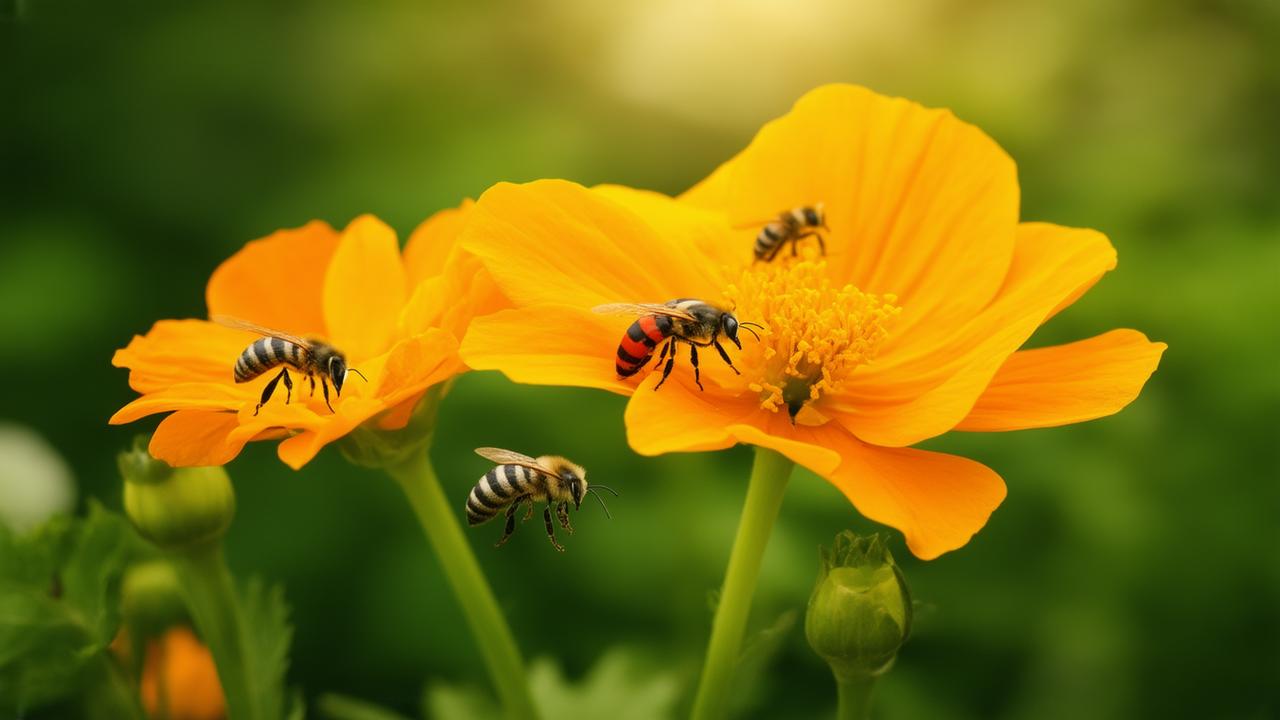
The first time you see your vegetable garden come alive with wings and legs and soft, purposeful buzzing, it changes how you think about “bugs.” Suddenly, they’re not just pests to be battled with sprays and traps. They’re tiny gardeners, partners in the work, drifting from flower to flower, hunting along the stems, slipping beneath leaves where you can’t see. The air hums, the soil moves, and you realize: this is an ecosystem, not a battlefield.
The Silent Invitation: How Plants Call in the Helpers
Walk into a thriving garden on a warm morning and pay attention to the edges. That’s where the magic usually starts. A feathery spray of blossoms, a cloud of delicate scent, a low, steady murmur. This is the language of invitation—plants calling in allies you might never have thought to recruit.
Long before we lined garden beds with marigolds or tucked herbs among tomatoes, plants were experimenting with their own quiet defense systems. Some release fragrances that confuse or repel pests. Others offer nectar and pollen so irresistible that beneficial insects set up permanent residence. When you start choosing plants not just for color or flavor, but for the tiny communities they nourish, your garden shifts from fragile to resilient.
Four plants, in particular, earn their keep over and over again: they pull in pollinators and predators, and at the same time help keep the usual troublemakers—aphids, beetles, caterpillars, and more—at arm’s length. You’ll recognize their names, but maybe not the full extent of their powers: dill, calendula, sweet alyssum, and nasturtium.
Dill: The Umbrella of Tiny Hunters
You can smell it before you see it. Crush a frond of dill between your fingers and there’s that sharp, green, almost citrusy scent that reminds you of pickles and summer kitchens. But let the plant stand in the garden, and it becomes something else entirely: a soft, airy beacon for some of the best hunters you could hope to host.
Dill’s flower heads—flat, yellow umbrellas of tiny blossoms—are like open buffets for beneficial insects. Lacewings float in, their fragile wings catching the light. Parasitic wasps, so small you might miss them unless you lean close, comb their way along each cluster. Ladybugs rest between the stems, hunting aphids on nearby plants. All of these insects have one thing in common: their larvae are voracious predators of pests.
Plant dill near your brassicas—cabbage, kale, broccoli—and it functions as a decoy and a shield. Black swallowtail butterflies will lay their eggs on dill instead of your parsley or carrot tops. Aphids and caterpillars that do land nearby are more likely to meet a swift end, thanks to those hovering wasps and stalking larvae.
Dill also plays a gentler role. Its scent can confuse or repel some pest insects, making it harder for them to hone in on their favorite crops. Instead of clean rows of unprotected vegetables, your garden becomes a mixed, slightly chaotic tapestry—visually beautiful, yes, but also strategically confusing to pests.
Calendula: The Golden Decoy with a Sticky Surprise
Calendula looks innocent. There it is, a ring of golden or deep orange petals, shining like a small sun above the soil. But beneath that cheerful bloom is a quietly ruthless strategy. Calendula is what gardeners call a “trap crop”—it lures in pests like aphids, whiteflies, and leafhoppers, then makes life difficult for them.
Run your fingers along a calendula stem and you’ll feel it—slightly sticky, almost resinous. Those secretions can trap small soft-bodied insects or slow them down. Instead of spreading through your lettuce or kale, they gather on the calendula, where they’re easier prey for predators like ladybugs, lacewings, and hoverfly larvae.
At the same time, calendula’s bright flowers are a feast for pollinators. Bees of all sizes burrow deep into the blooms, collecting pollen and nectar before bouncing off to your squash, tomatoes, and beans. You’ll notice that once calendula begins blooming in earnest, the whole garden feels busier—more traffic, more movement, more life.
Calendula is tough, tolerant of less-than-perfect soil, and generous with its seeds. It will often reseed itself if you let a few flowers dry on the stem and fall. Year after year, you’ll find new seedlings popping up in unexpected places, quietly volunteering to guard your vegetables once again.
Sweet Alyssum: The Low, Fragrant Carpet of Protection
Bend close to a patch of sweet alyssum and the scent might surprise you. It’s soft, honeyed, with a whisper of wild meadow. The flowers themselves are tiny—clusters of white, purple, or soft pink—but what they lack in size they make up for in abundance. A single plant can throw a long, lush carpet across the edge of a bed.
Sweet alyssum is a powerhouse for attracting hoverflies (also called syrphid flies). You might mistake them for small bees at first: they hover in place, wings whirring, before settling for a quick sip of nectar. Their adult stage runs on pollen and nectar, but their larvae are something else entirely—tiny green or brown commas that consume aphids with startling efficiency.
Scatter sweet alyssum near plants that tend to suffer from aphid infestations—peas, kale, chard, or even roses if you mix flowers and vegetables. Over time, you’ll notice fewer outbreaks and more balanced populations. Instead of racing for the insecticidal soap at the first sign of trouble, you’ll catch yourself wondering: “Have the hoverflies found this yet?”
Beyond hoverflies, sweet alyssum brings in small parasitic wasps, predatory beetles, and an assortment of wild pollinators. It also serves a practical role for you: as a living mulch. Its dense growth can shade the soil, helping to keep roots cool and moisture locked in during hot spells. And because it stays low, it never competes with taller vegetables for light.
Nasturtium: The Spicy Shield and Living Aphid Magnet
Nasturtiums are the rebels in the garden—the ones that tumble over edges, slip between stones, and send their round, shield-like leaves and jewel-bright flowers wherever they please. Their scent is peppery and green; their taste (yes, the leaves and flowers are edible) is bright, sharp, and a little wild on the tongue.
To certain pests, nasturtium is irresistible. Aphids, especially black aphids, will flock to nasturtium leaves and stems, clustering in shocking numbers. At first, it can be jarring to see so many on a single plant—but this is exactly why nasturtiums are so valuable. They act as a living sacrifice, drawing aphids away from your beans, peas, and brassicas.
Once the aphids gather, the next wave arrives: ladybugs, hoverflies, lacewings. They find the concentrated food source and move in. In a sense, nasturtiums are training wheels for your beneficial insect population—they make it easier for predators to find their prey and to stick around in your garden.
Nasturtiums also have a reputation for repelling certain pests, like squash bugs and some beetles, especially when grown as a border or interplanted with vulnerable crops. Their sprawling growth softens the lines of a vegetable bed, turning rigid rows into a more natural, flowing patchwork. In the evening light, their flowers—yellows, oranges, reds—glow against the backdrop of green vines and dark soil.
Planting the Partnerships: A Simple Guide
It can be tempting to overthink companion planting, to search for a perfect chart or rigid system. But beneficial insect gardening is more about diversity and pattern than strict rules. Think about layering colors, heights, and bloom times so that there’s always something flowering, always a reason for friendly insects to stay.
Here’s a quick, mobile-friendly overview of how these four plants work in your vegetable garden:
➡️ An old-school moisturizer with no luxury branding is crowned the number one choice by dermatology experts
➡️ Day will slowly turn to night as the longest total solar eclipse of the century passes across several regions, creating a rare and spectacular event that scientists say will captivate millions
➡️ Gray hair: 5 habits to adopt to enhance salt and pepper hair without the “granny” effect, according to a hairstylist
➡️ “They age you instantly”: 5 “granny” hair trends to ditch for good after 50 according to a hairstylist
➡️ Baking soda becomes the unexpected remedy for wrinkles and dark circles say beauty specialists
➡️ France and Rafale lose €3.2 billion deal after last?minute U?turn
➡️ Climate scientists caution that compounding snow intensity and wind shear could generate near-whiteout conditions exceeding historical safety thresholds
| Plant | Key Beneficial Insects | Helps Protect | Main Pest Effects |
|---|---|---|---|
| Dill | Ladybugs, lacewings, parasitic wasps | Cabbage, kale, broccoli, carrots | Attracts predators of aphids, caterpillars; distracts swallowtail caterpillars |
| Calendula | Bees, ladybugs, hoverflies | Lettuce, brassicas, tomatoes | Traps aphids and whiteflies; creates hunting ground for predators |
| Sweet Alyssum | Hoverflies, parasitic wasps, small pollinators | Peas, kale, chard, strawberries | Reduces aphid outbreaks; covers soil as living mulch |
| Nasturtium | Ladybugs, hoverflies, other aphid predators | Beans, cucumbers, brassicas, squash | Trap crop for aphids; can deter some beetles and squash pests |
Scatter these plants through your garden instead of confining them to one neat row. Tuck dill between tomatoes, edge a bed with sweet alyssum, plant a circle of calendula around young cabbage, and let nasturtiums cascade from containers into your paths. The goal is to break up monocultures and create a patchwork that feels more like a meadow than a factory line.
Watching the Web Come Alive
Once you begin gardening this way, you start to notice things you might have overlooked before. A tiny wasp carefully inspecting a tomato hornworm. A lacewing egg, suspended on the end of a delicate filament. The sudden absence of aphids on a leaf that had been crowded a few days before.
This is the quiet reward of planting for beneficial insects: the sense that you’re not alone in the work. Every dill seed you sow, every calendula seedling you tuck into the soil, is an invitation. You’re saying to the small, winged world, “There’s food here. There’s habitat. Come help.”
Your role shifts from that of controller to collaborator. You still monitor, still intervene when necessary, but more often with observation than with sprays. Over time, your garden learns its own rhythms. Some years the hoverflies are everywhere. Other years, it’s the ladybugs that dominate. The balance tips and shifts, but the web stays intact.
And somewhere in that slow, buzzing, flickering dance of wings, you find a quieter version of yourself as well. More patient. More curious. More willing to trust that when you plant the right things, the helpers will come.
Frequently Asked Questions
Do I need all four of these plants for my garden to benefit?
No. Even adding one or two—like dill and sweet alyssum—can make a noticeable difference. The more diversity you include, though, the more stable and resilient your garden ecosystem becomes.
Will these plants take over my vegetable beds?
They can spread, especially calendula and nasturtium, but you remain in control. Simply thin or pull extras, or trim them back if they crowd young vegetables. Most are easy to manage by hand.
Are these plants safe around children and pets?
Nasturtiums, dill, and calendula are commonly grown in family gardens and are generally considered safe. Nasturtiums and calendula are even edible. As always, supervise children and teach them not to eat anything from the garden unless an adult says it’s okay.
Can I grow these in containers on a balcony or patio?
Yes. Dill, calendula, sweet alyssum, and nasturtium all do well in containers with good drainage and regular watering. Even a few pots can attract beneficial insects and support nearby potted vegetables or herbs.
Do I still need to use pesticides if I plant for beneficial insects?
In many cases, you’ll find you need them far less, or not at all. Broad-spectrum pesticides can harm the very beneficial insects you’re trying to attract. If you must intervene, start with the least disruptive methods, like hand-picking or targeted organic treatments.
When should I sow these plants for best results?
Sow after the danger of frost has passed and the soil has warmed a little. Stagger your sowings—every few weeks—so you have continuous blooms and habitat for beneficial insects throughout the growing season.
Will these plants attract unwanted insects too?
They may draw in some pests, especially trap crops like nasturtium and calendula—but that’s part of their role. By concentrating pests in a few places and feeding predators, they help protect the rest of your vegetables and support a more balanced, self-regulating garden.





