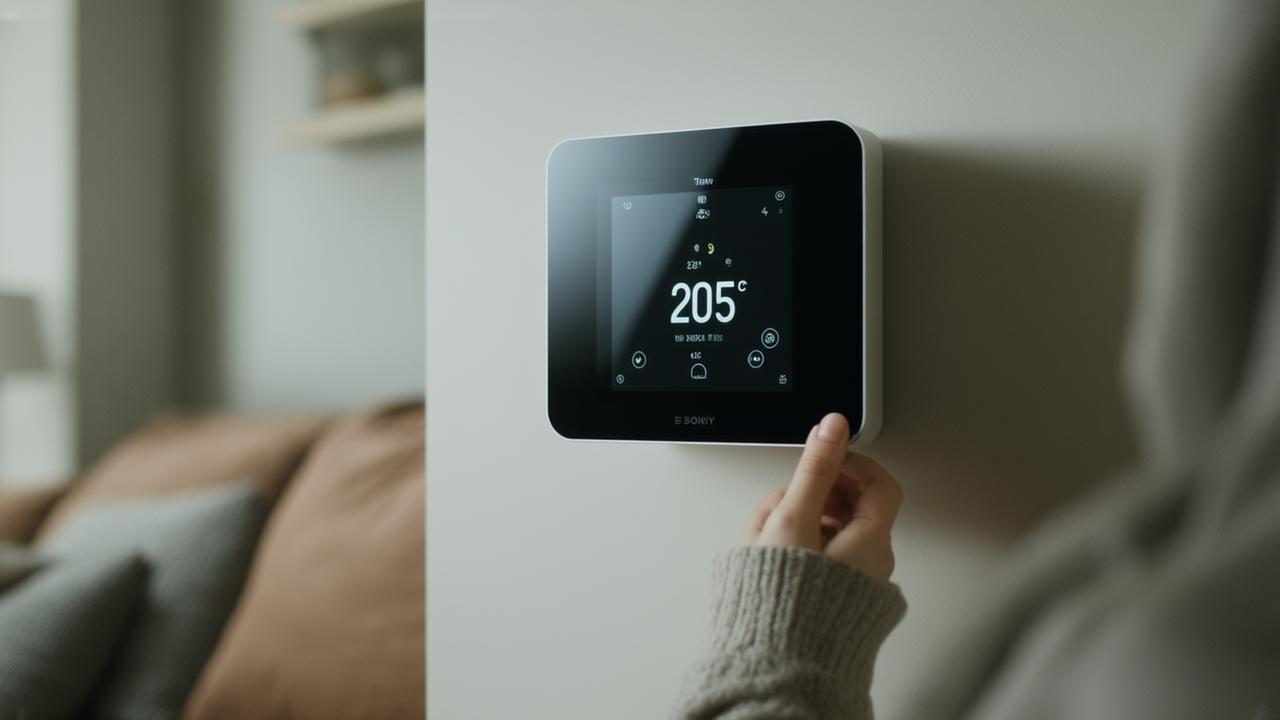
The first cold evening of the year always sneaks up on you. One moment, your windows are cracked open to let in the last of the autumn light; the next, you’re standing in the hallway, hand hovering over the thermostat, wondering: How warm should home really be? For decades, many households in Europe and beyond carried an almost mythical number in their heads: 19 °C. Sensible. Efficient. “Good enough.” But as you rub your hands together and listen to the central heating stir awake, a quiet revolution is unfolding in the background. Scientists, doctors, and energy experts are rewriting the rules—and the old 19 °C standard is quietly slipping into the past.
The Old 19 °C Rule: A Relic of Another Era
For years, 19 °C was the benchmark whispered in advice columns, government pamphlets, and energy-saving campaigns. It was born out of a particular moment in history: oil crises, rising fuel prices, and a push to curb energy use without plunging people into discomfort. It sounded scientific. It sounded disciplined. It felt like the reasonable compromise between comfort and conscience.
Think back to homes built in the 1960s or 70s. Single-glazed windows. Drafts that hissed under doors. Radiators clanking like old locomotives. In these houses, 19 °C on the dial rarely meant 19 °C in your bones. You padded about in thick socks and wool sweaters; you moved more, you shivered a little, and it was considered normal. Energy was expensive, climate talk was faint, and occupational health guidelines were mostly written around office workers in suits—not children at floor level or older adults sitting still for hours.
That world is gone. Our houses are better insulated. Our jobs are more sedentary. Our awareness of health—and of the climate emergency—has sharpened. A number, once born of necessity and compromise, no longer fits the bodies and lifestyles it was meant to guide. Now, as evidence piles up, experts are quietly but firmly agreeing: the 19 °C rule is outdated.
The New Temperature Sweet Spot: What Experts Recommend Now
If 19 °C is no longer the gold standard, what is? Instead of one rigid number, experts now talk about a range—a “comfort lane” that shifts with who you are, what you’re doing, and where you are in your home.
Most recent guidance from building scientists, medical researchers, and public health bodies converges around this idea: for living spaces where you spend long, inactive hours—like the living room or home office—the recommended indoor temperature now often falls between 20 °C and 22 °C. For bedrooms, the ideal is frequently a little cooler, around 17 °C to 19 °C, especially for healthy adults who sleep better in slightly chilled air under warm bedding.
It’s not just about comfort in the indulgent sense. The updated recommendations are rooted in data about cardiovascular stress, respiratory health, and mental wellbeing. Prolonged exposure to temperatures below 18 °C, especially for vulnerable people, is associated with higher risks of respiratory infections, increased blood pressure, and worsened symptoms of conditions like arthritis and asthma. On the other end, over-heating homes beyond 23–24 °C in winter may nudge energy use sharply upwards without clear health benefits—and sometimes with negative effects, such as drier airways and restless sleep.
The new temperature standards are less about one magic number and more about balance: between warmth and air quality, between comfort and energy use, between the needs of different bodies sharing the same rooms.
Why 19 °C No Longer Fits Our Bodies—or Our Lives
Imagine an elderly person sitting by the window for most of the day. Their circulation isn’t what it used to be; their skin is thinner, their muscles generate less heat. Now place them in a home kept at a steady 19 °C. On paper, that might seem “fine.” In reality, their body is constantly working a little too hard just to stay warm. Over days and weeks, that subtle strain can add up.
Or think of a child playing on the floor. Warm air rises, but small hands and feet press against the coldest surfaces in the house. At 19 °C measured at chest height for an adult, the air near the floor can be notably cooler. Children lose heat more quickly than adults, and they move in and out of blankets and sweaters without thinking about it. For them, that neat little number can mean a low-level chill that never entirely leaves.
Our daily lives have changed, too. Many of us now work from home, sitting still for long stretches at a desk. In offices, building codes and occupational guidelines frequently ensure temperatures around 20–22 °C. At home, some people still cling to 19 °C out of habit or thrift—and then wonder why their fingers feel stiff on the keyboard and why they reach for another coffee just to “warm up.” A body at rest generates less heat. The less you move, the more your environment needs to do for you.
And then there’s the psychological piece. Cold, unwelcoming rooms don’t just nudge your blood pressure; they shape your mood. Multiple studies connect uncomfortably cool indoor temperatures with lower concentration, irritability, and even symptoms of low mood. You feel hesitant to leave the bed or couch, not because you’re lazy, but because the air itself feels faintly hostile.
In this modern context, the strict 19 °C rule begins to look like a blunt tool: neat in theory, misaligned in practice. A home is not a laboratory. It’s a living space, holding many different bodies, ages, and rhythms—each demanding its own share of warmth.
Different Rooms, Different Needs: Rethinking Heat Room by Room
Instead of heating your entire home to one uniform number, experts increasingly recommend a zoned approach—thinking room by room, activity by activity. Your body doesn’t need the same environment to drift into sleep as it does to type, cook, or play with children on the floor.
Below is a simple table that gathers current typical expert recommendations into an easy overview. It’s not a rigid rulebook, but a flexible starting point you can adapt to your own home and health.
| Room / Use | Recommended Range | Notes |
|---|---|---|
| Living room / Lounge | 20–22 °C | Ideal for long periods of sitting, reading, or relaxing. |
| Home office | 20–22 °C | Supports concentration and dexterity for keyboard work. |
| Bedroom (adults) | 17–19 °C | Cooler air with warm bedding often improves sleep quality. |
| Bedroom (babies / elderly) | 19–21 °C | Slightly warmer for safety and comfort of vulnerable sleepers. |
| Kitchen | 18–20 °C | Cooking adds heat; overly warm kitchens can feel stuffy. |
| Hallways / Spare rooms | 16–18 °C | Lower temps are acceptable for short stays; avoid letting spaces drop too cold. |
What matters most is not the perfection of each number, but the pattern they create: your main living and working areas are a shade warmer than 19 °C, your resting spaces are cool-but-not-cold, and no part of the house becomes a genuine cold spot that invites damp and mould.
Balancing Comfort, Health, and Energy: A New Way to Heat
Of course, there’s the question humming in the background of every thermostat adjustment: What will this cost? Raising your living room from 19 °C to 21 °C does nudge your energy use upward, particularly in older, poorly insulated homes. Yet, the story isn’t as simple as “warmer equals wasteful.”
When you hover on the edge of comfort, you often compensate in hidden ways. You may take longer, hotter showers. You might use plug-in heaters near your feet or retreat into one overheated room while the rest of the house drops to near-outdoor temperatures. These patterns can create moisture, cold patches, and uneven heating that is both uncomfortable and inefficient.
A modern approach to heating looks more like this: First, set realistically comfortable temperatures in the core rooms where you live your life—often 20–22 °C. Second, work on reducing heat loss: thick curtains at night, draught-proofing around doors, rugs over bare floors, simple insulation fixes where possible. Third, use timers and smart controls so you’re not heating empty rooms or maintaining high temperatures while you sleep or are away.
➡️ This small adjustment helps reduce the feeling of bodily overload
➡️ What it means psychologically when you avoid talking about yourself, even when asked
➡️ I noticed my stress dropped once my cleaning goals became realistic
➡️ This is how to show interest without forcing enthusiasm
➡️ The one breathing mistake most people make daily without realizing it affects their stress levels
➡️ Why doing one task at a time is healthier than multitasking
➡️ I realized my cleaning system was built for a life I don’t live
Think of it less as a war between comfort and the climate, and more as a kind of indoor ecology. A well-balanced home feels gently warm where you need it, cool where your body sleeps best, and never harshly cold in the corners where damp can creep in. Within that ecology, the old 19 °C rule becomes just one small number in a much wider and more nuanced landscape.
Listening to Your Own Thermostat: The Body as Guide
Behind all the numbers and charts, one truth remains stubbornly human: we feel warmth differently. Some people run hot, shedding layers as soon as the radiators click on. Others wrap themselves in two blankets and still feel the echo of a chill in their bones. Age, health conditions, body size, medication, and simple habit all shape where comfort begins and ends.
Experts now encourage people to treat official recommendations as a starting map, not a final destination. Notice how you feel after a full day working from home at 20 °C. Do your shoulders crawl up around your ears with tension? Are your fingers stiff on the keyboard? Or do you feel alert and clear-headed? Try nudging the temperature by half a degree. Try adding a layer, then removing one. Let your body be part of the decision-making, not merely the object of it.
If there are several people in your household, comfort becomes a shared negotiation. A child might insist they are “fine in a T-shirt,” while an older relative quietly adds another cardigan. Instead of one person dictating the thermostat, consider small adjustments for individuals: a heated throw on a favourite chair, warm socks as standard winter wear, a slightly warmer bedroom for the most fragile sleeper in the house.
The new thinking on heating is less authoritarian and more conversational. It asks you to be curious about your own sensations. To pause when you instinctively reach to crank the dial either way, and to ask: What does my body really need right now? When you start to listen to that inner thermostat, the numbers on the wall begin to feel less like rules and more like tools.
FAQ: Your Questions About the New Indoor Temperature Standards
Is 19 °C now considered “unsafe” for indoor temperatures?
Not automatically. A healthy adult who is active, dressed warmly, and spending only part of the day in a 19 °C room may feel perfectly fine. The concern arises when vulnerable people—older adults, babies, people with certain health conditions—spend long periods in spaces below about 18 °C. For them, slightly warmer indoor temperatures are now widely recommended for health and comfort.
What is the best indoor temperature for sleep?
For most healthy adults, a bedroom temperature of around 17–19 °C works well, provided you have adequate bedding and nightwear. Cooler air helps the body’s natural drop in core temperature that signals sleep. For babies and elderly people, a slightly warmer range—roughly 19–21 °C—is usually advised, as they are more sensitive to cold.
Will raising my thermostat from 19 °C to 21 °C dramatically increase my bills?
It will increase your energy use, but how much depends heavily on your home’s insulation, your heating system, and your usage patterns. The key is to combine a slightly higher, healthier comfort level in key rooms with smart controls: use timers, lower temperatures in unused spaces, and improve draught-proofing. In many cases, this approach can prevent excessive bills while still moving away from the outdated 19 °C rule.
Is there a single “ideal” indoor temperature for everyone?
No. Modern recommendations focus on ranges rather than a single number. Most people feel and function well at around 20–22 °C in living and working rooms, but personal comfort can vary depending on age, health, activity level, and clothing. Instead of chasing one perfect number, aim for a comfortable band that suits the most sensitive members of your household.
How can I stay energy-efficient if I follow these newer, warmer recommendations?
Think in layers and zones. Heat your main living and working rooms to a comfortable level, use lower settings in hallways and rarely used rooms, and improve insulation wherever possible. Heavy curtains at night, closing doors between rooms, and using programmable thermostats can all help. Small changes like warm socks or a light sweater can then fine-tune comfort—without relying solely on pushing the thermostat higher.





