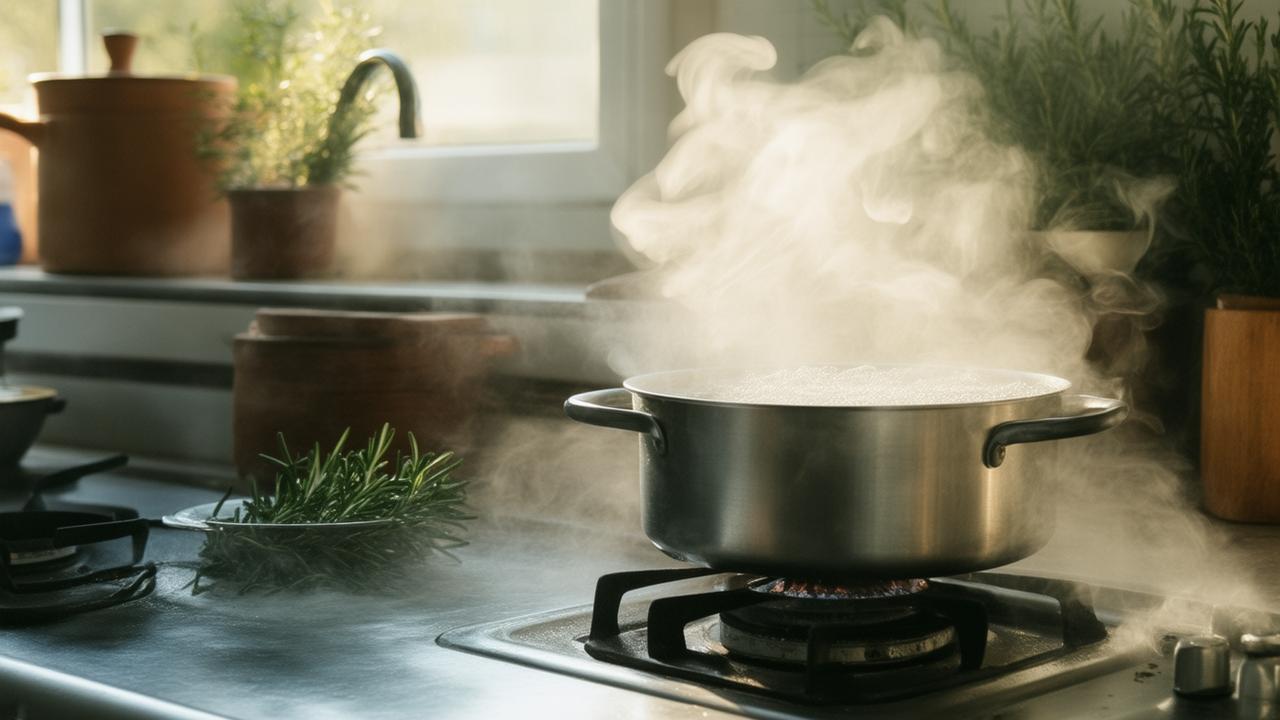
The first time I noticed it, I was eight years old, sitting on a wooden stool in my grandmother’s tiny kitchen, my legs swinging above the cool tile floor. A faint hiss of simmering water whispered from the stove, and the room was wrapped in a soft, green, almost piney fragrance that made everything feel slower, quieter, kinder. My grandmother didn’t say much—she rarely did—but as she walked past me, she lifted the lid of a dented little pot. A ghost of steam rose, carrying with it the unmistakable scent of fresh rosemary. “For the house,” she murmured, as if that explained everything. Back then, I didn’t understand how something as humble as boiling a few sprigs of an herb could completely transform the atmosphere of a home. Now, years later, I find myself doing the same thing in my own kitchen, watching the steam curl upwards like a memory made visible.
The Steam That Changes a Room
It always starts the same way. A quiet afternoon, a heavy mood, or a home that feels just a little too cluttered with the invisible dust of the day: to‑do lists, unread emails, worries I can’t quite name. There’s a particular kind of restlessness that doesn’t respond to sweeping floors or wiping counters. The air itself feels tired. On those days, instead of reaching for a candle or an air freshener, I find my way to the refrigerator or the little pot of herbs on the windowsill, and my hand goes straight for the rosemary.
There is something deeply grounding about the ritual. The sound of the faucet as cold water fills a pot. The gentle clatter of the lid. The firm, almost woody feel of rosemary stems between your fingers, each needle releasing a faint burst of fragrance as you strip it down. You don’t need to measure. This isn’t a recipe so much as an invitation. A handful of fresh rosemary, or a generous pinch of dried if that’s what you have. The important thing is the intention: a small act of care, both for the house and for yourself.
When the water first reaches a simmer, the transformation begins almost imperceptibly. The scent arrives in thin threads, weaving its way through the kitchen. It doesn’t rush; it unfolds. There’s a brightness to rosemary’s aroma—herbal, slightly resinous, with an echo of pine forests and wild hillsides baked by the sun. Within a few minutes, the steam drifts into the hallway, seeps under doors, lingers at the edges of bookshelves. It’s as if the air decides to stand a little taller.
Grandmother Lore and Quiet Alchemy
My grandmother never called it aromatherapy. She would have laughed at the word, shaking her head as she wiped her hands on her apron. For her, boiling rosemary was simply something “you do for the house” on days when the weather was gloomy, when someone was sick, or when visitors had just left and the rooms felt oddly hollow. She treated it the same way she treated opening the windows after rain or sprinkling a bit of salt on the floor before sweeping: a small domestic spell wrapped in practicality.
Years later, when I started reading about rosemary, I was strangely delighted to discover that science and folklore seemed to agree with her. Rosemary has been associated for centuries with clarity, memory, and purification. Students in ancient times wore wreaths of it while studying. In some traditions, it was burned to cleanse a space, ward off negativity, or honor the dead. Now, modern research points to its aromatic oils—cineole, camphor, and others—that can gently awaken the senses and freshen the air. My grandmother didn’t know the names of chemical compounds, but she knew what felt right.
Watching her, I learned that tending a home isn’t only about what can be seen—dust, dishes, laundry—but also about what can be felt. The energy of a room. The way the air holds either tension or ease. Boiling rosemary became, in my mind, a kind of quiet alchemy: a way to turn plain water and simple leaves into something intangible yet powerfully soothing. It required almost nothing, but it changed everything.
How to Try It in Your Own Kitchen
The beauty of this little ritual is how forgiving it is. You don’t need special equipment, expensive oils, or any kind of expertise. Just a pot, some water, and rosemary—fresh or dried. Here’s how I usually do it now, echoing the gestures I watched a hundred times in that small, sun‑faded kitchen:
- Fill a small pot about halfway with water.
- Add a few fresh rosemary sprigs (or 1–2 tablespoons of dried rosemary).
- Bring the water to a gentle boil.
- Reduce the heat to the lowest setting and let it simmer.
- Allow the scented steam to fill your home for 15–30 minutes, keeping an eye on the water level.
That’s all. No fuss. No perfect timing required. You can let it simmer longer if you like, topping up the water when it evaporates, or you can simply turn off the heat and leave the pot on the still‑warm burner to continue releasing fragrance as it cools. The point isn’t precision. The point is presence.
A Scent That Cleans More Than the Air
Something subtle happens when that rosemary steam begins to wander through the rooms. It’s not just that the lingering smells of cooking or a closed‑up house start to fade, though that’s part of it. It’s that the whole place begins to feel more awake, more alive. Instead of trying to overpower odor with synthetic perfume, rosemary seems to invite the space to breathe again.
On grey afternoons, when the light is hesitant and the sky presses low, the scent brings a kind of indoor sunshine. On hot, heavy days, it cuts through the thickness like a cool breeze from a grove of evergreens. Early in the morning, it pairs beautifully with the first cup of coffee, sharpening the edges of your thoughts. Late at night, with the lights dimmed and a book half‑open on your lap, it feels like a soft, herbal lullaby for the mind.
I’ve noticed something else, too. Boiling rosemary often nudges me toward other small acts of care. While the pot simmers, I find myself clearing a corner of the table, folding the blanket tossed over the back of the couch, opening a window just a crack. None of it is dramatic. But together, these tiny gestures begin to change the way the home feels—less like a place you’re passing through, more like a place that is actively holding you.
Little Rituals That Make It Even More Special
You can keep this practice as simple as you like, or let it grow into its own gentle ritual. Some afternoons, I’ll add a slice of lemon to the pot for a brighter, fresher aroma, or a few grains of whole cloves to deepen the scent. Other days, I let the rosemary stand alone, proud and unadorned. Here are a few ways to weave it into your routine without turning it into another task on your list:
- Simmer rosemary while you tidy a single room, letting the scent mark the transition from chaos to calm.
- Put on a favorite album, light a single candle, and let the three—music, flame, and steam—create a small sanctuary.
- Use it as a reset after guests leave, helping the house reclaim its own quiet personality.
- Let the aroma accompany you while you journal, paint, or simply stare out the window for a while.
Over time, your mind begins to link that scent with a feeling of exhale. A cue that says: this is a place where you can soften your shoulders. This is a moment when you don’t have to rush.
A Simple Habit That Gently Resets Your Day
There’s a reason certain home tips cling to us across generations. They are rarely about efficiency alone. They’re about rhythm. Boiling rosemary isn’t going to scrub your walls or declutter your shelves. But it can change the pace of your day in a way that makes everything else feel more possible. That’s the quiet power of sensory rituals—they bring us back into our bodies.
In a world that loves multitasking, this little pot on the stove insists on singletasking. You can’t rush the water to boil faster; you can’t force the room to fill with scent any sooner than it will. All you can do is stand there for a moment, listening to the tiny hiss of bubbles breaking the surface, watching the faint tremble of steam. The rosemary needles soften and deepen in color, surrendering themselves, bit by bit, to the water. There’s a tenderness in that surrender, a reminder that softness can be strong, too.
And it’s not only about mood. For some people, synthetic fragrances can be overwhelming—headache‑inducing or cloying. A simple pan of simmering rosemary offers a gentler alternative, especially when you know exactly what’s in it. Just water, plant, and heat. You can control the strength by adding more or less, simmering longer or shorter. There’s a clarity, almost a honesty, in that simplicity.
➡️ France suffers a €3.2 billion blow as a last-minute reversal kills a major Rafale fighter jet deal
➡️ Neither boiled nor raw : the best way to cook broccoli for maximum antioxidant vitamins
➡️ France turns its back on the US and drops €1.1 billion on a European detection “monster” with 550 km reach
➡️ Day will turn to night during the longest total solar eclipse of the century occurring across regions
➡️ No more duvets in 2026? The chic, comfy and practical alternative taking over French homes
➡️ Seniors behind the wheel: will licenses be pulled automatically after 70 from ?
➡️ Goodbye kitchen cabinets: the cheaper new trend that won’t warp, swell, or go mouldy over time
Comparing Rosemary Simmer to Other Home Atmosphere Tricks
Boiling rosemary isn’t the only way to shift the feeling of a room, of course, but it has a character that’s different from a candle or a plug‑in diffuser. The table below gives a simple comparison you can glance at on your phone while standing in your own kitchen, deciding what kind of comfort you’re craving.
| Method | What It Feels Like | Pros | Things to Keep in Mind |
|---|---|---|---|
| Boiling rosemary | Soft, herbal, natural; feels like bringing a piece of the garden indoors. | Uses simple ingredients; customizable strength; no synthetic fragrance. | Requires stove supervision; scent is gentle, not overpowering. |
| Scented candle | Warm, cozy, visually soothing with soft light. | Easy to use; many scents; adds ambiance with flame. | May contain synthetic fragrance; open flame needs care. |
| Essential oil diffuser | Consistent, noticeable fragrance; can blend multiple oils. | Customizable blends; automatic timers on some models. | Requires device and oils; scent can be intense for sensitive people. |
| Opening windows | Crisp, clean air; sounds of the outside world drift in. | Free; refreshes air thoroughly; connects you to weather. | Weather‑dependent; outdoor noise or pollution can be an issue. |
Each method has its place, but there’s something deeply intimate about the rosemary pot—the way it asks you to participate, to stand in the kitchen you live your life in and stir a little magic into the everyday.
Carrying the Tradition Forward
Sometimes I wonder what my grandmother would think if she could see me now, in a very different kitchen, with sleeker counters and brighter lights, repeating the same small gesture she once made without ceremony. I imagine her nodding, the corners of her mouth turning up just slightly, as if to say: of course you still do this. The details of our lives change, but the need to feel at home in our own spaces does not.
Boiling rosemary won’t solve every problem. It won’t pay the bills or fix the leak under the sink. But it can offer a pause, and sometimes a pause is exactly the doorway you need—to patience, to clarity, to the next right step. As the steam curls toward the ceiling, touching picture frames and corners of the room you rarely look at, it seems to whisper a reminder: this is your place. You are allowed to make it gentle.
So the next time your home feels a bit heavy or stale, when you find yourself wandering from room to room without knowing what you’re looking for, try this: put on a pot of water. Add a handful of rosemary. Let it boil, then simmer. Stand there for a moment in the rising scent. Listen to the tiny, persistent sound of bubbling water. Feel how, slowly, almost shyly, the atmosphere begins to shift. It’s such a small thing, really—yet it carries the quiet weight of generations, of kitchens before yours, of hands that learned long ago that comfort can be brewed, one simple pot at a time.
Frequently Asked Questions
Is it safe to boil rosemary on the stove?
Yes, it’s generally safe as long as you use a stable pot, keep the heat low once it’s simmering, and never leave it unattended for long. Check the water level occasionally so it doesn’t boil dry.
Can I use dried rosemary instead of fresh?
Absolutely. Dried rosemary works well and is often more convenient. Use about 1–2 tablespoons of dried rosemary in a small pot of water, adjusting the amount to get the strength of scent you like.
How long should I let the rosemary simmer?
Simmering for 15–30 minutes is usually enough to scent a small home, but you can let it go longer if you keep adding water as it evaporates. Stop whenever you feel the atmosphere has shifted the way you want.
Will boiling rosemary make my home smell too strong?
Most people find the scent gentle and herbal rather than overpowering. If it feels too strong, simply turn off the heat, move the pot off the burner, or add more water to dilute the aroma.
Can I reuse the rosemary after boiling?
Once rosemary has been boiled for a while, most of its fragrance has been released. You can let the cooled liquid be used to wipe down counters for a light herbal scent, but the sprigs themselves are usually ready to be composted or discarded.





