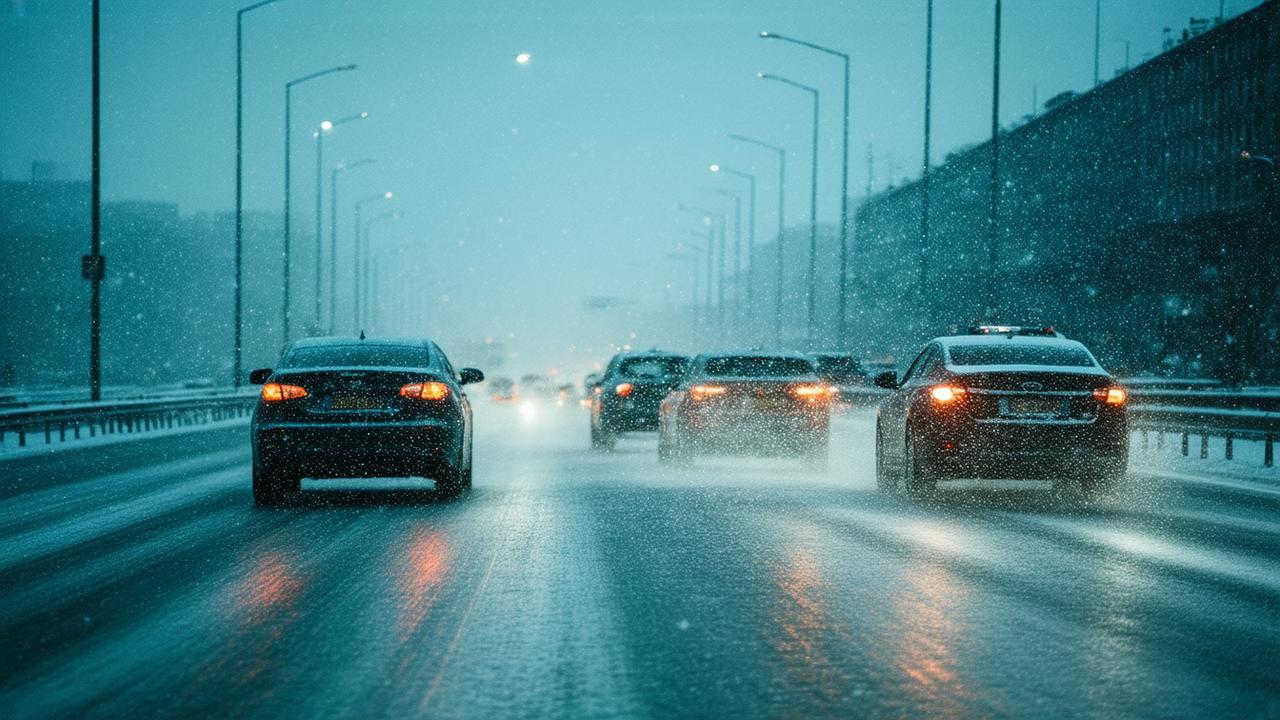
The first flakes haven’t even started to fall, and already the night feels different. The air has that strange, metallic chill that seems to ring in your ears. Streetlights glow in small, hazy halos, catching nothing yet—but promising everything. Inside, phones keep buzzing with alerts, yellow and red banners sliding across screens: “Heavy snow set to begin late tonight.” “Major disruptions expected.” “Travel chaos likely.” The language is official, clipped, almost cold. But out the window, the sky is building its own story—one that will be told in inches, in silence, and in the sudden, unnerving stillness of a city forced to stop.
The Night Before: When the World Holds Its Breath
There’s a peculiar electricity to the last hours before a major storm, as if the world is waiting to exhale. The ordinary routines—washing dishes, plugging in phones, double-checking the locks—feel strangely ceremonial. You refresh the radar map again, even though it hasn’t changed. Bands of royal blue and deep purple swirl over your region, marching steadily east, like an army you can’t see but know is coming.
Outside, the sounds are already softening. Fewer cars pass. People hurry down sidewalks, coats clutched tighter, shoulders hunched. Somewhere, snowplows are lined up in lots and garages, quiet for now, orange lights dark, blades resting on bare asphalt. Their engines will roar to life soon enough.
Weather alerts ping and chime: the words “official” and “confirmed” carry a certain weight. There’s no more ambiguity, no more “maybe it will miss us.” This is it. The forecast, once a tentative possibility, has solidified into a warning—heavy snow, likely blizzard conditions in some areas, dangerous travel, possible power outages, and impacts that will reach into tomorrow and beyond.
The Warning Becomes Real
There’s a moment when the first flakes appear, almost shyly, as if testing the courage of the sky. One drifts across the cone of a streetlight. Then another. You stare longer, and suddenly they’re everywhere, falling and swirling and spinning on invisible currents of wind. What felt theoretical all day is now undeniably real. The weather alerts, the news segments, the anxious texts—this is what they were all pointing toward.
Within an hour, lawns blunt into softness. Tree branches begin to frost at the edges, each twig edged in white. Cars parked along the curb transform from familiar shapes into lumpy, indistinct mounds. The world’s hard lines blur as if someone ran a soft-focus filter over the entire neighborhood. It is beautiful, yes—but also ominous.
The forecast calls for inches—then more inches, then drifting and blowing, the kind of snow that doesn’t just fall but rearranges itself all night long. This isn’t the playful snow that dusts the ground for an afternoon and melts away by morning. This is the kind that changes plans, closes roads, and makes everything uncertain.
The Anatomy of a Disruption
The words “major disruptions” sound sterile, like a line in a report. But what they mean is messy and very human. They mean alarm clocks that no longer matter because offices are closed. They mean buses that never arrive and flights that sit, delayed forever, on distant runways. They mean grocery aisles stripped of milk, bread, and batteries. They mean emergency crews working through the night, orange and blue lights flashing through veils of snow.
When meteorologists talk about “travel chaos,” they’re thinking in maps and models—road networks, traffic density, timing of snowfall rates. But for the rest of us, chaos locks into smaller, more intimate details: the crunch of tires on unplowed streets, the slip of a boot on an icy curb, the creeping dread when your windshield wipers can’t quite keep up.
As snow thickens, sightlines shrink. Distances shorten into gray smears. What used to be a five-minute drive becomes a question: can I make it? Should I even try? This is how a storm rewrites a landscape—not just in drifts and dunes, but in choices and chances.
The Quiet Violence of Heavy Snow
Heavy snow does something paradoxical: it makes the world quieter and more dangerous at the same time. Step outside as the storm deepens, and the first thing you might notice is the sound—or rather, the lack of it. Snow absorbs noise. It swallows the growl of traffic, the echo of footsteps, turning everything into a muffled hush. There’s a softness to it that feels almost sacred.
But beneath that hush, the risks multiply. Roads glaze over with compressed snow and hidden ice. Bridges cool faster than the ground, turning deceptively slick. Wind picks up, scooping snow into sudden, swirling curtains that erase the road just a few yards ahead. Tire tracks that looked safe a moment ago fill in moments later, as if the storm is determined to erase proof that anyone tried to pass.
This is why officials keep repeating the same advice: reconsider your travel. Stay home if you can. Avoid unnecessary risk. It’s not melodrama; it’s math—a calculus of braking distance, visibility, and human reaction time set against a landscape that is rapidly slipping out of our control.
| Alert Level | What It Typically Means | How You Might Feel |
|---|---|---|
| Advisory | Hazardous conditions possible; use caution but routine life may continue with care. | Mild concern, refreshing the forecast, debating whether to change small plans. |
| Watch | Storm is possible; timing and intensity still uncertain but significant impact is on the table. | Uneasy, starting preparations, texting friends: “Are you seeing this storm?” |
| Warning | Storm is expected; dangerous conditions are likely or already happening. | Alert, maybe anxious, canceling plans, watching the windows as the first flakes arrive. |
| Blizzard Warning | Heavy snow and strong winds; low visibility and life-threatening travel conditions. | On edge, charging devices, checking supplies, planning to stay put until it passes. |
Inside, While the Storm Takes Over
Indoors, life narrows to small comforts and quiet rituals. The glow of lamps feels warmer against the blue-white storm outside. You listen for the distant scrape of plow blades, a metal-on-pavement sound that is both reassuring and strangely lonely. You might fill the bathtub “just in case,” line up candles on the counter, and check your flashlight batteries again even though you already did that an hour ago.
On social media, timelines fill with the same kinds of images: backyard decks slowly vanishing beneath growing drifts, rulers plunged into snowbanks, pets staring in confusion at suddenly transformed yards. There’s humor—a snowman in progress, a caption about “working from home in a snow globe”—and there’s worry. Someone posts about a loved one stuck on a highway, another about an ambulance heard down the block, sirens faint against the snow-thick air.
Time behaves differently in a snowstorm. Minutes drag when you’re obsessively checking the radar, then leap ahead in chunks when you glance out and realize that the snow on the railing has doubled in the space of a single TV episode.
When Travel Turns Treacherous
If you do have to go out, the world meets you differently. The first step onto the front path is a negotiation, your boots punching through the powder, the cold seeping in around the seams. The air is sharper, the kind that bites at your nose and cheeks, leaving small crystals gathered at the edge of your scarf if you stay out long enough.
Cars move like caution itself. Tail lights burn soft red through the flurries, smudged and haloed. The usual rules of the road seem to bend. Speed limits become suggestions that no one dares meet. Intersections are approached with the quiet dread of uncertainty—will the car stop in time? Will the wheels slide? That gentle press on the brake is no longer about convenience; it’s a test of physics.
Every winter, we hear the same reminders: keep extra blankets in the car, pack water and snacks, notify someone of your route and expected arrival time. On mild days, those suggestions sound like over-preparation. Tonight, in this storm, they feel like the bare minimum of common sense.
The Hidden Vulnerable
Behind the weather maps and commuting stories lies another layer of disruption—one that doesn’t always make headlines. For people without stable housing, storms like this rewrite survival in brutal ways. Shelters strain at capacity. Outreach teams move through the thickening snow, trying to get people indoors before the temperature plummets and the wind picks up speed.
For those who rely on daily care—home nurses, visiting aides, meal deliveries—every road closure and delayed train is more than an inconvenience; it’s a question mark over their safety. Heavy snow doesn’t distribute hardship evenly. It amplifies the fractures that already exist, pressing on them like a weight.
And then there are the workers who do not get to stay home: plow drivers, paramedics, linemen, nurses, grocery staff, overnight clerks at gas stations that become lifelines for stranded drivers. While many hunker down and listen to the storm from inside, they step out into it, again and again.
The Morning After: What the Storm Leaves Behind
Morning comes, though sometimes it feels as if the storm has been going on for longer than a single night. You wake to a surprising kind of silence. It’s not the storm’s hush—that snowy, falling quiet—but a pause, as if the whole world is taking stock. The sky, once churning and white, may have settled into a pale, almost tender blue. Or perhaps the snow is still falling, slower now, as if tired.
➡️ France suffers a €3.2 billion blow as a last-minute reversal kills a major Rafale fighter jet deal
➡️ Neither boiled nor raw : the best way to cook broccoli for maximum antioxidant vitamins
➡️ France turns its back on the US and drops €1.1 billion on a European detection “monster” with 550 km reach
➡️ Day will turn to night during the longest total solar eclipse of the century occurring across regions
➡️ No more duvets in 2026? The chic, comfy and practical alternative taking over French homes
➡️ Seniors behind the wheel: will licenses be pulled automatically after 70 from ?
➡️ Goodbye kitchen cabinets: the cheaper new trend that won’t warp, swell, or go mouldy over time
Pull back the curtain. There it is: a world remade. Cars half-buried, driveways erased, steps vanished. Trees bow deeply under the new weight, branches sagging like overloaded arms. The familiar shape of your street has changed, narrowed by unplowed banks and ridges. Somewhere in the distance, the low roar of a plow grows, then passes by in a spray of snow, pushing back the night’s work, foot by reluctant foot.
This is where the phrase “major disruptions” truly comes into focus. Schools closed. Buses suspended. Trains delayed. A grid of urban life temporarily scrambled. The storm has moved on—perhaps hundreds of miles away now—but its imprint lingers in every canceled appointment, every rescheduled shift, every neighbor standing at the end of a driveway, shovel in hand, assessing the task ahead.
Yet in this slow, messy aftermath, something else surfaces too: small, unscripted moments of connection. The teenager down the block shovels the stairs of an elderly neighbor. Strangers help push a stuck car free. People who usually only nod in passing pause to talk, breath fogging in the cold air, united for a moment by the shared challenge of simply digging out.
Choosing Caution, Finding Wonder
What begins as an official alert—heavy snow confirmed, major disruptions likely—ends up being many things at once. It is a logistical puzzle, a public safety challenge, a test of infrastructure. But it is also a reminder of limits, of how quickly our carefully scheduled lives can be interrupted by something as simple, and as complicated, as frozen water falling from the sky.
Respecting this storm means listening to the warnings, cancelling the trip that can wait, staying off the roads when authorities say conditions are dangerous. It means preparing, not panicking—setting out candles, charging devices, checking on that neighbor who lives alone. It means acknowledging that for some, this storm will be more than an inconvenience, and thinking, honestly, about how to help.
Yet even in the midst of chaos and danger, there’s room for awe. Step outside, just for a moment, when it is safe to do so. Hear how the world has quieted, how the snow turns even the harshest edges gentle. Watch how the light scatters off the endless white, turning the ordinary into something strange and luminous. Let yourself notice the beauty without forgetting the risk.
Because this is what storms do: they disrupt, they endanger, they challenge—and they reveal. They show us where we are vulnerable, yes, but also where we are resilient. And as this heavy snow settles in, as alerts continue to scroll across our screens and plows carve paths through the drifts, we are left with a choice: to move through this with care, intention, and a measure of wonder, or to treat it as just another inconvenience in an already crowded day.
Tonight, as the first flakes thicken into a curtain and the storm takes hold, the decision is already there, waiting with the snow: stay safe, stay aware, and allow this sudden, startling pause in the usual rush to mean something.
Frequently Asked Questions
How dangerous is this heavy snow if I need to travel?
Heavy snow significantly increases the risk of accidents due to poor visibility, slick roads, and longer stopping distances. If local authorities advise against travel, it’s best to stay off the roads unless it’s truly essential—medical needs, critical work, or emergencies.
What should I do to prepare before the snow begins?
Charge phones and backup batteries, gather flashlights and candles, restock basics like food, water, and necessary medications, and ensure you have warm clothing and blankets easily accessible. If you own a car, top off fuel and place an emergency kit inside with a blanket, snacks, and a scraper.
Why do officials emphasize “stay home if you can” so strongly?
Staying home reduces the number of vehicles on the road, making it easier and safer for plows, emergency vehicles, and essential workers to move. Fewer cars also mean fewer accidents and faster response times for those truly in need.
How can I help others during a storm like this?
Check in on elderly neighbors, people living alone, or anyone with mobility or health challenges. Offer to help with shoveling, share updates if they don’t use phones or the internet often, and if you have extra supplies, consider sharing with those who couldn’t prepare in time.
Is it okay to go outside and enjoy the snow?
Yes—if conditions are not extreme and local guidance doesn’t advise otherwise. Dress in layers, cover exposed skin, stay aware of changing conditions, and avoid walking near busy roads where drivers may struggle to stop. Enjoy the beauty, but don’t forget the storm’s power.





