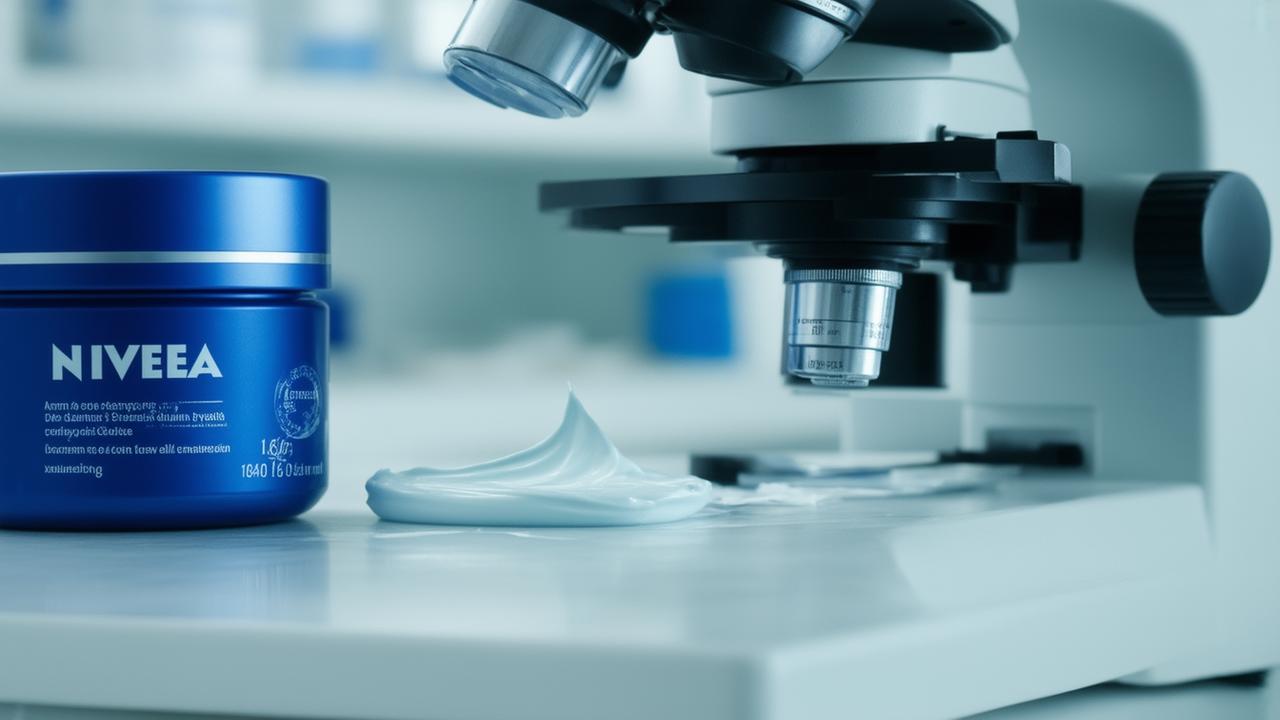
The Nivea blue tin sat in my bathroom cabinet like a tiny moon— glossy, familiar, almost nostalgic. You’ve probably seen it too, maybe on your grandmother’s nightstand or tucked into a friend’s handbag. There’s something almost comforting about that deep cobalt blue and the clean, soapy scent that seems to whisper, “I’ve been here for decades. You can trust me.” As a dermatologist, I’d heard countless patients mention it in passing—“Oh, I just use that classic Nivea cream at night, is that okay?”—and I’d always give a cautious, half-smile answer: “It depends.” One evening, I decided to stop relying on habit and reputation and instead sit down with the formula itself, like a detective with a case file. I printed the ingredient list, made a cup of tea, opened a fresh tin, and let the story of this iconic blue cream unfold under the lamplight.
The First Encounter: Touch, Scent, Memory
When you open a tin of Nivea Creme, the first thing that hits you is the scent—powdery, slightly floral, clean in a very old-school way. It’s not subtle. It reminds me of childhood bathrooms, cold winter mornings, and the kind of skincare routines that involved just “a good cream” and not twelve steps of acids and serums.
I scooped a small amount out with a clean spatula. The texture is unmistakable: dense, waxy, and rich—almost like softened butter that’s just about to melt but hasn’t decided yet. As I spread it across the back of my hand, it resisted at first, then slowly yielded, leaving behind a glossy, occlusive film that made my skin look instantly more plump, almost lacquered with moisture.
This sensory experience tells you a lot even before you read the ingredients: this is a classic, heavy occlusive cream designed to sit on top of the skin and prevent water loss. It’s not a light, sophisticated gel-cream that disappears in seconds. It’s more like a protective winter coat than a breezy summer shirt.
Inside the Tin: A Dermatologist Dissects the Formula
Once you strip away the nostalgia, you’re left with chemistry. Nivea Creme’s formula is surprisingly simple compared with many modern moisturizers. It’s a classic oil-in-water emulsion with a strong occlusive backbone. Let me walk you through some of the core characters in this formula, because each one has a role in the story your skin will experience.
| Key Ingredient | What It Does | Dermatologist’s Take |
|---|---|---|
| Aqua (Water) | Base of the cream, provides initial hydration and texture. | Standard and essential; nothing controversial here. |
| Paraffinum Liquidum (Mineral Oil) | Occlusive; helps trap moisture in the skin. | Highly effective, inert, often misunderstood but generally safe. |
| Cera Microcristallina (Microcrystalline Wax) | Gives the cream its dense, rich texture; enhances barrier effect. | Boosts occlusion, great for very dry skin but can feel heavy. |
| Glycerin | Humectant; attracts water to the outer layer of skin. | A workhorse hydrating ingredient; universally beneficial. |
| Lanolin Alcohol | Emollient; helps soften and smooth skin. | Excellent softener, but a potential allergen for some people. |
| Paraffin / Petrolatum (depending on region) | Strong occlusive barrier, reduces transepidermal water loss. | Gold standard for repairing very dry or damaged skin. |
| Fragrance | Gives Nivea its iconic scent. | Pleasant, but not ideal for sensitive or reactive skin. |
When I look at this lineup as a dermatologist, I see a formula that’s unapologetically old-school: heavy on occlusives, minimal on trend-driven actives, meant to protect and soften rather than transform. There are no fancy peptides, no retinol, no exfoliating acids. It’s a straightforward barrier-support cream with a very specific skin type in mind.
Who the Blue Tin Loves: Skin Types and Realistic Expectations
As I rubbed the cream into my own skin, I imagined the faces of my patients and made a mental list of who would thrive with this and who would quietly break out in protest. Skin is personal, and Nivea Creme is not a one-size-fits-all hero.
If you have very dry, tight, or wind-chapped skin, especially on the body, Nivea Creme can feel like a warm blanket. Picture winter nights, central heating, and skin that stings when you step out of the shower. In those moments, the occlusive richness of mineral oil, waxes, and petrolatum works like a seal, locking in whatever water is left in your skin and giving it the chance to repair.
On the other hand, if your skin is oily, acne-prone, or easily congested, this is where things get tricky. Heavy, occlusive products can trap not just water, but also sebum and dead skin cells, potentially increasing the risk of clogged pores in people predisposed to acne. It doesn’t mean everyone with combination skin will break out from Nivea Creme, but I would be cautious using it all over the face every night if you’re already battling blackheads or inflammation.
Then there’s sensitive and reactive skin. The problem here is not the mineral oil or petrolatum—those are actually quite skin-friendly and rarely allergenic. The main concern is the fragrance and, for some, lanolin derivatives. Both are known causes of contact dermatitis in a subset of people. So if your skin easily flares, burns, or reddens with new products, this iconic blue cream might still be too loud for your skin’s quiet needs.
The Good, the Bad, and the Honest: Benefits vs. Drawbacks
Every product lives in a balance of pros and cons. Nivea Creme’s charm lies in how clearly that balance shows once you remove the glow of nostalgia and marketing.
What it does well: It is very good at one job: preventing water loss. When your skin is dry, its outermost barrier is compromised, allowing water to evaporate more easily. The occlusive ingredients in Nivea Creme form a protective layer on top of the skin, reducing this loss and giving your barrier time to recover. That’s why many people say their skin feels softer and more “comfortable” after consistent use.
It’s also stable and simple. With no unstable actives like vitamin C or retinoids, the formula doesn’t degrade quickly. You can throw the tin in a bag, forget it for months, and come back to find it essentially unchanged. That makes it practical, travel-friendly, and reliable.
Where it falls short: By modern skincare standards, Nivea Creme is not a multi-tasker. It doesn’t offer targeted treatment for hyperpigmentation, aging, acne, or texture. It’s a moisturizer, not a miracle. If you’re expecting fine lines to vanish or dark spots to fade, you’re likely to be disappointed.
The texture can also be a deal-breaker. On humid days or on naturally oily faces, it can feel suffocating, as if your skin is wearing a plastic raincoat. Some people love that “sealed in” sensation, but others feel instantly greasy and uncomfortable. And finally, the fragrance—however beloved—adds a risk of irritation that many modern fragrance-free formulas have intentionally avoided.
Smart Ways to Use Nivea: Derm-Approved Strategies
Instead of simply declaring the blue cream “good” or “bad,” I prefer to ask: How can it be used wisely? There are ways to weave Nivea Creme into a routine that respect both its strengths and its limitations.
1. As a targeted slugging product
If your cheeks are dry but your T-zone is oily, don’t smear it all over. Use Nivea Creme like a strategic shield: apply a lighter, hydrating moisturizer first, then press a thin layer of Nivea on only the driest areas at night—around the nose, on the cheeks, over the lips, or on flaky patches.
2. As a hand and foot rescue
This is where Nivea Creme quietly shines. Hands washed too often, cracked knuckles in winter, heels that catch on socks—these are the places that appreciate a dense, occlusive cream. Apply a generous amount before bed, put on cotton socks or light gloves, and let it work overnight.
3. As a cold-weather face protector (for some)
If you ski, hike, or live somewhere brutally cold, a very thin layer of Nivea over your regular moisturizer can protect your skin from windburn and harsh air. Just be mindful if you’re acne-prone; use it sparingly and avoid layering it over comedogenic sunscreens or makeup.
4. Not a substitute for sunscreen or actives
Nivea Creme is not a sunscreen. It doesn’t protect from UV damage, and it doesn’t replace targeted treatments like retinoids, niacinamide, or vitamin C. Think of it as a coat over your actives, not instead of them.
➡️ France suffers a €3.2 billion blow as a last-minute reversal kills a major Rafale fighter jet deal
➡️ Neither boiled nor raw : the best way to cook broccoli for maximum antioxidant vitamins
➡️ France turns its back on the US and drops €1.1 billion on a European detection “monster” with 550 km reach
➡️ Day will turn to night during the longest total solar eclipse of the century occurring across regions
➡️ No more duvets in 2026? The chic, comfy and practical alternative taking over French homes
➡️ Seniors behind the wheel: will licenses be pulled automatically after 70 from ?
➡️ Goodbye kitchen cabinets: the cheaper new trend that won’t warp, swell, or go mouldy over time
My Verdict: If This Tin Could Talk
After sitting with the formula, testing it on my own skin, and thinking about the dozens of faces I see every week, my assessment of the blue tin is this: it’s not magic, but it is honest. Nivea Creme does what its ingredients say it will do—no more, no less. It protects, softens, and seals. It doesn’t try to be trendy. It doesn’t promise to erase a decade from your face.
If your skin is naturally dry, non-reactive, and thirsty for a heavy, comforting cream—especially in cold or dry climates—this little tin can be a loyal companion. If your skin is oily, acne-prone, or very sensitive, it’s best approached like a strong perfume: admired from a distance, or used sparingly and strategically, never mindlessly.
There’s also something quietly beautiful about its place in skincare history. Generations have used this same formulation, passing it down like a shared secret. For some, that scent alone is a form of emotional skincare—connecting them to parents, grandparents, and familiar rituals. Science may be neutral, but skin is also about stories, and the Nivea blue tin has more than earned its place on bathroom shelves around the world.
As a dermatologist, I won’t call it a universal must-have. But as a human who has watched skin crack and heal, who has seen the relief on someone’s face when their dryness finally eases, I can say this: used on the right skin, in the right way, that simple blue tin still has a valid role in a very crowded, very complicated skincare world.
FAQs About Nivea Creme (Blue Tin)
Is Nivea Creme safe to use on the face?
It can be safe for many people, especially those with dry, non-acne-prone skin. However, its heavy, occlusive texture and fragrance make it less ideal for oily, congested, or very sensitive faces. Patch-test on a small area first and avoid using it all over if you’re acne-prone.
Can Nivea Creme cause breakouts?
It can contribute to clogged pores in individuals who are prone to acne or have very oily skin, mainly because it’s so occlusive. Not everyone will react this way, but if you’re breakout-prone, reserve it for very dry spots or use it on the body instead of all over your face.
Is Nivea Creme good for anti-aging?
Indirectly, it can help by supporting the skin barrier and keeping it well-hydrated, which can make fine lines look softer temporarily. But it doesn’t contain active anti-aging ingredients like retinoids or peptides. It’s supportive, not corrective.
Can I use Nivea Creme around the eyes?
You can, but cautiously. The skin around the eyes is delicate and more prone to irritation, and the fragrance may be too strong for some people. If you try it there, use a very small amount and stop immediately if you notice redness, stinging, or swelling.
Is Nivea Creme suitable for children?
On healthy, intact skin, it can be used on children, particularly on dry areas like elbows, knees, and hands. However, because it’s fragranced and contains potential allergens like lanolin alcohol, I usually prefer fragrance-free, pediatric-formulated moisturizers for babies and very young children.
Can I combine Nivea Creme with my active serums?
Yes. Apply your water-based serums first (like hyaluronic acid or niacinamide), let them absorb, then follow with a lighter moisturizer if you like, and finally add a thin layer of Nivea Creme on top as a seal, especially at night. Just avoid pairing it with strong exfoliants if your skin is easily irritated.
Is mineral oil in Nivea Creme harmful?
Cosmetic-grade mineral oil is highly purified and considered safe, non-sensitizing, and effective as an occlusive. It has a reputation problem, not a science problem. For most people, it’s a reliable ingredient that helps prevent water loss without penetrating deeply into the skin.





