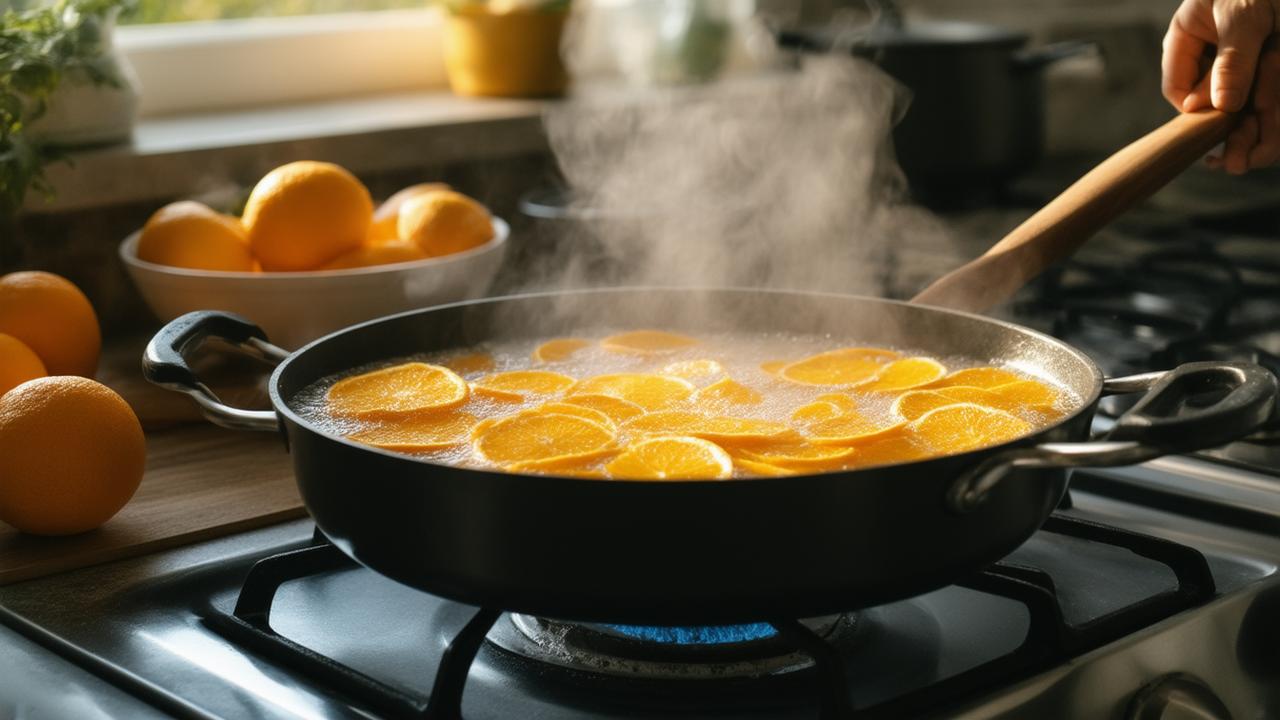
The first thing you notice is the sound. A soft, patient simmer—barely a whisper—coming from the kitchen. Then the scent begins to unfurl, slow at first, as if testing the air. Warm, bright, gently sweet. You stand there, half skeptical, half curious, watching a handful of orange peels turning lazily in a pot of boiling water. Within minutes, the mood of the room changes. The stale, “lived-in” smell of the day—cooked food, maybe a faint hint of last night’s onions, the ghost of laundry detergent—starts to dissolve. In its place: a clean, sunlit fragrance that feels like someone just opened a window onto a citrus grove.
Why Orange Peels Work Like Nature’s Air Freshener
It feels almost too simple: peel an orange, put the discarded skins in a pot, and add water. But inside those colorful curls of rind is an aromatic powerhouse. Orange peels are loaded with essential oils—especially a compound called limonene, which gives citrus that unmistakable fresh smell. When you boil the peels, heat releases those oils into the steam. The scent doesn’t just sit in the pot; it rides the rising vapors, drifts through the kitchen, and quietly wanders down the hallway.
Unlike commercial sprays that explode into the air with a chemical rush and vanish just as quickly, the scent of boiling orange peels feels soft and rounded. It fills the room more like a slow sunrise than a flash of neon. There’s no sharp sting in your nose, no artificial perfume clinging to your throat—just that familiar, gentle brightness that reminds you of winter holidays, breakfasts in sunlight, or warm afternoons peeling fruit at the table.
There’s also something deeply reassuring about using what would otherwise be waste. Instead of tossing your orange peels into the trash or compost, you’re giving them a brief second life as a natural home freshener. The pot of water on the stove becomes a small act of quiet thrift and sensory pleasure—one that feels oddly grounding in a world of plug-ins and aerosol cans.
The Simple Ritual: How to Boil Orange Peels for Maximum Scent
The beauty of this ritual lies in its simplicity. You don’t need fancy equipment, specialized oils, or even a recipe, really. You just need water, heat, and a handful of peels. But there’s a certain rhythm to it that can turn this from a random trick into a comforting habit.
Gathering and Preparing Your Peels
Start with fresh oranges. As you peel them, try to keep the skins in larger pieces if you can—wide ribbons or big curved sections work better than tiny bits. The more surface area, the more aroma-releasing oils you’ll expose. You don’t have to be fussy, but rinsing the peels under cool water helps remove any dust or residue. As you do, you’ll feel their slightly rough, dimpled surface and catch that first quick burst of citrus as your fingers press into the skin.
If you eat oranges regularly, you can collect the peels over a day or two and keep them in a container in the fridge. There’s something oddly satisfying about knowing that pile of brightly colored scraps is destined to become your home’s next wave of freshness.
The Gentle Simmer
Fill a small or medium saucepan with water—about halfway is usually enough—and drop in your orange peels. Place the pot on the stove and bring the water to a gentle boil. Not a roaring, splashing, pot-rattling boil, but a soft one, with small bubbles that rise and break quietly at the surface.
As the water heats, you’ll see the peels relax and deepen in color. Within a few minutes, steam will start to curl upward, carrying with it the first threads of fragrance. This is the moment when many people instinctively lean over the pot, close their eyes, and take a slow, deliberate breath.
Once the water reaches a boil, lower the heat to a simmer. Let the pot sit uncovered so the steam can drift into the room. You can leave it going for 20 minutes or longer, topping up the water if it gets low. This isn’t just an air-freshening technique; it’s a sensory backdrop for whatever else is happening at home—reading, cooking, cleaning, or simply being.
Layers of Aroma: Customizing Your Citrus Steam
On its own, the scent of orange is clean and cheerful. But you can build on it, adding depth and character with ingredients you probably already have in your kitchen. This is where the whole process starts to feel like blending your own little seasonal “perfume” for the house.
Spices That Warm and Ground the Brightness
Drop a cinnamon stick into the pot, and the mood shifts. Suddenly the scent is not just fresh but cozy—less like a sunny kitchen, more like a winter evening with blankets and books. Add a few whole cloves, and there’s a gentle spice in the air, a faint echo of holiday baking. Star anise brings a subtle, mysterious sweetness. A small piece of fresh ginger adds a clean, zingy edge that cuts through heavier kitchen smells.
With each new ingredient, the aroma becomes layered, more personal. The combination of sweet orange with warm spice has a way of making a house feel welcoming, even if there are shoes in the hallway and dishes in the sink. It’s that old magic: scent quietly rewriting the story of a space.
Herbs and Other Citrus Friends
If you have rosemary, thyme, or a few bay leaves on hand, you can slip them into the pot as well. Rosemary and orange together smell like fresh air after rain in an herb garden—crisp, clean, and slightly forest-like. Bay leaf adds a subtle, almost floral note that softens the citrus. A lemon or grapefruit peel tossed in with the oranges creates a more complex, almost sparkling aroma.
What you’re creating is not just a scent but a feeling. Bright and uplifting for mornings. Warm and cuddling for evenings. Light and herbaceous for spring cleaning days. All without a single drop of synthetic fragrance.
Why the Scent Lasts Longer Than You’d Expect
One of the quiet joys of boiling orange peels is how long the fragrance lingers after you turn off the stove. You might leave the kitchen, get absorbed in something else, and walk back an hour later to find the air still gently perfumed. This isn’t magic—it’s chemistry, plus a bit of environment working in your favor.
The essential oils released from the orange peels don’t just vanish when the steam disappears. Some of those aromatic molecules settle onto surfaces, fabrics, and into the very air currents of your home. Soft furnishings—curtains, couches, blankets—act like subtle scent sponges, catching and slowly releasing those citrus notes over time. That’s why, sometimes, the kitchen might smell strongly at first, while the hallway or living room carries a softer echo that hangs around well into the evening.
It also matters when and how you do it. Simmering a pot of orange peels after cooking a strongly scented meal, for instance, helps ease out lingering odors from fried foods or pungent ingredients. Doing it while you clean creates a kind of sensory “reset”: as you wipe down surfaces and clear clutter, the air itself is quietly being refreshed, too. When you open a window slightly, the dance between fresh outdoor air and orange-scented indoor air can help carry the fragrance further through the house.
A Small Habit With a Surprisingly Big Mood Shift
There’s something almost ceremonial about putting a pot of orange peels on the stove. It marks a subtle transition: the end of a meal, the start of a cozy evening, or the beginning of a quiet weekend morning. The act takes seconds, but the effect lingers in your senses, and even in your memory.
Think of the days when the house feels “heavy”—after a long stretch of rain, a week of closed windows, or one of those exhaustive cleaning days where everything looks tidy but somehow still smells tired. Setting a small pot to simmer becomes an invitation to pause. You listen to the gentle bubble, you catch the first wave of citrus in the air, and your brain seems to let out a breath it didn’t know it was holding.
Because the scent is natural and familiar, it doesn’t shout. It doesn’t demand your attention; it simply improves the background. Guests might walk in and say, “Your house smells amazing—what is that?” And you’ll glance toward the kitchen, where a humble pot of water and orange peels is quietly doing its work like the simplest spell.
➡️ Psychology says people who let others go first in line when they seem rushed display these 6 situational awareness traits that most people are too self-focused to develop
➡️ Boiling rosemary is a simple home tip I learned from my grandmother, and it can completely transform the atmosphere of your home
➡️ New ban hitting wood burners announced as fireplace rules changed
➡️ Soon a driving licence withdrawal for senior motorists after a certain age a necessary safety measure or a shocking discrimination against retirees
➡️ Day will turn into night: the longest solar eclipse of the century is already scheduled and its extraordinary duration is astonishing scientists
➡️ No vinegar or baking soda needed : the trick to cleaning your car seats and removing the toughest stains
➡️ Add just two drops to your mop bucket and your home will smell amazing for days no vinegar, no lemon needed
Practical Tips: Making the Most of Your Orange Peel Pot
To help you turn this sensory ritual into an easy, repeatable habit, here’s a quick reference you can adapt to your own home and tastes. These suggestions keep things practical while still leaving plenty of room to experiment and play.
| Element | Suggestions |
| Amount of Peels | Peels from 2–4 oranges are usually enough for a small to medium home. |
| Water Level | Fill the pot halfway; add more water as it evaporates to keep a steady simmer. |
| Simmer Time | 20–60 minutes, depending on how strong and widespread you want the scent. |
| Add-Ins | Cinnamon sticks, cloves, star anise, ginger, rosemary, bay leaves, or other citrus peels. |
| Safety Notes | Never leave the pot unattended; keep an eye on the water level so it doesn’t boil dry. |
When you’re done, you can let the water cool and discard the peels in your compost or trash. Some people even reuse the same batch once more within the same day, adding a bit of fresh peel to revive the scent.
Turning Everyday Moments Into Sensory Rituals
In a world filled with products promising instant freshness, it’s almost disarming to discover that something as humble as a boiled orange peel can transform the atmosphere of a home. There’s no branding, no packaging, no artificial notes—just the honest fragrance of fruit you might have eaten for breakfast.
Over time, this simple practice can weave itself into the fabric of your days. Maybe you simmer orange peels on chilly afternoons when the light fades early, or on Sunday mornings while coffee brews. Maybe it becomes your reset button after a long day—put the peels in the pot, turn on the stove, let the air soften and brighten while you change out of your day clothes and step into something more comfortable.
The scent, of course, is what first draws you in. But what stays with you is the feeling it creates: that sense of a house cared for, even in its messiness; of air that feels softer, kinder, more alive. Boiling orange peels is not just about making your home smell good. It’s about reclaiming a tiny, daily bit of beauty from something we usually throw away—and letting that beauty seep into the air you breathe.
FAQ: Boiling Orange Peels for a Naturally Fresh Home
How long does the scent from boiling orange peels last?
In many homes, the scent lingers for a few hours after you turn off the heat. Soft furnishings and fabrics can hold a faint citrus smell even longer, sometimes into the next day, especially if you simmered the peels for 30 minutes or more.
Can I use dried orange peels instead of fresh?
Yes. Fresh peels are more aromatic, but dried peels still release a pleasant scent when boiled. You may need to simmer them a bit longer or use slightly more to achieve the same intensity as fresh peels.
Is it safe to leave the pot simmering while I’m in another room?
It’s fine to be in another room as long as you’re at home and checking occasionally. Like any pot on the stove, you should never leave it unattended for long or leave the house while it’s simmering. Always keep some water in the pot so it doesn’t boil dry.
Can I add other citrus fruits, like lemon or grapefruit?
Absolutely. Lemon adds a sharper, more “cleaning-day” brightness, while grapefruit brings a slightly bitter, sophisticated edge. Mixing different citrus peels creates a more complex fragrance that can feel especially fresh and uplifting.
Will boiling orange peels get rid of strong odors, like fish or fried foods?
It won’t erase every odor instantly, but it does a remarkable job of softening and replacing lingering smells, especially when combined with basic ventilation (like opening a window or turning on a fan). It’s particularly effective after cooking, as a final fragrant touch to clear the air.
How often can I do this without it becoming overwhelming?
That depends on your sensitivity to scent. Many people enjoy simmering orange peels a few times a week, or saving it for specific moments—after cooking, during cleaning, or when guests are coming over. Because the fragrance is gentle and natural, it rarely feels overpowering.
Do I need to add essential oils for a stronger scent?
No, you don’t have to. The natural oils in the orange peel are usually enough for a pleasant aroma. However, if you enjoy a more intense scent, a drop or two of pure citrus essential oil can boost the fragrance—just be careful not to overdo it, as essential oils are highly concentrated.





