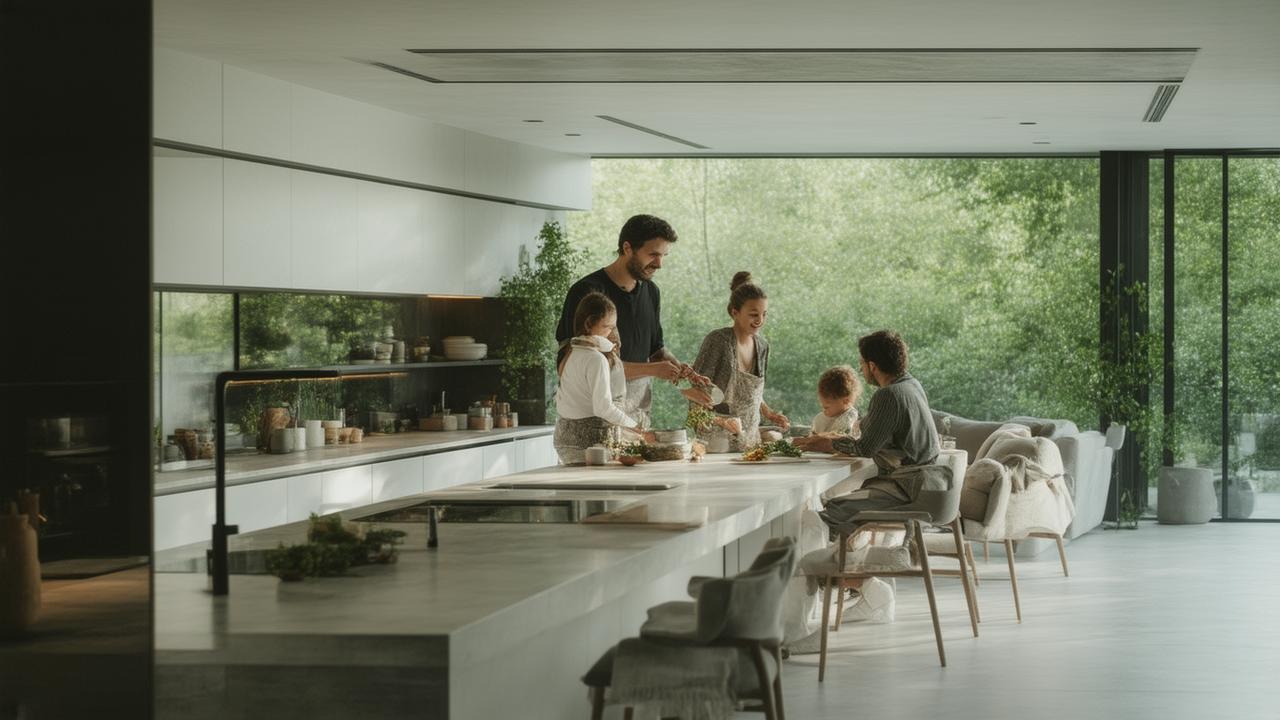
The first thing you notice is the silence in the middle of the room. No hulking rectangle, no jutting countertop demanding you walk around it. Just space—clear, open space—where an island used to stand like a stubborn rock in a river. The light seems brighter, the floor wider, the air easier to breathe. You can cross the kitchen in three relaxed strides without sidestepping a corner or clipping a hip. Somewhere between the clatter of pans and the low hum of the refrigerator, you realize: you don’t miss the island at all.
The Moment We Fell Out of Love With Kitchen Islands
For nearly two decades, the kitchen island has been the undisputed celebrity of home design. It showed up in glossy magazines, real estate listings, and home-renovation shows like a mandatory status symbol: “Open-concept kitchen with massive island.” It became our prep space, homework desk, cocktail bar, and casual dining table. If you didn’t have one, you were supposed to want one.
But somewhere along the way, the island began to feel less like a gift and more like a boundary. Families bumped into its corners. Friends clustered on one side while the cook was trapped on the other. The island ate square footage that small and medium-sized homes simply could not spare. In many apartments and townhouses, it turned what could have been a fluid, generous layout into a pinball corridor around a monolith of quartz.
Designers started noticing something: in the hands of most homeowners, the island was working too hard. It had to store, seat, hide, display, and somehow still let people move. And as our lives at home shifted—toward hybrid work, shared cooking, and more intentional gathering—the very thing that once made islands desirable began to make them feel dated: their immovability.
Enter the 2026 Replacement: The Flexible Kitchen Hub
By 2026, the conversation is changing. Instead of asking, “How big can the island be?” people are wondering, “How free can this room feel?” And out of that question, a new trend is quietly taking over: the flexible kitchen hub.
This isn’t a single object; it’s a new way of shaping the center of the kitchen. Think slender, movable worktables, beautifully detailed peninsulas that hug walls instead of cutting the room in half, and multifunctional consoles that slide, fold, or extend. These pieces trade bulk for agility and spectacle for subtlety. They offer all the practicality we loved about islands—with a lighter footprint and far more grace.
Imagine a kitchen where your main prep surface can glide closer to the window when you want natural light, or tuck beside the wall when you’re hosting a big gathering. Where circulation is smooth, and everyone belongs on the same side of the conversation. Where surfaces are scaled to human bodies and real rituals, not television sets and showrooms.
From Fixed to Fluid
The flexible kitchen hub is built on one simple idea: your kitchen should change as easily as your day does. Breakfast for two? Roll the narrow worktable closer to the coffee machine. Baking day with kids? Swing out the peninsular counter to create more shared space. Dinner party? Slide the table away from the cooking zone to create a drinks bar.
In place of a permanent concrete “stage” in the center of the room, you get a cast of nimble pieces that collaborate. Some are anchored—a slender peninsula attached to one wall, perhaps—but the stars are mobile: butcher-block trolleys, slim steel-framed tables, and elegant carts that could live just as happily in a dining room or on a terrace.
| Feature | Traditional Island | Flexible Kitchen Hub |
|---|---|---|
| Mobility | Fixed, permanent | Movable tables, trolleys, sliding pieces |
| Space Flow | Often blocks natural pathways | Opens up circulation, adapts to needs |
| Aesthetic | Bulky, central statement | Light, layered, more room to breathe |
| Use Over Time | Single layout for all activities | Reconfigurable for work, cooking, hosting |
| Renovation Impact | Structural changes, plumbing, electrics | Mostly furniture-based changes |
The New Anatomy of a Practical & Elegant Kitchen
Stand in a kitchen designed around this new trend and your senses will catch the difference before your brain does. There’s an ease to how objects and people occupy space. You can smell the stew without elbowing someone. You hear the soft scrape of a wooden trolley as it’s drawn nearer, not the dull thud of a hip against stone.
Instead of a single, overscaled block, the room is composed of layers: a long, wall-hugging counter for heavy-duty cooking; a slender, waist-high table for plating and conversation; a low console where bowls and boards are stored in open view. Each piece feels considered, not just in what it does, but where it rests in relation to light, movement, and each other.
Elegance in Proportion
The island trend encouraged a “bigger is better” mentality. Counters stretched beyond comfortable reach; stools lined up like airport seating. In contrast, the flexible hub trend is obsessed with proportion. Surfaces are deliberately narrow—sometimes only 60–70cm deep—so that nothing feels overbearing. You can stand on either side and still talk without raising your voice.
This restraint is what makes the new look feel elegant. It’s not about luxury finishes (though those can coexist); it’s about visual calm. More floor is visible. More wall space breathes. Light finds its way to corners that once sat in the island’s shadow. The kitchen stops shouting and starts whispering—a quiet confidence that feels deeply modern.
How Real Homes Are Saying Goodbye to Islands
Listen to the stories coming out of recent renovations, and a pattern emerges. A couple in a compact city home removed their bulky island and replaced it with a movable oak table on slim black casters. In the morning, it slides under a window, bathed in sunlight, scattered with coffee cups and open laptops. In the evening, it tucks closer to the range as a prep station, freeing space for guests to drift and mingle.
In a countryside house where family gatherings swell from three to twelve people without warning, the owners traded their massive stone island for a wall-anchored peninsula and a set of nesting tables. On quiet weekdays, the kitchen feels open and almost minimal. On weekends, the extra tables unfold, forming a long, convivial line from the cooktop to the garden doors, covered in salads and still-warm bread.
Multi-Room, Not One-Room
One of the quiet revolutions behind this 2026 trend is a simple mental shift: the kitchen is no longer treated as a stage that must contain every activity. Instead, it becomes part of a wider ecosystem of rooms. Your prep hub might sit in the kitchen, but your tasting table hovers closer to the living room. A slim counter ties into a window seat, blurring the line between cooking and lounging.
Without an island anchoring everything to a single spot, you’re free to let activities flow outwards. That freedom creates a more human rhythm in the home: kids doing homework a few steps away on a movable console, a friend perched at a tiny side table sipping wine while you stir a pot, someone else reading in an armchair but still within conversation’s reach.
The Practical Upside: Maintenance, Money, and Movement
The shift away from islands isn’t just poetic—it’s practical. Fixed islands are expensive to build and even more expensive to correct if you get them wrong. They often require re-routing plumbing or electricity, plus structural considerations for heavy stone or concrete tops. Once committed, you’re stuck with your choice for a decade or more.
Flexible hubs tip the scale toward furniture instead of architecture. Instead of paying for a block of stone that never moves, you invest in a well-made worktable you could one day take with you or repurpose in another room. If a lifestyle change—or a new family member—reshapes how you use your home, your kitchen can evolve without demolition.
Simpler Care, Lighter Footprint
Cleaning around a permanent island often means navigating awkward corners where crumbs accumulate and mops refuse to cooperate. In a hub-based kitchen, many pieces can be nudged aside or lifted altogether. Floors are easier to sweep. Spills are simpler to manage. When sunlight hits the room, it doesn’t highlight a fortress of cabinetry but glows across continuous, open surfaces.
➡️ Psychology says people who let others go first in line when they seem rushed display these 6 situational awareness traits that most people are too self-focused to develop
➡️ Boiling rosemary is a simple home tip I learned from my grandmother, and it can completely transform the atmosphere of your home
➡️ New ban hitting wood burners announced as fireplace rules changed
➡️ Soon a driving licence withdrawal for senior motorists after a certain age a necessary safety measure or a shocking discrimination against retirees
➡️ Day will turn into night: the longest solar eclipse of the century is already scheduled and its extraordinary duration is astonishing scientists
➡️ No vinegar or baking soda needed : the trick to cleaning your car seats and removing the toughest stains
➡️ Add just two drops to your mop bucket and your home will smell amazing for days no vinegar, no lemon needed
And then there’s sustainability. Choosing fewer built-ins and more enduring, repairable furniture pieces generally lowers the renovation’s environmental impact. Pieces can be refinished, resold, or relocated, rather than ripped out and discarded. Elegance isn’t just what you see; it’s what you don’t waste.
Designing Your Own Post-Island Kitchen
If you’re planning a remodel or just daydreaming about a future change, you don’t have to wait for some official “trend rollout” in 2026. The ingredients of this new movement are already available—you just need to think differently about how they come together.
Begin not with Pinterest images of gleaming islands, but with a day in your life. Who’s in the kitchen at 7 a.m.? Where do bags and keys land? Do you cook elaborate meals or embrace simple, comforting dishes? Do you work from home at the table, or do you crave a device-free zone? Map your real movements before you map your cabinetry.
Practical Steps Toward a Flexible Hub
Start small if a full renovation isn’t in the cards. Remove bar stools that never feel comfortable and replace them with a slender, movable table nearby. Try a high-quality trolley for extra prep space instead of installing something permanent. Clear the visual clutter from the center of your kitchen—even temporarily—and notice how your body responds when you move through the room.
If you’re building or renovating, challenge the default assumption: “Do we truly need an island?” Many discover that a generous wall run and a light, central table accomplish more, for less, with better energy. Aim for sight lines, not centerpieces. Give your kitchen the gift of circulation.
In the end, saying goodbye to kitchen islands is less about rejecting a design feature and more about embracing a new kind of domestic grace. The 2026 kitchen is not a showroom but a living landscape: surfaces that shift with the seasons of your day, spaces that honor both movement and rest, and a central hub that supports your life without demanding the spotlight.
Frequently Asked Questions
Are kitchen islands completely going out of style?
Islands won’t disappear overnight, but they’re losing their status as a default requirement. Many new designs favor lighter, more flexible solutions that better fit real-life movement and smaller homes.
Can a small kitchen work without an island?
Absolutely. Small kitchens often function better without an island. A combination of wall counters, a narrow movable table, and smart vertical storage can feel far more spacious and efficient.
What replaces the storage I used to get from an island?
Storage can shift to tall cabinets, under-counter drawers along the walls, slim pantries, and multi-tiered trolleys. Many homeowners discover they had more underused items than true storage needs.
Is a flexible hub more expensive than a traditional island?
Not usually. Because you’re investing more in furniture and less in heavy built-ins, you can often reduce construction costs and still choose beautiful, durable pieces.
How do I make a movable table look intentional, not temporary?
Choose materials and finishes that echo your kitchen—matching wood tones, complementary metals, similar countertop shades. Treat it as a designed element, not a leftover piece, and keep the surrounding area visually calm so it feels integrated.





