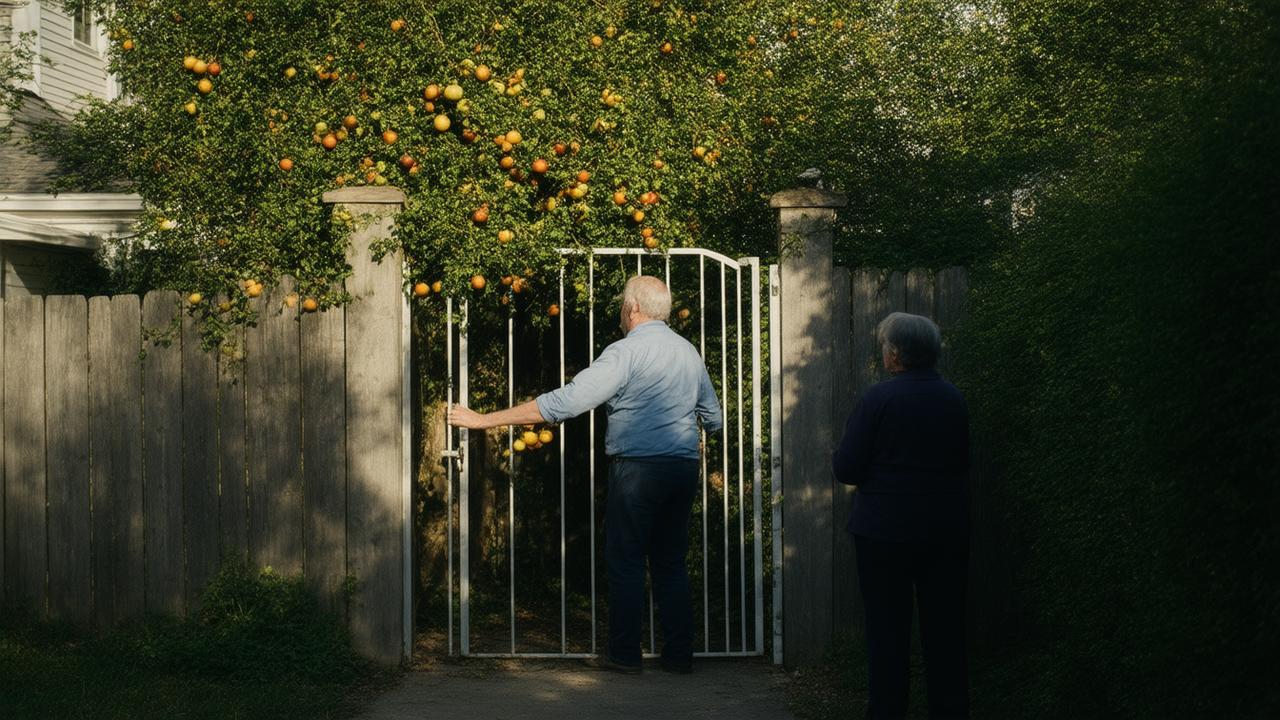
The first time you catch your landlord’s hand reaching through the leaves of your apple tree, there’s a strange, almost cinematic pause. Sunlight trembles on the fruit; a bird scolds from the fence; somewhere, a lawnmower drones. And there, in that small, quiet moment, you realize you’re not just watching someone pick an apple—you’re watching a boundary being tested. Your garden, your fruit, your sanctuary… but is it, legally? Or does the person who owns the land also own the right to wander in and help themselves?
When a Garden Is More Than Just Land
For many renters, the garden is the only wild piece of the world that feels like theirs. You know every corner of it: the way the rosemary darkens after rain, the shy strawberries hiding under their own leaves, the peach tree that took three years to finally trust the seasons enough to really bear fruit.
So when your landlord steps in unannounced to “just grab a few lemons,” it doesn’t feel like a neutral act. It feels like someone walking into your living room and opening your fridge without knocking. The soil under your fingernails, the hours spent weeding, watering, pruning—those things live in the fruit as much as sunshine does.
But the law often speaks a different language than feelings. Ownership, tenancy, access, consent—these are colder words than blossom, harvest, or home. And yet, tucked in between them is the answer to a surprisingly modern, surprisingly common question:
Does my landlord have the right to enter my garden to pick fruit?
The Quiet Line Between “Landlord’s Property” and “Tenant’s Space”
The tricky thing about gardens is that they sit exactly on the border between “property” and “privacy.” The landlord owns the land, that part is rarely in dispute. But you, as the tenant, usually have the right to exclusive possession of the space you rent, and that often includes the garden, courtyard, or yard that comes with your home.
Legally, in many places, the basic idea is this: once you sign a lease and move in, you don’t just rent walls and a roof—you rent the private space inside the boundary that’s been agreed upon. If the garden is part of your rental, it becomes part of that private space. Your landlord can’t simply drift in at will like it’s a public park.
Think of your garden gate as an extension of your front door. Just because someone holds the title to the building or the land doesn’t mean they can walk through either of them without a reason, without notice, or without your permission—except in very specific circumstances, such as emergencies, or where your lease clearly allows it.
What Your Lease Is Really Saying About the Garden
Some leases mention gardens specifically: who maintains them, who trims hedges, who is responsible for mowing lawns, even who owns the fruit from trees and vines. Other leases say nothing at all, leaving the garden to live in a vague, assumed space. But assumptions are where conflicts quietly grow roots.
Take a slow, careful look at your tenancy agreement. You might find phrases like “exclusive use of the property,” or that the “yard” or “garden” is “for tenant’s use.” If the garden is included in the space you’re renting, that’s a strong starting point for saying: this is your domain while you live there.
Even without specific wording about fruit, the idea of exclusive possession usually means: the landlord must respect your peaceful enjoyment of the property. A surprise appearance among your sunflowers, plastic bag in hand, rarely qualifies as “peaceful.”
The Landlord’s Rights: Not a Blank Check
Most landlord access rights are about safety, repairs, inspections, or emergencies. A leaking pipe in the garden? Sure. A crumbling boundary wall? Also sure. Fire, flood, or urgent work arranged with notice? Very likely allowed. But entering simply to pick fruit, because it’s “their tree” on “their land”? That’s where it becomes shaky.
In many legal systems, landlords are only allowed to enter the tenant’s rented area if:
- They give proper notice (often 24–48 hours in writing, depending on local law).
- The visit has a reasonable purpose (repairs, inspection, showing the property to new tenants, etc.).
- They come at a reasonable time of day.
- In a true emergency, they may enter without notice—but “the cherries look ripe” is not an emergency.
Harvesting fruit generally doesn’t appear on that list of acceptable reasons.
There’s another layer: some regions recognize “peaceful enjoyment” as a legal right you have as a tenant. This means you’re entitled to use your rented space without unreasonable interference from the landlord. Repeated, unannounced garden visits—even for something as gentle as picking figs—can begin to feel like an intrusion, and courts often take that seriously.
Who Owns the Fruit?
Here’s where law meets soil in a way that’s both practical and poetic: in many places, anything that naturally grows in the rented area—and is part of the property at the start of the tenancy—belongs to the property owner in a long-term sense, but the tenant usually has the right to the use and enjoyment of what grows there while they live in it.
Translate that to daily life: the landlord might own the tree, but during your tenancy, you may have the right to enjoy its shade and its fruit, unless your lease says otherwise. The fruit is part of your ordinary enjoyment of the property. When you water that tree, prune that vine, or stake that tomato plant, you’re not just decorating—you’re stewarding something that’s part of your home.
Of course, the details can vary dramatically from place to place. That’s where local advice matters. But the heart of the matter is this: ownership and access are not the same thing. A landlord can own a tree and still be barred from stepping into your garden to pluck from it without your consent.
The Emotional Geography of a Shared Tree
Legal lines are one thing. Lived lines are another.
Picture your landlord standing on the other side of the fence, eyes drifting toward the apricots hanging like little suns over the boundary. Maybe they planted that tree years before you ever moved in. Maybe the fruit reminds them of someone they loved. Maybe you’ve nurtured it, too, through storms and late frosts, through garden pests and heatwaves.
That tree is now part of both your stories. But that still doesn’t automatically give them the right to walk into your garden and take what they want, any more than your emotional attachment to the house gives you the right to knock down a wall.
And yet, the law doesn’t forbid generosity. It only tries to protect consent.
Sometimes, the easiest path through this tangle is conversation. A simple, “Hey, the plums will be ready in a week; would you like some? Let me know and I’ll leave a basket by the door,” can transform tension into shared delight. Boundaries don’t have to be hostile; they can be collaborative, like deciding where to plant a new shrub along the path.
➡️ After 25 years of reforestation, once-barren landscapes are now absorbing millions of tons of CO annually
➡️ Goodbye Kitchen Islands : Their 2026 Replacement Is A More Practical And Elegant Trend
➡️ Not vinegar, not wax: the simple home trick that makes hardwood floors shine like new
➡️ An exceptionally large African python has been officially confirmed by herpetologists during a certified field expedition, and now scientists are bitterly divided over how this shocking discovery should be handled
➡️ Day will slowly turn to night as the longest total solar eclipse of the century passes across several regions, creating a rare and spectacular event that scientists say will captivate millions for hours
➡️ Day set to turn into night as the longest solar eclipse of the century now has an official date, with experts highlighting its remarkable duration and the extraordinary visibility expected
➡️ Day set to turn into night as the longest solar eclipse of the century now has an official date, with experts highlighting its remarkable duration and the extraordinary visibility expected
A Quick Glance at Rights and Responsibilities
While the exact rules depend on where you live, the core ideas often cluster around the same themes. Here’s a simplified snapshot to help you place your situation:
| Question | Typical Position (Varies by Region) |
|---|---|
| Can my landlord enter my garden without notice? | Usually no, if the garden is part of your rented space, except in emergencies. |
| Is picking fruit a valid reason to enter? | Generally not considered a necessary or urgent reason. |
| Who enjoys the fruit while I live here? | Often the tenant, as part of normal use and enjoyment of the property. |
| Can we agree to share the harvest? | Yes, if both sides consent—ideally with clear communication. |
| What if the lease gives the landlord garden access? | They may have more rights, but still usually need reasonable notice and purpose. |
When the Law Feels Smaller Than the Garden
There’s something faintly absurd about boiling a living garden down to clauses and notice periods. The law can tell you that your landlord cannot legally stroll into your yard on a sunny Saturday morning just to harvest pears for a weekend pie—but it can’t fully capture how it feels to see someone gather something you’ve nurtured, without a word.
So what do you do when it happens?
- Start with clarity. Calmly tell your landlord that you consider the garden part of your rented home and that you need them to ask permission before entering.
- Refer to your lease. Point out any wording about exclusive use, privacy, or garden responsibilities.
- Suggest alternatives. Maybe you’re happy to share fruit, but on your terms: “If you ever want some, please text me and I’ll pick some for you.”
- Keep a record. If unannounced visits continue, note dates and what happened. It may matter later if you seek advice.
- Seek local guidance. Tenants’ unions, housing advisers, or legal clinics can explain the rules in your area.
The aim isn’t to escalate conflict; it’s to plant a clear, firm boundary—like a neat hedge around a cherished space. Clear boundaries can turn awkwardness into respect, and respect into easier living on both sides.
Drawing Your Own Boundary in the Soil
In the end, the question isn’t only, “Does my landlord have the right to enter my garden to pick fruit?” but also, “What kind of relationship do I want around this shared piece of earth?”
Legally, they often don’t have that right without consent, notice, or a good reason that aligns with local laws. Ethically, it’s about recognizing that even if they own the land, you inhabit it. You water it at dusk. You listen to the bees. You collect the first tomato like a tiny miracle.
Between title deeds and tenancy rights, there is a living, breathing space where courgettes spiral across the soil and blackberries stain fingertips. That space deserves both legal respect and human care. A landlord who understands that will knock, ask, and maybe wait at the gate with a smile. A tenant who understands that can set boundaries clearly, and maybe, sometimes, choose to share the harvest.
And somewhere between law and sunlight, between contract and compost, your garden will continue to do what gardens always do: quietly insist that home is not only where you live, but what you care for.
FAQ: Landlords, Tenants, and Garden Fruit
Can my landlord ever enter my garden without permission?
In many regions, your landlord can only enter without permission in a genuine emergency, such as a fire, burst pipe, or immediate risk to safety or property. Routine picking of fruit is not an emergency and generally does not justify unannounced entry.
What if my lease doesn’t mention the garden at all?
If the garden is clearly part of the space you use and access as the tenant, it’s often treated as part of your rented premises, even if not named. Local law and how the property is advertised or described can help clarify this. When in doubt, get advice from a local tenants’ support service or legal adviser.
My landlord says they planted the tree years ago—does that give them special rights?
Planting the tree may give them emotional attachment, but it usually doesn’t give them extra legal rights to enter your rented area without your consent. Ownership of the tree doesn’t override your right to privacy and peaceful enjoyment of the property during your tenancy.
Can I stop my landlord from taking fruit if they come into the garden?
You have the right to set boundaries about access to your rented space. Calmly explain that they must not enter without permission except for emergencies or agreed repairs. If they ignore this, document the incidents and seek local legal or tenancy advice; repeated unauthorized entry may be considered harassment or a breach of your rights.
Is it okay to agree to share the fruit?
Yes. Many tenants and landlords work out friendly arrangements—like splitting the harvest or leaving a box of fruit at the door. The key is that sharing should be voluntary and based on consent, not pressure or assumption. You can be generous without giving up your right to privacy.





