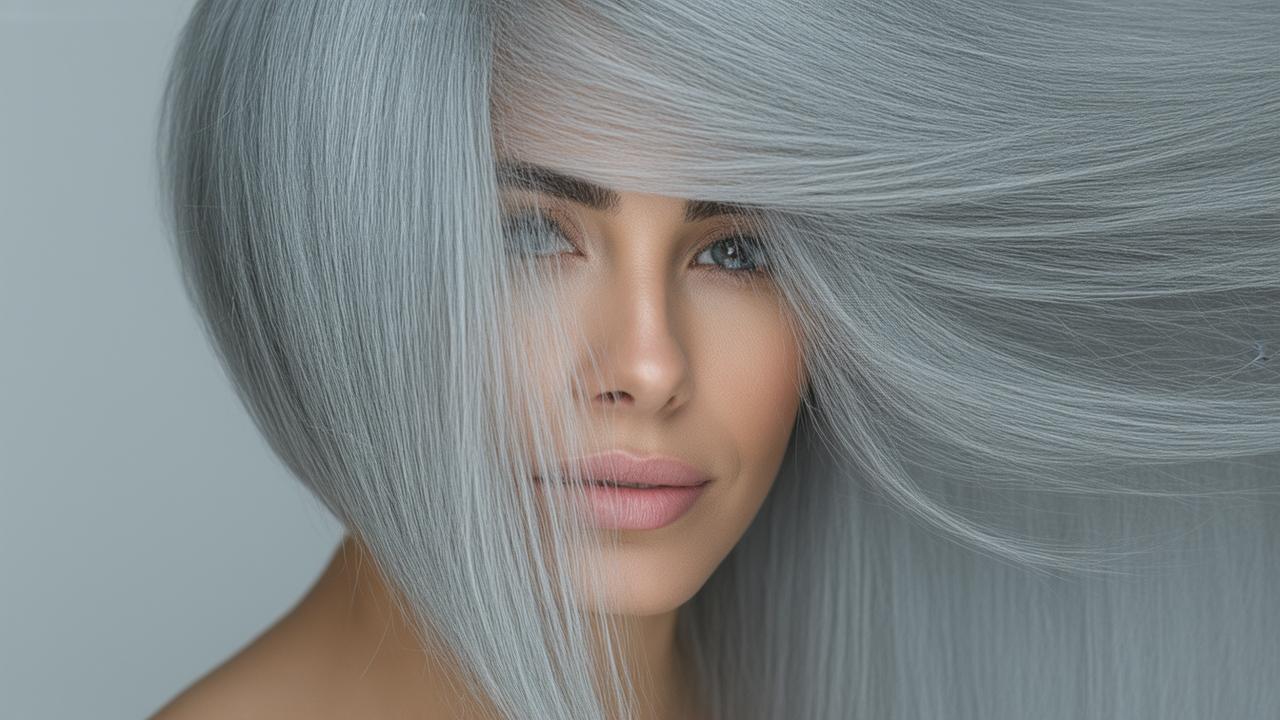
The first time Leena noticed the thin silver thread at her temple, it glinted in the bathroom light like a tiny streak of moon. She leaned closer to the mirror, fingers trembling just a little, and there it was—one hair, defiant and shimmering, refusing to play by the rules. Her first instinct was the old one: reach for the box dye she’d used for years, that familiar chemical smell, that quick, comforting disguise. But something in her paused. Maybe it was the way her scalp still felt dry from the last round. Maybe it was the faint sting in her eyes she’d begun to ignore. Or maybe, deep down, she was just tired of the ritual of hiding.
What if, she wondered, there was another way? A softer way. A way that didn’t feel like waging war on her own body.
The Quiet Rebellion Against Chemical Color
Across kitchen tables, in salon chairs, and over late-night video calls, the same small confession is starting to surface: “I don’t want to use harsh dyes anymore.” It’s not shouted from rooftops. It’s not a viral declaration. It’s quieter than that—more personal. A soft rebellion made of sighs of relief and whispered promises to treat our bodies more gently.
For decades, the story was simple: grey hair appeared; we covered it. We masked it with foams and creams that promised “radiant color,” “total coverage,” and “up to 100% grey concealment.” Few of us questioned the fine print. We ignored the pungent fumes, the itching scalp, the vague warning labels tucked on the side of the box.
But something has shifted. Maybe it’s the deeper cultural move toward slow living and mindful choices. Maybe it’s the rise of people openly embracing their natural texture and color. Or maybe it’s the simple, growing discomfort with putting aggressive chemicals on our skin, again and again, year after year.
Out of this unease, a new trend is emerging—not a trend in the shallow, passing sense, but more like a quiet evolution. People are starting to say goodbye to traditional hair dyes and turning instead toward gentler, more natural ways to soften, blend, and even beautifully disguise grey hair.
Nature’s Palette: Plants That Color Like Memory
Step into a kitchen where someone is preparing a natural hair color ritual and you’ll notice the difference immediately. There’s no sharp ammonia burn in the air, no sting at the back of the throat. Instead, the space smells warm and earthy—like tea, like rain on dry soil, like sun-warmed leaves crushed between fingers.
This new wave of grey coverage is rooted in very old practices. Plant-based hair color—henna, indigo, cassia, amla, coffee, black tea, and herbal infusions—is experiencing a renaissance. Not the brash, all-or-nothing red henna phases some of us remember from the 90s, but nuanced, layered approaches: blends handcrafted to soften grey, add depth, and create tones that look like the sun has been flirting with your hair for years.
Henna, made from the leaves of Lawsonia inermis, stains hair with copper or reddish tones, binding to the keratin like a gentle tattoo. Indigo, from the Indigofera plant, deepens those warm tones into brunettes and near-black shades. Cassia adds golden light and shine, especially to lighter hair. Some people brew coffee or black tea rinses to add subtle darkness, or infuse herbs like rosemary and sage for depth and scalp health.
Instead of lifting and stripping pigment the way traditional chemical dyes do, these natural colorants work by layering over your existing shade, blending grey rather than attacking it. The result? Color that often looks less “dyed” and more “lived in.” As if you’ve been on a long, restful vacation instead of in a salon under harsh lights.
From Coverage to Camouflage: A Different Way of Thinking About Grey
Here’s where the emotional shift becomes especially interesting: the new approach to natural color isn’t always about total coverage. It’s about camouflage, soft focus, gentle blending. Instead of trying to erase grey hair as if it were a mistake, people are learning to work with it—to make it part of a larger color story.
Imagine this: your natural base shade is a warm brown, and silver strands are starting to scatter near your hairline and crown. Instead of coating everything in opaque one-note color, a plant-based blend gently deepens your brown while letting some grey glint through as lighter highlights. The effect can be surprisingly youthful—not because the grey is gone, but because the overall look is softer, dimensional, and alive.
Where harsh dyes can sometimes create a flat, too-dark “helmet” effect that actually ages the face, natural methods tend to interact with your real color rather than overwrite it. Fine lines and expression marks sit more easily against hair that looks like it belongs to your present self, not an artificially frozen version from a decade ago.
The Subtle Art of Looking Younger Without Pretending
One of the quiet joys people describe when switching away from traditional dyes is that feeling of coherence—like their hair, skin, and age finally started speaking the same language. Looking younger no longer means pretending to be younger; it means looking rested, vibrant, and at ease.
Natural grey-blending techniques play a big role here. They create a sort of visual kindness around the face. Slightly softened roots. Wisps of silver that catch the light instead of stark lines of regrowth. A transition that’s more sunrise than on/off switch.
There’s also the way these methods often improve hair health over time. Traditional dyes can roughen the cuticle, weaken strands, and leave hair dry or brittle. Plant-based color, oils, and herbal masks tend to do the opposite: they gloss, thicken, and condition. Healthier hair reflects light better, moves more fluidly, and frames the face in a way that simply reads as more youthful.
And then there’s the emotional layer. Many people share a similar story: once they stopped fighting every incoming silver, a strange thing happened—they relaxed. Their reflection felt more honest. Friends said, “You look…good. Different. Happy?” It’s incredible how much younger we can appear when we’re not at war with ourselves.
A New Ritual in the Bathroom Light
The act of coloring your hair, done naturally, feels less like combat and more like care. The rhythm is slower: measuring out powders, warming water, whisking until smooth. Sectioning hair with patient fingers. Wrapping it up and waiting—sometimes for an hour, sometimes two—as the plants quietly work their magic.
The waiting becomes part of the ritual. A chance to make tea, to read, to sink into a bath. No burning scalp urging you to rinse as fast as possible. No frantic checking of the clock in fear of “over-processing.” If anything, you’re more likely to stretch out the time, enjoying the weight of the paste and the promise of softness to come.
It’s not glamorous in the conventional sense. You won’t look like a shampoo commercial model during the process. You might look like you lost a wrestling match with a garden. But there’s something deeply grounding in the mess of it. Your hair color becomes something you do with yourself, not something done to you.
In that shift—from chemical urgency to botanical patience—many people rediscover an unexpected intimacy with their own body. This is my hair, in this season of my life. I’m not erasing it. I’m tending it.
Comparing the Old and the New: A Closer Look
As more people consider stepping away from traditional dyes, it helps to see the contrast clearly. The differences are not just aesthetic; they’re practical, emotional, and sensory as well.
| Aspect | Traditional Chemical Dyes | Natural Grey-Blending Methods |
|---|---|---|
| Smell & Sensation | Strong chemical odor, possible stinging or itching | Earthy, herbal scents; typically gentler on scalp |
| Color Result | Opaque, uniform, can look flat or too dark | Layered, dimensional, often more natural-looking |
| Impact on Hair | Can dry or weaken hair over time | Often conditions and strengthens with repeated use |
| Grey Management | Demands frequent root touch-ups; obvious regrowth | Softens and blends; regrowth less stark and noticeable |
| Emotional Feel | Focus on hiding or “fixing” signs of age | Focus on harmonizing with age while feeling refreshed |
For many, this table isn’t just a list of pros and cons; it’s a gentle nudge toward a different relationship with time, beauty, and self-image.
➡️ Engineers confirm construction is underway on an ambitious underwater rail line designed to link entire continents through a deep-sea tunnel
➡️ No vinegar, no wax: the simple home trick that makes hardwood floors shine like new
➡️ Spraying vinegar at your front door: what it does and why people swear by it
➡️ If you still remember these 10 everyday moments from decades ago, your memory is sharper than most people in their 70s
➡️ Greenland declares an emergency after researchers spot orcas breaching dangerously close to melting ice shelves
➡️ If you have old keys at home, you may be sitting on a hidden treasure without even realizing it ‘here’s why’
➡️ Not Crosswords or Chess: The Best Memory-Boosting Activity for Over-65s
The Transitional Season: In Between Two Worlds
Letting go of traditional dyes doesn’t usually happen overnight. There’s often a transitional season—a slow, sometimes awkward, always human in-between. Roots grow in, lines of contrast appear, and you might feel caught between past habits and future intentions.
This is where the new trend truly shines. Natural methods are particularly good at easing transitions. Instead of a hard stop from dark box dye to stark grey, you can use plant-based glazes, tea rinses, or partial applications to soften the demarcation. Some people choose to treat only the most visible areas—the hairline, temples, or part line—letting the rest of the hair grow out at its own pace.
In this season, hats and scarves become allies, not shields. Strategic haircuts—soft layers, fringe, or a shorter crop—can help grey and colored hair mingle more gracefully. Each small choice is a vote: I am moving toward something kinder. I am allowing myself to change.
And somewhere in that in-between, a new self-image begins to take shape: someone who can cherish their years and still enjoy the play of color and shine. Someone who can say goodbye to traditional dyes without saying goodbye to feeling beautiful.
Goodbye, But Not to Beauty
Saying farewell to traditional hair dyes isn’t about abandoning the desire to look good. It’s about redefining what “good” looks and feels like. The new trend in naturally covering and blending grey hair is less about perfection and more about coherence—about aligning your outward appearance with your inner sense of who you are right now.
Maybe your path will involve deep, glossy plant-based brunettes. Maybe you’ll discover that your natural silver, softly brightened and conditioned, makes your eyes glow in a way no dye ever did. Maybe you’ll land somewhere in between, with strands of moonlight woven through a sun-warmed base color.
Whatever your version looks like, this quiet movement away from harsh formulas is really a movement toward something else: gentleness, patience, and a new kind of youthfulness. Not the brittle, hard-edged kind that fights every grey hair like an enemy—but the softer, truer kind that lets you stand in the bathroom light, look at your reflection, and think:
This is me. And I like who I see.
FAQ: Natural Grey Coverage & Looking Younger
Does natural hair color really cover grey hair?
Natural methods can cover or blend grey, but the result is usually softer and more dimensional than traditional dyes. Some plant-based colors, like henna and indigo, can achieve strong coverage, while others create more of a subtle camouflage effect.
Will I look older if I stop using traditional dyes?
Not necessarily. Flat, overly dark color can sometimes age the face more than a softer, blended approach. Many people find that healthier, shinier hair and a more natural shade actually make them look fresher and more relaxed.
Are natural dyes completely safe for everyone?
They are generally gentler, but “natural” doesn’t automatically mean allergy-free. It’s wise to do a patch test before trying any new plant-based color, especially henna or herbal blends, to ensure your skin reacts well.
How long do natural grey-blending colors last?
It varies. Some herbal rinses fade in a few washes, while henna and indigo can last several weeks or more, gradually softening rather than disappearing overnight. Many people refresh their color every 4–8 weeks, depending on their hair and goals.
Can I switch from traditional dye to natural color immediately?
You can start, but results depend on your current color history. Previously dyed hair may react differently to plant-based colors. A transitional phase—allowing some regrowth, trimming old color, and testing small sections—often leads to the best outcome.





