The first time I really noticed it, I was sitting on a crooked wooden bench at the edge of a forest, watching a woman in a bright blue jacket climb a muddy hill. The sky had decided, quite without apology, to pour sideways rain. Her boots slipped, her hair stuck to her cheeks, and more than once she had to grab at low branches just to stay upright. Everyone else in the group had long since turned back toward the warm café and the promise of dry socks. But she kept climbing. There was something almost stubborn in the way that blue jacket moved against the slate-gray hillside—like a small, vivid refusal to give up.
I remember thinking: it’s not just her personality. It’s the color. That blue looked like resolve you could wear. Later, I found out that psychologists have been quietly mapping the way color wraps around our moods, our habits, even our capacity to keep going when everything in us wants to quit. Somewhere between the forest path and the research papers, a pattern appears: resilient, persevering people often surround themselves—consciously or not—with three particular colors.
Not magic colors. Not “fix-your-life-in-30-seconds” colors. But shades that speak softly to the nervous system, to the part of the brain that decides whether we shrink back or lean in, whether we surrender or take one more step.
The Silent Language of Color and the Stubborn Heart
Imagine you’re standing at a trailhead, about to start a long hike. Your backpack straps bite into your shoulders just a little. The air is cool and smells of wet leaves. Ahead: miles of uneven ground, unpredictable weather, and a steep climb that looks much easier on the paper map in your pocket.
Now imagine the whole scene drained of color—just grayscale. The green of the moss, the golden flicker of dry grass, the deep blue suggestion of mountains far away: all gone. The world suddenly feels flatter, thinner, a bit like walking through someone else’s faded memory. You’d probably still walk. But does it feel like an adventure anymore? Or just… effort?
Psychology has a quiet answer to that. Colors don’t simply decorate our experiences; they anchor them. They whisper to the emotional centers of the brain, nudging our stress response, our focus, our willingness to persist. In studies of athletes, students, and even people recovering from injury, certain colors consistently show up in the background of stories about patience, grit, and stubborn hope.
Resilient people don’t always realize they’re doing it, but they tend to choose surroundings that echo what they need most: calm when the heart races, energy when the body is tired, warmth when the path feels cold and unforgiving. Over and over, three colors float to the top—like leaves in still water—when researchers listen closely to those stories.
The First Color: Blue, the Calm Between Heartbeats
You’ve felt it before. The particular silence of a lake at dusk, when the sky softens into a long sheet of blue and everything seems to exhale at once. Shoulders drop. Thoughts, which had been sparking in all directions all day, finally begin to move in straighter lines.
Psychologists often talk about blue as a “regulation” color. Shades of blue tend to lower heart rate and blood pressure, reduce feelings of anxiety, and support steady concentration. That might sound like trivia, but it becomes crucial in moments when life narrows to a single choice: panic or persist.
Persevering people rarely live in constant motivation. They live, instead, in a rhythm: effort, fatigue, recovery, effort again. Blue supports that recovery stage. It is the color that quiets your nervous system enough for you to think clearly, reassess, and decide to keep going instead of simply reacting.
Picture a college student studying late under a soft blue desk lamp; an open-water swimmer staring at the horizon line before diving into cold waves; the woman in the blue jacket on the muddy hill. They are all facing something slightly bigger than they feel prepared for—and blue becomes a kind of portable shoreline, a reminder of steady ground beneath emotional weather.
In workplaces, blue walls and screensavers are often chosen for focus. In bedrooms, navy or slate bedding wraps nights in something slower, deeper. Over time, these choices matter. Resilient people don’t just push hard; they build pockets of quiet into their lives. Blue is often the color of those pockets.
The Second Color: Green, Where Effort Learns to Breathe
On another day, maybe months after that rainy hike, you step into a small city park at lunchtime. Office towers loom around you, glass and metal and unblinking windows. But underfoot, the ground softens into dirt and grass, and the trees build a loose ceiling of leaves that filter the light into something warmer, slower. You take a breath you didn’t know you were holding.
Green is the color our nervous system seems to recognize as safety. The human brain evolved in landscapes full of plants, food, shade, and water. It makes sense that, to our deepest instincts, green still means “you can rest here without being eaten.”
Research on “restorative environments” shows that even brief contact with greenery—plants on a windowsill, a short walk through a garden, a green-dominated photograph—reduces mental fatigue and boosts feelings of possibility. That’s not just “feeling good.” It’s the mental reset we need for perseverance.
Resilience isn’t only about standing firm when storms hit; it’s also about being able to recover between storms without collapsing. Green lives right at that edge: not sleepy, not hyper, but quietly vital. It supports curiosity, a sense that trying again might be worth it.
People who weather long-term challenges—multi-year projects, chronic illness, parenthood, athletic training—often build tiny ecosystems of green around them: a plant on the desk, a walk in the park between meetings, hiking on weekends, green accents in busy rooms. It’s as if they’re unconsciously telling their exhausted brains, “We are still in a living world. Things still grow here. So can we.”
The Third Color: Yellow, the Small Sun You Carry
There is a certain kind of morning light that makes everything look freshly possible. It spills across countertops, slips under curtains, clings to the edges of your coffee mug. Even if nothing in your life has changed overnight, the world feels newly underlined. Yellow carries that feeling in concentrated form.
Psychology often associates yellow with optimism, attentional energy, and a sense of forward movement. In small doses, it wakes us up. It’s the color that taps your shoulder and says, “Look again. There might be something here worth trying for.”
Resilient people are not permanently cheerful. Many of them have walked through grief, uncertainty, or failure so deep it pressed their shoulders toward the ground. What sets them apart is not that they never despair, but that they don’t stay in the dark room forever. Something eventually nudges them toward the doorknob. Very often, in their physical spaces, that “something” is yellow.
Think of the runner lacing up bright yellow shoes on a gray morning; the sticky notes shouting small goals from the edge of a computer screen; the splash of mustard or sunflower or honey on a wall otherwise painted in calm neutrals. These are not accidents; they are flickers of invitation.
In experiments, yellow can sharpen focus and enhance memory of details, especially when used to highlight key information. That same effect, transferred to daily life, can help persevering people notice reasons to continue where others see only reasons to stop. A shaft of color that says, “Here. This part matters. This is where you place your next step.”
How Resilient People Quietly Use These Colors
Most people don’t wake up and declare, “I will design a color-based resilience strategy today.” Instead, they follow small instincts: the mug they always reach for, the jacket they bring to hard meetings, the trail they walk when their thoughts are too loud. Over time, these instincts line up with what psychology already knows about blue, green, and yellow.
| Color | Psychological Role | How Resilient People Use It |
|---|---|---|
| Blue | Calming, stabilizing, supports steady focus. | Chosen for clothing during stressful days, backgrounds on devices, quiet corners for thinking. |
| Green | Restorative, balances effort with recovery. | Walks in parks, houseplants, nature wallpapers, work breaks spent near trees or grass. |
| Yellow | Energizing, encourages optimism and attention. | Bright accents in workspaces, motivational notes, small wearable items that feel like a personal “sun.” |
When you look closely, it’s like watching someone build a mental weather system. Blue sets the pressure low enough that storms don’t tear everything apart. Green ensures there are still seasons of growth. Yellow breaks through like sunlight between clouds, suggesting that the future is not a closed door.
None of this replaces therapy, supportive relationships, or practical problem-solving. But it does mean that the world you build around you can either fight your resilience or quietly stand behind it, hands steady on your shoulders.
➡️ Bird experts expose the winter fruit trick that turns robins into garden addicts
➡️ Goodbye microwave: here’s the appliance that will replace it, and it’s much better
➡️ Many households waste money by using appliances at the wrong time of day
➡️ Growing anger among exhausted seniors as more “cumulants” are forced to keep working after retirement just to survive while politicians brag about economic success
➡️ Forget vinegar and baking soda: pour half a glass of this simple ingredient and the drain cleans itself effortlessly
➡️ Day will turn to night as astronomers officially confirm the date of the century’s longest solar eclipse, a rare event expected to create an extraordinary spectacle across several regions for all
➡️ Heating: the 19 °C rule is over, here’s the temperature experts now recommend
Bringing the Three Colors Into Your Own Everyday Grit
Stand in your own living space for a moment—really look. Your desk, your kitchen table, your bedroom, the place where you most often feel overwhelmed. What colors are doing the talking there? Are they echoing the person you’re trying to become, or the person you were when you first chose that rug, that jacket, that wallpaper?
You don’t need a renovation. You need small, intentional shifts:
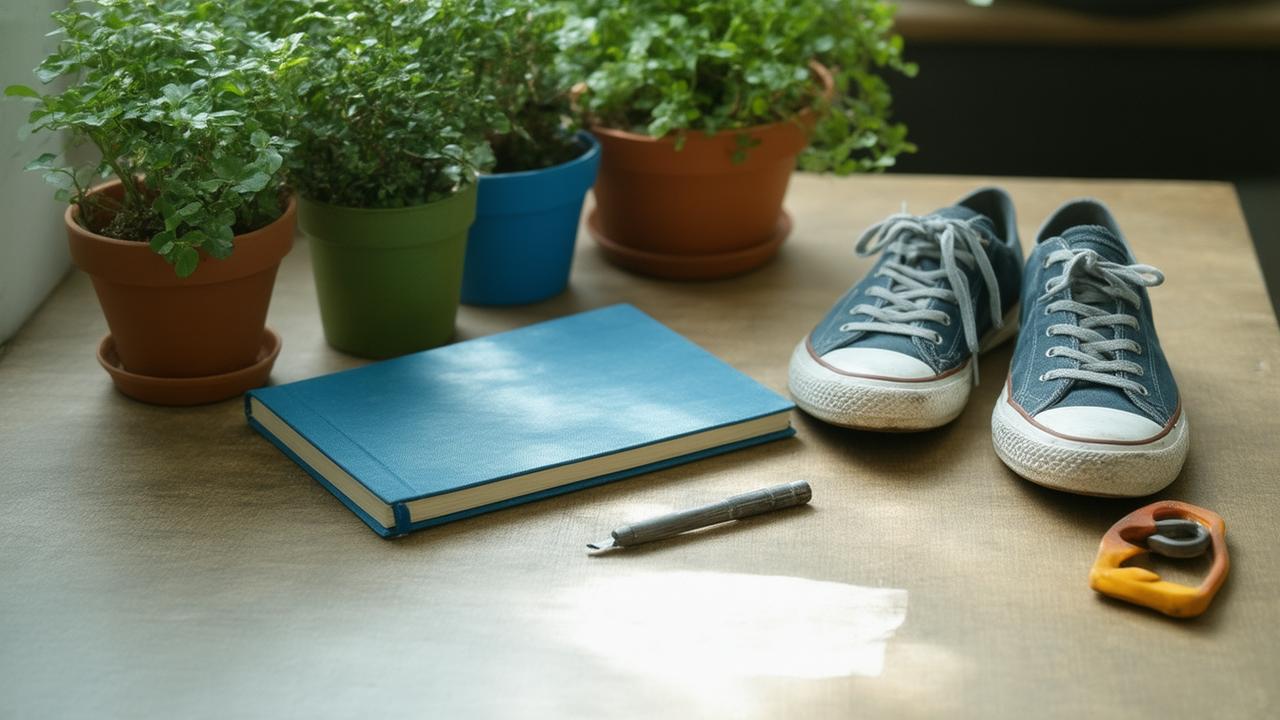
- For blue: Choose a calming background on your phone or laptop. Keep a blue notebook just for problem-solving or reflection. Wear blue on days that feel loaded with difficult decisions.
- For green: Add one living plant to the room where you most often feel stuck. Take brief “green breaks” by stepping outside to look at trees or distant hills between tasks.
- For yellow: Use yellow to highlight commitments: a calendar, a habit tracker, a small object you see when you first wake up. Let it act as your daily reminder that effort is still possible.
Think of these shifts not as decoration, but as environmental allies. Your future exhausted self will walk into these spaces and be quietly greeted by signals that say: slow down but don’t stop; rest but don’t surrender; the path is long but not empty.
Resilient people rarely rely on willpower alone. They enlist everything they can—friends, routines, landscapes, light, and yes, color. When life gets heavier, they’ve already built small, bright footholds into the walls.
When the Path Narrows, Let Color Walk Beside You
Sooner or later, everyone finds their own version of that muddy hill. The phone call that changes the shape of a life. The exam you fail after months of studying. The relationship that ends with more questions than answers. The long, unglamorous grind of working on a dream that, some days, doesn’t look like it’s working back.
In those moments, resilience doesn’t always sound like a battle cry. Sometimes it’s just a sigh and a small, hoarse, “One more try.” Sometimes it’s sitting alone in a blue-touched room, letting the nervous system calm enough that you don’t say something you’ll regret. Sometimes it’s a slow walk under green trees until your jaw unclenches. Sometimes it’s catching sight of a small flash of yellow on your desk and remembering the version of you who bought it because they believed you could get through this.
Psychology gives these colors names and numbers and measurable effects. But long before that, people carried them through stories: the deep blue of a sailor’s sea, the green of fields that return after winter, the gold of a horizon that proves the night has an end.
You don’t have to be naturally brave to be resilient. You just have to be willing to build a world that helps you try again. A world where blue steadies your breath, green keeps your hope rooted, and yellow reminds you that somewhere ahead, there is still light.
And the next time you see someone in a bright blue jacket climbing a slick, unforgiving hill while others head for shelter, look closely. You might just be watching the quiet collaboration of brain, body, and color—a small, stubborn miracle in motion.
FAQ
Do these three colors work the same way for everyone?
Not exactly. Cultural background, personal memories, and individual taste all shape how you respond to color. However, many psychological studies still find broad patterns: blue generally calms, green restores, and yellow tends to energize. Your personal experience may lean slightly differently, but the overall trends are surprisingly consistent.
Can color alone make me more resilient?
No. Color is a support, not a solution. Resilience grows from many roots: relationships, habits, mindset, rest, and sometimes professional help. Colors like blue, green, and yellow simply create environments that make it easier for your best coping skills to show up when you need them.
What if I don’t like wearing these colors?
You don’t have to. You can use them in subtle ways: notebook covers, wallpapers on devices, blankets, artwork, plant pots, or even a bookmark. The goal is not to drape yourself in them head to toe, but to let them quietly inhabit the spaces where you most often struggle or strive.
Is there a “bad” color for perseverance?
No color is inherently bad. Intense reds, for example, can raise arousal and tension, which is useful in some competitive situations but exhausting if you’re already stressed. Very dark or dull palettes may feel comforting to some but draining to others. The key is noticing how you feel in different color environments and adjusting accordingly.
How quickly can color changes affect my mood or persistence?
Some effects are immediate—stepping into a green park or a blue-toned room can lower stress within minutes. Others build over time, as your brain starts to associate certain spaces and colors with safety, effort, or recovery. Think of color as slow, steady training for your emotional landscape rather than a sudden switch.





