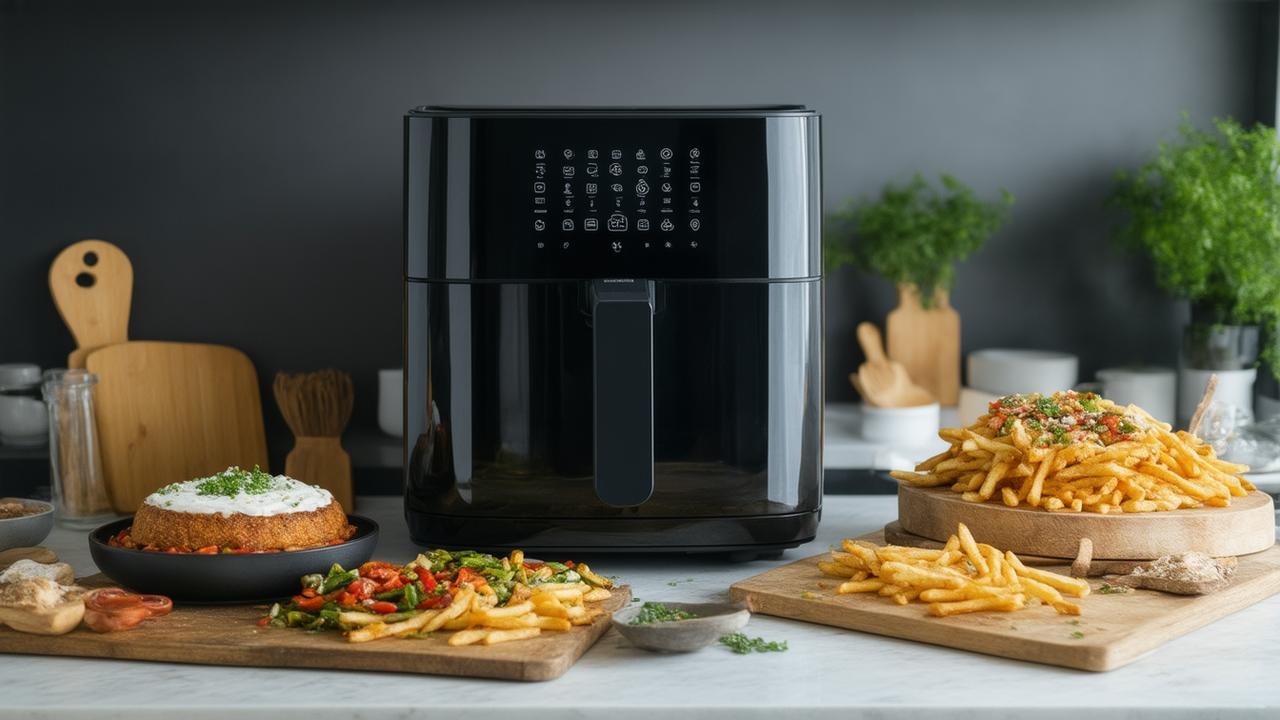
The first time I watched it on my counter, I felt a little like I was cheating on my air fryer. The familiar hum, the basket I’d shaken a hundred times for crisp, golden fries—it all sat quietly to the side while this new, sleek machine purred to life. Steam swirled behind the glass door, light reflecting off the brushed metal frame. It didn’t beep obnoxiously. It didn’t demand. It simply…cooked—calmly, efficiently, in a dozen different ways that made every other gadget in my kitchen suddenly feel a little outdated.
The Slow Goodbye to the Air Fryer
For years, the air fryer has been the undisputed rock star of modern kitchens. It showed up promising guilt-free fries and crispy wings with a fraction of the oil, and it delivered. It earned its prime spot on countertops across the world. But if we’re honest, most of us use it for the same three things: fries, nuggets, and reheating leftovers. Maybe a batch of vegetables on a good day.
At first, that was enough. The novelty of crisp without deep-frying. The ease of tossing frozen food into a basket and pulling out something that resembled a proper meal. But slowly, the cracks began to show. You couldn’t see your food without pulling the drawer out. Baking a whole loaf of bread? Forget it. Steaming dumplings? Not happening. Trying to do more than one thing at once? You’d be standing there in shifts—batch after batch.
Then this new machine arrived—a quiet revolution in matte black and silver, its promise printed simply on the box: nine cooking methods in one. Air fryers, it announced without a word, are the flip phone of kitchen technology now. It’s time for something smarter.
The Machine That Does (Almost) Everything
When you open the door, a soft interior light spills onto your counter. You can see everything inside: the glistening chicken skin as it blisters, the cheese on your vegetables as it quietly browns, the bread as it rises and domes. This isn’t just an air fryer. It’s a hybrid—a cross between a tiny oven, a steamer, a slow cooker, and, yes, an air fryer too.
On its control panel, nine options glow like a tiny constellation:
- Air fry
- Bake
- Roast
- Steam
- Steam-bake (or combi cooking)
- Grill/Broil
- Slow cook
- Dehydrate
- Reheat
But a list doesn’t tell the story. The story is in the sound of bubbling fat under a grill function, in the gentle exhale of steam as buns swell into soft, shiny pillows. It’s in the way your kitchen smells like an entire restaurant menu, yet your counter holds just one machine.
From Sizzle to Steam: Cooking with All Your Senses
The first night I tested it, I decided to really push it. A whole dinner, start to finish, with no other appliance. The chicken legs went in first, marinated in lemon, garlic, and smoked paprika. I selected roast, then added a touch of steam. The result? Skin that crisped and crackled while the meat inside stayed lush, almost impossibly juicy—something my old air fryer never fully mastered without drying out the thinner parts.
While the chicken rested, I switched to steam mode. A bamboo steamer used to be my go-to for dumplings, but this time I lined the tray with parchment and watched as little pockets of dough plumped up, the edges going just translucent at the rim. No stovetop. No pot of boiling water. No guessing if there was enough water left in the bottom. Just clear glass, steady steam, and that telltale scent of sesame and ginger filling the room.
In the time it takes my traditional oven to preheat, this thing had delivered roasted chicken and steamed dumplings. That’s when it hit me: this wasn’t just another gadget. It was a quiet rearranging of how my kitchen worked.
Why Nine Methods Change Everything
Air fryers made us fall in love with speed and crispiness. But nine methods expand the story from “fast snacks” to “actual cooking.” Think of it less as an appliance and more as a little ecosystem of heat and moisture control. With one device, you can move through an entire day of meals without switching tools.
Here’s how those nine methods stack up in daily life:
| Mode | Best For | How It Feels Different |
|---|---|---|
| Air Fry | Fries, wings, veggies | Crisp like your old air fryer, but with more space and visibility. |
| Bake | Cakes, cookies, bread | Acts like a mini oven, often faster and more even for small batches. |
| Roast | Whole chicken, vegetables | Dry heat with optional steam gives crisp outsides and tender centers. |
| Steam | Dumplings, fish, buns | Gentle, moist cooking for delicate foods—no stovetop needed. |
| Steam-Bake | Bread, lasagna, casseroles | Moist interior, beautifully browned top; bakery-style results. |
| Grill/Broil | Cheesy tops, charred veg | Quick, intense top heat for bubbling, blistered finishes. |
| Slow Cook | Stews, braises | Set it and forget it, like a classic slow cooker—but in the same device. |
| Dehydrate | Fruit chips, herbs | Low, steady heat turns produce into snacks and preserves. |
| Reheat | Leftovers | Brings food back to life, not just “hot and limp” like a microwave. |
In practice, this means breakfast can be a tray of roasted tomatoes and eggs baked in little ramekins, lunch a steam-baked loaf filled with cheese and herbs, and dinner a slow-cooked stew followed by air-fried croutons you toss on top at the last minute. All from the same machine, on the same counter.
Space, Simplicity, and the Quiet Decluttering
There’s another, quieter story happening under all this: the slow decluttering of our kitchens. For years, we responded to every new food trend with another plugged-in solution. A machine for rice. A machine for slow cooking. A machine for steaming. A machine for frying with less oil. Each one took up just enough space to be inconvenient and just enough effort to make you think twice about hauling it out.
This nine-method device does something deceptively radical: it gives you permission to let go. To donate the bulky slow cooker you only use twice a year. To retire the air fryer that hogs space but limits what you can make. To see your counters again—not as parking lots for appliances, but as actual working surfaces.
And for all its intelligence, it doesn’t feel technical in use. It feels human. You don’t need to memorize codes or decode cryptic icons. You choose roast when you want something browned and cooked through. You choose steam when you want moisture. You choose air fry when you want that bite of crisp. It’s less about learning a new system and more about finally having a tool that behaves the way you cook in your head.
When Technology Disappears into the Background
The beauty of this kind of kitchen device is that the technology eventually disappears. At first, you’ll tap every button just to see what it does. You’ll watch through the glass like a kid peering into an oven. You’ll listen for the transitions: the fan slowing, the hiss of steam subsiding, the click of a heating element.
➡️ Marine biologists warn of a troubling shift in orca interactions with vessels, as new research suggests learned aggression and humans refuse to change course
➡️ Psychology explains why overthinking at night is closely linked to the brain processing unresolved emotions
➡️ The forgotten kitchen liquid that leaves grimy cabinets smooth, clean, and shiny again with surprisingly little effort
➡️ “I’m a hairdresser, and this is the short haircut I recommend most to clients with fine hair after 50”
➡️ Drivers receive welcome news as new licence rules are set to benefit older motorists across the country
➡️ New spacecraft images expose interstellar comet 3I ATLAS with a level of detail scientists never expected
➡️ A retiree wins €71.5 million in the lottery, but loses all his winnings a week later because of an app
But after a while, you stop thinking about it. You’ll understand instinctively that your crusty bread will love a burst of steam at the start. That your reheated pizza deserves a few minutes of air fry, not a microwave blast. That your fish will be happiest in a cloud of steam, rather than in direct, dry heat.
Standing at the counter, you’ll move with a new confidence—less bound to specific recipes and more connected to what you want the food to become. Tender. Crisp. Juicy. Golden. Caramelized. Flaky. The machine adjusts, but you decide.
Goodbye, Air Fryer. Hello, Real Cooking Again.
Letting go of the air fryer isn’t just about swapping one box for another. It’s about stepping into a different way of thinking in the kitchen. The air fryer was our gateway—a promise that home cooking could be easy, fast, and satisfying. But it also boxed us into a certain kind of meal, a certain way of interacting with food: open drawer, dump, press start, shake, repeat.
This new generation of multi-method cookers nudges us back toward actual cooking without demanding hours of labor. It gives us back the aroma of slow-simmering stews without needing a giant pot on the stove. It lets us experiment with bakery-style bread without mastering a professional oven. It lets us have crispy, golden edges when we want them, but not at the expense of every other texture.
The air fryer had its moment, and it was an important one. But moments end. What takes its place is something quieter, more capable, and oddly more human: a single, thoughtful device that understands we don’t just want things fast and crispy. We want them right.
FAQs
Is this new nine-method device still able to air fry like my old air fryer?
Yes. It uses similar rapid hot air circulation, often with more precise temperature and time control, plus better visibility through a glass door. You’ll still get crisp fries, wings, and vegetables, but you’ll also have the option to combine air frying with other methods like roasting or steam-baking.
Will it take up more space than my air fryer?
The footprint can be slightly larger, but in practice it usually replaces multiple appliances: your air fryer, toaster oven, steamer, and sometimes even your slow cooker or dehydrator. Many people actually gain counter and cabinet space by consolidating.
Is it complicated to use so many cooking modes?
Most models are designed to be intuitive. You choose modes based on what you want the result to be—crispy, moist, slow-cooked, or baked. Many programs are preset, and you can adjust time and temperature as you grow more comfortable. After a few uses, switching modes feels natural.
Can this replace my full-size oven?
For large holiday meals or multiple full-size trays, a traditional oven still has the edge in sheer capacity. But for everyday cooking—small roasts, vegetables, bread, pizza, and desserts—a nine-method countertop device can realistically handle most of the work, often faster and more efficiently.
Is it worth upgrading if my air fryer still works?
If you only use your air fryer for occasional snacks, you may not feel an urgent need to upgrade. But if you’re cooking most days, enjoy trying new recipes, or want to reduce the number of appliances cluttering your kitchen, a device with nine cooking methods offers a big step up in flexibility, texture, and overall cooking experience.





