The first time you see them from the air, they don’t look real. They bloom out of the South China Sea like geometric mirages—perfect runways, sharp-angled piers, neat squares of concrete ringed by pale turquoise water and a halo of milky sand. There is no gentle gradient from mangrove to beach, no messy tangle of evolution or erosion. These islands were not grown, they were manufactured—poured, piled, and pressed into existence. Over twelve relentless years, China has been scooping up the seafloor and dumping it back down in strategic rings and rectangles, turning invisible reefs into hard, permanent land. Standing there, you can almost hear the hum of the dredgers in the distance, the low machinery-of-empire thrum beneath the waves.
A Sea That Became a Construction Site
The South China Sea once sounded like a place from a travel article: sun-bleached shoals, coral gardens breathing in gradients of blue, fishermen’s boats drifting between distant coasts. But sometime in the early 2010s, parts of it started to sound more like a construction zone. The sea floor rumbled. The water churned with clouds of sediment. At night, the horizon glowed with working lights from ships that never seemed to sleep.
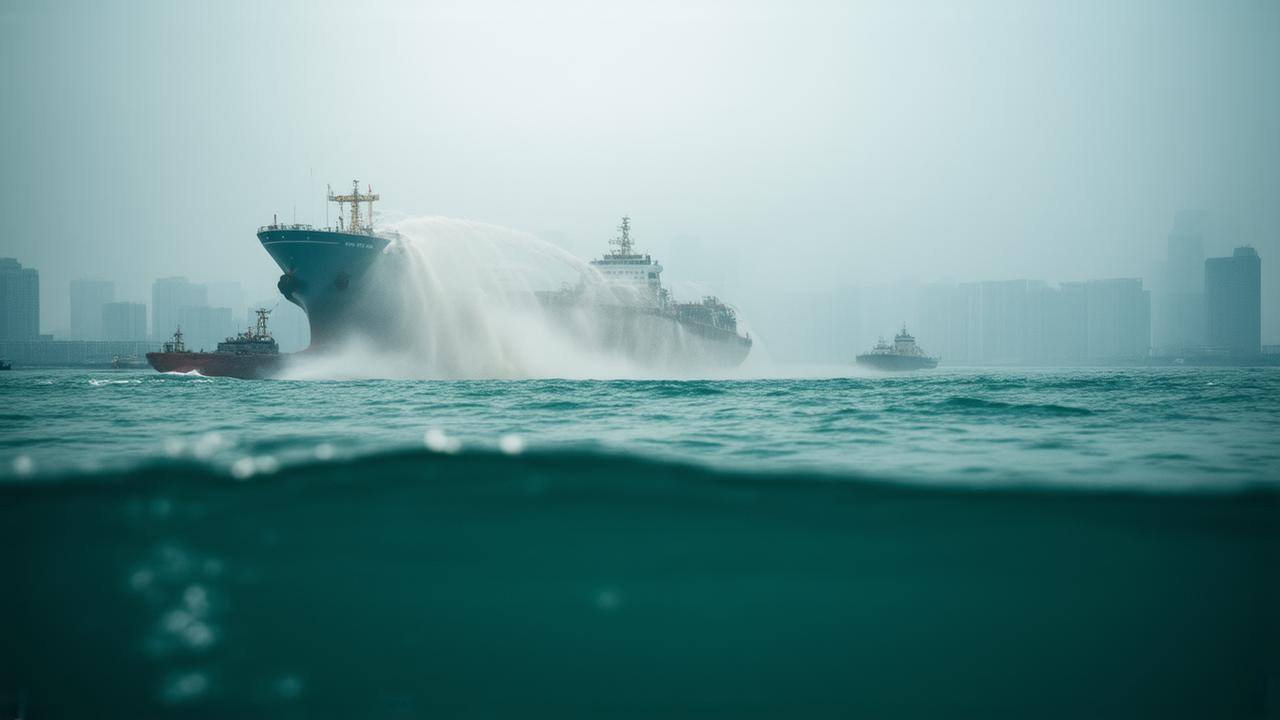
This was not the slow, patient work of sediment building up on a reef. It was a project with schedules and deadlines. Dredging vessels—some as long as city blocks—scooped sand and coral debris from the seafloor and blasted it onto submerged reefs. Where there had once been only a thin, underwater ridge, there was suddenly a smudge of pale sand visible on satellite images. Then a thicker smudge. Then a shape. Within a few months, some of these reefs had grown more land in a season than nature might add in centuries.
The numbers sound surreal when you repeat them out loud. Tonnes upon tonnes of sand, moved day and night, scooped up from one part of the ocean and slammed down onto another. It’s a kind of hyper-speed coastal geology, powered by diesel and steel—and a very particular vision of what the sea should be: not just a watery space between countries, but a surface where you can draw a line, pour sand, and call it home.
How to Build an Island from Nothing
To understand these new islands, imagine an architect with the power to move entire chunks of the seabed. The blueprint begins not on land, but in shallow water, on top of features that used to be known mostly to fishermen and marine biologists: coral reefs, atolls, shoals. These are the bones upon which the islands are built.
First, there is surveying. Ships chart the underwater terrain, mapping the hidden ridges and platforms that will anchor the new land. Then come the dredgers, belching out plumes of sand and pulverized coral. Like enormous mechanical mouthfuls, they suck up material from deeper channels and pump it toward the chosen reef, where it splatters into the sea in thick, cascading arcs.
Slowly, an outline appears: a ring of pale sand rising just beneath the water’s surface. From above, it looks like a ghost of an island tracing itself into being. But ghosts don’t stay shapeless for long. Bulldozers and excavators—land machines shipped in by sea—begin their careful dance on this unstable newborn ground, compacting the sand, pushing it higher, reinforcing it with rock. Seawalls are laid like armor along the edges, gray blocks stacked against the gnawing, restless ocean.
Once the base is stable, the transformation accelerates. Concrete is poured. Runways are laid out in bold, ruler-straight lines. Radar domes rise like pale bubbles on stilts. Harbors are cut into the island’s sides to shelter ships that weren’t there before. And then, one day, a satellite photo catches the first glint of a jet on that fresh strip of asphalt, and the fiction ends. It is no longer a reef. It is a runway, a port, a garrison—terra firma where just a few years earlier, the only solid things were coral and shell.
| Feature | Before Reclamation | After Reclamation |
|---|---|---|
| Terrain | Submerged reef or shoal, rarely exposed | Raised island with runways, roads, buildings |
| Elevation | Just below or at sea level | Several meters above high tide |
| Ecosystem | Coral reefs, seagrass beds, reef fish | Artificial shoreline, concrete, sparse planted greenery |
| Human Use | Occasional fishing, navigation hazard | Airstrips, ports, radar, military and logistical hubs |
Islands with an Agenda
These are not islands in search of inhabitants; they are islands with an assignment. You can sense it in their geometry. Natural islands shrug their shoulders at the sea, their coastlines bending and feathering under centuries of storms. These new outposts are all intention: right angles, grid patterns, shorelines tamed by sea walls instead of mangroves.
In the South China Sea, sand doesn’t just make land; it extends influence. Each newly risen island becomes a kind of exclamation mark in a long and contested sentence about who owns what in these waters. For China, the transformation of remote reefs into airstrip-equipped islands is both a declaration and a demonstration: we can do this, and we have done it.
From a satellite image, it’s easy to see only the symbols: the long gray lines of runways, the circular pads where aircraft might sit, the neat clusters of buildings. But from sea level, the island itself tells a different story. The concrete gets hot enough to shimmer. The air shudders with the sound of generators. Antennae reach into the sky like a bristle of metallic reeds. Every object seems to point outward, beyond the island’s edges, toward the open sea and whoever might cross it.
On some days, the mood is almost mundane. Supply ships tie up at docks. Workers plant decorative bushes in imported soil. There are basketball courts, satellite dishes, maintenance crews carrying toolboxes. It looks, from certain angles, like any other remote outpost of human normalcy—except that, beneath the concrete and painted lines, there is a reef that never consented to any of this.
What Happens When You Bury a Reef?
When tonnes of sand roar from a dredger’s pipes and crash down onto living coral, the first casualty is silence. A reef is not a quiet place; it crackles and clicks with the tiny sounds of shrimp, fish, and the soft rasping of feeding. But the soundscape goes blank under the roar of engines and the grinding of pumps.
Then the light changes. Sediment from the dredging billows through the water like underwater storm clouds, blotting out the sun. Coral that has spent centuries building itself, millimeter by patient millimeter, suddenly finds itself buried or starved of light. The fine, pale dust drifts into the open mouths of clams, clogs the delicate filaments of filter feeders, settles onto branching corals that can’t shake it off fast enough.
Some marine creatures can move away; many cannot. The result is less like pruning a garden and more like pouring a parking lot over it. What was once a complex, three-dimensional city of life—nooks for juvenile fish, coral ledges, seagrass meadows—is simplified into a flat, monochrome platform.
Scientists who study these waters describe zoning lines of impact radiating out from the islands. Closest to the new shores, damage is almost absolute. Farther out, the reefs struggle with chronic stress: more sediment, more noise, more ship traffic, more pollution. Even if construction stopped tomorrow, recovery would not be a quick, neat reversal. Coral reefs can be tenacious; they can colonize shipwrecks and adapt to some changes. But when the reef itself has been smothered beneath meters of fill, there is nothing left to bounce back from.
The Uncertain Future of Manufactured Shores
There is a quiet irony in all this building. These islands are born into a century of rising seas. Concrete may shrug off a few storms, but the ocean is tireless. Every year, typhoons grow a little more potent, waves a little more muscular with heat and energy. Seawalls, no matter how solid, are invitations to the sea to test them, to look for cracks in the logic of land where there once was none.
Island-building on this scale is a statement of control—a declaration that with enough machinery and material, a state can redraw the boundary between land and sea. Yet the planet is rewriting its own boundaries in the background. As polar ice melts, sea levels creep up the margins of every coastline, real and artificial. The very forces that made these islands possible—industrial capacity, economic ambition, confidence in engineering—must now grapple with their unintended accomplice: climate change.
➡️ The simple reason some rooms echo more than others
➡️ The exact reason your phone battery drains faster at night even when you are not using it
➡️ The hidden link between eye contact and trust perception
➡️ Clocks to change earlier in 2026 with new sunset time for UK households
➡️ Yoga experts say breathing patterns matter more than poses for calming the nervous system — here’s why
➡️ The daily drink centenarians swear by: and it’s surprisingly delicious
➡️ Kiwi has been officially recognised by the European Union and the UK as the only fruit proven to significantly improve bowel transit
What happens to a man-made island designed with today’s sea level in mind, when tomorrow’s tides are centimeters, or meters, higher? Maintaining the illusion of permanence will require endless effort: more dredging, more walls, more reinforcements, each one a new disturbance in a sea that is already exhausted by human demands.
And then there’s the geopolitical future. Islands may be made of sand and rock, but they are also made of stories: who claims them, who visits them, who is denied access. A reef buried under a runway is no longer a shared, difficult-to-define space. It has a flag painted on its surfaces—a literal one, perhaps, or a metaphorical one in the form of listening posts and patrol boats. For neighboring countries and passing ships, these islands are no longer just navigational curiosities; they are signals.
Questions the Sea Still Asks Us
When you pull back from the details—the dredgers, the concrete, the satellite photos—what remains is a knot of unsettling questions. What does it mean, morally, to create land by erasing life? At what point does an artificial island become “real” in the way we talk about coasts, countries, borders? Is land something you earn over geological time, or something you can deposit on a reef like cash into an account?
Maybe, years from now, someone will stand at the edge of one of these islands and watch a storm roll in. They’ll feel the wind rise, smell that electric tang of salt and rain. Waves will slam into the seawall with a rhythm that predates borders and dredgers and the very idea of nations. And beneath the engineered surface, under meters of imported sand and stacked concrete, the original reef will sleep, buried but not entirely gone, its limestone bones holding up a world it never chose.
Whether we see these places as feats of engineering, symbols of power, or cautionary tales, they force us to confront a truth we often avoid: the line between land and sea is not a given. It is, increasingly, a choice. For twelve years, China has chosen to redraw that line with sand, transforming hidden reefs into visible, strategic islands. The question that lingers is not just what those islands will become, but what kind of sea—and what kind of shared future—we are building around them.
Frequently Asked Questions
Are these new islands natural or artificial?
They are artificial. They are built on top of natural reefs and shoals using massive land-reclamation techniques, mainly by dredging and dumping sand and rubble to raise the seabed above sea level.
Why is China building islands in the South China Sea?
The islands serve strategic purposes: extending presence in contested waters, supporting airstrips and ports, and reinforcing territorial and maritime claims in a region rich in fisheries, shipping lanes, and potential energy resources.
How long does it take to create one of these islands?
The initial landform can appear in months, thanks to industrial dredging. However, fully developing an island with runways, harbors, and infrastructure takes several years of continuous construction and reinforcement.
What is the environmental impact of this island-building?
The impact is severe. Dredging and sand dumping bury coral reefs, stir up sediment that blocks sunlight, damage marine habitats, and can disrupt fisheries and biodiversity well beyond the immediate construction zone.
Will these artificial islands last in the face of climate change?
They can be reinforced and maintained, but they are vulnerable to sea-level rise, storm surges, and increasingly intense typhoons. Keeping them viable will likely require ongoing, intensive engineering and continual modification.





