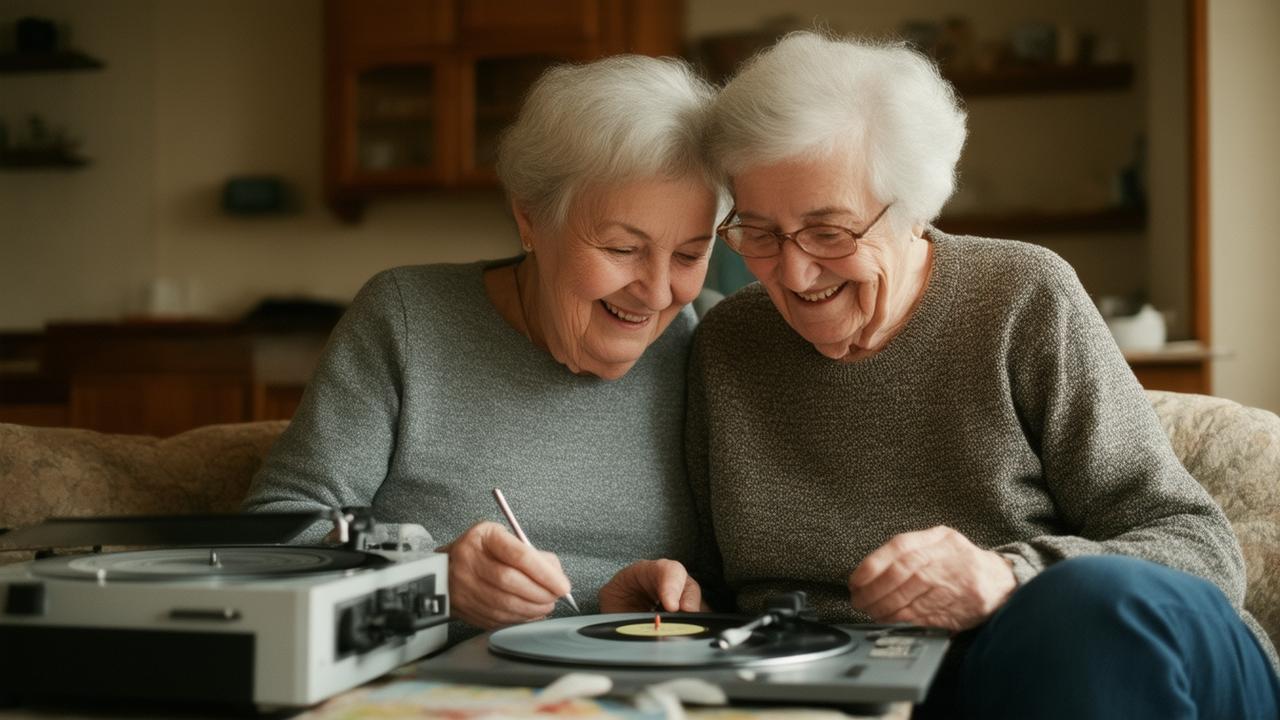
The old man at the corner table is doing something radical. He’s not scrolling. There is no phone beside his coffee, no tablet propped up, no glowing watch buzzing on his wrist. Just a folded newspaper, a chipped mug, and the patient way he lifts his gaze to the window as if the world outside is still worth looking at. Around him, the café hums with notifications and quiet, frantic thumbs, but he is elsewhere—rooted in a slower, older rhythm. And if you watch closely, he seems… lighter. Not because life is easier at 70 than at 27, but because he’s carried certain habits across the decades like heirlooms, habits that act as anchors in a world that’s always demanding more, faster.
The Quiet Superpower of Doing One Thing at a Time
Ask someone in their twenties what they’re “working on” and you’ll often get a list: answering messages, checking email, half-watching a video, nibbling on a snack, mentally drafting a to-do list. The mind becomes a browser with 34 tabs open, all making noise.
Now ask a woman in her 60s what she’s doing while she kneads bread dough at the kitchen counter. “Kneading bread,” she’ll say. Flour dusts her hands, the warm dough presses back against her palms, the smell of yeast is gently rising around her. Maybe the radio murmurs in the background, but her focus is here. One thing. Done fully.
Old-school single-tasking isn’t just efficient—it’s deeply sensory. When you grow up in a world without constant digital stimulation, you learn to take satisfaction in the process itself. Stirring soup, polishing shoes, hanging laundry in the sun—these are not filler between “real life.” They are life. They insist on presence.
Psychologists today talk about mindfulness as a modern cure for burnout. But for many people in their 60s and 70s, this is simply how they were raised: finish what’s in front of you before you reach for the next thing. And that small act of attention becomes a quiet kind of happiness. Not dazzling, not Instagrammable—but quietly grounding, like placing one stone carefully on top of another until a path appears.
Why Tech-Obsessed Brains Feel So Tired
Constant switching between apps, tasks, and screens doesn’t just consume time; it chews through mental energy. Younger generations often report feeling wired and exhausted at the same time, like a laptop stuck at 9% battery even while it’s plugged in. Older adults who kept their one-thing-at-a-time approach often show a different kind of fatigue: they might get physically tired, but mentally, they’re less fragmented.
They’re not trying to be productive every second. They’re simply present for the seconds they have.
The Art of Showing Up in Person
There is a certain kind of silence that hangs after a video call ends—flat, blue-lit, unsatisfying. Then there is the silence in a living room after everyone has finished laughing at the same joke, the echo of it still warm in the air. These are not the same silence.
People in their 60s and 70s grew up in an era where “I’ll come by” was the default social plan. No calendar invite, no group chat, no link. Just showing up with maybe a pie, or a plant, or an extra pair of hands. Even now, many of them cling stubbornly to this habit of being there in person.
They visit neighbors. They sit by hospital beds. They attend funerals in uncomfortable shoes and hold real, shaking hands. They stop by for coffee without texting a week ahead. It can be inconvenient, sure. But baked into that inconvenience is meaning. You can’t mute someone’s grief when you’re sitting beside them. You can’t scroll away from their joy when they’re laughing right in front of you.
Conversation That Doesn’t Need a Battery
There’s a particular look that crosses the face of an older friend when you talk and they listen—really listen. No notifications, no glances down at a phone, no furtive check for new messages. Just attention, like a steady light.
Many tech-obsessed younger folks crave this but rarely experience it. Their friendships can feel like long, scattered threads of memes, half-finished sentences, and “sorry, got busy” messages. The conversation never fully lands; it just hovers, like a tab left open in the back of a browser.
Older generations, especially those who keep their face-to-face rituals, have these thick, woven strands of connection. Weekly card games. Monthly lunches. The same holiday gatherings, year after predictable year. Routines that would look boring on a screen but feel vital in a living room.
The Comfort of Analog Routines
Open the drawer in a 70-year-old’s kitchen and you might find a small universe: rubber-banded recipe cards with careful handwriting, a calendar with doctor appointments circled in ink, maybe a notebook of addresses and birthdays. No passcodes. No software updates. Just a paper trail of a life maintained in lines and loops.
Many people in their 60s and 70s refuse to fully surrender to digital everything. They still write grocery lists on scraps of paper. They still keep photo albums with glossy pages and plastic sleeves. They still use wall calendars with scenic landscapes and thick red circles around the days that matter.
This isn’t just nostalgia. It’s tactile reassurance. When you write something by hand, your body helps your brain remember. When you revisit an old address book, you don’t just see names—you see eras of your life. The friend who moved away. The cousin who passed. The neighbor whose number you still haven’t had the heart to cross out.
Slowness as a Shield
Analog systems move at the speed of pen and paper, which is to say: much slower than the speed of light. But this slowness acts like a soft shield. You can’t check your notebook 60 times a day. You won’t receive 87 calendar notifications for every minor event. The noise stays low.
For younger people whose lives are managed entirely through buzzing black rectangles, the world can feel like one long “ping.” The brain never fully steps off the treadmill. Meanwhile, the old-school habit of writing things down by hand—then leaving them alone—creates little islands of mental rest. The list will still be there in the morning. No need to refresh.
Table Time: Old Habits vs. Always-Online
To see the difference more clearly, imagine the following side by side:
| Old-School Habit | Tech-Obsessed Equivalent | Emotional Effect |
|---|---|---|
| Handwritten to-do list | Multiple task apps and reminders | Calmer focus vs. constant micro-stress |
| Visiting a friend in person | Messaging and reacting to stories | Deeper connection vs. shallow but frequent contact |
| Evening walk without devices | Endless scrolling before bed | Better sleep and clarity vs. restless overstimulation |
| Reading a physical book | Jumping between tabs, feeds, and videos | Immersion vs. fragmented attention |
| Cooking from memory or recipe card | Following online recipes while checking notifications | Enjoyment and presence vs. distraction and hurry |
The Almost-Lost Ritual of Doing Things With Your Hands
Sit beside an older man while he fixes something. A toaster, maybe. Or a wobbly chair. His fingers move patiently, feeling for screws and loose joints. No YouTube tutorial open on a laptop, no frantic Googling for answers. Just a lifetime of practice with tools and the quiet confidence that most things—given time—can be mended.
Many in their 60s and 70s still carry the habit of making and repairing instead of replacing. They darn socks. They reattach buttons. They patch the corner of an old quilt instead of buying a new blanket online. Their world is stitched together, not constantly swapped out for the latest version.
Younger, more tech-entangled people are often separated from this kind of direct engagement. When something breaks, it’s cheaper and faster to order a new one. When boredom hits, it’s easier to open an app than pick up a needle, a hammer, an instrument, or a wooden spoon.
The Satisfaction of Tangible Results
There is a deep, glowing pride in seeing something you made or repaired continue to live in your home. That bookshelf you assembled. The jam you cooked down from fruit you picked yourself. The scarf you knitted during a winter of long evenings.
Older adults who hold on to these habits often report a more grounded sense of usefulness. They can point to things around them and say, “My hands did that.” It’s a kind of happiness that doesn’t care about likes or followers. The result is literally right there, on the table, in your lap, in your garden.
The always-online life, by contrast, produces very little you can touch. Screens fill the hours, but at the end of the day, nothing new exists in the room around you. That emptiness can echo, even if you never quite name it.
➡️ 6 old-school habits that people in their 60s and 70s refuse to drop and that make them happier than tech?obsessed youth
➡️ Bad news a 135 fine will apply to gardeners using rainwater without authorization starting February 18
➡️ A growing lifestyle trend among seniors: why more “cumulants” are choosing to work after retirement to make ends meet
➡️ Baking soda becomes the unexpected remedy for wrinkles and dark circles say beauty specialists
➡️ 3I/ATLAS: a strange radio signal was detected from the interstellar comet
➡️ Car experts share the winter tire-pressure rule most drivers forget
➡️ 10 dishes you should never order in restaurants, according to professional chefs
When “Boring” Routines Become Secret Joys
There’s an old man who walks the same route every morning: down past the post office, across the small bridge, up along the row of maple trees, then back home. He doesn’t track his steps. He doesn’t wear earbuds. Some days he walks faster, some days slower, but he always nods to the same dog-walker, the same sleepy barista turning over the “Open” sign.
Monotony? Maybe from the outside. But for him, this daily loop is a living story. He knows when the first buds appear in spring. He can tell you which month the geese return, which week the river usually floods over its banks. The habit has stitched him into the seasons, into the neighborhood, into time itself.
Many people in their 60s and 70s keep these steady rituals: morning coffee at the same table, weekly visits to the market, a set evening for calling a sibling or friend. They sound simple, almost dull, in a world obsessed with novelty. But simplicity isn’t the enemy of joy; chaos is.
The Anxiety of Infinite Options
Tech-saturated lifestyles come with a constant menu of possibilities: a thousand shows to watch, endless content to consume, limitless people to follow. Younger folks swim in a sea of “coulds,” and that ocean can be quietly exhausting. What if you chose the wrong show? Missed the best meme? Fell behind the latest trend?
Routine cuts through that noise. When Thursday night is always card night, you don’t waste energy deciding what to do. When Sunday morning is always reserved for pancakes with the grandkids, nothing else competes. Decision fatigue shrinks, and in the space that opens up, you can actually savor what you’re doing while you’re doing it.
Choosing a Little Less Noise
None of this is to say that everyone in their 60s and 70s is some serene monk of analog wisdom or that all younger people are jittery phone-addicts. Many older folks love their tablets; many younger ones are cultivating gardens, learning to bake, turning off their phones at night on purpose.
But the habits that older generations refuse to drop—writing things down by hand, showing up in person, doing one thing at a time, fixing instead of discarding, walking the same routes, cooking from scratch, lingering over coffee without a screen—hold a quiet lesson.
Happiness isn’t louder online. It’s rarely found in the next scroll, the next upgrade, the next notification. It’s more likely to be hiding in the worn spine of a cookbook, the familiar creak of a front step you’ve walked over a thousand times, the slow warmth of a conversation that wanders and loops and never quite “ends.”
The people who grew up before the internet don’t have a magic formula. They just never stopped doing the small, human things that tether us to our bodies, our places, and one another. And in a world glowing with screens, those old-school habits look less like relics and more like lifelines.
Maybe the question isn’t why they won’t let them go, but why we ever thought we should.
Frequently Asked Questions
Are all older adults happier than younger, tech-obsessed people?
No. Happiness depends on health, relationships, finances, personality, and many other factors. But many older adults who keep certain low-tech habits often report feeling more grounded, less rushed, and less overwhelmed by digital noise.
Can younger people adopt these old-school habits without giving up technology?
Yes. You don’t need to abandon your phone to benefit. You can choose specific times to single-task, keep a paper journal or to-do list, schedule regular in-person meetups, or start a hands-on hobby like cooking or crafting.
What is one simple habit I can start today to feel less overwhelmed?
Try a daily device-free walk, even for 10–15 minutes. Leave your phone at home or in your pocket and just notice your surroundings. This tiny practice often creates a surprising sense of calm.
Why do analog tools feel less stressful than digital ones?
Analog tools, like notebooks and calendars, don’t compete for your attention. They don’t send alerts, update themselves, or tempt you with other apps. You use them only when needed, which lowers mental clutter.
Isn’t relying on old habits just resisting progress?
Not necessarily. It’s less about resisting progress and more about choosing balance. Technology can be incredibly helpful, but pairing it with older, slower habits can protect your attention, deepen your relationships, and make everyday life feel more real and satisfying.





