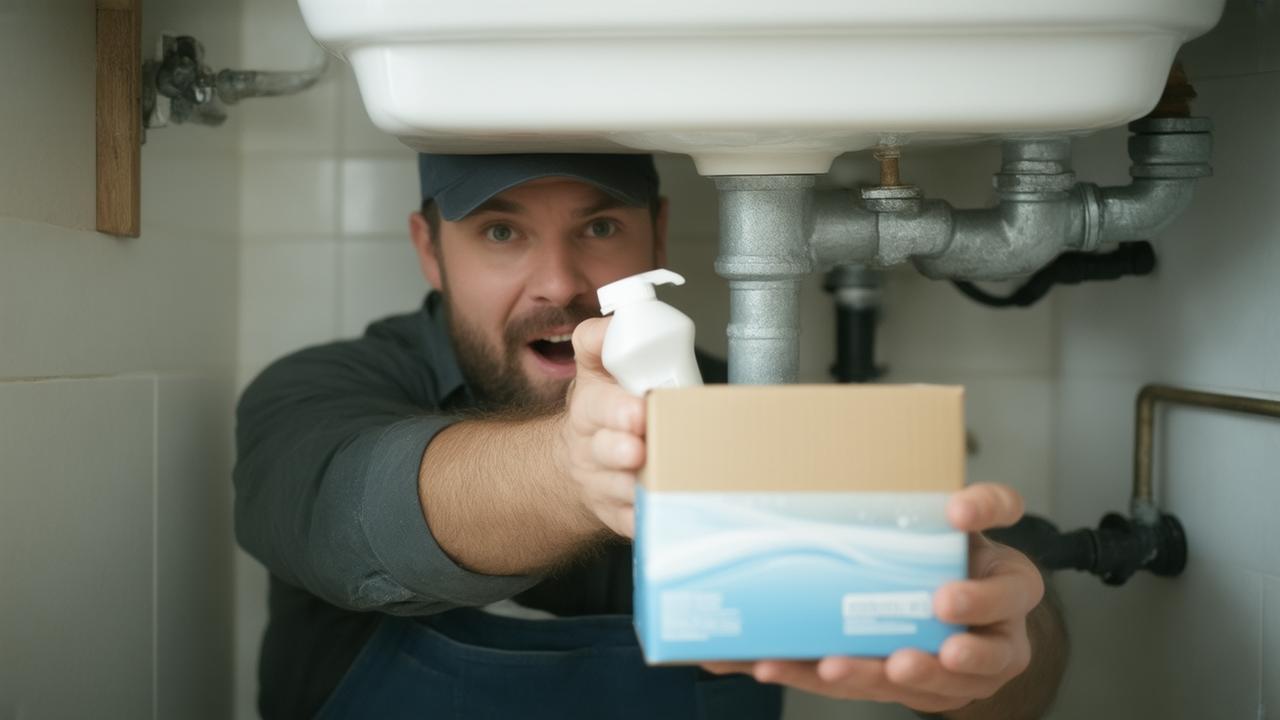
The first thing everyone remembers is the sound. Not the gurgling, not the angry rattling of aging pipes—those had been part of the background music of the old house for years. No, what people remember is the sudden silence. The kind of silence that makes you freeze mid-step and listen harder. Somewhere beneath the kitchen floor, the stubborn blockage that had tormented this house finally surrendered, and all it took, unbelievably, was a basic household product poured down the sink.
When the Pipes Began to Complain
It started with a smell before it became a story.
A faint, sour tang lingered in the kitchen, that damp odor of something stuck where it shouldn’t be. The sink drained slower each week, the water circling with growing reluctance, as if deciding whether or not it actually felt like disappearing. At first, it was easy to ignore—run the tap a little less, jiggle the disposal, hope the problem just, somehow, resolved itself.
But houses have a way of insisting on attention. Tiny warnings stack up into small crises. The washing machine began to complain in gurglings and sighs as it cycled. The downstairs bathroom sink burped when the upstairs shower ran. Then one night, after dinner, the kitchen sink simply gave up. The soapy water rose as if offended, filling the basin with cloudy dishwater and flakes of leftover food that bobbed like tiny, guilty islands.
By morning, the problem had spread. When the toilet flushed, the water hesitated. When the shower ran, the drain bubbled in quiet protest. It felt like the house was holding its breath, the circulation of water and waste choked by something no one could see.
The Call for Reinforcements
By the third day, the household had had enough. A plumber was called—two, in fact, over the course of a week. They arrived with tool belts and handheld cameras, with practiced calm and the worn patience of people who have seen every kind of domestic catastrophe. They probed and tested, unscrewed access caps and uncoiled snakes.
Their verdicts weren’t encouraging.
“There’s a serious blockage somewhere in your main line,” one of them said, frowning at the video feed from the drain camera. The screen showed a dark, murky tunnel, interrupted by a blur of sludge that clung to the interior like a barnacle to a ship’s hull.
“We might be able to clear it with more aggressive jetting,” another suggested, “but if that doesn’t work, you’re probably looking at digging. Maybe roots. Maybe a collapsed section.” He said the word “digging” the way a doctor says “surgery”—necessary, but heavy with disruption and cost.
Estimates were written down. Numbers were circled. Jaws tightened.
Yet in between the worry and the what-ifs, something else turned up: a small, half-remembered suggestion, dropped into conversation by a neighbor over the fence.
“You know,” she had said, “my aunt swears she fixed a drain issue once with something as ordinary as vinegar. Just poured it down and left it overnight. I don’t know if it was luck or chemistry, but she never had the problem again.”
The Idea That Seemed Too Simple
It was one of those casual remarks that linger around the edges of your thoughts, especially when you’re staring at a sink full of still water and an estimate that makes your wallet ache.
In the cluttered under-sink cabinet, among the cleaning sprays and sponges, there was a gallon jug of plain white vinegar. Next to it, a familiar yellow box of baking soda, softened from years of being opened and closed with damp fingers. On another shelf, an economy-size bottle of dish soap perched like a quiet sentinel of everyday routine.
In an age of specialized products and professional services, these simple staples seemed almost too humble to matter. Vinegar was for salads and streaky windows. Baking soda was for cookies and keeping the fridge from smelling like last week’s leftovers. Dish soap was for greasy plates, not clogged pipes.
Still, the mind grabs at hope in unexpected ways. After the plumbers scheduled a return visit and the house settled into an anxious waiting, the idea crystallized into a plan.
“What if we just… try it?” someone said. No one expected a miracle. At best, the hope was that it might loosen the edges of whatever lurked in the pipes, make the professionals’ job a little easier.
So, late one evening, with the house quiet and the day’s water usage finished, a decision was made. The kitchen sink became the stage for a small, unassuming experiment.
The Simple Experiment
The ritual began with boiling water, the kettle hissing softly on the stove. First, a kettleful of hot water went down the drain, a searing prelude meant to warm the cold metal and soften the grime. Then came the baking soda—half a cup, poured in a gentle stream, disappearing into the dark circle of the drain with a faint, dusty whisper.
The vinegar followed. A full cup, maybe more, was tipped slowly over the baking soda. The reaction was immediate: a rush of fizzing, a foam that bubbled up and exhaled a sharp, cleaning scent. It sounded almost alive, breathing and crackling somewhere in the unseen passage below.
They left it alone for a while, the way one leaves a sleeping child in a quiet room. No running water. No flushing. Just time and chemistry doing whatever they could in the dark. After half an hour, another kettle of boiling water chased the last traces of fizz down the line. For good measure, a generous squirt of concentrated dish soap was added beforehand—a silky stream of blue slipping into the drain, meant to break up grease, to slip between the stubborn layers of congealed kitchen history.
No one expected what came next.
The Moment Everything Changed
At first, nothing seemed different. The sink looked the same; the pipes remained invisible behind walls and under floors. A tentative trickle of water was run, then halted, everyone braced for the familiar slow rising that signaled failure.
But the water didn’t rise. It swirled once, twice, and then—almost shyly—vanished, pulled down with quiet ease. Another stream of water followed, just to be sure. Again, it emptied cleanly, the bowl of the sink gleaming and empty, as if the last few weeks had been a fever dream.
Down in the basement, near the access point in the main line, the air felt different. Pipes that had once gurgled like reluctant drains now hummed in silence. Where there had been the faintest tremor of trapped pressure, there was now only the solid, unremarkable stillness of things working as they should.
When the plumbing crew returned the next day, ready to continue their diagnostics, they were met not with a crisis, but with a curiosity.
“Run everything,” one of them said, a hint of skepticism in his voice. The shower blasted awake upstairs. Toilets flushed in chorus. The dishwasher clicked into life. Water coursed through the house like a river unblocked after a long winter of ice.
They listened. They tested. They checked the basement access again, shining flashlights into the once-troublesome main line.
“I don’t get it,” one of the workers admitted, shaking his head. “This line was half-blocked before. Now the flow is… perfect.”
Perfect. A word rarely used for old pipes and older houses. And yet, here it was: the unmistakable, crisp rush of unhindered water, sliding through the system with the effortless grace that only comes from being unobstructed.
What Likely Happened in the Dark
For all the drama of the moment, the real explanation was both humble and quietly elegant. Somewhere along the main line, layers of grease, soap scum, and organic residue had gathered over the years. Every dinner plate rinsed, every pot scrubbed, every fragment of food washed away had left behind a microscopic trace. Over time, those traces joined forces, thickening into a stubborn, waxy ring.
Baking soda, mildly abrasive and alkaline, likely clung to the sticky film. Vinegar, acidic and impatient, reacted with it, breaking up the outer layers and introducing a storm of tiny, expanding bubbles into the mess. That fizzing reaction may have pried loose chunks that were just waiting for the right nudge to move.
➡️ 6 old-school habits that people in their 60s and 70s refuse to drop and that make them happier than tech?obsessed youth
➡️ Bad news a 135 fine will apply to gardeners using rainwater without authorization starting February 18
➡️ A growing lifestyle trend among seniors: why more “cumulants” are choosing to work after retirement to make ends meet
➡️ Baking soda becomes the unexpected remedy for wrinkles and dark circles say beauty specialists
➡️ 3I/ATLAS: a strange radio signal was detected from the interstellar comet
➡️ Car experts share the winter tire-pressure rule most drivers forget
➡️ 10 dishes you should never order in restaurants, according to professional chefs
Then came the boiling water, sweeping through like a hot, cleansing tide. It softened fats that had solidified in the coolness of underground pipes, melting them into more mobile forms. The dish soap acted as a quiet mediator, wrapping its molecular arms around grease, turning it from stubborn clumps into tiny, suspended droplets that could finally be flushed away.
In the dim, cold corridors beneath the house, chemistry and temperature did what brute force had failed to finish.
A Tiny Table of an Unlikely Rescue
For those curious about what was actually used in that unexpectedly successful home experiment, here’s a simple breakdown:
| Item | Amount Used | Role in the Pipes |
|---|---|---|
| Boiling Water | 2–3 kettles (approx. 3–4 liters total) | Softens grease and helps push loosened debris along. |
| Baking Soda | About 1/2 cup | Combines with vinegar to create agitation; mildly abrasive. |
| White Vinegar | 1–2 cups | Acidic reaction helps loosen buildup and soap scum. |
| Dish Soap | A generous squeeze (2–3 tablespoons) | Breaks down grease and allows water to carry it away. |
None of these were exotic chemicals. They were the same quiet items waiting under countless sinks and in countless cupboards, living their double lives as both kitchen companions and, occasionally, unsung emergency responders.
The Balance Between DIY and Professional Help
As satisfying as this story is, it’s important to admit what the repair crew themselves emphasized before they packed up their tools, a little bemused, a little amused.
Not every blockage can be charmed away with pantry ingredients.
Some clogs are symptoms of deeper issues: tree roots invading old clay lines, pipes that have sagged or cracked with age, foreign objects lodged where they were never meant to fit. For these, no amount of vinegar, baking soda, or boiling water will restore true function. They require the practiced hands, eyes, and heavy equipment of professionals who understand the subterranean anatomy of a home.
But this time, in this house, the story went differently. The blockage was the cumulative weight of ordinary living, not structural failure. And so a basic household product—or rather, a small chorus of them—was enough to tip the balance. The workers, expecting hours of work, found themselves instead listening to pipes that now sang with invisible, flawless flow.
They ran their tests again, more out of disbelief than doubt. The numbers came back clean. The cameras glided through clear passages where sludge had once clung. One of them laughed, the sound echoing faintly in the quiet basement.
“I’ll be honest,” he said, “I don’t get surprised often in this line of work. But this… this is impressive.”
The Quiet Lesson in the Walls
Long after the plumbers drove away and the household returned to its normal rhythms, the story of the miraculous unclogging became part of the home’s mythology. It was retold over dinners, passed to friends who complained of their own sluggish drains, tucked away in those mental drawers labeled “Things To Try Before Calling Someone.”
It carried a gentle reminder about the hidden systems that support our everyday lives. The veins and arteries of our homes are often ignored until they fail, their workings taken for granted. We do not see what gathers in the bends of pipes, what lingers in the angles of aging joints, until something refuses to go where it’s supposed to.
This story isn’t a universal prescription. It’s not a guarantee or a substitute for expert advice when things truly go wrong. But it is a nudge toward curiosity and respect—for both the old, enduring ingenuity of plumbing and the surprising power of simple chemistry.
Sometimes, the most transformative solutions are not the loudest or most expensive. Sometimes, the hero is just a quiet jug of vinegar under the sink, a box of baking soda on a pantry shelf, a bottle of dish soap you’ve reached for a thousand times without thinking. And sometimes, when the timing and conditions are just right, they work together in the dark, unseen, to restore the effortless flow that keeps a home alive.
And if you happen to be standing there in the kitchen when it happens, you’ll hear it: that sudden, uncanny silence. The sound of a problem letting go.
Frequently Asked Questions
Does vinegar and baking soda really clear serious clogs?
Vinegar and baking soda can help with mild to moderate buildup caused by grease, soap scum, and organic residue. They are less effective for severe blockages, solid objects, or structural issues like collapsed pipes or invading tree roots. In those cases, professional help is necessary.
Is it safe to pour boiling water down my drains?
Boiling water is generally safe for metal pipes and many modern systems, especially for kitchen sink lines with grease buildup. However, in older homes with fragile or PVC pipes, repeatedly using boiling water may cause damage. Let the water cool slightly from a full rolling boil if you are unsure.
How often can I use this household method to maintain my drains?
Using a combination of baking soda, vinegar, and hot water once a month can help maintain cleaner drains and reduce buildup. For regular maintenance, use smaller amounts than you might for a serious clog.
Can I skip the dish soap in this method?
You can, but dish soap helps significantly when grease and fat are involved. Its job is to emulsify oils and allow water to carry them away. Including dish soap often makes the process more effective for kitchen sink issues.
When should I stop trying DIY methods and call a professional?
If multiple DIY attempts have no effect, if water backs up into multiple fixtures at once, if you notice foul odors from several drains, or if you suspect a major blockage in the main line, it’s time to call a professional. Persistent or recurring issues may indicate deeper structural problems that home remedies cannot fix.





