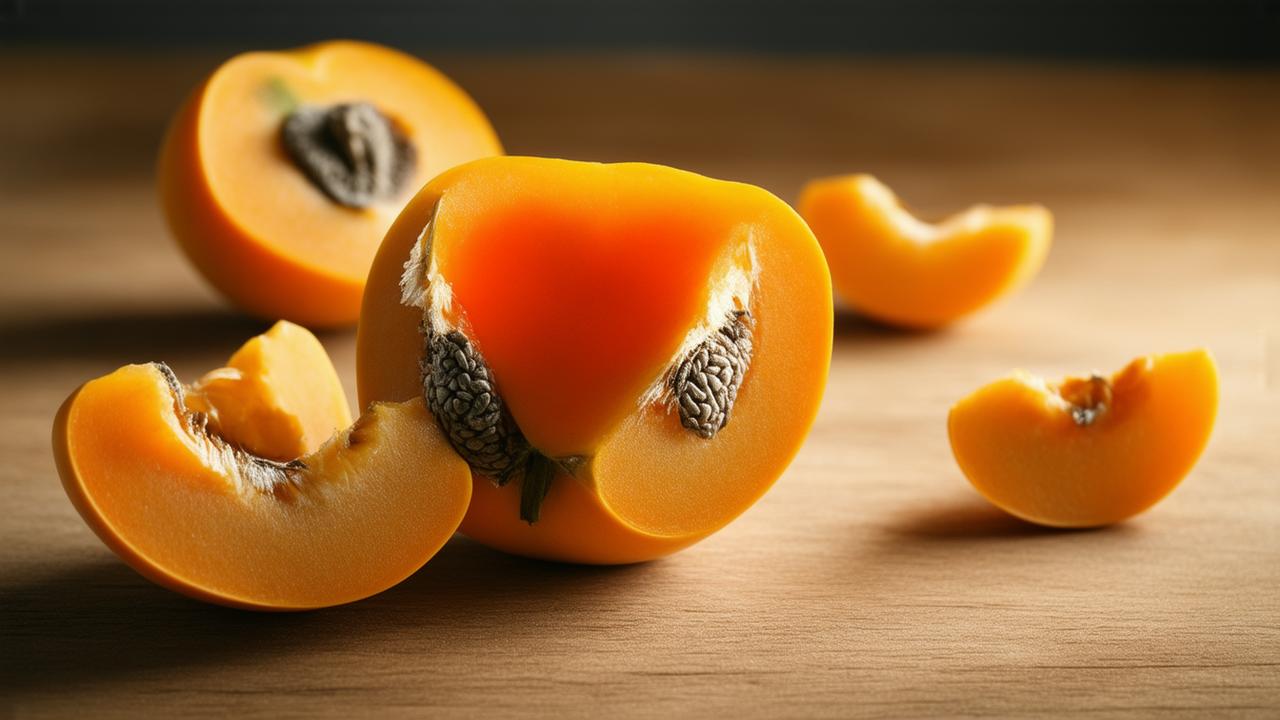
The first time I bit into a ripe persimmon, it felt like biting into a sunset. The skin was smooth and taut, the color somewhere between a pumpkin and a glowing ember. I didn’t really know what to expect—maybe something like an overconfident tomato or a shy mango. Instead, the flesh gave way with a silken softness, a honey-sweetness that flooded my mouth, and a faint, earthy perfume that lingered at the back of my throat. It was as if autumn itself had taken on a form you could hold in your hand.
Persimmons don’t shout at you from the fruit aisle the way neon-bright citrus or fragrant peaches do. They sit quietly in their orange jackets, a little mysterious, a little old-world, like a story your grandmother once told and you only half remember. But within that modest exterior, persimmons carry a kind of quiet power—nutritional, sensory, and even emotional. For generations, they’ve been revered in kitchens and folk traditions from East Asia to the Mediterranean. And as modern science catches up, we’re finally beginning to understand why this humble fruit deserves a much bigger place in our bowls, our baking pans, and our everyday rituals.
1. A Sweet Boost without the Blood Sugar Crash
Think of the moment mid-afternoon when your energy dips and your brain starts to fog. Most of us know the siren call of sugary snacks: a cookie here, a candy bar there, maybe another coffee. The spike is quick, but the crash that follows is unforgiving. This is where persimmons quietly step into the story like a steady, patient friend.
Bite into a ripe persimmon—especially the squat, tomato-shaped Fuyu type—and you get generous sweetness that doesn’t feel chaotic. That’s because persimmons come naturally packaged with fiber. Fiber slows down how quickly sugar enters your bloodstream, helping to prevent dramatic highs and lows. One medium persimmon can provide a noticeable chunk of your daily fiber needs in a package that tastes like caramel and apricot had a meeting in late October.
It’s the difference between a sugar rush and a slow-burning lantern. Instead of spiking and crashing, your energy levels can rise gently and stay there, making persimmons a perfect snack alongside a handful of nuts or a spoonful of yogurt. You get pleasure and comfort, but without paying the price an hour later.
| Nutrient (per medium fruit) | Approximate Amount | Why It Matters |
|---|---|---|
| Calories | ~110 | Gentle energy, naturally sweet, no added sugar |
| Fiber | ~6 grams | Supports steady blood sugar and digestion |
| Vitamin A | Over 50% of daily value | Key for vision, skin, and immune health |
| Vitamin C | ~20% of daily value | Antioxidant support and collagen production |
| Manganese & Copper | Trace minerals | Help with metabolism and antioxidant enzymes |
There’s a kind of sweetness that feels reckless, and a kind that feels kind. Persimmons are firmly in the second camp.
2. A Feast of Color for Your Eyes and Skin
The Glow That Starts from Within
Hold a persimmon up to the light and you’ll see why painters and poets have been obsessed with this fruit for centuries. That deep, glowing orange comes from pigments called carotenoids—especially beta-carotene—which our bodies transform into vitamin A. And vitamin A, among its many jobs, is your quiet guardian of sight and skin.
Imagine sitting by a window as evening softens the edges of the day. Your eyes adjust, your pupils widen, and all the subtle shadows of dusk emerge. That ability to see in low light, to distinguish shapes and movements when the sun is no longer obvious, depends heavily on vitamin A. Persimmons offer a surprising amount of it, layering gentle protection over time to help guard against night blindness and age-related vision issues.
Then there’s your skin—the part of you that meets the world first. The same orange pigments that make persimmons so striking can help your skin cope with daily wear: sunlight, pollution, dry air. Carotenoids act like tiny shields, working alongside vitamin C in the fruit to support collagen, the protein that keeps skin resilient and plump. You might not see the difference overnight, but imagine, month after month, feeding your skin from the inside with every orange slice and silky spoonful.
There’s something poetic about it: the color you see in your hand becomes part of the quiet architecture of your body’s resilience.
3. An Antioxidant Shield You Can Actually Taste
The Subtle Bitterness of Protection
Not all persimmons are created equal. If you’ve ever bitten into an unripe Hachiya persimmon—the tall, acorn-shaped kind—you may remember that strange, mouth-drying astringency, like every bit of moisture was suddenly pulled from your tongue. That sensation comes from tannins, natural plant compounds that, when the fruit is ripe, settle down and become far more gentle.
Those tannins and other plant chemicals—polyphenols, flavonoids, and carotenoids—are more than just quirks of taste. They’re part of the fruit’s antioxidant arsenal, a way of saying to your cells, “I’ve got your back.” Our bodies are constantly engaging with free radicals: unstable molecules formed by normal metabolism, pollution, stress, even sunlight. Left unchecked, those free radicals can damage cells and accelerate aging and inflammation.
When you scoop the jelly-like flesh from a ripe Hachiya or crunch softly through a Fuyu, you’re not just enjoying sweetness—you’re inviting in compounds that help neutralize this everyday damage. Science is still uncovering exactly how these different antioxidants work together, but we know they’re linked with reduced oxidative stress, better heart health, and potentially a lower risk of chronic diseases.
It’s strangely comforting to think that the faint tang at the edge of persimmon’s sweetness is a sign of that quiet, internal protection at work.
4. Gentle on the Gut, Powerful for Digestion
How Persimmons Help Things Move (Kindly)
So much of how we feel every day starts in the gut: energy levels, mood, even the clarity of our thoughts. Persimmons come with a duo that your digestive system loves—fiber and natural plant compounds that soothe rather than overwhelm.
The fiber in persimmons is a mix of soluble and insoluble types. The insoluble fiber acts like a broom, helping keep things moving along your digestive tract, preventing that sluggish, heavy feeling. The soluble fiber forms a gentle gel, feeding beneficial gut bacteria, supporting regularity, and even helping balance cholesterol.
There’s a sensory side to this, too. Notice the way ripe persimmon flesh clings to the spoon, almost pudding-like. That texture isn’t just a pleasure to eat; it hints at how the fruit behaves once it reaches your stomach—slowing digestion just enough to help you feel satisfied for longer, without feeling weighed down.
Of course, as with any high-fiber food, the key is balance. Too many persimmons at once—especially if you’re not used to fiber—might leave you a bit bloated. But integrated into your day with some water and other whole foods, they become an ally, not a challenge, for your gut. A sliced Fuyu on morning oatmeal, a chunked persimmon tossed into a leafy salad, or a spoonful of soft, jammy Hachiya over yogurt: each is a tiny act of kindness toward your digestion.
5. Heart-Forward Fruit: Supporting Your Circulation
Quiet Work Behind Every Beat
Your heart is always working, unseen and mostly uncelebrated, a metronome that keeps the rest of your life possible. Food can either make its job harder or ease the load. Persimmons manage to do the latter in several subtle ways.
The fiber in persimmons, particularly soluble fiber, can help reduce LDL (“bad”) cholesterol by binding to it in the digestive tract and encouraging your body to excrete it rather than absorb it. Over time, this gentle nudge may translate to cleaner arteries and less strain on your heart.
Then there are the antioxidants, once again showing up quietly in the background. Oxidative stress is a major contributor to the damage that accumulates in blood vessels. The cocktail of carotenoids, vitamin C, and plant polyphenols in persimmons appears to help protect the delicate lining of your arteries, potentially improving blood flow and reducing the risk of plaque buildup.
Even the presence of minerals like potassium can be meaningful. Potassium helps balance the effects of sodium, easing tension in blood vessel walls and supporting healthy blood pressure. Picture a simple bowl on your table: a few persimmons, maybe some walnuts and a wedge of cheese. It looks like nothing more than a still life, but as you eat from it, you’re making small, cumulative investments in the health of the muscle that never gets a day off.
➡️ “I feel like I’m always bracing for something”: psychology explains anticipation mode
➡️ By dumping sand into the ocean for more than a decade, China has managed to create entirely new islands from scratch
➡️ “No one explained how to do it”: their firewood stored for months was actually unusable
➡️ “This slow cooker meal is what I start in the morning when I know the day will be long”
➡️ A quick and natural way to make any room smell fresh, without using sprays or scented candles
➡️ A Nobel Prize winning physicist says Elon Musk and Bill Gates are right about the future, with far more free time but fewer traditional jobs
➡️ 8 phrases deeply selfish people often say without realising it
6. Seasonal Comfort, Emotional Nourishment
Persimmons as Little Rituals of Autumn
Not all benefits can be measured in milligrams and percentages. Sometimes, a fruit feeds our spirit as tangibly as our bodies. Persimmons are very much a seasonal fruit; depending on where you live, they appear in late autumn, lingering into winter when other fruits have long gone quiet. Their very timing makes them emotionally potent.
There’s a certain rhythm to waiting for persimmons to ripen on the counter. The rock-hard Hachiya that nearly bites back when unripe will, over days, soften into a trembling balloon of sweetness. You can press it lightly with your thumb and feel the give, like a promise finally kept. That waiting can become its own ritual—watching, touching, anticipating. It slows you down in a season that’s often frantic with holidays and deadlines.
In many cultures, persimmons are symbols of good fortune, transformation, and warmth. They’re hung to dry in strings like little lanterns, sliced into salads with bitter greens, baked into breads, stirred into puddings. Sharing a persimmon at the table—passing slices from hand to hand—has a kind of intimacy, like passing a story or an heirloom recipe.
Those intangibles matter. The comfort of spooning soft persimmon into your breakfast on a cold, gray morning. The feeling of biting into one while wrapped in a sweater, leaves skittering outside. The awareness that you’re eating something rooted in older kitchens and older hands. All of that is nourishment, too, the kind that settles somewhere deeper than the stomach.
Frequently Asked Questions about Persimmons
Are all persimmons safe to eat raw?
Yes, but with a caveat. Fuyu persimmons (short and squat) can be eaten when firm or slightly soft. Hachiya persimmons (taller and acorn-shaped) should be eaten only when very soft, almost jelly-like; otherwise they can taste extremely astringent.
How do I know when a persimmon is ripe?
A Fuyu is ripe when its color is deep orange and it yields slightly to gentle pressure, though it can also be enjoyed while still fairly firm. A Hachiya is ripe when it feels very soft, almost like a water balloon, and the skin may look a little translucent.
Can I eat the skin of a persimmon?
Yes. The skin of a Fuyu persimmon is thin and usually pleasant to eat. The skin of a very ripe Hachiya can also be eaten, though many people prefer to scoop out the flesh with a spoon and leave the skin behind.
What’s the best way to store persimmons?
Keep firm persimmons at room temperature until they ripen. Once soft and ready to eat, you can store them in the refrigerator for a few days to slow further ripening. If they become very soft, they can be frozen for later use in smoothies or baking.
How can I use persimmons in everyday meals?
Try slicing Fuyu persimmons into salads, grain bowls, or on top of yogurt and oatmeal. Use very ripe Hachiya persimmons as a natural sweetener in muffins, quick breads, puddings, smoothies, or simply eat them with a spoon like a dessert custard.
Are persimmons suitable for people with blood sugar concerns?
Persimmons are naturally sweet but also high in fiber, which slows sugar absorption. In moderate portions and as part of a balanced meal, they can fit into many blood sugar–conscious diets. It’s wise for anyone with diabetes or prediabetes to monitor portions and consult a healthcare professional.
Can I be allergic to persimmons?
Persimmon allergy is uncommon but possible. If you notice itching, swelling, or digestive discomfort after eating them, it’s best to stop and talk with a healthcare provider. As with any new food, start with small amounts if you’re unsure.
In the end, persimmons are more than just another fruit on the shelf. They’re a small, glowing reminder that nourishment can be beautiful, seasonal, and deeply satisfying—one sunset-colored bite at a time.





