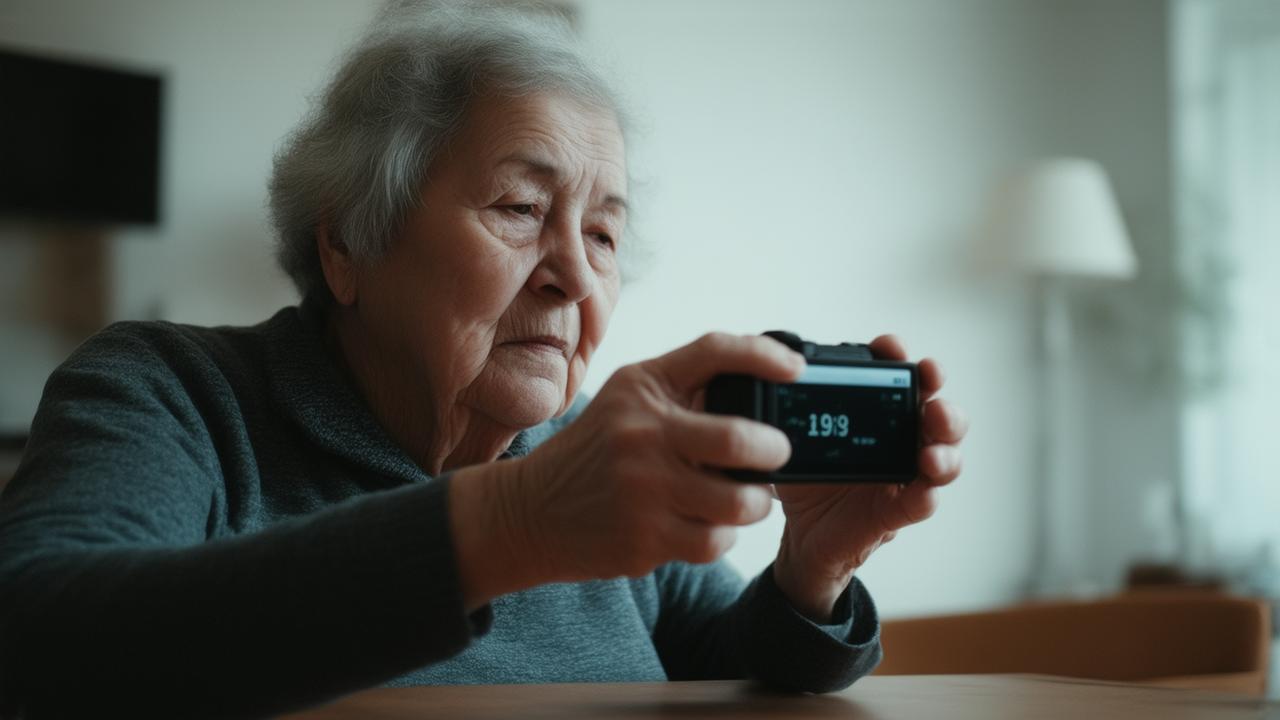
The first time George noticed it, he was standing at the kitchen counter, slicing strawberries. The knife slipped, the berry rolled, and his hand twitched—just a fraction of a second too late. He caught it, but barely. It was nothing, he told himself. Just a moment. But later that week, he tripped on a raised bit of sidewalk and felt his foot stumble in slow motion, as if his body heard the alarm long after it sounded.
“I’m just getting old,” he muttered, rubbing his knee. He was 68, still walking every day, still lifting light weights twice a week. Heart strong. Legs strong. But something else felt just a little slower—like the world had nudged the playback speed down by a notch.
What George didn’t know was that there’s a quiet, often-overlooked routine that has more to do with his reaction time than any treadmill or dumbbell: simple balance and coordination practice. The kind of routine that doesn’t look heroic on a gym floor. No sweat-drenched selfies. No step counts. Just small, deliberate movements that train the pathways between eyes, ears, muscles, and brain—those millisecond decisions that decide whether you catch yourself or fall, grab the railing or miss it, hit the brakes in time or not.
The Hidden Reflex Gym Inside Your Body
Most people over 60 know they “should” keep moving: walk more, sit less, maybe do some strength training. But reaction time lives in a more subtle world. It’s not just about muscle strength or cardio fitness; it thrives in the space where balance, attention, coordination, and nerve signaling meet.
Think, for a moment, about walking across a forest trail. The path twists. A root juts out where the ground dips. Your eyes scan ahead, your ears catch a bird’s sudden wingbeat, your foot adjusts mid-step as a stone wobbles under your shoe. You don’t think, “Shift weight left, activate ankle muscles.” You just do it. That’s reaction time in real life: instinctive, quiet, precise.
As we age, those small corrections slow down. Neurons transmit a bit less efficiently, joints feel stiffer, and we instinctively move more carefully, or not at all. Over weeks and years, the body becomes less practiced at making micro-adjustments. Without realizing it, we train ourselves to avoid the very challenges that keep us sharp.
Here’s the twist: you don’t need elaborate equipment or high-tech brain games to maintain reaction time. You need little invitations to instability. Tiny doses of unpredictability, safely delivered. You need, in a sense, to go wobbly on purpose.
The Overlooked Routine: Practicing Controlled Instability
Balance and coordination routines rarely get the same attention as jogging or strength training. They look unimpressive. Standing on one leg in the living room doesn’t feel like “real exercise.” But in those quiet minutes, you are tuning a deep, ancient system that once kept your ancestors from stumbling off rocks or missing a branch in the dark.
Imagine you’re standing at your kitchen counter, one hand resting lightly on the edge. You slowly lift one foot, just an inch from the floor, feeling your standing leg wake up. Tiny muscles around your ankle and hip engage, shifting like a flock of small birds adjusting in the wind. Your eyes focus. Your breath slows. This small challenge sends a message to your brain: stay sharp, stay ready.
Here are some examples of what a simple “reaction time preservation” routine might include:
- Standing on one leg while brushing your teeth.
- Walking heel-to-toe along a hallway, as if you were balancing on a log.
- Gently turning your head side to side while balancing, so your inner ear and vision must cooperate.
- Catching a softly tossed ball, or bouncing one hand to the other, while standing on slightly uneven ground like grass.
- Practicing light, quick foot taps on a low step—up, down, side to side—like a slow-motion dance.
These small drills don’t just challenge strength; they play with timing. They ask you to respond, not just exert. Over time, this practice preserves the nervous system’s quickness—your ability to sense, decide, and move before you even realize you did.
How Nature Quietly Trains Your Reflexes
Modern floors are flat, hard, predictable. Sidewalks, kitchen tiles, polished wood: they don’t ask much from your body, so your reaction time is rarely tested. But step into a patch of grass, a grove of trees, or a stretch of sand, and everything is different. The ground tilts slightly, dips unexpectedly, gives way under your heel.
On an autumn path, leaves hide small stones. Your foot feels one shift, and a chain reaction begins—ankle, knee, hip, spine, all making a thousand tiny corrections. Your arms lift slightly for balance. Your eyes sharpen, absorbing detail. This is your entire system rehearsing for the moment when your safety depends on those adjustments.
For someone over 60, time on uneven natural surfaces can be like sending your reflexes to a quiet, outdoor gym—one that trains them without fanfare. Of course, it must be done safely: sturdy shoes, a walking stick if needed, perhaps a friend at your side. But the principle is powerful. Each step on uneven ground whispers to your nervous system: stay awake, stay responsive.
Reaction time isn’t only about speed, either. It’s about coordination: your body’s ability to orchestrate a fast, graceful response rather than a panicked flail. Nature excels at asking for this kind of grace. The arc of your foot across a tree root, the way your body naturally angles on a hillside, the micro-stumble and recovery when a rock shifts underfoot—these are repetitions, like practice throws before the real game.
Building a Gentle, 10-Minute Reflex Ritual
You don’t need to overhaul your life to preserve reaction time. You just need small, steady rituals. Think of them as daily conversations with your nervous system: “We’re still doing this. We’re still quick.”
Here’s a simple routine you can adapt at home or outside. Always hold a stable surface when you start—a counter, a heavy chair, a railing. Over time, you may not need the support as often, but it’s there to keep things safe.
| Activity | Time | What It Trains |
| Single-leg stand (holding a counter) | 2 minutes (1 minute each leg) | Balance, ankle reflexes, posture control |
| Heel-to-toe walk along a hallway | 2 minutes | Coordination, focus, midline stability |
| Light step-taps on a low step | 2–3 minutes | Foot speed, leg reaction time, rhythm |
| Head turns while standing (looking left/right) | 2 minutes | Inner ear (vestibular) system, visual stability |
| Gentle ball toss (against wall or with partner) | 2–3 minutes | Hand-eye coordination, quick decision-making |
This adds up to around 10–12 minutes. The key isn’t intensity—it’s consistency. Three to five times a week is enough to send your body a clear message: “These reflexes are still in use. Please maintain them.”
The Brain Behind the Quick Step
When you catch yourself from a stumble or slam on the brakes at a yellow light, it feels like your body just “knew” what to do. In reality, a quiet army of systems had been training for that split-second call: your eyes, inner ear, spinal cord reflex loops, and several regions of your brain responsible for planning movement.
Balance and coordination routines stimulate these systems like a subtle, whole-body puzzle. Each small wobble sends sensory information up to the brain: Where am I in space? Which muscles are firing? Which joints are at risk? The brain responds, adjusting signals back down to the muscles. The more often this loop runs, the more efficient it becomes.
Over 60, this is particularly important because the nervous system’s “wiring” naturally changes. Some pathways become less efficient, but others can strengthen with use. The principle at work here is “use it or lose it”—not in a threatening way, but in a practical one. If you regularly challenge your balance and coordination, your brain has a reason to preserve and refine those circuits.
Interestingly, reaction time doesn’t just help you avoid falls. It can preserve a feeling of confidence in your own body. When you trust that you can step quickly out of the way, twist to catch a falling pot, or pivot if a grandchild barrels toward you, you move more freely. That freedom, in turn, keeps you more active, and the cycle reinforces itself.
➡️ “I feel like I’m always bracing for something”: psychology explains anticipation mode
➡️ By dumping sand into the ocean for more than a decade, China has managed to create entirely new islands from scratch
➡️ “No one explained how to do it”: their firewood stored for months was actually unusable
➡️ “This slow cooker meal is what I start in the morning when I know the day will be long”
➡️ A quick and natural way to make any room smell fresh, without using sprays or scented candles
➡️ A Nobel Prize winning physicist says Elon Musk and Bill Gates are right about the future, with far more free time but fewer traditional jobs
➡️ 8 phrases deeply selfish people often say without realising it
From “Careful” to Capable: Reclaiming Quickness at Any Age
There’s a subtle cultural script that starts whispering once we cross 60: Be careful. Don’t trip. Don’t move too fast. Don’t risk it. While safety is crucial, living in constant caution can unintentionally weaken the very systems that keep you safe.
What if, instead of only avoiding risk, you carefully practiced the skills that help you respond to it? A short daily ritual of balance and coordination—done near a wall, a counter, a sturdy chair—becomes a form of gentle rebellion against that shrinking script. You’re not acting recklessly; you’re practicing preparedness.
George discovered this almost by accident. His daughter, a physical therapist, showed him a few simple drills: standing on one leg while washing dishes, walking a slow straight line on the back patio, turning his head side to side as he walked down the hall. It felt almost silly at first, like pretending to be on a balance beam at the Olympics.
But weeks later, when he stepped on a loose stone in the driveway, he felt his body react differently. His foot slid, his body wobbled, and then—without thinking—he shifted his weight, swung one arm out, and stayed upright. No fall. No bruised knee. Just a quiet, private moment of triumph.
“Huh,” he thought, straightening. “That could have gone another way.”
That’s the point of this overlooked routine. It’s not about becoming a gymnast at 70 or sprinting like you did at 25. It’s about giving your body enough practice that, when life throws a pebble under your foot or a sudden bark behind your shoulder, you’re not a half-second too late.
In the end, preserving reaction time over 60 is less about pushing harder and more about paying attention: to the ground under your feet, to the small wobbles you once ignored, to the quiet intelligence of your body learning, step by step, to stay ready.
Frequently Asked Questions
Is it really possible to improve reaction time after 60?
Yes. While some slowing with age is natural, research and clinical practice show that balance, coordination, and reaction drills can maintain and even improve functional reaction time—especially the kind that helps prevent falls and enhances daily movement.
How often should I do balance and coordination exercises?
About 3–5 times per week for 10–15 minutes is a realistic and effective target. Consistency matters more than intensity; short, regular sessions are better than occasional long ones.
What if I already feel unsteady on my feet?
Start with very simple versions of the exercises while holding a stable surface, such as a kitchen counter or sturdy chair. You may also want to consult a healthcare provider or physical therapist for a personalized plan, especially if you’ve had previous falls.
Do I need special equipment?
No. Most reaction-time-preserving routines require only everyday surroundings: a hallway, a counter, a low step, a ball, or a safe patch of grass. Good, supportive footwear is helpful.
Can walking alone preserve my reaction time?
Walking is valuable for overall health, but flat, predictable surfaces do relatively little for reaction time and balance. Adding specific balance, coordination, and light agility work makes your walking safer and your reflexes sharper.
Is outdoor walking on uneven ground safe for older adults?
It can be, if approached wisely: choose stable shoes, use a walking stick if needed, start on mild terrain, and go with a companion if you feel uncertain. Begin with brief outings and build up as your confidence and stability improve.





