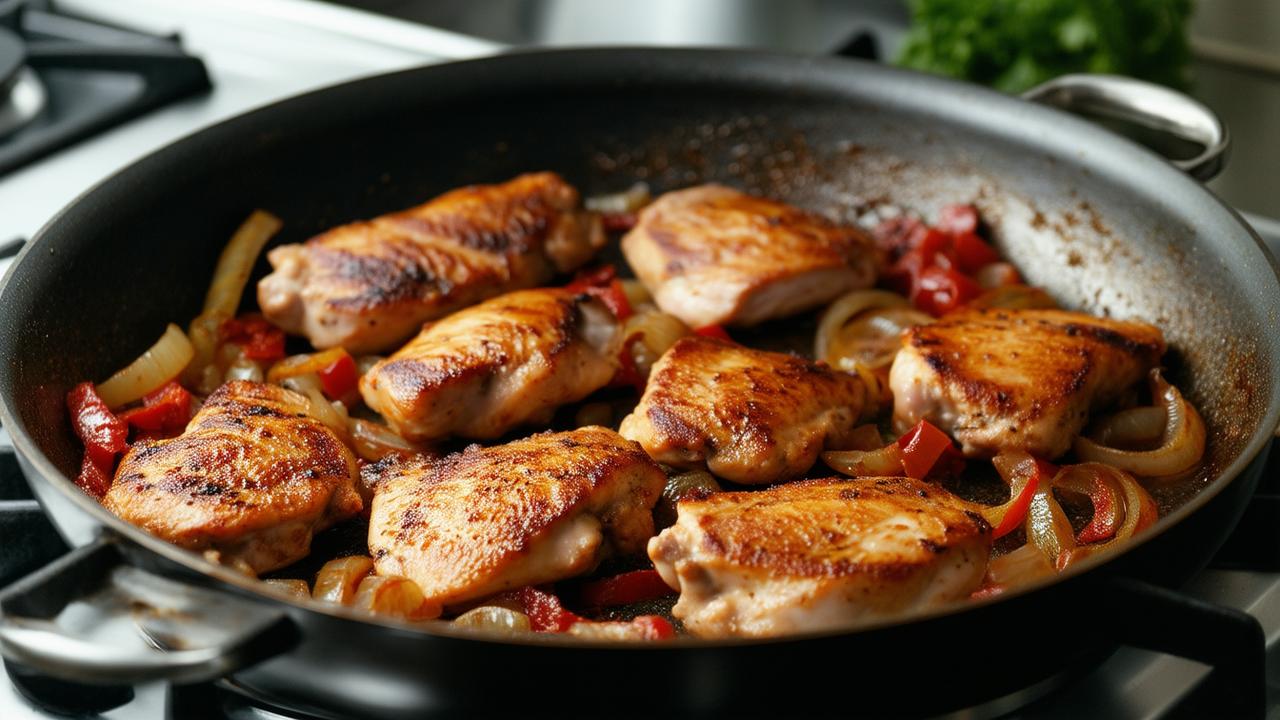
The onions hit the hot skillet first, collapsing in slow motion as they meet the shimmering pool of oil. A whisper of sizzle turns into a soft, eager hiss, and suddenly the kitchen smells like Sunday afternoons in a home you haven’t visited in years. Paprika follows—deep rust-red against pale golden rings of onion—blooming in the heat, staining the oil, and turning the whole scene into something that looks like it took hours instead of minutes. But the clock on the stove is ruthless, honest. This skillet chicken recipe is a trick of time: under 30 minutes from raw ingredients to plates on the table, yet it feels like the kind of meal that needed a slow day, an open window, and someone humming absentmindedly at the sink.
The Kind of Recipe That Waits for You
This is the dinner you reach for on the days where you’re tired in the way that seeps into your bones—the days when you want home, not just food. You don’t want to fuss. You don’t want to consult three different timers. But you also don’t want to eat something that tastes like it came out of a box.
The beauty of this skillet chicken with paprika and onions is how it quietly understands that. It’s forgiving. It doesn’t ask for pristine knife skills or an encyclopedic pantry. It waits for you at that intersection between “I need something fast” and “I want something real.”
There’s no marinating overnight, no turning on the oven to preheat for twenty minutes, no twelve-step choreography. You heat a pan, slice some onions, rub chicken with spices, and let the heat do the rest. Yet thanks to the paprika and the slow-softened onions, it tastes like a recipe that has lived in someone’s family for generations.
Gathering the Few Things You Need
Before anything touches the skillet, there’s a quiet moment in the kitchen where the ingredients gather on the counter. A few things, simple and unfussy, but already promising more than the sum of their parts.
| Ingredient | Amount | Notes |
|---|---|---|
| Boneless, skinless chicken thighs or breasts | 4 pieces (about 1 to 1.5 lb / 450–700 g) | Thighs stay juicier, but breasts work fine |
| Yellow or sweet onions | 2 medium, thinly sliced | The heart of the sauce |
| Garlic cloves | 2–3, minced | Adds warmth and depth |
| Paprika (sweet or smoked) | 2–3 tsp | Use smoked for a deeper, campfire edge |
| Salt & black pepper | To taste (about 1–1.5 tsp salt overall) | Season in layers |
| Olive oil or neutral oil | 2–3 tbsp | For searing and softening onions |
| Chicken broth or water | 1/3–1/2 cup (80–120 ml) | Just enough for a light pan sauce |
| Optional: pinch of chili flakes, lemon wedge, fresh herbs | To taste | For brightness or heat |
This is pantry cooking lit up by a single color: the rusted sunset of paprika. Feel free to adjust the spice to your comfort level. Use sweet paprika for a mild, round flavor, smoked paprika for a hint of campfire, or a mix of the two. That flexibility is the secret: it’s your kitchen; the recipe is just visiting.
The Sizzle Story: From Cold Chicken to Golden Brown
The first real decision is how you handle the chicken. If you have a few extra minutes, letting it sit out on the counter for 10 minutes while you slice onions helps it cook more evenly. The chill fades, the meat relaxes. You pat it dry with a paper towel—this small act makes the difference between pale and golden brown.
In a small bowl, paprika darkens as it meets salt, pepper, and maybe a hidden pinch of chili flakes, if you like a quiet burn at the back of your throat. You rub this mix into the chicken, coating it as thoroughly as you gently can, fingers turning a faint brick color. Suddenly, it already looks like dinner, even though nothing has hit the heat.
The skillet goes on the stove—heavy if you have it, cast iron if you love that deep, resonant sear. A thin sheen of oil spreads across the surface, shimmering when it’s ready. Then the chicken lays down and tells you, with a satisfying sizzle, that it’s found the heat it was waiting for.
For a few minutes, you leave it alone. That’s the quiet trick. Don’t poke or rearrange too much. The surface where meat meets metal is building flavor, becoming a browned crust that will later mingle with sweet onions and paprika-stained juices. You flip the chicken only once it releases easily and shows its first golden, spotted side—five to seven minutes total, depending on thickness, to approach doneness. If you’re using breasts, you may want to pound them slightly beforehand so they cook quickly and evenly.
Onions, Paprika, and the Illusion of Hours
When the chicken is nearly cooked through, you transfer it to a warm plate. It rests, tented lightly with foil or just nestled near the stove. The skillet now holds a bit of fat, browned bits clinging to the bottom like a map of flavor.
This is when the onions tumble in. They start sharp and white, then gradually relax into something pale gold, then deeper, sweeter. The paprika joins them in the pan, and the oil takes on a reddish hue, like sun hitting late autumn leaves. Garlic follows closely behind, never left alone long enough to burn.
The smell shifts from “something’s cooking” to “someone’s home.” That’s the magic right there. It’s the smell of patient food, even though the clock is very much on your side.
As the onions soften and slump, you splash in a bit of broth or water. It hits the pan with a soft hiss, loosening all those browned bits from the bottom. You scrape gently with a wooden spoon, and the liquid turns golden-amber, slightly thickened by onion and spice. What you’ve made is a loose, glossy pan sauce—nothing fancy, nothing complicated, but deeply satisfying.
The chicken slips back into this fragrant tangle of onions and paprika, along with any juices it has released on the plate. A few more minutes on low heat, covered, and everything finishes together. The flavors knit quietly in the pan while you set the table with whatever you have: bowls, plates, mismatched forks. It doesn’t matter. The center of the meal is waiting in that skillet.
Serving It Like You Meant to Plan This All Day
When you slide the skillet onto the table, it has the look of something that took intention. Rust-red onions drape themselves over the chicken, edges translucent and caramelized. The sauce collects in shallow pockets along the bottom of the pan, begging to be scooped up with whatever you pair it with.
This dish is endlessly flexible. Spoon it over a pillow of mashed potatoes, where the juices sink in like rain into soft earth. Serve it alongside rice that drinks up every drop of paprika-stained broth. Tumble it over buttered noodles for something that feels like the coziest kind of diner food. Even a piece of toasted, crusty bread becomes dinner when dragged through the bottom of that skillet.
A quick squeeze of lemon at the very end can brighten everything, if you’re the sort of person who likes a little lift. A scatter of parsley or chives is optional but welcome, tiny sparks of green against the warm sunset tones of the dish.
Why It Tastes Homemade When It’s Actually Fast
There’s an old myth that “homemade” must mean “time-consuming.” This skillet chicken quietly proves otherwise. What makes it feel like home isn’t the hours invested but the little choices along the way:
- Using onions not just as an afterthought, but as the soft backbone of the sauce.
- Letting paprika bloom in oil instead of just sprinkling it on cold.
- Allowing the chicken to rest and return to the pan, so the sauce and meat can meet properly.
Those steps don’t ask for much time; they ask for a bit of attention. In return, you get something that tastes like comfort. It’s the sort of dish that seems to hold a story, even if your story was simply: “I got home late, I was tired, and I still wanted something that reminded me I was worth cooking for.”
➡️ Forget vinegar and baking soda: this half-glass trick clears any drain on its own
➡️ Boiling rosemary is the best home tip I learned from my grandmother: and it completely transforms the atmosphere of your home
➡️ Scientists warn the longest total solar eclipse of the century may trigger mass superstition but governments dismiss public fears as ignorance
➡️ How boiling orange peels instantly freshens the whole house and leaves a long-lasting natural scent during winter
➡️ Goodbye to pricey creams: a homemade trick to pamper collagen and soften the look of wrinkles after 60
➡️ Nine unsettling habits that people in their 60s and 70s refuse to abandon and why they claim it makes them happier than the restless tech obsessed youth who say they know better
➡️ How to keep mice seeking shelter out of your home: the smell they hate that makes them run away
The skillet becomes a small stage for that shift—from surviving the day to actually nourishing yourself at the end of it. No elaborate sides, no complicated garnishes. Just chicken, onions, paprika, and the feeling that you’ve managed to coax something warm and generous out of a short half hour.
A Recipe That Welcomes Your Life As It Is
What makes this meal special isn’t perfection. It’s how adaptable it is to your reality. Have only one onion? Slice it thin and carry on. No broth? Water works fine, especially if you’re generous with seasoning. Cooking for one? Halve the ingredients and reheat the leftovers tomorrow tucked into a warm pita or spooned over leftover rice.
You can nudge the recipe toward wherever you’re standing in life right now. Add more paprika for a deeper color and flavor. Stir in a dollop of sour cream or plain yogurt off the heat for creaminess that echoes old-world stews. Toss in a handful of spinach at the end to wilt gently in the sauce. None of this breaks the recipe. It just bends with you, easily.
There’s a quiet reassurance in that. Knowing you have something you can lean on, something that doesn’t punish you for not having planned every last detail. The skillet waits. The onions soften. The chicken browns. And in under 30 minutes, your kitchen smells like you’ve been there all afternoon, keeping an eye on the pot, even if you just walked in from a long day.
Frequently Asked Questions
Can I use bone-in chicken instead of boneless?
Yes, but the cooking time will be longer. Sear the bone-in pieces until browned, then lower the heat, cover, and cook until the meat is fully done. Expect closer to 30–35 minutes total instead of under 30.
What kind of paprika works best?
Sweet paprika gives a mild, warm flavor and beautiful color. Smoked paprika adds a deeper, almost grilled note. Many people enjoy a mix of the two. Avoid hot paprika if you’re sensitive to spice.
Can I make this dairy-free and gluten-free?
This recipe is naturally dairy-free and gluten-free as long as your broth and any optional additions are gluten-free. Just serve it with rice, potatoes, or gluten-free bread or pasta.
How do I know when the chicken is cooked through?
Use a meat thermometer if you have one—look for an internal temperature of 165°F (74°C) in the thickest part. Otherwise, cut into the thickest piece: the juices should run clear, and the center should no longer be pink.
What’s the best way to reheat leftovers?
Reheat gently in a covered skillet over low to medium-low heat with a splash of water or broth to loosen the sauce. Alternatively, warm it in the microwave in short bursts, stirring the onions and sauce over the chicken.
Can I add vegetables to the pan?
Yes. Bell peppers, thinly sliced carrots, or halved cherry tomatoes work well. Add firmer vegetables (like carrots) with the onions, and softer ones (like tomatoes or spinach) in the last few minutes of cooking.
What if I don’t have chicken broth?
Water works perfectly fine. Just taste and adjust the salt and seasoning at the end to make sure the sauce is flavorful enough.





