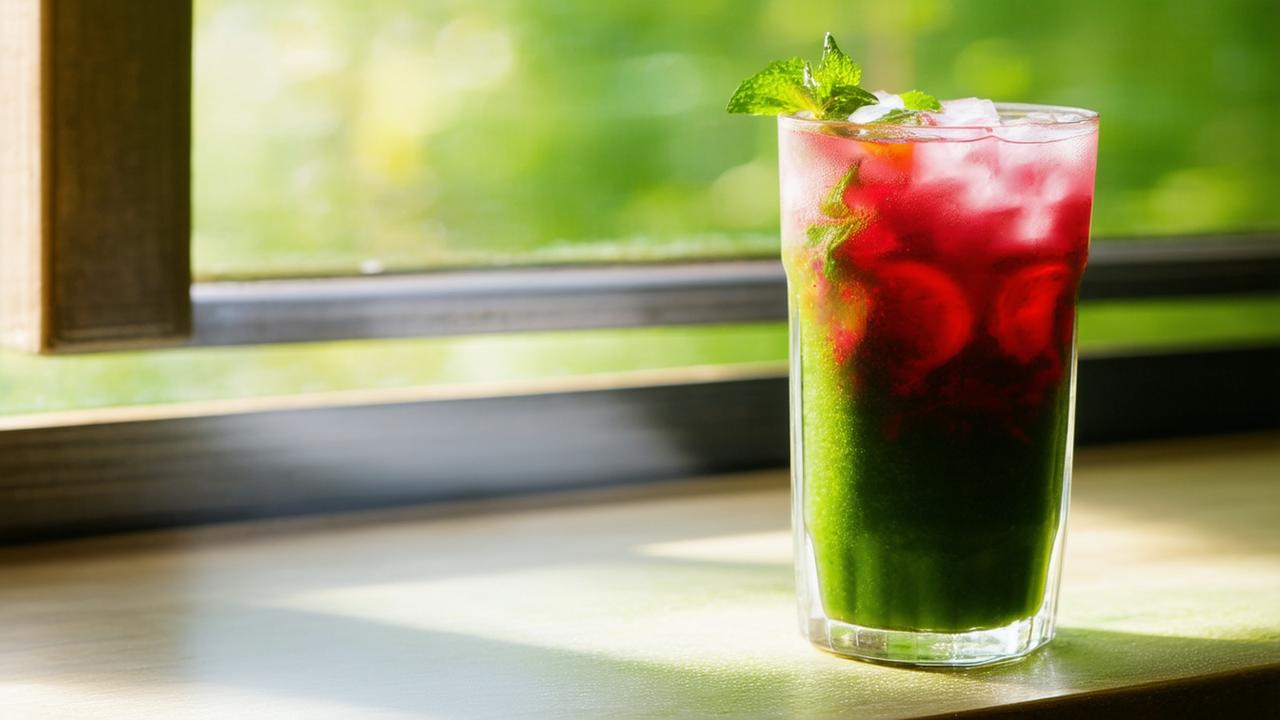
The first thing you notice is the sound. A low, steady simmer that reminds you of rain against old tin roofs. The kitchen smells faintly sweet, a little earthy, a little floral, and it’s still dark outside when the old man lifts the battered kettle off the stove. He moves slowly, not because he has to, but because he’s learned there’s no sense in hurrying the best parts of the day. At ninety-four, his hands are lined and mottled, but steady as he pours a pale golden drink into a small porcelain cup. Steam curls up, catching the first thin blade of sunlight, and he smiles.
“Same thing I’ve had every morning since I was a boy,” he says. “My father had it. My grandfather too.” He raises the cup, inhales deeply, then takes a long, unhurried sip. “Keeps you going.”
The Quiet Ritual Hiding in Plain Sight
If you follow enough stories about people who live past one hundred, you start to notice a pattern. It isn’t fancy supplements or elaborate fitness plans that tie them together. It’s ritual. Small, everyday acts repeated over decades like beads on a necklace. Early walks. Long conversations. Simple food. And, almost always, something warm and fragrant in a favorite cup.
Travel through the world’s pockets of extraordinary longevity—Okinawa in Japan, the mountain villages of Sardinia, the highlands of Costa Rica’s Nicoya Peninsula, the Greek island of Ikaria—and you’ll find that nearly every centenarian has a “daily drink.” They don’t talk about it as a biohack. They talk about it the way you’d talk about a loved one or a familiar landscape. It’s just part of their day, glued into the morning the way dawn is glued to the horizon.
Ask them what it is, and the answers vary in detail but not in spirit: a simple herbal infusion. A handful of fresh or dried leaves from the garden or countryside, doused in hot water, sipped slowly. No neon-colored powders, no complicated gadgets—just plants, water, and time.
And here’s the pleasantly surprising part: these drinks are not only quietly powerful; they’re genuinely delicious. Floral, citrusy, gently bitter or honey-sweet, they taste like the places they come from. And you can bring that taste—and that ritual—into your own mornings, wherever you happen to live.
The Drink With a Hundred Names
To outsiders, it can look like a thousand different recipes. But underneath the regional quirks, there’s a shared idea: an antioxidant-rich, plant-based drink that’s easy on the body and kind to the senses. In Okinawa, the cup often holds green tea or jasmine tea—delicate, grassy, with a hint of sea breeze if you drink it near the shore. In Ikaria, it’s more likely to be a wild herbal brew of sage, rosemary, and mountain tea (a variety of ironwort), plucked from craggy slopes where goats pick their way through stones.
In Nicoya, elders favor coffee that’s surprisingly light: brewed weak by modern standards, sipped over time rather than swallowed in a jolt. In Sardinia, you might find a fennel or lemon verbena infusion, or sometimes just lemon peel and hot water fragranced with a sprig of rosemary from the yard.
Strip away the geography and what remains is this: a warm herbal or light tea drink, usually unsweetened or just gently sweetened with a touch of local honey. It’s made from whole, recognizable plants. It’s never rushed. And it’s consumed with a kind of reverence that has less to do with health fads and more to do with presence.
Centenarians speak of it not just as a beverage, but as a anchor: the thing that signals, “The day has begun. You’re here. Breathe.”
The Plant Power We Keep Forgetting
Modern research now echoes what these elders have quietly known for generations: these plant-based brews are loaded with polyphenols and antioxidants that help reduce inflammation and support heart and brain health. Green tea’s catechins. Rosemary’s rosmarinic acid. Sage’s anti-inflammatory compounds. Yet if you ask a centenarian in a hillside garden why they drink it, they’re more likely to shrug and say, “Because my mother did.”
And there’s something deeply grounding in that answer, because the magic here isn’t only in the plants. It’s in the whole scene: the early hour, the familiar cup, the steady pace. The drink is part of a full-body slowing down that our wired age has almost forgotten how to do.
How It Actually Tastes (And Why That Matters)
Imagine waking up and, instead of reaching for something sugary and cold, you hold a warm cup that smells like a hillside just after rain. The first sip is not intense; it’s subtle, layered. There might be a light bitterness at the edge of your tongue, balanced by an almost citrusy lift or a faint honeyed roundness. You feel it more than you taste it at first—a soft warmth unspooling through your chest, belly, fingers.
In Ikaria, the mountain teas are soft and floral, with a whisper of thyme and wildflowers. They taste like open windows and stone terraces. In Okinawa, green tea can be slightly umami, gently grassy, like spring leaves steeped in sunlight. Sardinian fennel infusions are bright, anisey, almost playful on the tongue. Even the humble “hot lemon water” beloved by many elders, especially in Mediterranean climates, can be unexpectedly luxurious if made with real lemon, a sliver of peel, and water that is hot but never scalding.
That sensory pleasure isn’t a side note. It’s central. When something is delicious in a soft, enduring way, you come back to it again and again, year after year. Centenarians don’t endure their daily drink out of discipline; they savor it. They look forward to it. And that repeated enjoyment builds a quiet, powerful compound interest of small benefits.
Less Jolt, More Gentle Wake-Up
If your mornings usually begin with a hard hit of coffee, shifting toward a centenarian-style daily drink isn’t about giving up pleasure; it’s about changing the kind of wake-up you get. Instead of a spike-and-crash rhythm, these drinks offer a slower ascent.
A light green tea gives a smooth lift, cushioned by L-theanine, which can promote a calm alertness instead of jangly jitters. Herbal infusions, many naturally caffeine-free, encourage a wakefulness that stems more from the ritual and hydration than from stimulation. Over time, your nervous system feels less like a car with a sticky accelerator and more like a well-tuned engine idling easily, ready but not over-revved.
The Simple Art of Making a Centenarian-Style Daily Drink
You don’t need to live on a remote island or cultivate a terrace of wild herbs to adopt this ritual. You only need a few basic ingredients, some curiosity, and a willingness to let your morning slow down by a few precious minutes.
Here is a simple pattern you can adapt to your taste and what you can find locally:
- Choose your base plant: green tea, loose-leaf herbal tea (chamomile, fennel, lemon balm, sage, rosemary, mint), or a blend.
- Heat water gently: just off the boil for green tea; fully boiling is fine for most herbs.
- Steep with intention: 2–3 minutes for green tea; 5–10 minutes for herbs, covered so the aromatic oils don’t escape.
- Season lightly: a squeeze of lemon, a thin strip of peel, or a teaspoon of real honey if you like.
- Sit down to drink: don’t carry it into chaos; give the first few sips your full attention.
To make the idea more concrete, here’s a simple comparison of centenarian-inspired daily drinks you can experiment with, all easy to prepare in a small kitchen.
| Region-Inspired Drink | Main Ingredients | Flavor Profile | When to Enjoy |
|---|---|---|---|
| Okinawan Morning Green | Loose green tea, hot (not boiling) water | Light, grassy, gently savory | Early morning, with or before breakfast |
| Ikarian Mountain Infusion | Sage, rosemary, mountain tea (or chamomile) | Herbal, floral, slightly resinous | Cool mornings and quiet evenings |
| Sardinian Fennel & Lemon | Fennel seeds, lemon peel, hot water | Bright, gently sweet, anise-like | After a meal, or mid-morning |
| Mediterranean Lemon Honey | Hot water, lemon juice, optional teaspoon honey | Clean, citrusy, softly sweet | First thing after waking, before food |
Creating a Space Around the Cup
The drink itself is only half the story. The rest is where and how you drink it. Centenarians rarely gulp these infusions while scrolling through a lit screen. They drink them at a table that knows their elbows, on a balcony, in a courtyard, or on a worn wooden step outside the front door.
You can borrow that, too. Maybe it’s a small chair by the window where the light comes in. Maybe it’s a corner of your balcony with a plant or two. Maybe it’s just the end of your kitchen counter, cleared of everything but your cup. Let the steam rise. Notice the color. Take the first sip before you look at any device. This tiny pocket of undistracted time is part of the medicine.
Why Centenarians Swear by It (Without Ever Needing to)
If you ask a hundred-year-old why they’re still here, they’ll probably laugh. Most of them don’t see themselves as wise gurus. They’ll tell you they got lucky. They’ll point to good genes. They’ll talk about hard work in fields or long walks over hills. Many of them will forget to mention the drink entirely unless you spot the cup and ask.
➡️ “I didn’t expect one decision to save me $750 in just three months”
➡️ Psychology says people who grew up without air conditioning developed these 7 mental resilience traits that are nearly impossible to build today
➡️ Heated dispute over effortless patio cleaning: the ‘miracle’ method for blackened slabs that some call genius and others call irresponsible
➡️ This forgotten feature in your car improves visibility during bad weather
➡️ Food experts explain why this cooking shortcut often backfires
➡️ The simple reason some rooms echo more than others
➡️ The exact reason your phone battery drains faster at night even when you are not using it
But watch long enough, and you see the pattern: this daily drink is a quiet meeting point where several longevity threads are woven together.
- Hydration: A gentle way to get fluids first thing, without sugar overload.
- Plant compounds: A steady trickle of antioxidants and anti-inflammatory compounds over decades.
- Ritualized calm: A built-in pause that steadies nervous systems and sets the tone for the day.
- Social glue: Many centenarians drink it with someone else—partner, neighbor, friend—nourishing connection.
The power isn’t in any single cup; it’s in what happens when you have that cup every day for years. Like a path worn into the earth by repeated footsteps, the ritual shapes a life that moves just a bit more gently, a bit more intentionally. The body responds to that kind of constancy.
Surprisingly Delicious, Deeply Ordinary
There’s a comforting ordinariness to this whole idea. We are used to being sold longevity in dramatic packages—rare ingredients, complicated regimes, strict rules. But what the oldest people in the world keep showing us is almost the opposite: that the small, daily, enjoyable things we can actually stick with matter far more.
A hot herbal drink. A few minutes of quiet. Something that feels good, tastes good, and is simple enough to repeat tomorrow, and the day after, and the day after that. You don’t need to swear by it. You only need to show up and drink it.
Bringing the Centenarian Cup Into Your Own Morning
Tomorrow, before the buzz and scroll, you might try this:
- Fill a kettle and heat the water slowly.
- Drop a spoonful of loose herbs or a tea bag into your favorite mug.
- Pour, breathe in the first wave of steam, and let it steep.
- Sit somewhere you can see a slice of sky, even if it’s just a small square between buildings.
- Take that first sip as if you’ve been waiting for it all night.
That’s it. No grand declarations, no new identity, no “program.” Just a drink that has held countless elders through countless dawns, quietly supporting hearts, minds, and the slow, stubborn rhythm of long life.
In the end, the daily drink centenarians swear by is not a secret potion at all. It’s a simple, plant-based, warm cup of something real—green tea, herbal tea, lemon, maybe a touch of honey—that you’re willing to meet every morning with your full attention. Surprisingly delicious. Disarmingly ordinary. And, over time, potentially life-changing.
FAQ
What exactly is the “daily drink” centenarians swear by?
In many long-lived communities, it’s a simple warm drink made from plants—often green tea or herbal infusions like sage, rosemary, fennel, lemon, or mountain tea. The specifics vary by region, but the pattern is the same: hot water plus real plants, sipped slowly every day.
Does it have to be green tea to get the benefits?
No. Green tea is popular in places like Okinawa, but other centenarian regions rely on herbal blends. Any high-quality, plant-based infusion—without lots of sugar or artificial additives—can fit the spirit of this daily drink.
Can I still drink coffee?
Many long-lived people do drink coffee, usually in moderate amounts and often more weakly brewed than typical modern coffee. You can keep your coffee if you like, and add a gentler herbal or tea-based ritual earlier or later in the day.
Is honey okay, or should it be completely unsweetened?
A small amount of real honey is common and can be perfectly fine for most people. Centenarians typically use it sparingly. If you have blood sugar concerns, check with a healthcare provider and consider keeping your drink unsweetened or very lightly sweetened.
How long do I need to drink it before noticing any benefits?
Some people feel a difference in calmness and digestion within days, but the deeper benefits are about long-term consistency. Think in months and years, not weeks: it’s the cumulative effect of a daily, gentle, plant-based ritual that seems to matter most.
Can I use tea bags, or do I need loose leaves and fresh herbs?
High-quality tea bags are absolutely fine to start with. If you enjoy the ritual, you might later explore loose-leaf teas or fresh herbs from a garden or market for more aroma and flavor, but they aren’t required to begin.
What time of day is best for this drink?
Most centenarians have it in the morning, sometimes again in the evening. Morning is ideal for hydration and setting a calm tone for the day, but the “best” time is the time you can consistently protect as a small, quiet ritual.





