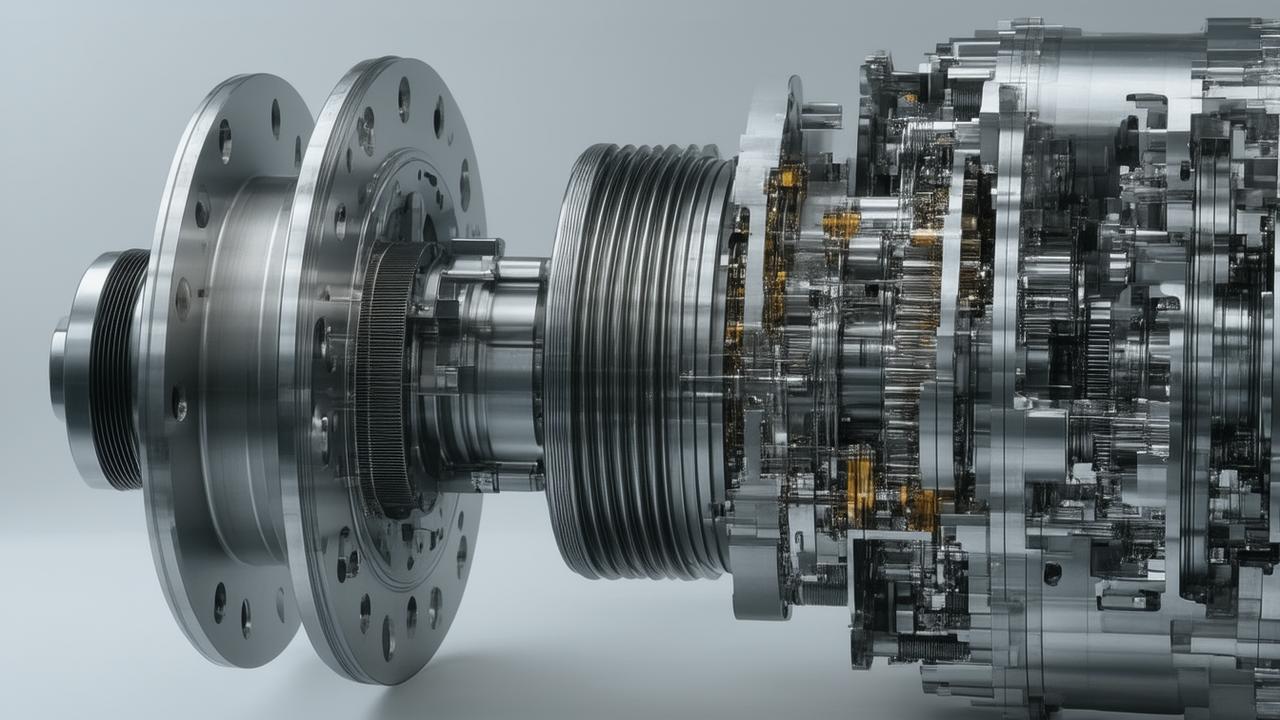
The first thing you notice is the sound. Not the sterile whine of an electric motor or the anonymous hum of an automatic, but the old, familiar symphony of a straight-six clearing its throat at idle. The second thing is your right hand, resting almost instinctively on the gear lever—cool, weighted, expectant. You’re sitting in a brand-new BMW, but what’s under your palm feels like a relic from another time: a manual gearbox. Only this one does something no manual in history has ever quite managed to do. It refuses to let you make a catastrophic mistake.
The Gearbox That Says “No” (But in a Nice Way)
In a quiet corner of BMW’s R&D center, long after most of the office lights have clicked off, the engineers who refused to let shifting die have been working on something audacious. What if, they wondered, a manual gearbox could still be completely mechanical in feel, yet smart enough to protect you from yourself?
That’s the premise of BMW’s new “intelligent manual” transmission—a six-speed gearbox that promises to all but eliminate mis-shifts. No more accidental grabs for second when you meant to hit fourth on a high-speed overtake. No more gut-wrenching crunch when a rushed downshift plants you two gears too low. The revolution here isn’t about abandoning what makes a manual magical; it’s about quietly, invisibly watching your back.
BMW’s engineers started from a place of almost romantic stubbornness: the belief that the manual is not just a shifting mechanism, but a language between driver and machine. The terrifying part of that language, of course, is that it’s easy to misspeak. A badly timed or misdirected shift can detonate an engine, unsettle a car mid-corner, or simply snap you out of the flow state that makes driving joyous.
This new gearbox doesn’t replace the driver’s intention; it reads it. Beneath the leather boot and iconic shift pattern, a constellation of position sensors, load cells, and a compact electronic brain are constantly measuring where your hand is going—and whether that decision makes sense for the engine, the road speed, and the car’s current attitude.
A Shifter That Feels Mechanical, Thinks Digital
The wildest part isn’t the tech. It’s that you can barely tell it’s there.
Slide the lever from third to fourth, and it feels exactly like you remember: the faint resistance of the synchromesh, the notch as the gear engages, the subtle vibration that travels up the stick. There is no servo tugging against your hand, no artificial detent that screams “computer.” It is resolutely, defiantly analog in sensation. Yet beneath that analog skin is a precise digital skeleton.
BMW’s system does two almost contradictory things at once. First, it preserves a fully manual clutch and a mechanically connected shifter. You depress the clutch. You choose the gear. You release the pedal. The car moves because of you, not for you. Second, it overlays this old-school setup with a fast-reacting guardian: if you attempt to slot the lever into a gear that would overspeed the engine or conflict with the direction of travel, the gearbox gently resists entering that gate.
You feel it as a subtle stiffness, a quiet suggestion: try again. Not a hard lockout, not a humiliating buzz or beep—just a firm hand on your wrist, like a trusted instructor catching your arm at the last second. If you persist, the system simply will not engage the dangerous ratio. In normal driving, you hardly notice it. In spirited driving, you start to realize how frequently your instincts are… well, not perfect.
How It Knows What You Meant
The trick lies in correlation. The system constantly cross-checks three things: current engine speed, vehicle speed, and the shift trajectory your hand is taking. Start pulling from fifth toward the vague zone between third and first at highway pace, and the software begins running probabilities in milliseconds. Did the lever cross the virtual line where a normal fourth-gear shift would travel? Is your hand angle consistent with a 5–4 rather than a 5–2 plunge? Is the clutch fully depressed, partially, or not at all?
In a traditional manual, all that chaos is simply “driver error.” In BMW’s new world, it becomes a decision tree. The gearbox predicts your intention and compares it with physical reality. Only if both line up does the synchro sleeve fully engage. If they don’t, the sleeve pauses at a safe, non-engaged position, and that’s when you feel the gearbox’s quiet refusal.
On a backroad, this feels almost supernatural. You aim for third on a hard braking zone, your foot feathering the brake, your heel nudging the throttle for a rev-match. Your hand muscles remember the motion, but maybe, just once, you’re a hair too far left, flirting with the gate for first. Instead of the shriek of over-rev and the sudden, sickening deceleration, the lever simply halts with a mild, rubbery firmness. Your brain catches up a heartbeat later. You correct, find third cleanly, and the car flows into the corner as if nothing happened. Your pulse spikes—then you laugh.
The Emotional Science of Never Missing a Shift
This is where the story stops being about hardware and code, and starts being about how it feels to be human behind the wheel again.
Manuals have always thrived on risk and reward. Perfect shift? Euphoria. Botched one? Embarrassment at best, mechanical tragedy at worst. That tension is part of why enthusiasts cling to three pedals even as automatics grow faster and smarter. BMW’s new gearbox doesn’t remove the challenge of shifting; it trims off the sharpest edges of failure.
Instead of fear, you get flow. Your left leg still performs its quiet ballet at every intersection. Your right hand still sweeps through the gears like brushing paint across a canvas. But somewhere in the background, a guardian angel is editing out your worst possible mistakes. It’s like walking a mountain ridge trail with a near-invisible safety line: the exposure is still there, the view still dizzying, but the knowledge that one stumble won’t be your last gives you permission to relax into the experience.
For drivers who grew up on automatics, this could be the bridge they needed. The gearbox makes learning to drive manual less intimidating—yet not dumbed down. You can still stall. You can still shift sloppily. You can still grind a gear if you truly disrespect the mechanism. What you can’t do is accidentally downshift from sixth to second at 130 km/h and scatter your engine internals like metallic confetti on the highway.
Where Old-School Feel Meets New-School Logic
BMW is careful to point out that this isn’t a dual-clutch, nor is it a disguised automatic. There is no full-auto mode, no paddles, no “let the computer handle it” button. The brain in this gearbox is not a director—it’s an editor. It doesn’t choose your shifts; it only vetoes the ones that would be catastrophic.
The tactile language of the shifter remains the same: the spring load pulling you back to the 3–4 plane, the slight reach toward fifth and sixth, the familiar dogleg toward reverse. Enthusiasts will recognize it instantly, and that’s by design. The engineering accomplishment here is not that BMW made a smart gearbox. It’s that they made a smart gearbox that hides its intelligence until the split second you need it.
Even rev-matching, that sacred dance of heel-and-toe, remains your responsibility unless you choose to pair the gearbox with the car’s optional auto-blip feature. You can have a pure analog experience if you crave it. Or you can let the computer synchronize engine speed on downshifts while you focus on your line. What you can’t do is blame the transmission for a destroyed engine after a clumsy panic shift. That era, BMW quietly suggests, is over.
A New Contract Between Driver and Machine
Some purists will argue that any electronic intervention, however subtle, corrupts the essence of a manual. Yet, in conversation with the engineers behind the project, a different philosophy emerges: this is not about preserving the past in amber. It’s about updating the unspoken contract between driver and machine.
➡️ Why Australian psychologists are studying loneliness as a measurable public health risk
➡️ The surprising role of Australian wetlands in buffering floods and storing carbon
➡️ How Australia’s migration story is influencing modern identity and everyday language
➡️ Australia’s renewed interest in nuclear submarines is reshaping Indo Pacific strategic planning
➡️ What Australian historians now believe about the early contact period along the northern coast
➡️ How Australian supermarkets are quietly changing portion sizes without changing prices
➡️ Why Australian scientists are watching Antarctic ice shelves with growing urgency
That contract used to say: “I give you control. In return, you accept the consequences of your mistakes.” Now, it says: “I give you control. In return, we both agree not to destroy each other if you slip.”
From a mechanical sympathy standpoint, that’s almost poetic. Modern engines are powerful, tightly wound, and expensive. The speeds we travel at—even legally—leave very little margin for error. A single wrong shift can ruin years of careful engineering and thousands of hours of your own saving and dreaming. With this new gearbox, the relationship becomes more collaborative. You still get the intimacy of a manual. The car simply refuses to let a momentary lapse end the story.
How It Compares to Traditional Manuals
On paper, the differences between BMW’s intelligent manual and a conventional gearbox can be captured simply. On the road, they are printed in your heart rate and your grin. Still, a side-by-side view helps clarify what’s changed—and what hasn’t.
| Feature | Traditional Manual | BMW Intelligent Manual |
|---|---|---|
| Clutch Pedal | Fully mechanical, driver-controlled | Fully mechanical, driver-controlled |
| Gear Engagement | Purely mechanical; no error checking | Mechanical feel with electronic mis-shift prevention |
| Mis-shift Protection | None; full risk of over-rev or wrong gear | Prevents engagement of unsafe gear ratios |
| Driver Involvement | Maximum, with high risk of error | Maximum, with reduced risk of catastrophic error |
| Learning Curve | Steep, intimidating for newcomers | Gentler, more forgiving of mis-aimed shifts |
Driving Into the Future, One Gear at a Time
Out on an empty ribbon of asphalt, the sunset turning the horizon into a smoldering band of orange and violet, the new gearbox reveals its true purpose. It’s not here to win drag races against dual-clutch automatics or to lap a circuit two-tenths faster. It’s here to make manual driving viable—and thrilling—in an era that could easily forget it altogether.
You row from second to third, the engine singing. Third to fourth, the chassis settling, the world blurring at the edges. Fourth back to third for a tightening bend, the intelligent transmission shadowing your movements like a dance partner who knows the choreography just a fraction better than you do. Not leading, not forcing—just ensuring that when you commit your weight, you’ll land on solid ground.
As the road unwinds and the sky deepens into indigo, a quiet realization settles in. This isn’t nostalgia dressed up in carbon fiber. It’s an evolutionary step that acknowledges both our fallibility and our stubborn love for mechanical engagement. Somewhere between the analog past and the autonomous future, BMW has carved out a new middle path: a manual that refuses to die, but also refuses to destroy itself in the name of purity.
You park, engine ticking softly as it cools, hand lingering one last time on the gear lever. For the first time in a long time, the thought crosses your mind that maybe—just maybe—the manual still has a future. Not by freezing time, but by daring to change just enough.
Frequently Asked Questions
Does this new BMW manual gearbox shift for you?
No. The driver remains fully responsible for all gear changes. The system does not offer an automatic mode and will never shift on its own. It only intervenes to prevent the engagement of a gear that would mechanically endanger the engine or drivetrain.
Can you still stall the car with this gearbox?
Yes. Clutch operation is entirely manual, and the system does not prevent stalls. If you release the clutch too quickly or at too low an engine speed, the engine can still stall just like in a traditional manual car.
Will I feel the system intervening when I mis-shift?
In most cases, you’ll feel a subtle resistance or a refusal of the lever to fully enter the unsafe gear. It’s designed to be gentle and intuitive rather than abrupt, so it feels more like a nudge than a hard block.
Does this take away from the “pure” manual driving experience?
For many drivers, no. The clutch and shift feel remain analog and mechanical. The system only appears at the extremes—when a mis-shift could cause serious damage. Everyday shifts, even aggressive ones, feel unchanged if they are mechanically reasonable.
Is this gearbox aimed at beginners or enthusiasts?
Both. New manual drivers benefit from the extra safety net, making the learning process less intimidating. Enthusiasts gain the peace of mind that heavy track use or spirited driving is less likely to be cut short by a single costly shifting error.





