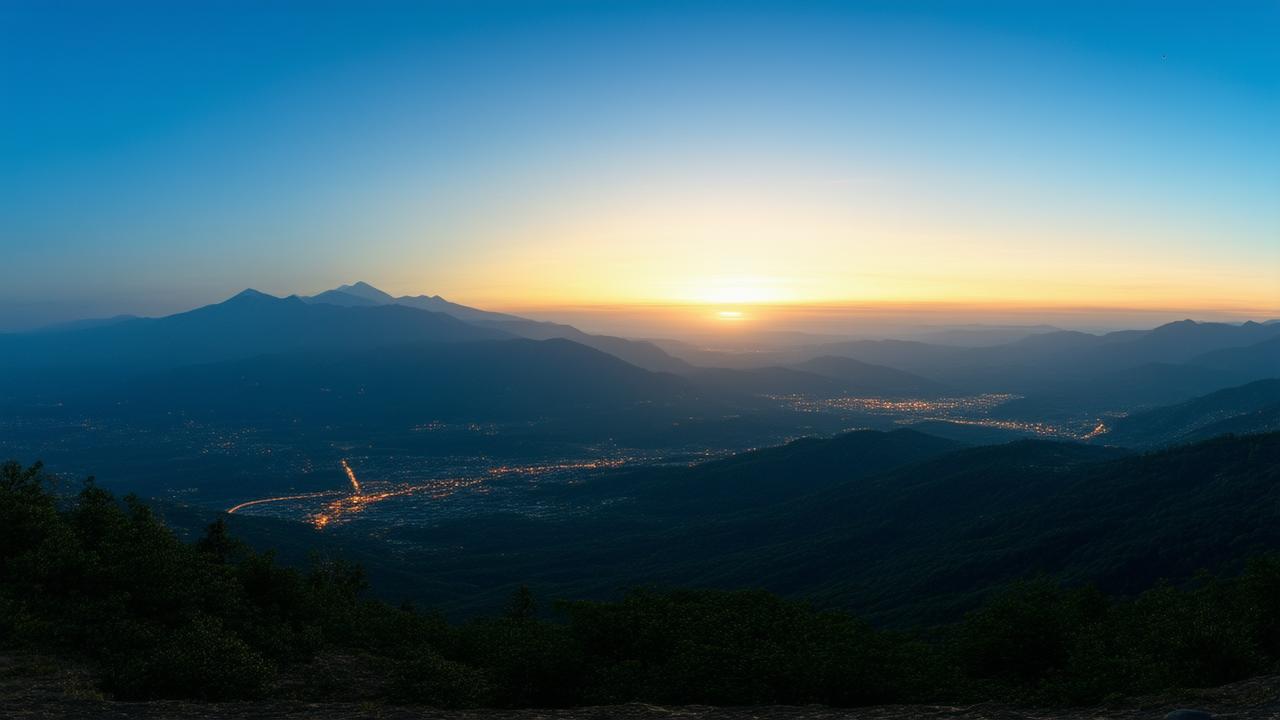
In the late morning, when the sun is usually a bright and unquestioned presence overhead, the light will begin to feel…wrong. It will start subtly, like someone turning down a dimmer switch you didn’t know existed. Colors will lose their edge. Shadows will grow longer and sharper, then strangely blurred. Birds will fall silent mid-song. A breeze may pick up, cool and almost cautious. And as the day slowly turns to night, millions of people will look up—through eclipse glasses and pinhole projectors, from city rooftops and quiet rural fields—to watch the longest total solar eclipse of the century slide across the sky like a dark, deliberate brushstroke.
A Slow Turning of the World
The word “eclipse” sounds sudden, almost like a snap or a switch. But what’s coming is not an instant blackout. It’s a long, slow turning of the world’s familiar light toward something far stranger. Over the course of several hours, the moon’s shadow will cross continents, sweeping over oceans, deserts, forested hills, and glassy skylines, stitching together a temporary, invisible path that links millions of strangers under the same darkened sun.
If you’ve never seen a total solar eclipse, it’s easy to imagine it as just a darker version of sunset—pretty, yes, but not much more. Those who’ve stood under the moon’s shadow, though, use different words. They talk about electricity in the air, about feeling very small and very connected at the same time. They talk about forgetting everything for a few minutes—jobs, deadlines, texts, worries—as if the cosmos has leaned in close and said, “Watch this.”
This time, scientists say, the experience will be stretched out in a way few living people have ever felt. The path of totality—the narrow track where the sun will be completely covered—will linger. Instead of the usual two or three fleeting minutes, many locations will experience totality for significantly longer, giving onlookers time not only to gasp, but to breathe, to notice, to really look.
Following the Path of Shadow
Imagine the path as a moving river of darkness, roughly a hundred or so kilometers wide, rushing across the face of the Earth, yet taking its time as it goes. On one side of this river, the sun remains bright, the day almost normal. On the other, inside the shadow’s heart, it is twilight at midday, a brief, eerie night. The longest stretch of this artificial night will pass over a fortunate segment of the planet—farms and fishing towns, megacities and small villages—each community standing still for different reasons but under the same deepening sky.
In coastal regions, people will likely line the beaches, watching the light drain out of the water. The sea, usually a fluent mirror of the sky, will turn a dark, silvery slate as the sun thins to a crescent. Waves will continue to break with their usual rhythm, but something about them will seem off, as if they’re breaking in a different world. Inland, in fields and prairies, the crops will glow with an oddly metallic hue; leaves will gleam along their edges, then fade into dusky silhouettes.
Above crowded city streets, skyscrapers will catch the dying light in their windows, bright shards turning quickly to dull reflections. Streetlights, confused, may flicker on early. Office workers will press against glass walls, stepping away from emails to press eclipse glasses over their faces, craning their necks toward the waning disk. On roofs and balconies, shouts will rise up in waves: “Look—it’s starting!” and then, a bit later, “It’s gone!” followed by that awkward, shared silence when language feels too small for what the eyes are seeing.
The Science Behind the Spectacle
Strip away the awe, and the eclipse is an exquisitely predictable dance of geometry. The moon, about 400 times smaller than the sun, also happens to be about 400 times closer to Earth. By a cosmic coincidence of scale and distance, this makes the two bodies appear almost exactly the same size in our sky. When their orbits align just right, the moon can slide neatly in front of the sun, casting a narrow, racing shadow on Earth’s surface.
For this eclipse, the alignment is particularly generous. The moon will be at a distance that makes its apparent size just large enough to fully cover the sun for longer than usual. The shape of both Earth’s orbit around the sun and the moon’s orbit around Earth plays into this, as does the tilt of our planet. The result is a shadow that lingers, stretching totality out into an event that will be studied, measured, and cherished by scientists and sky-watchers alike.
Solar physicists are already preparing a kind of global choreography. Telescopes are being calibrated, cameras tested, flight paths adjusted for research planes that will chase the shadow to extend their view. Observatories along the path will share data in real time. For many of these scientists, it’s like being given a once-in-a-career laboratory that appears in the sky and then vanishes.
The Sun Revealed by Its Disappearance
Paradoxically, it is when the sun is hidden that we get to see some of its most delicate features. During totality, when the bright disk is fully blocked, the solar corona—its outer atmosphere—flares into view. It appears as a ghostly white halo, feathery and dynamic, stretching outward in streamers and tendrils shaped by the sun’s magnetic field.
Most days, the corona is invisible from Earth because its faint glow is drowned out by the sun’s glare. Scientists can mimic an eclipse using special instruments called coronagraphs, but there’s nothing quite like the clarity of nature’s own version. During this unusually long total eclipse, researchers will have rare minutes to study how the corona’s structure shifts and shimmers in real time, collecting data that may help solve enduring mysteries, such as why the corona is so much hotter than the sun’s surface.
Other researchers will focus on the sun’s surface itself, watching for solar prominences—great loops of glowing gas arcing outwards—and measuring changes in radiation, temperature, and solar wind. Down at ground level, teams will monitor how the sudden cooling of the air affects winds, clouds, and even tiny variations in atmospheric chemistry. It is as if someone has given the planet a dimmer switch and a stopwatch, and scientists are determined to note every subtle response.
How the Eclipse Will Touch the Ground
Despite all the spacecraft, satellites, and observatories pointed upward, the most profound part of an eclipse often unfolds at ground level, in small, human details. In schools, teachers may march their students outside, turning a lesson plan into a memory. On farms, animals may grow uneasy: cows bunch together as if evening has arrived, chickens fall quiet, and insects, fooled by the fading light, begin their night chorus in the middle of the day.
In forests and parks, the eclipse writes with shadows. Under trees, the spaces between leaves act like thousands of tiny pinhole cameras, projecting infinite crescent suns onto paths and picnic tables. If you look down instead of up, the ground becomes an art installation: overlapping arcs of light, sharp and delicate, shifting with every stray breeze. Even in cities, this effect appears in the shadows cast by railings, fences, and latticework.
Then there’s the temperature. As totality approaches, the air may cool noticeably, like the sudden shade of a passing cloud but deeper, more pervasive. Some people report feeling the hairs on their arms and the back of their necks stand up as the sky darkens and a chill settles. It’s not just the drop in degrees—it’s the sense that the day itself is exhaling.
Voices of Awe: A Shared Human Moment
One of the quieter miracles of a long eclipse is the chorus of reactions it gathers. Amateur astronomers will set up telescopes in parking lots and fields, inviting neighbors and strangers alike to peer through the eyepiece. There will be children seeing their first eclipse, faces hidden behind oversized safety glasses, squinting and then grinning in disbelief. There will be elders who remember shorter eclipses from decades ago, comparing the two like old songs.
In some places, communities will center the event in cultural traditions: music performances timed to the onset of totality, storytellers weaving local legends about sun and moon, spiritual gatherings folding the celestial event into prayer or meditation. Elsewhere, the mood will be festive and informal—food trucks, lawn chairs, eclipse parties on rooftops and in backyards—people laughing nervously as the world grows dim around them.
What binds these varied responses together is something simple and ancient: the act of looking up, together. For a few minutes, the constant churn of everyday life pauses; messages go unanswered, meetings are postponed, traffic slows or stops. Even those who have no prior interest in astronomy may find themselves unexpectedly moved. Many eclipse chasers say that once you see one total eclipse, you spend the rest of your life trying to see another. This time, with the longest totality of the century, the first-timers may find the bar set astonishingly high.
➡️ This small adjustment helps reduce the feeling of bodily overload
➡️ What it means psychologically when you avoid talking about yourself, even when asked
➡️ I noticed my stress dropped once my cleaning goals became realistic
➡️ This is how to show interest without forcing enthusiasm
➡️ The one breathing mistake most people make daily without realizing it affects their stress levels
➡️ Why doing one task at a time is healthier than multitasking
➡️ I realized my cleaning system was built for a life I don’t live
Planning to Stand in the Shadow
If you’re lucky enough to live along the path of totality, the eclipse will come to you. For others, the event is a reason to travel—to join the pilgrimage of people who book flights and hotels months, even years, in advance for the chance to stand under the narrow band of darkest shadow. Astrophotographers will haul tripods, filters, and camera rigs to carefully chosen vantage points, hoping for clear skies. Casual observers might simply toss a blanket into a car trunk and head toward the path with fingers crossed.
Whatever your level of preparation, there is one non-negotiable: eye safety. Looking directly at the sun without proper eclipse glasses or filters can cause serious, permanent damage, and ordinary sunglasses are nowhere near sufficient. Certified eclipse glasses and solar viewers are designed to cut sunlight down to safe levels. Only during the brief phase of totality—when the sun is completely covered—can you safely look with the naked eye, and the instant the first bead of sunlight returns, protection is needed again.
For many observers, though, the most lasting memories will not be the perfectly framed photographs, but the messy, human moments: the stunned quiet just before totality, the spontaneous applause and cheers as the sun re-emerges, the rush to describe what words can barely capture. The longest total solar eclipse of the century will pass in a matter of hours; the stories people tell about it may last a lifetime.
| Phase | What You’ll Notice | What to Do |
|---|---|---|
| Partial eclipse begins | A small “bite” missing from the sun; light slowly softens. | Use certified eclipse glasses or solar viewer at all times. |
| Deep partial phase | Strange shadows, cooler air, wildlife growing quiet. | Look for crescent-shaped light patterns on the ground. |
| Totality | Sky darkens, stars appear, corona visible around black sun. | Remove eclipse glasses briefly; simply look and experience. |
| End of totality | First bright “diamond ring” of sunlight reappears. | Put eclipse glasses back on immediately. |
| Partial eclipse ends | Daylight returns to normal; animals resume usual behavior. | Take a moment to reflect, share stories, and note what you felt. |
After the Shadow Passes
When the eclipse is over, the world will look the same as it did before. The sun will shine, traffic will resume, notifications will pile up on our screens. Yet, for many people, something quiet and internal will have shifted. There is a particular kind of perspective that comes from watching the machinery of the solar system play out overhead, from seeing, with your own eyes, that we live on a moving world under a moving sky.
The longest total solar eclipse of the century will be marked in scientific papers and in careful graphs of temperature, light, and plasma. It will be a trove of data, a gift to those who spend their lives trying to understand the sun, the moon, and the delicate interface where they meet our planet. But it will also live on in far less technical records: journal entries, shaky smartphone videos, the way a child’s voice sounds when they say, “I didn’t know the sky could do that.”
Long after the last crescent of darkness has slipped away and the path of totality has vanished into open ocean, people will remember where they stood when day turned to night and then back again. They will remember the way the light changed on familiar walls, the chill of the air, the silhouettes of friends and strangers turned skyward. For a few rare, stretched-out minutes, the universe will show us its clockwork, and all we’ll have to do is look up.
Frequently Asked Questions
How long will this total solar eclipse last?
The entire event, from the first bite of the moon to the last, will span several hours at any given location. The period of totality—the time when the sun is completely covered—will be the longest of this century in some regions, lasting noticeably longer than typical eclipses that offer only a couple of minutes of full coverage.
Is it safe to look at the eclipse with the naked eye?
It is only safe to look directly at the sun during the brief phase of totality, when the sun is completely blocked. For all other phases, including the partial phases before and after totality, you must use certified eclipse glasses or a properly filtered solar viewer to protect your eyes.
Why is this eclipse considered so special for scientists?
Because totality lasts longer than usual, scientists have more time to study the sun’s outer atmosphere, or corona, as well as changes in the Earth’s atmosphere and environment. The extended duration allows for more data collection, better imaging, and coordinated experiments across multiple locations.
Will animals really behave differently during the eclipse?
Yes. Many animals respond to the sudden change in light and temperature as if evening has arrived. Birds may roost, insects may begin their nighttime sounds, and livestock can grow restless or move toward their usual resting spots, creating an uncanny sense of misplaced twilight.
Do I need special equipment to enjoy the eclipse?
You only need certified eclipse glasses or a safe viewing method, like a pinhole projector, to enjoy the partial phases. Binoculars or telescopes require proper solar filters. Beyond that, a comfortable place to sit, a clear view of the sky, and a little time to simply be present are often all it takes to turn the event into a deeply memorable experience.





