The moment that changed everything for Lena was so small she almost missed it. She was standing in the aisle of a grocery store, a bag of coffee in each hand, staring at them as if the wrong choice might quietly rearrange the fate of her life. People eased their carts around her. Someone’s child cried two aisles over. A soft song played above the fluorescent lights. And still she stood there, frozen between dark roast and medium, between one label and another, between this tiny decision and the hundreds that waited for her outside the sliding glass doors.
She laughed at herself, finally dropping one bag into her cart, but the laugh felt thin. This wasn’t about coffee. It was never just about coffee. The same paralysis hit her when she thought about moving cities, changing jobs, saying yes to a relationship that felt too real—or ending one that had quietly gone stale. She looked like a capable adult to everyone else. Inside, she felt like her mind had turned into a hall of mirrors, every option reflecting another, each reflection whispering, “Are you sure? Are you sure? Are you sure?”
Few people know it, but difficulty making decisions is rarely just a “personality quirk.” More often, it’s a fear-based mental process, a quiet survival strategy dressed up as indecisiveness. It’s the mind trying—sometimes desperately—to keep you safe in a world it doesn’t entirely trust. To see it clearly, you have to slow down and listen to the subtle rustle of thoughts beneath the obvious ones, the way you’d listen for wind moving through trees on a still, gray morning.
The Inner Weather of Decision-Making
Imagine, for a moment, that your mind is a landscape. On some days, it’s open and spacious—a clear valley with mountains in the distance and a river threading through the center. On these days, deciding feels simple: you pause, you look around, you choose a path. There might be uncertainty, sure, but there’s also a quiet trust that whatever happens, you’ll find your way.
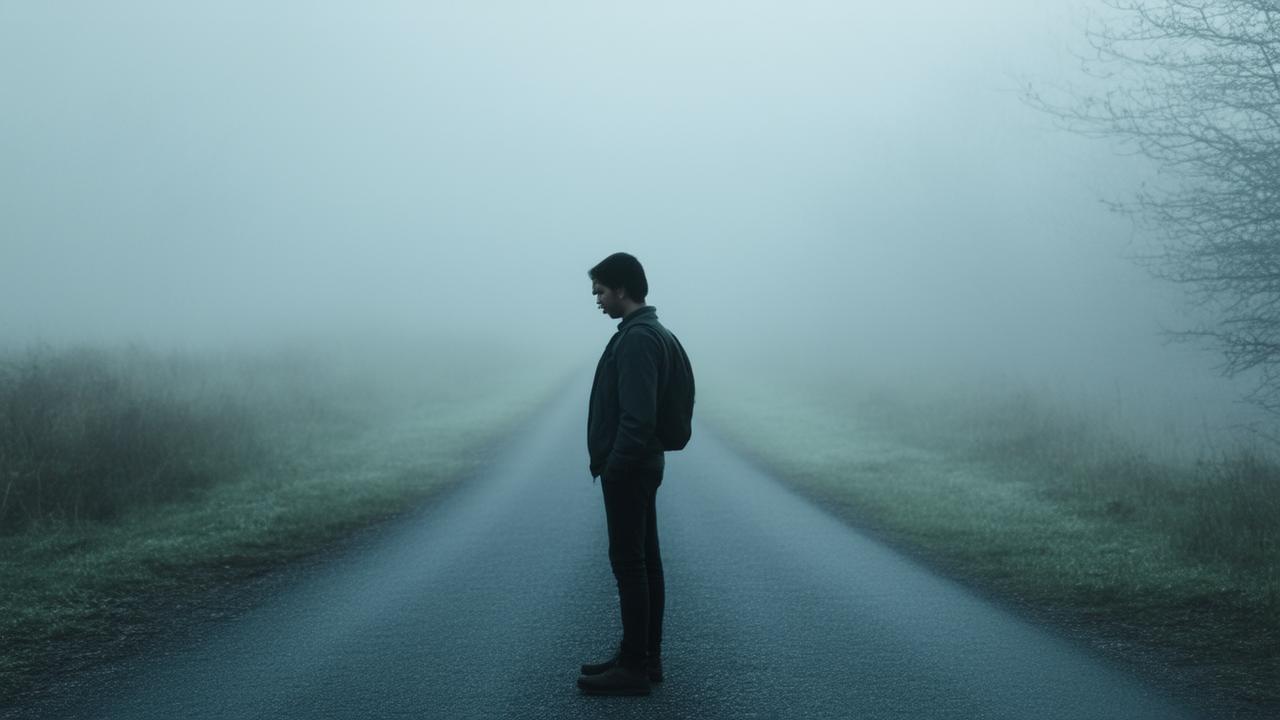
On other days, though, the same landscape feels different. The sky hangs heavy and low. Fog presses in. The air buzzes with a subtle static, and every path looks like it might hide a cliff edge just beyond sight. This is the inner weather of fear-based decision-making. Nothing around you has changed—not your values, not your intelligence, not your options. But the climate inside your nervous system has shifted, and with it, everything feels riskier.
That inner weather is shaped by experiences you’ve had and stories you’ve absorbed: the criticism that came when you chose “wrong” as a child, the job that fell apart after a big risk, the breakup that followed a brave confession. Layer by layer, your mind learned that decisions can lead to pain—and that if it can just calculate everything perfectly, maybe it can outrun that pain next time.
So it tries. It replays scenarios. It gathers opinions. It opens twenty tabs and reads every article. What looks like procrastination from the outside is often the mind turning in anxious circles, hoping to stumble onto certainty the way a lost animal might circle a clearing, nose pressed to the wind.
The Quiet Engine: A Fear of Regret
At the core of this mental looping, there is often one specific fear humming like an engine in the background: the fear of regret. Not just “I might not like this,” but “I might prove something terrible about myself. I might waste my life. I might ruin everything.”
Regret is a uniquely heavy emotion because it doesn’t just say, “That hurt.” It says, “You did this. You were the one at the wheel.” So, if your nervous system has learned that responsibility can feel unbearable, your mind may decide that the best solution is to avoid choosing at all.
It doesn’t say this out loud, of course. Instead, it whispers in more respectable language:
- “I just need more information.”
- “The timing isn’t right.”
- “I’m still weighing my options.”
- “What if there’s a better choice I haven’t seen yet?”
Fear-based decision-making isn’t about logic; it’s about protection. The brain would rather sit in the discomfort of stagnation than risk the sharp sting of “I chose wrong.” To your survival system, not moving can feel safer than stepping into the unknown—even when that stillness quietly erodes your joy.
This is why someone like Lena can feel stuck over something as small as coffee. It’s not that the coffee matters. It’s that every choice, no matter how tiny, brushes against this deeper question: “Can I trust myself?”
The Invisible Scripts Running the Show
Most of us carry invisible scripts that began writing themselves years ago. They’re not printed in ink; they’re embedded in sensation—the flush of shame after a scolding, the tense silence after a mistake, the humming panic of watching someone else’s anger unfold and thinking, “If only I had done something differently.”
Over time, the mind organizes these experiences into rules like:
- “If I choose wrong, I’ll lose love or approval.”
- “If I disappoint people, I won’t be forgiven.”
- “If I fail, I’ll never recover from it.”
- “If I commit, I’m trapped.”
These rules don’t just live in thoughts; they live in the body. That tightness in your chest when you open a housing application form. The way your throat constricts when someone asks, “So, what’s your plan?” The heat in your face when you second-guess your words right after you say them.
To your thinking brain, a decision might look like a list of pros and cons. To your nervous system, it feels like entering a room where danger may be waiting, unseen. This mismatch explains why advice like “Just pick something!” or “Go with your gut!” can land like static. Your mind isn’t being irrational; it’s trying, in its own way, to protect you from a past it never wants to repeat.
The Everyday Cost of Staying Stuck
If you pause long enough, you can feel the toll this takes. Opportunities drift by like clouds you never quite reach for. Relationships hover in a strange in-between—never fully chosen, never fully released. Dreams remain in the safe, unreal space of “someday,” where they can’t disappoint you by actually existing in the world, flawed and unpredictable.
The irony is that non-choices are also choices. Saying nothing is choosing silence. Staying is choosing this version of your life for one more day. Refusing to decide how you feel is a decision to let the moment pass you by. The world moves, with or without your active participation. Your story is still being written—you’ve just handed the pen to fear.
Listening Beneath the Noise
There is a different way to move through decisions, but it doesn’t begin with forcing yourself to “be bolder” or “care less.” It begins with listening—really listening—to the fear that has been driving the process.
Next time you find yourself spinning in indecision, try slowing down enough to notice what your body is saying, not just your thoughts. Where does the fear live—stomach, chest, throat, jaw? Is it hot or cold, sharp or dull, buzzing or heavy? You’re not trying to fix it yet; you’re simply acknowledging that there is more happening than a “simple choice.”
In that pause, ask yourself gentle questions:
- “What is the worst story my mind is telling about this decision?”
- “What past experience does this remind me of?”
- “Who am I afraid of disappointing or losing?”
- “What am I trying to protect myself from feeling?”
You may notice that the answer has nothing to do with the actual options in front of you. You’re not really choosing between two cities; you’re choosing between identities, between old expectations and a self you haven’t fully met yet. You’re not just choosing whether to stay in your job; you’re choosing whether to confront the part of you that believes you’re only worthy when you’re safe and practical.
When you see this clearly, the decision itself becomes less of a villain. It’s simply a doorway. The fear is what stands guarding it, shoulders tense, eyes narrowed, asking, “Are you sure you want to walk through?”
Shifting the Question: From Perfect to Trustworthy
The fear-based mind wants guarantees: the perfect choice, the right path, the one that will minimize pain and maximize approval. But life doesn’t work that way. There are no choices that won’t expose you to uncertainty, heartache, or change. The weather will still turn, seasons will still shift, and even the safest path will eventually demand something of you.
So, instead of asking, “What is the perfect decision?” try shifting the question to: “Which decision lets me become more trustworthy to myself?”
That might mean:
- Choosing the option that aligns with your values, even if it scares you.
- Choosing to tolerate someone’s disappointment rather than betraying your own truth.
- Choosing a small, experimental step rather than waiting for total certainty.
- Choosing to make peace with partial information, knowing that you’ll adjust course as you learn.
Trust grows in motion, not in stasis. You don’t become good at choosing by thinking about decisions; you become good at choosing by making decisions, experiencing the outcomes, and learning—slowly, gently—that you can survive regret, repair mistakes, and pivot when needed.
It’s less like solving a puzzle and more like walking a trail in the forest at dusk. You rarely see the entire path at once—just the next few feet illuminated by the soft spill of your flashlight. You step, and then you see more. And in the process, you discover that your capacity to navigate is far larger than fear told you it was.
➡️ A psychologist is adamant : “the best stage in a person’s life is the one where they start thinking this way”
➡️ Goodbye Kitchen Islands : Their 2026 Replacement Is A More Practical And Elegant Trend
➡️ Goodbye steaming : the best way to cook broccoli to keep nutrients plus easy recipes to try
➡️ Goodbye hair dyes : the new trend that covers grey hair and helps you look younger
➡️ Behavioral scientists say that people who walk faster than average consistently share the same personality indicators across multiple studies
➡️ Banana peels in the garden: they only boost plants if you put them in this exact spot
➡️ Banana peels in the garden: they only boost plants if you put them in this exact spot
Small Steps Out of the Fear Loop
You don’t have to overhaul your whole life to shift this pattern. In fact, the nervous system often responds better to small, consistent experiments than to big, dramatic leaps. Think of it as gently changing your inner weather, one breeze at a time.
Here are a few simple practices you can begin to weave into your days:
- Set decision “containers.” For low-stakes choices, give yourself a short time limit—three minutes for what to eat, five minutes for which shirt to wear—and practice deciding within that boundary.
- Name the fear out loud. “I’m afraid I’ll regret this.” “I’m afraid they’ll think less of me.” “I’m afraid I’ll fail.” Naming it breaks the spell of vagueness.
- Pre-approve imperfection. Tell yourself: “No matter how this turns out, I will not attack myself for this choice. I can be curious instead of cruel.”
- Review your history. Look back at three decisions you once agonized over. How many turned out to be survivable, even if they weren’t perfect? How many led to unexpected gifts?
- Practice tiny acts of self-trust. Choose a walk route without overthinking. Order something new at a café. Let the small yeses accumulate; they matter.
Over time, your mind begins to update its script. It learns, experientially, that decisions are not cliffs—they’re paths. Some will wind, some will dead-end, some will open onto meadows you never could have predicted. But in every case, you will still be there with yourself, learning, adjusting, mending, beginning again.
A Simple Comparison of Fear-Based vs. Trust-Based Decisions
Notice how different the inner experience can be when fear is driving versus when self-trust is quietly present:
| Aspect | Fear-Based Process | Trust-Based Process |
|---|---|---|
| Main Question | “How do I avoid regret and pain?” | “What aligns with my values right now?” |
| Emotional Tone | Tense, pressured, all-or-nothing | Curious, spacious, willing to learn |
| Time Spent | Long rumination, circular thinking | Reasonable reflection, then action |
| View of Mistakes | Proof of failure and unworthiness | Information for growth and adjustment |
| Sense of Self | Fragile, easily “ruined” by wrong choices | Resilient, capable of repair and change |
Letting the Story Unfold
One evening, months after that coffee aisle moment, Lena found herself at her kitchen table with a different kind of choice in front of her: a job offer in a new city, a life with edges she couldn’t yet see. The old fear rose up, as it always did—racing heart, spiraling what-ifs, that familiar urge to delay the email, to ask five more people what she should do.
This time, she did something different. She put her hand over her chest and simply said, “You’re scared because you think this choice will define everything. But we’re allowed to change. We’re allowed to learn. Whatever I choose, I won’t abandon myself.”
The fear didn’t vanish. It softened. The mental static quieted just enough for her to hear another voice—quieter, steadier, like water moving under ice. It didn’t promise certainty. It didn’t lay out a five-year plan. It just asked, “Who are you becoming? And which choice lets you meet her?”
That was the night she wrote back and said yes.
Decision-making will probably never feel like strolling through a sunlit meadow every time. There will always be foggy days, moments when the stakes feel high and the heart feels fragile. But when you recognize that much of your difficulty choosing is rooted not in weakness, but in a fear-based mental process trying to protect you, something begins to shift.
You stop waiting for the perfect path and start walking the real one, step by imperfect step. You stop treating yourself like a problem that needs to be solved and start treating yourself like a living story that’s still being written.
And slowly, almost imperceptibly at first, you discover that the real miracle was never in making the perfect decision. It was in learning that you are bigger than any single choice, and that you can be trusted to stay with yourself, no matter how the road curves ahead.
Frequently Asked Questions
Why do I freeze even over small decisions?
Freezing over small choices often means your nervous system is linking them—unconsciously—to bigger fears: fear of regret, judgment, failure, or loss. The decision itself is minor, but it brushes against deeper beliefs about your worth and safety, so your body reacts as if the stakes are much higher.
Is indecisiveness always a sign of anxiety?
Not always. It’s normal to take time with complex or meaningful decisions. However, if you regularly feel paralyzed, stressed, or consumed by “what ifs,” especially over everyday choices, fear-based thinking and anxiety are likely playing a significant role.
How can I tell if a decision is truly wrong for me or if I’m just scared?
Fear usually feels urgent, loud, and all-or-nothing, while genuine misalignment feels more like a steady, quiet “no” in your body. If you imagine choosing one option and feel a sharp panic, that’s often fear. If you feel a deep heaviness or a sense of shrinking over time when you picture it, that may signal misalignment.
Can I become more decisive without turning reckless?
Yes. Being more decisive doesn’t mean caring less; it means trusting more. You can still weigh options thoughtfully while setting time limits, practicing self-compassion for imperfect choices, and committing to adjust course as you learn. Decisiveness grows from resilience, not from ignoring consequences.
What if I regret a big decision I’ve already made?
Regret is painful, but it doesn’t mean your story is over. Instead of attacking yourself, ask: “What did I not know then that I know now?” and “How can I move closer to alignment from here?” Every decision becomes part of your learning. You can honor the cost of a choice while still allowing it to teach you how to choose differently next time.





