It started with a jar of honey.
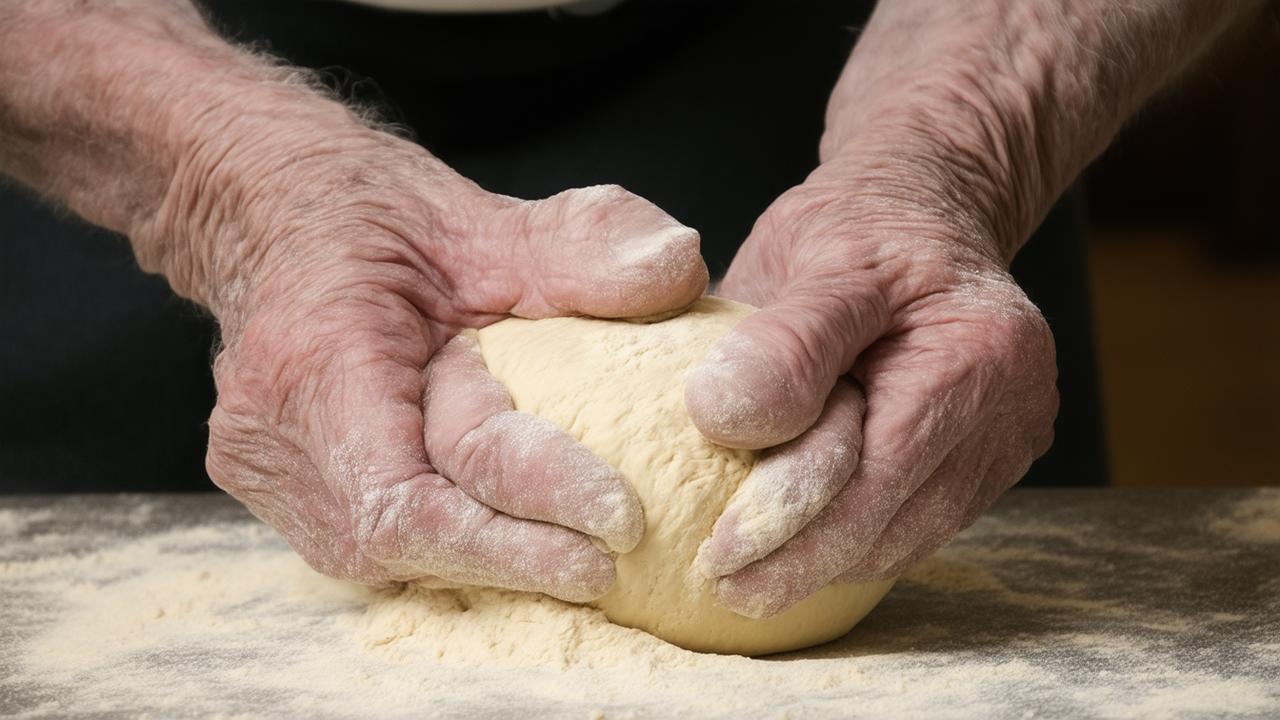
I was standing at my kitchen counter on a cool Tuesday morning, light slipping through the blinds in thin golden stripes, when the lid refused to budge. My fingers pressed and twisted, forearm straining just a little too hard, a faint ache running up toward my elbow. The stubborn jar didn’t care that I’d once been the kind of person who could carry heavy grocery bags in each hand without thinking. It didn’t care that I’d spent years gardening, hiking, turning wrenches on old bicycles. It just held on, and my 66-year-old hands… didn’t.
That was when I noticed it—this subtle, almost impolite weakening. The way my grip didn’t quite match the memory of how strong it used to feel. The way I fumbled with the dog’s leash clasp, how opening the garden gate felt like more work than it should. It was like my hands had quietly aged while I’d been busy thinking about everything else.
I did what many of us do in these moments: I worried for a while, then I went looking for answers. I spoke with a physical therapist, read up on studies about aging and strength, and started paying very close attention to what I did with my hands all day. And that’s when a simple, almost old-fashioned daily activity began to stand out—not flashy, not gym-based, not expensive. Just one, deeply human motion that shows up in almost every culture and every story of daily life.
It was carrying.
The Quiet Strength Test You Do Every Day
We like to measure our strength with big gestures—how much we can bench press, how many pushups we can do, whether we can still help move a piece of furniture without paying for it for three days. But hand strength often reveals itself in the smallest moments. Buttoning a shirt. Turning a key. Lifting a pan full of water to the stove without feeling like it might tilt from your grasp.
The physical therapist I saw, a calm woman with kind eyes and a firm handshake, said something that lodged in my mind: “Your hands are storytellers. They’re telling you how your whole body is aging.”
She explained that grip strength isn’t just about hands. It’s strongly linked to overall muscle mass, balance, and even longevity. Researchers have found that lower grip strength is associated with higher risk of disability and falls as we age. The hands are like a dashboard warning light—when they weaken, it’s often a sign that the rest of the system is easing off too.
But here’s the hopeful part: hands are also extremely responsive. They adapt. Give them a reason to be strong, and they will try to rise to the occasion, even in your sixties, seventies, and beyond. The trick is choosing the right “reason”—a movement that’s natural, sustainable, and forgiving on joints that have seen a good many years of work.
For me, that reason turned out to be carrying—specifically, walking while carrying weight in my hands in a controlled, deliberate way. Something that sounds almost laughably simple, until you feel what it does for you.
Carrying as a Daily Ritual: More Than Just “Farmer’s Walks”
If you’ve heard of “farmer’s walks” at the gym, you probably imagine burly people trudging across rubber floors with giant dumbbells. But the essence of the movement is far older and much more accessible: pick something up, hold it securely, and walk.
Think about it. Humans have always carried: buckets from wells, baskets from fields, wood for the fire, children balanced on hips. That daily hauling wasn’t just work—it was a full-body strength practice, repeated quietly, day after day, for a lifetime.
I started small. In my case, I used two reusable grocery bags with a few heavy books inside. I stood tall, braced my midsection lightly like I was preparing for a soft poke to the stomach, and walked slow laps down my hallway and back. Fifteen seconds. Then twenty. Then thirty. The first time, my hands tingled faintly afterward, the way muscles do when they’ve finally been asked to wake up.
Carrying does something subtle but powerful:
- Your fingers and forearms learn to hold while your body moves, which is exactly what you ask them to do in real life.
- Your shoulders and upper back stabilize, building posture and helping keep the chest open instead of caving forward.
- Your legs and core join the conversation, which turns it into a whole-body practice—not just “hand exercise.”
This is what made it so appealing at 66: it didn’t feel like a punishment, or like I was chasing my younger self. It felt like reclaiming something I’d once taken for granted—the simple competence of carrying what I needed from one place to another.
How I Built a “Carrying Habit” into Real Life
At first, I treated carrying like a prescribed exercise: a short, scheduled routine in my living room. Over time, it slid into my daily life in a way that felt surprisingly natural, even enjoyable. I began to think of it not as a workout, but as a ritual—a way of reminding my body and my hands: You’re still in this. You still have work to do.
Here’s how my days began to change:
- Groceries became training partners. Instead of loading everything into a cart, then a car, then the counter in as few trips as possible, I started carrying two modestly loaded bags at a time, walking with deliberate steps and good posture.
- Watering cans turned into hand-strength allies. I filled them halfway instead of all the way, carried them slowly to the plants, hand switching when I felt a good, solid challenge.
- Reusable bags replaced random boxes. When moving things around the house, I put items in sturdy bags with handles and carried them from room to room, focusing on squeezing the handle rather than letting it hang off my joints.
I also started doing a simple, timed practice three or four days a week. This is what it looked like after a couple of months of easing in:
| Activity | Details |
|---|---|
| Warm-up walk | 3–5 minutes of normal walking around the house or yard |
| Light carry | 2 bags with light weight, 20–30 seconds walking, 2–3 rounds |
| Moderate carry | Slightly heavier weight, 20 seconds walking, 2–3 rounds |
| Cool-down | Gentle hand opening and closing, 1–2 minutes of easy walking |
Nothing heroic. No gritted teeth. Just consistent, quiet effort—enough that my hands knew they’d done a job, but not so much that I dreaded the next session.
What It Feels Like When Your Hands Start to Come Back
The changes didn’t arrive in a cinematic rush. They came in tiny, almost forgettable increments—the sort you only notice when something that used to be hard suddenly isn’t.
One evening, I opened a stubborn jar without thinking—and halfway through twisting, I realized: this used to be the moment where my hand slipped. It didn’t. My fingers stayed firm, my wrist steady. I caught myself smiling alone in the kitchen, lid in hand like a small medal.
Another time, I picked up my grandchild, who has the solid, wiggly weight of a healthy toddler. I hoisted her under the arms, and instead of that faint panic that my hands might not hold, I felt rooted. Secure. We swayed a little, both of us laughing, and I noticed how much more willing I was to say “Sure, come here” instead of “Let’s sit down first.”
The emotional shift was as important as the physical. Stronger hands meant less hesitation, less quiet doubt about what I could still do. I started volunteering again to help carry chairs at community events, to move potted plants on the patio, to take the heavier end of a box. That sense of capability—of being a participant instead of a bystander—did more for my spirit than I expected.
➡️ These zodiac signs are destined for major prosperity in 2026, according to astrological forecasts
➡️ The RSPCA urges anyone with robins in their garden to put out this simple kitchen staple to help birds cope right now
➡️ The RSPCA urges anyone with robins in their garden to put out this simple kitchen staple today
➡️ What you see is not a ship : at 385 metres long, Havfarm is the world’s largest offshore salmon farm
➡️ “I used to multitask constantly,” this habit helped me stop without effort
➡️ Workers in this role often earn more by becoming specialists rather than managers
➡️ If you want a happier life after 60 be honest with yourself and erase these 6 habits
And here’s something surprising: my balance improved. Carrying weight made me walk more consciously, more upright. My steps became surer. I found myself catching my foot on uneven pavement less often, my body more ready to correct and steady itself when the world tilted slightly underfoot.
How to Start, Gently, No Matter Your Age
If your first thought is, “That sounds nice, but my hands are already weak,” this part is for you. Hand strength, especially later in life, is not about proving anything. It’s about staying connected—to your independence, your daily rituals, the small tasks that make up a life.
Here are some gentle ways to begin weaving carrying into your day:
- Start lighter than you think you need. Two half-filled water bottles, a small tote with a book or two, a light kettlebell or dumbbell if you have one. You should feel challenged, but not strained.
- Walk for time, not distance. Ten to twenty seconds of carrying can be enough at first. Put the weight down before your grip fails completely; this is training, not a test.
- Keep your posture tall. Imagine a string gently lifting the crown of your head. Let your shoulders sit down and back instead of hunching forward.
- Use everyday opportunities. Carry one moderately heavy object at a time from room to room instead of loading your arms full. Let your hands do real, useful work.
- Respect pain signals. Mild muscle fatigue is fine. Sharp or joint pain, especially in wrists, elbows, or shoulders, is a sign to lighten the load or shorten the time.
If you have arthritis, nerve issues, or any concerns about balance, it’s wise to check in with a healthcare provider or physical therapist before increasing the difficulty. Many therapists can show you how to adapt carries—using thicker handles, different grip positions, or assisted supports—so that your joints feel protected while your muscles are engaged.
The Daily Choice Hidden in Ordinary Moments
One afternoon, months into my experiment, I watched an older neighbor carry a basket of laundry across her yard. The wicker pressed into her palms, the fabric swayed as she walked. She moved carefully, but with a kind of easy dignity—no rush, no wobble. I recognized it instantly: that quiet, practiced resilience that comes from asking your body to keep showing up.
Hand strength isn’t really about jars or door handles or even exercise, when you get right down to it. It’s about options. About being able to say “Yes, I can carry that,” when someone hands you a bag, a suitcase, or the leash of an excited dog. It’s the ability to reach out and take hold—of objects, of people, of moments—without hesitation.
At 66, I thought my grip was simply a measure of what I’d lost. Now I see it differently. It’s a conversation I can keep having with my body, every time I pick something up and decide to carry it just a little farther than I did the week before.
So tomorrow, when you lift the grocery bags, the watering can, the suitcase handle, or even just a pair of light weights in your living room, pause for a moment. Feel your fingers close, your forearms engage, your shoulders stabilize. Take a few deliberate steps.
That small, ordinary act—the daily choice to carry—isn’t just protecting your hand strength. It’s protecting the way you move through the world.
Frequently Asked Questions
Is carrying safe if I already have weak hands?
Yes, it can be safe if you start extremely light and progress gradually. Begin with very manageable weights—light bags, small water bottles, or a nearly empty tote—and short walking times. Stop before your grip completely gives out, and avoid any sharp or joint pain. If you have existing hand or wrist conditions, consult a healthcare professional before increasing intensity.
How often should I do carrying exercises?
Two to four times per week is a good starting range for most people. On other days, you can still let everyday tasks count as “light practice”—carrying groceries, laundry, or small objects with attention to posture and grip. The key is consistency over many weeks, not intensity in a single session.
Do I need special equipment?
No. While dumbbells or kettlebells are convenient, they aren’t required. Reusable shopping bags, buckets, watering cans, or sturdy totes work well. Just make sure the handle is comfortable and doesn’t dig painfully into your fingers.
How long does it take to notice improvement in grip strength?
Many people notice small changes within 3–6 weeks of regular practice—like opening jars more easily or holding objects more securely. More substantial improvements in strength and endurance typically appear over 2–3 months, especially if you increase weight or time very slowly and steadily.
Can carrying help with overall balance and stability?
Yes. When you carry weight, especially in one or both hands, your body has to stabilize your trunk, hips, and legs to stay upright. Over time, this can improve posture, core engagement, and walking confidence. For those with balance concerns, starting with very light loads and short distances in a safe, uncluttered space is essential.





