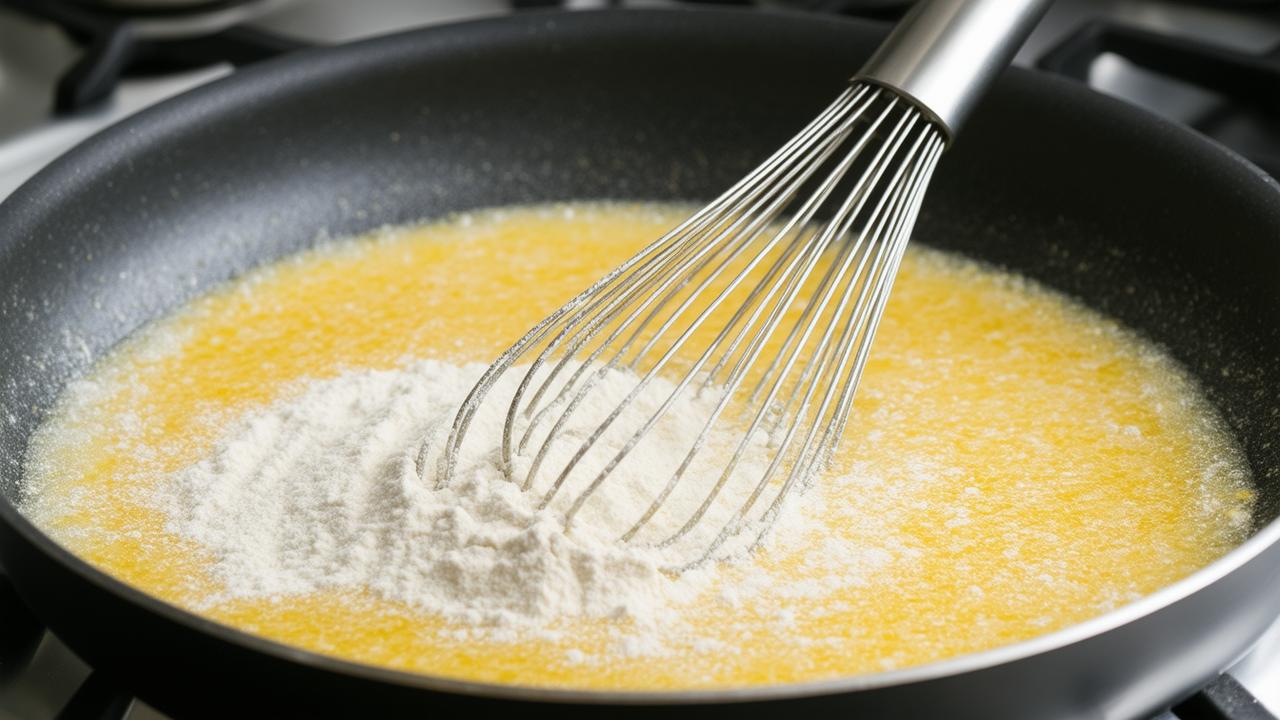
The kitchen smelled like a rainy Sunday afternoon, all warm and savory and a little bit nostalgic, even though it was only a regular Tuesday. I stood at the stove, watching the last curls of steam rise off the roasting pan, the browned bits clinging to the metal like tiny, stubborn memories. I hadn’t planned to make gravy that night. In fact, I almost poured the drippings straight down the sink, the way I’d seen so many people do when they didn’t know what treasure they were holding. But something about the color—deep amber with little sparks of caramelized onions—made me pause. Within twenty minutes, that hesitation turned into the smoothest homemade gravy I’ve ever made in my life. The sort of gravy that feels less like a sauce and more like a story you can taste.
The Moment I Almost Threw Away the Good Stuff
The chicken had finished roasting, its skin bronzed and crisp, the pan beneath it a small map of sizzled fat and browned bits. The first instinct is always the same: clean up, clear out, move on. But cooking has a way of rewarding the people who linger, the ones who run a wooden spoon through the leftovers in the pan and think, What if?
I tilted the roasting pan, letting the juices pool in one corner. Fat floated to the top like a thin, golden blanket, while darker, more mysterious juices swirled beneath. The smell was rich and layered—salt, roasted garlic, a whisper of herbs. I felt that familiar tiny nudge of curiosity, almost like the kitchen tapping me on the shoulder: Don’t waste this.
The stove flame came back to life with a soft whoosh. I placed the pan right across the burners, and the drippings loosened, warming again, releasing a hidden second breath. If you’ve ever hesitated to make gravy because you’re afraid of lumps, I understand you. I used to look at silky gravies on holiday tables like they belonged to another universe of cooks—people with inherited cast-iron pans and written recipes browned with age. But that night I had no recipe, just a feeling and a bag of flour, and somehow, that was enough.
How the Gravy Started Talking Back
There’s a small, almost ceremonial moment when you scatter the flour across the pan drippings for the first time. It falls in pale clouds, landing gently on the shimmering surface, and for a second, you wonder if you’ve already made a mistake. It looks wrong at first—patchy, powdery, dull. But as soon as the spoon hits the pan, the real conversation starts.
I grabbed my favorite wooden spoon, the one with a singed edge from too many close encounters with the burner, and dragged it through the drippings and flour. They resisted at first, then gave way, transforming into something thick and sandy, like wet beach sand after a wave pulls back. The smell deepened—nutty, toasty, with a faint hint of warmth that only comes from flour meeting fat at just the right temperature.
This is the part everyone rushes through, but it’s quietly the heart of the whole thing: the roux. Give it a minute to breathe. Let it bubble softly. The mixture hissed and sputtered in the pan, and I kept stirring, slow circles, scraping every browned edge back into the center. The color shifted from pale beige to a warm, comforting brown, like a worn leather chair. I could feel the nervousness easing out of my shoulders. I wasn’t measuring. I wasn’t timing. I was just listening.
Pouring in Liquid and Trusting the Swirl
The next step felt a little like stepping onto ice for the first time—careful, alert, hoping not to slip. I poured in the first splash of stock, a modest drizzle that hit the hot pan with a gentle hiss. Instantly, the roux clumped, grabbing onto the liquid as though startled. For a split second, I thought, Here we go, lumpy disaster. But instinct said: keep stirring.
The spoon became a kind of paddle, pushing through the soft clumps, pressing them against the pan, coaxing them to dissolve into the warming liquid. The magic of it is quieter than most kitchen fireworks. No dramatic flames, no big sizzle—just the slow, hypnotic thickening as each addition of stock turns a rough, matte paste into something shiny and elastic.
I didn’t dump all the liquid in at once. That was one of the tiny, crucial decisions I made without even really knowing its importance. A little at a time, stir until smooth. A little more, stir again. The gravy began to relax, smoothing itself out like a wrinkled sheet shaken over a bed. It went from heavy to glossy, from stubborn to silky. Steam rose up in tiny fragrant waves, carrying hints of rosemary and roasted onion. I leaned in closer, as if it were telling me a secret.
The Quiet Alchemy of Heat and Patience
Once all the stock was in and the gravy started to find its shape, there was a new kind of waiting. The surface quivered as it approached a simmer. Small bubbles appeared at the edges, breaking gently like the first raindrops on a lake. I turned the heat down and kept stirring, tracing slow figure-eights across the bottom of the pan.
Gravy doesn’t thicken in one dramatic moment—it creeps there, almost shyly. Each minute of gentle heat makes it a little more cohesive, a little more confident. I could feel it under the spoon, the way the resistance grew just slightly, the way the liquid clung instead of sliding away. No lumps surfaced, no graininess emerged. It was as if all the fears I had about failure simply evaporated in the steam.
What surprised me most wasn’t that the gravy thickened—it was how calm the whole process felt when I stopped rushing it. The kitchen, so often a place of timers and multitasking and clattering dishes, had gone unexpectedly soft. The overhead light bounced off the surface of the gravy, turning it into something that looked almost luxurious. The smell had grown more complex: roasted chicken, toasted flour, herbs, and a faint, buttery richness from the fat. It smelled like warmth, like care, like home even if you’d never had this specific gravy before.
A Tiny Table of Kitchen Truths
As the gravy gently burbled, I realized I’d just learned—almost by accident—a set of quiet kitchen truths, the sort you don’t always find written down. If I could have jotted them onto a slip of paper for my past self, they might have looked like this:
| Step | What Actually Matters | How It Feels When It’s Right |
|---|---|---|
| Saving the drippings | Don’t toss the browned bits; they’re flavor gold. | The pan smells rich, savory, a little smoky. |
| Making the roux | Equal-ish parts fat and flour, cooked until toasty. | Looks like wet sand; smells nutty and warm. |
| Adding liquid | Add stock slowly, whisk or stir constantly. | Clumps melt away, surface grows glossy. |
| Simmering | Gentle heat; don’t rush the thickening. | Soft bubbling, spoon leaves trails in the sauce. |
| Finishing | Taste, season, maybe a knob of butter at the end. | Silky on the tongue, deeply savory, balanced. |
Reading that table, it sounds almost methodical, but in the moment it didn’t feel like a formula. It felt like a conversation between the pan and my senses—smell, sight, touch through the handle of the spoon.
When the Spoon Stood Up for Me
There’s a small test I’ve grown to love. I dip the spoon into the gravy and lift it, letting the sauce run off the back in a slow, velvety ribbon. That night, as I did it for the first time with this accidental creation, the gravy coated the spoon in a smooth, even layer, no streaks, no translucent thinness. I ran a finger down the back of the spoon, drawing a line right through the center. The trail stayed clear; the gravy held its place like a curtain drawn open. Every cook has a moment when they realize: Oh. This worked. That was mine.
Tasting it was like stepping into a room I’d seen only from the outside. It was savory and round, but not heavy. The roasted notes from the pan drippings came through first, followed by the subtle toasted flour and the bright, quiet murmur of the herbs that had clung to the chicken skin. There were no floury lumps to chew through, no chalky aftertaste, just this sense of completeness, like all the separate parts of dinner had been given a place to meet.
➡️ These zodiac signs are destined for major prosperity in 2026, according to astrological forecasts
➡️ The RSPCA urges anyone with robins in their garden to put out this simple kitchen staple to help birds cope right now
➡️ The RSPCA urges anyone with robins in their garden to put out this simple kitchen staple today
➡️ What you see is not a ship : at 385 metres long, Havfarm is the world’s largest offshore salmon farm
➡️ “I used to multitask constantly,” this habit helped me stop without effort
➡️ Workers in this role often earn more by becoming specialists rather than managers
➡️ If you want a happier life after 60 be honest with yourself and erase these 6 habits
The potatoes suddenly looked less like a side dish and more like a landing place. The carved chicken on the cutting board felt unfinished until I poured a thin, glistening stream of gravy over it, watching it pool along the curves of each slice. The plate became a small landscape of colors and textures, all gently unified by that smooth, amber sauce that almost never existed.
Why This One Pan of Gravy Changed How I Cook
It would be easy to say it was “just gravy,” but that would miss the quiet revolution it sparked. This one pan of smooth, homemade gravy rearranged my sense of what I was capable of in the kitchen. For years, I’d treated gravies and sauces as something a little advanced, a little precise, something for people who used words like “deglaze” without having to look them up. Yet everything that made this gravy turn out right came down to noticing, not perfection.
It taught me that the tiny details matter—the patience of letting the roux toast, the choice to add liquid slowly instead of all at once, the low heat that coaxes thickness instead of demanding it. But it also showed me that recipes are really just suggestions for paying attention: what to watch for, what to smell for, what kind of change to wait on.
Ever since that night, I’ve stopped seeing pan drippings as something to wash away. After roasted chicken, seared pork chops, even a tray of vegetables that left behind a sticky, caramelized glaze, I reach for the flour almost automatically. Each batch of gravy tastes a little different—darker from beef, lighter from turkey, deeply earthy when I start with a base of sautéed mushrooms—but that first memory remains the anchor. The moment I almost threw away the good stuff and instead listened to what the pan was trying to offer.
And maybe that’s the real secret: gravy isn’t just a sauce; it’s a way of saying nothing is wasted. Not the browned edges, not the juices, not the quiet time standing at the stove with a spoon in your hand, learning to trust your senses more than your fear of doing it wrong.
FAQ
Why did my gravy turn out smooth this time when it usually gets lumpy?
Two things likely worked in your favor: you cooked the flour in the fat long enough to form a proper roux, and you added the liquid gradually while stirring constantly. Those steps help the flour disperse evenly, preventing clumps from forming.
Do I need to measure the flour and drippings exactly?
Exact measurements help, but they aren’t mandatory. A good rule of thumb is roughly equal parts fat and flour. You can always adjust the thickness later by adding more liquid if it’s too thick or simmering longer if it’s too thin.
What if I don’t have stock—can I still make gravy?
Yes. You can use water with a pinch of salt and a few aromatics (like a splash of wine, a bay leaf, or a bit of onion). Stock adds depth, but the pan drippings themselves bring a lot of flavor.
How do I fix gravy that’s already lumpy?
Whisk vigorously while it’s hot, or use an immersion blender to smooth it out. You can also strain it through a fine-mesh sieve to catch any stubborn lumps.
Can I make this gravy ahead of time?
Absolutely. Let it cool, refrigerate it, and reheat gently on the stove with a splash of extra stock or water to loosen it if it has thickened too much. Stir as it warms to keep it silky.





