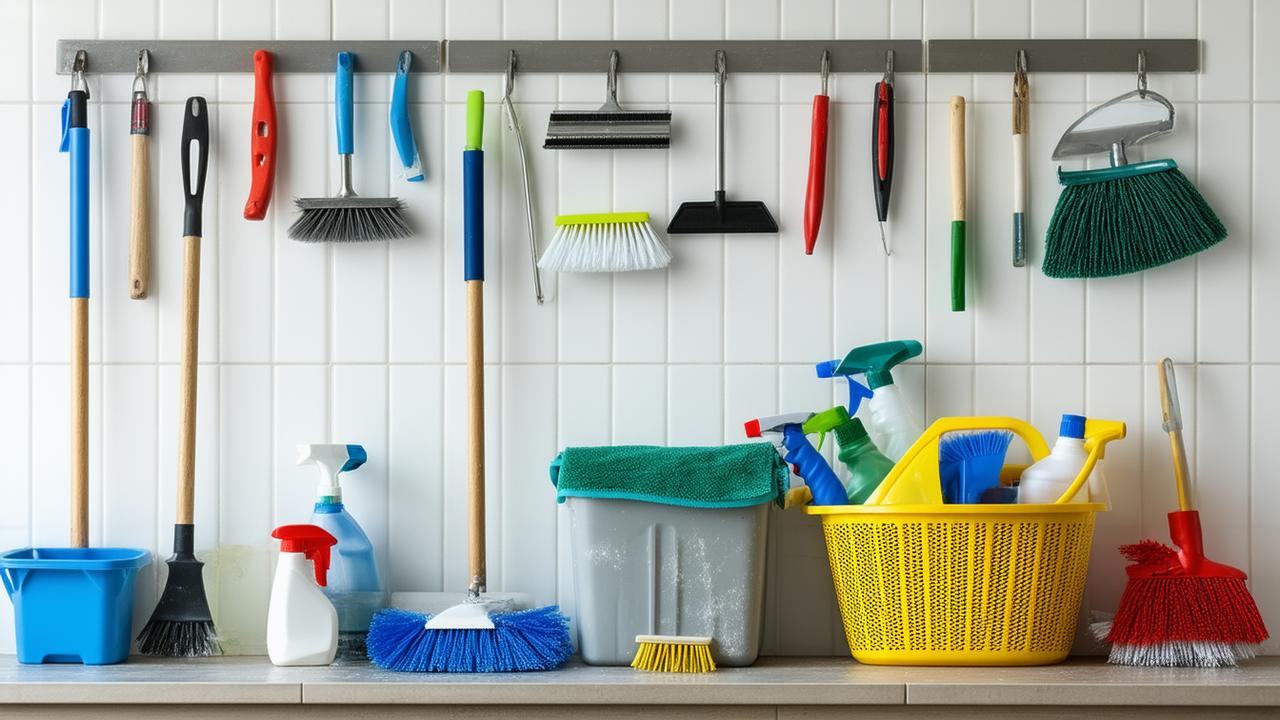
The realization came on a Tuesday, in the bright, accusing light of late afternoon. I was standing in my hallway, holding a spray bottle in one hand and a color-coded cleaning checklist in the other, and the house still looked… lived in. Not magazine clean, not ready-for-guests clean—just normal, cluttered, story-filled, human. A shoe sideways by the door. A mug with dried tea at my desk. A constellation of crumbs under the kitchen chair where I always eat in a rush. I had this sudden, disorienting thought: my entire cleaning system was built for a life I do not live.
The System That Looked Perfect—On Paper
For months, my cleaning routine had been a sort of private performance. I’d created a detailed weekly schedule after a late-night scroll through aspirational blogs and minimalist apartment tours. Monday: dust and declutter. Tuesday: bathrooms. Wednesday: floors. Thursday: kitchen deep clean. Weekends: laundry, linens, and all the little jobs that didn’t fit anywhere else.
On paper, it was beautiful: orderly, balanced, color-coordinated. I printed it out, slid it lovingly into a plastic sleeve, and stuck it on the fridge with a magnet shaped like a lemon slice. It promised something I craved—control, calm, a house that would finally stay clean.
But life refused to fit that grid.
The first edge began to fray when I noticed how often I was breaking my own rules. On Monday I’d be working late, so “dust and declutter” got bumped to Tuesday. Tuesday was already bathroom day, so I’d shove dusting to “sometime later.” By Friday, the schedule looked like the back of a receipt covered in frantic arrows and question marks. Entire days were crossed out with the guilty ferocity of someone canceling a gym membership they never used.
The house wasn’t a disaster. It just never matched the calm, spacious rooms I’d held in my head. The system was flawless—for someone else. Someone who didn’t take late meetings, who didn’t come home stunned and empty from people and noise and just need to sit. Someone who did not live here.
The Smell of Real Life
There’s a quiet, earthy smell to a home that’s actually lived in—a blend of coffee grounds, paper, soap, and the faint, reassuring musk of people who exist here day after day. My cleaning system had been designed to sterilize that away, to remake my space into a showroom where nothing lingered for long. It wasn’t just about cleaning; it was about denial.
One afternoon, I paused long enough to notice the way the afternoon light slid across the kitchen counter, catching every crumb in sharp relief. The light didn’t care about my schedule. It simply revealed what was already there: toast crumbs from the morning, a ring of spilled sugar near the coffee jar, a drip of honey now stiff and amber at the edge of the spoon rest.
I realized: I was trying to clean as if no one lived here—and yet every trace of my life contradicted that fantasy. The non-matching mugs beside the sink. The open book on the arm of the couch. The stack of mail I meant to sort three days ago. All of it whispered, “This is not a problem. This is your life.”
But my system treated those whispers as flaws to be corrected, evidence that I was failing at adulthood. The more I tried to erase the signs of living, the more the house seemed to push back, presenting new piles, new smudges, new little rebellions.
The Table Where the Truth Showed Up
The dining table was where the illusion really fell apart. According to the schedule, it was supposed to be cleared and wiped daily—no exceptions. In my imagination, it was always set with a simple centerpiece: a candle, maybe a single stem in a clear glass bottle. Minimal. Elegant.
In reality, the table collected my days like a nest collects twigs:
| Time of Day | What Was Actually On the Table | What My System Expected |
|---|---|---|
| Morning | Coffee mug, toast crumbs, open notebook, mail pile | Wiped surface, empty except a centerpiece |
| Afternoon | Laptop, charger, half-finished glass of water | No electronics, no clutter, “visual calm” |
| Evening | Plates, cutlery, spice jars, open cookbook | Cleared and reset within 15 minutes of dinner |
Every night, I would clear everything away, annoyed with myself, as if the table’s true job wasn’t to host my messy, shifting life, but to play the role of “perfect surface” in some imaginary magazine spread. I never once stopped to ask: why does my system insist this table should be something it clearly doesn’t want to be?
Who Was I Cleaning For?
The deeper I looked, the stranger it felt. So much of my routine was a performance for an invisible audience.
I realized many of my rules came not from need, but from old echoes: things I’d absorbed watching other people’s homes or listening to casual comments that stuck like burrs. “A clean sink means your life is together.” “Bedroom should always be guest-ready.” “Clutter is laziness.” Even the products I bought—lemon-scented sprays, specialty dusters, labeled containers—felt like props for a role I was trying to inhabit.
But no one was coming over most days. There was no inspection. No surprise visit by a magazine editor or an aunt with a white glove. It was just me.
And “just me” didn’t actually mind a book open on the counter or a sweater draped over the back of a chair. “Just me” wanted a home that felt soft enough to land in after a long day, not a stage that had to be reset every evening.
The question turned quietly, insistently: if this system isn’t for me, who is it for?
Listening to the House I Actually Live In
So I tried something different. Instead of forcing my schedule onto the week, I decided to listen to the house. Not the idealized house in my head, but the actual, slightly dusty, crumb-prone one I returned to each day.
I walked slowly through the rooms, not with a spray bottle or a trash bag, but with attention. The hallway rug near the door was always full of grit by Thursday—that told me something real about when sweeping mattered most. The sink annoyed me only when dishes started to smell, not the moment a spoon appeared. The bedroom, even unmade, still felt restful as long as clothes weren’t piled on the floor.
I noticed my own patterns, too. I had more energy in the late morning than after work. I hated starting big tasks at night. I tended to throw mail onto the table “just for now,” which actually meant, “I have no system for this yet.”
Slowly, a different rhythm emerged, one that wasn’t built around how a home should look, but how it actually felt to live in mine.
Rewriting the Rules
My new system began not with a chart, but with three questions:
- What actually bothers me when it’s dirty or cluttered?
- What feels easy to do, given the way my days really go?
- What can I simply accept as part of a lived-in space?
The answers surprised me. Dust on the top of the bookshelf? I didn’t care. A full trash can? That bothered me quickly. A bed left unmade? Neutral. Sticky counters? Instantly irritating. I started measuring “important” not by some external standard, but by how much something disrupted my actual comfort.
Cleaning shrank from a grand performance into a series of small, honest habits:
- Wiping the kitchen counters every night, because I loved waking up to a clear prep space.
- Running the dishwasher when it was full, not at specific times.
- Doing a five-minute reset in the living room—picking up cups, folding a blanket—whenever I changed activities.
- Saving deep cleaning, like scrubbing baseboards, for rare bursts of energy instead of weekly obligation.
The checklist left the fridge. In its place, I kept a small notepad where I’d jot only what truly needed attention this week: “wash towels,” “clean out fridge,” “vacuum hallway.” That was it.
➡️ This small adjustment helps reduce the feeling of bodily overload
➡️ What it means psychologically when you avoid talking about yourself, even when asked
➡️ I noticed my stress dropped once my cleaning goals became realistic
➡️ This is how to show interest without forcing enthusiasm
➡️ The one breathing mistake most people make daily without realizing it affects their stress levels
➡️ Why doing one task at a time is healthier than multitasking
➡️ “At 63, I felt disconnected from people”: the social habit I quietly lost
The house didn’t suddenly look like the homes in glossy spreads. But it felt more deeply like mine, in a way that was unexpectedly peaceful.
Letting Go of the Imaginary Life
What I was really releasing, I realized, wasn’t just a cleaning system. It was an imagined life where I had endless time and energy, where no one ever dropped crumbs, where I floated gracefully from task to task in a linen apron.
In that imaginary life, cleaning was effortless because I wasn’t quite real either—more symbol than person. Real me comes home in damp shoes, leaves a bag by the door, eats over the sink sometimes, gets too tired to fold the laundry immediately. Real me needs rest as much as a clean counter.
When I stopped trying to maintain a home for an imaginary version of myself, I could see the beauty in my actual rhythms. The half-finished mug of tea meant I’d gotten lost in a good book. The shoes by the door meant I’d taken a walk even when I didn’t feel like it. The occasional hurried pile of mail meant I had a life full of incoming things, decisions, possibilities.
Cleaning became less about erasing these traces and more about gently making space around them. Putting the shoes on a mat instead of hiding them away. Keeping a basket on the table for mail, sorted once a week. Accepting that “clear” didn’t have to mean “empty.”
A Home That Matches the Pulse of My Days
Now, when I walk into my home, I don’t see a list of failures waiting to be attacked. I see evidence that I live here fully. A jacket on the back of the chair. A pen uncapped by a notebook. A faint ring on the coffee table from a glass I set down while talking on the phone with someone I love.
The house is not spotless. But it is cared for.
I still clean. There are routines, even. But they’re built around the life I actually live: the way my energy rises and falls, the kinds of mess that truly weigh on me, the spaces that matter most. Some days are still chaotic. Some weeks, the dust wins. That no longer feels like a moral failure.
Sometimes, in the fading light of evening, I catch a glimpse of my living room: cushions a bit crooked, a book on the coffee table, a plant leaning towards the window, floor mostly clear except for one sock that escaped the laundry basket. There’s a quiet rightness to it, the way a forest floor looks right with leaves scattered and twigs askew. Not staged. Just alive.
I realized my old cleaning system was built for a life I don’t live—and maybe never truly wanted. The new one isn’t pretty enough for a chart, but it fits like a worn-in sweater: a little stretched, a little imperfect, and exactly, unmistakably, mine.
FAQ
How do I know if my cleaning system doesn’t fit my real life?
Notice how often you feel behind, guilty, or resentful about cleaning. If your routine looks good on paper but constantly collides with your actual schedule, energy, or needs, it’s probably built for an imagined life, not the one you’re living.
Where should I start when rebuilding my cleaning routine?
Start small. Walk through your home and identify only the messes that genuinely bother you day to day—like dirty dishes, overflowing trash, or sticky counters. Build your routine around solving those first, and let the rest be occasional or optional.
Is it okay if my home never looks “magazine clean”?
Yes. “Magazine clean” is usually staged and temporary. A lived-in home will always show signs of life. Aim for “comfortable and functional for me” instead of “perfect for strangers.”
How can I keep my space from getting overwhelming without a strict schedule?
Use tiny anchors instead of strict rules: a five-minute pickup before bed, wiping the kitchen surfaces after cooking, running the dishwasher when it’s full. These small habits prevent buildup without demanding a rigid timetable.
What if I live with other people who have different standards?
Talk openly about what genuinely matters to each of you—what feels stressful when it’s messy, and what doesn’t. Agree on a few shared priorities (like dishes or trash) and divide or rotate them. Let non-essential preferences be flexible so the system works for everyone’s real life, not just one person’s ideal.





