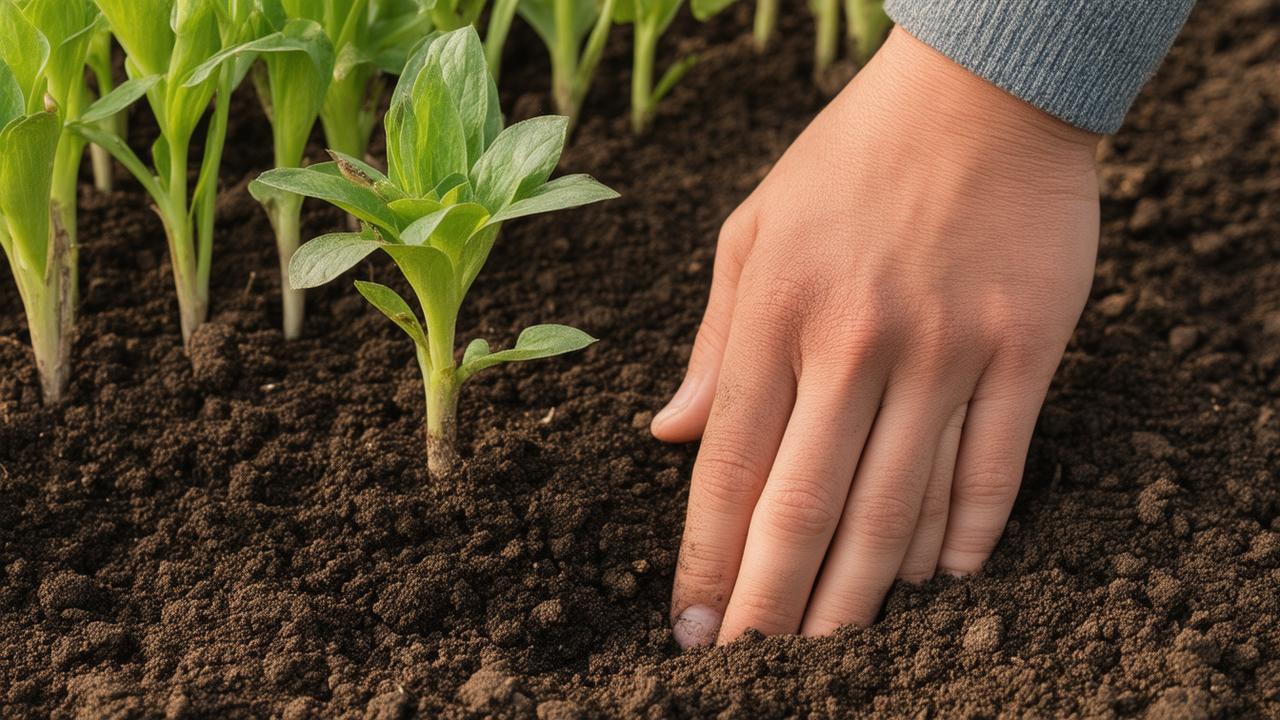
The first time I tried to train my garden, I spoke to it the way you’d speak to a stubborn computer: with a mix of false patience and simmering frustration. I had the plans, the diagrams, the color-coded notes. The seed packets promised obedience in 60 to 90 days. My calendar agreed. But the soil, the rain, the invisible clockwork humming beneath the mulch—none of it paid the slightest attention to what I thought “on schedule” meant.
The First Spring I Tried to Be in Charge
It began on an April morning that smelled like wet cardboard and thawing earth. The sky was a bleached gray, the kind that makes every color underneath seem louder: the lime-green tips of grass, the slick brown of compost, the faint rust of last year’s leaves still clinging to the fence. I stepped into the yard carrying a trowel, a fistful of optimism, and a notebook full of dates.
I had drawn neat boxes where tomatoes would rise in uniform glory, where peas would climb obediently, where zinnias would color-coordinate with the patio cushions. I had purchased seeds early—too early, the old gardener at the nursery had said with a sideways glance. I took it as a challenge.
That morning, the soil felt colder than I wanted it to. When I knelt and pressed my palm into the raised bed, a chill climbed up into my wrist. “You’ll warm up,” I muttered, more to myself than to the earth. The packet said, “Sow as soon as soil can be worked.” I could work it. Therefore, it was time. That was the logic.
I planted in straight lines. I tamped each seed down with precise, almost ceremonial care. I imagined the garden like a staged performance, each plant hitting its mark under my direction. I wrote down their expected germination dates like birthdays I fully intended to celebrate on time.
Every morning, I walked out with my coffee and my expectations. Every morning, the beds looked exactly the same: bare, brown, refusing. No tiny green arcs. No loosening of soil. Just the quiet, unhurried blankness of the garden, as if it hadn’t noticed my plans at all.
The Moment I Realized the Garden Had Its Own Clock
The first seedlings to appear weren’t the ones I’d centered my hopes on. Not the tomatoes I’d imagined roasting, not the neatly labeled carrots. Instead, it was a scatter of volunteers—self-seeded from last year’s chaos—popping up like uninvited guests at a formal dinner. Calendula, earnest and sunny. A rogue lettuce, already more confident than the ones I’d planted in orderly rows.
They emerged not where I had planned, and not when I had planned. Sometime in late April, after a week of unseasonable warmth followed by a stubborn cold snap, they simply decided it was their moment. I stood there, coffee cooling in my hand, trying not to be offended. I had done my part. I had followed instructions. But the seeds I cared about most remained hidden, while the garden shrugged up its own choices.
That was the first whisper that my schedule did not matter here.
A week later, the peas finally broke the surface. I almost missed them at first, mistaking the pale green hooks for bits of grass. They were smaller than I’d pictured, shy and tentative, like they were peeking up to ask if the danger had passed. They had waited. Not for my calendar, but for their quiet list of conditions: soil temperature, day length, that subtle interplay of moisture and warmth that no human spreadsheet can truly capture.
It felt, in that moment, like stumbling into a room where a conversation had been going on long before I arrived.
The Slow Education of Paying Attention
As the season unfolded, I began to realize I was not managing a project; I was learning a language. The rhythms were everywhere, but they were slow, layered, and easy to miss if all I wanted was quick progress and perfect control.
The lilac bush at the back fence, for example, ignored my impatience. I had planted it small and hopeful, imagining the heavy perfume of spring evenings right away. For three years it only produced leaves—a green promise with no follow-through. Each May, I’d inspect the stems for buds, feel that twinge of disappointment, and wonder what I was doing wrong.
Then one year, without warning, it bloomed. It was not gradual. It was an eruption: clusters of pale purple, trembling and fragrant, so heavy they bent the branches like tired arms. The scent was overripe and startling, thick in the air even at dusk. It didn’t care that this was the year I was traveling more, that I’d planned to be too busy to notice. The lilac answered to a rhythm older than my calendar: a certain maturity of root, a particular memory of winters survived, a private agreement with the length of the days.
I began to see similar patterns everywhere once I stopped insisting on my own pace. The chives bloomed almost precisely when the neighborhood bees began to wake up properly, lavender at the end of the month when afternoons turned lazy and hot. Certain corners of the garden always seemed damp, even after days of sun; others dried out in a few hours, as if thirstier by nature. I started watering less by schedule and more by touch: fingers pressed into the soil, reading moisture like Braille.
The garden was not something to be conquered. It was a clock made of leaves and shadows and birdsong, and I had been trying to tap it to make it run faster.
The Secret Table of the Garden’s Timetable
At some point, my notebook of rigid planting dates turned into a softer, more curious record: not what “should” happen, but what actually did. I began to create a kind of table, not as a command, but as a listening tool—a way to trace the garden’s own sense of time.
| Garden Sign | What It Meant | How I Responded |
|---|---|---|
| First dandelions open | Soil warming, early pollinators awake | Direct-sowed peas and spinach |
| Fruit trees in full blossom | Frost risk fading, longer days | Hardened off seedlings outdoors |
| Roses set first buds | Soil consistently warm | Planted tomatoes and peppers |
| Crickets loud at dusk | High summer, steady warmth | Sowed late beans, cut back spent blooms |
| First crisp breathy morning | Season turning, plants slowing | Planted fall greens, started cleaning beds |
Looking at that table, I realized how much my garden’s life was tied to subtle cues my body also responded to, even if I hadn’t named them. The particular angle of sunlight slipping through the maple tree. The way evening air cooled and wrapped around my ankles. The sound of bees thickening in the clover. My own moods began to move with these shifts: restless in late winter, expansive in June, quietly reflective in October.
The Seasons That Refused My Narrative
Of course, there were years when the rhythms themselves bent. One spring came late and wet, the sky practicing only two modes: drizzle and downpour. The soil stayed cold enough to bite. Seeds sulked. Slugs celebrated. My neat expectations of a predictable calendar broke down completely.
I tried, at first, to push through. I tucked seeds into soil I knew was too clammy. I set starts out a week earlier than wisdom suggested, gambling against a frost that came anyway, scorched the tender leaves, and left them hanging like burned paper. I remember standing there in the pale morning light, looking at the limp seedlings and feeling that hot, foolish anger rise in my chest—not at the weather, exactly, but at my own refusal to listen.
The garden did what it always does: it absorbed the mistake and carried on. Some plants died. Some stunted. Others, planted later in a fit of resignation, grew slow but strong, as if relieved I’d finally met them on their terms. The cucumbers arrived scandalously late that year—so late I’d almost given up on them—but when they did, they sprawled across the trellis with a stubborn vigor, making up for lost time in a way only plants seem able to do.
Another year, summer came early and hard, flipping straight from jacket weather to thick heat. The lettuces bolted almost overnight, shooting up bitter and determined. The basil, which usually sulked through June, exploded in fragrant leaves, making every brushing hand come away smelling like some green, hopeful kitchen. I redrew my mental map of what belonged to which month. The garden wasn’t misbehaving; it was negotiating with a changing climate, adjusting its tempo to a song I was just beginning to hear.
Letting Go of the Whistle and Stopwatch
Slowly, a lesson I resisted for most of my life became undeniable among the bean vines and beet greens: control is different from partnership. I could choose what to plant, where to place it, how much to water, when to harvest. I could observe, respond, nurture. But I could not command.
I had been treating the garden the way I treated my own days: a puzzle to solve, a project to optimize. Wake at six, coffee at six-thirty, emails, deadlines, measurable outputs. There was a certain comfort in that, a sense that I was the conductor and life, if not entirely on beat, at least took a few cues from my baton.
The garden exposed the limits of that story. Here was a place where my labor mattered, but never in the final way. I could not make a seed germinate faster just by wanting it. I couldn’t ask a drought to break by rearranging the schedule. I couldn’t bargain with late blight or stop the quiet, inevitable fade of autumn, no matter how attached I was to the heavy green abundance of August.
What I could do was notice. I could crouch down, brush aside the mulch, and see how the soil held moisture differently under the shade of the squash leaves. I could listen to the hush of rain on the beds and recognize, by sound alone, when it was soaking enough to reach the roots. I could feel the way my own breathing slowed when I knelt to weed, fingers working through cool earth, and realize that perhaps I too had rhythms I could not force forever.
➡️ This small adjustment helps reduce the feeling of bodily overload
➡️ What it means psychologically when you avoid talking about yourself, even when asked
➡️ I noticed my stress dropped once my cleaning goals became realistic
➡️ This is how to show interest without forcing enthusiasm
➡️ The one breathing mistake most people make daily without realizing it affects their stress levels
➡️ Why doing one task at a time is healthier than multitasking
➡️ I realized my cleaning system was built for a life I don’t live
Living Closer to the Garden’s Tempo
In time, my plans grew looser, like clothing that finally fits after years of wearing something too tight. I still sketch out the beds in winter, still circle varieties in seed catalogs with a hopeful pen. But the real calendar now lives outside, in the patient unfolding of leaves and the arrival of certain birds.
Robins, for instance, have become my unofficial alarm clock for the new season. The morning I hear their clean, insistent call layered over the weaker winter birdsong, I know it’s time to clear away the last of the old stems. When the first swallowtail butterflies hover over the dill, I take it as a sign that the high, bright days have begun in earnest.
I’ve also started giving the garden more say in what it becomes. Volunteers are no longer enemies of the plan; they’re collaborators. If a sunflower plants itself at the corner of a bed and grows taller than the variety I deliberately seeded, I give it the space. If a patch of self-sown arugula chooses the small gap between two stepping stones, I let it pepper the path with its stubborn, leafy ambition.
In some ways, the garden is messier now. Edges blur. Plants lean into each other. There are moments when the order-keeper in me twitches at the sight of a crooked row or a flower muscling its way into the vegetables’ territory. Yet, when evening comes and the light goes gold and thin, the whole place hums with a rightness I couldn’t have plotted on graph paper.
The rhythms I once tried to tame now shape me instead. I go to bed earlier in winter, rise earlier in summer. I find myself hungry for different foods at different points in the year, echoing what the beds are offering. Salads and herbs when everything is bright and new; roasted roots and slow-cooked sauces when the garden sinks back into itself. I say “not yet” to some things now, not because I lack ambition, but because I finally understand timing matters more than pressure.
Questions I Still Bring to the Soil
I used to come to the garden with directives: Grow this. Bloom now. Produce more. These days, I come more often with questions.
What are you waiting for? I ask the stubborn seedling, weeks behind its neighbors. What made you choose today? I wonder as the first crocus splits the frost-hardened ground. How do you know when it’s time to let go? I think, standing beside the withered sunflower stalk, seeds mostly taken by birds, petals long gone.
The garden does not answer in words, but it answers in patterns. It answers by repeating the same story in a hundred variations: there is a time to push, and a time to rest. A time to root down quietly and a time to burst into color. A time to hold on, and a time to return everything you’ve built to the soil so someone else can grow.
I have learned that my need to hurry doesn’t make anything ripen. My fear of pauses doesn’t prevent the fallow seasons. And my attempts to force constant productivity—of plants, of days, of myself—only lead to a brittle kind of exhaustion.
The garden insists on a different truth: that life moves in pulses and waves, in germination and dormancy, in crescendos and quiet retreats. It offers itself as a mirror for whoever is willing to slow down long enough to see their own reflection between the leaves.
Standing among the beds now, hands streaked with dirt, I understand something I couldn’t when I first walked out with my trowel and my certainty. This patch of earth doesn’t exist to satisfy my timetable. It keeps its own, guided by sun and soil and some deep, inherited memory of what it takes to survive here.
My garden has rhythms I can’t force. But I can listen to them. I can move a little closer to their pace. And in doing so, I’ve discovered a gentler way to move through my own days—less like a drill sergeant, more like a dancing partner, waiting for the next cue in a song that has been playing far longer than I have been alive.
Frequently Asked Questions
How can I start noticing the natural rhythms in my own garden?
Begin by keeping a simple observation journal. Note when certain flowers bloom, when particular birds return, when insects appear, and how the soil feels at different times. Over a season or two, patterns will start to emerge that are far more reliable than dates on a seed packet.
Why don’t my plants follow the timing suggested on the seed packets?
Seed packet dates are averages based on ideal conditions. Your garden has its own microclimate—shaped by shade, wind, soil type, and local weather. Temperature, not just time, largely dictates germination and growth, which is why plants may sprout earlier or later than printed estimates.
What should I do when weather disrupts my gardening plans?
Instead of forcing your original plan, adjust to what’s actually happening. Delay planting in overly cold, wet soil; add shade or mulch in unexpected heat. Focus on listening and responding rather than sticking rigidly to preset dates.
How do I balance planning with flexibility in the garden?
Make a loose seasonal plan—what you’d like to grow and where—but leave room to adapt. Use visual signs in the garden (first blossoms, insect activity, changing light) to decide when to act, rather than relying only on the calendar.
Is it okay to let volunteer plants grow, or will they ruin my design?
Volunteer plants can add resilience and character. As long as they’re not invasive or crowding out more delicate species, consider allowing some to stay. They often reveal where the garden itself wants to grow and can become some of your healthiest, happiest plants.





