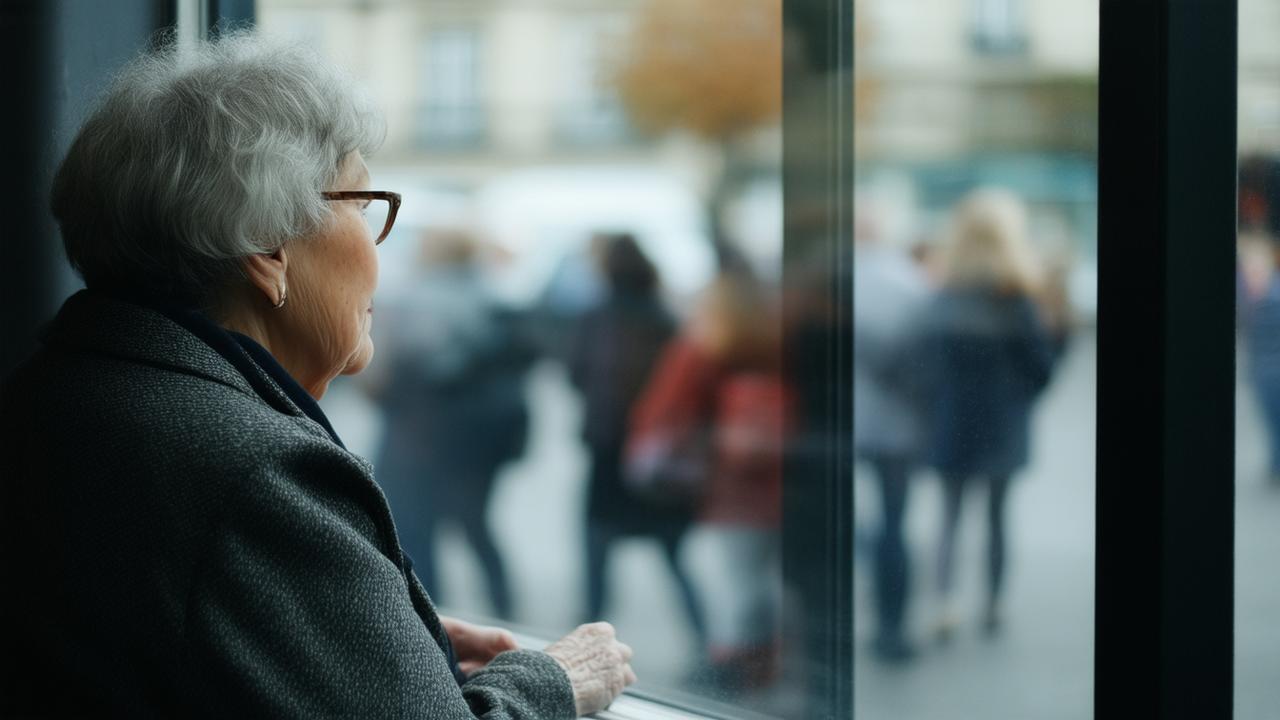
The thing I miss most is not a person, or a place, or even a time of my life. It’s a sound—thin and silvery—of my own voice saying, “Mind if I join you?” The words used to come easily, tumbling out as naturally as breath. But somewhere between 53 and 63, they started to dry up. By the time I noticed, the habit behind them—the simple act of putting myself in the path of other people—had quietly slipped out the back door of my life.
The Slow Quieting of a Once-Social Life
The change didn’t happen in a dramatic, cinematic way. There was no big argument, no betrayal, no lightning bolt, just a long, slow quieting. It was like one of those winter evenings when you look up from your book and realize, with a start, that dusk has finally become full darkness without your noticing when it happened.
In my forties, I used to say yes to almost everything—book clubs, gallery openings, volunteer meetings, the neighbor’s barbecue where the potato salad always tasted faintly of dish soap. I’d linger after yoga to talk. I’d stay late at work functions, perched on the edge of cocktail tables, laughing with people whose birthdays I never remembered but whose stories I knew by heart. It wasn’t a performance; it was oxygen. Being with people, even in small, ordinary ways, made the world feel textured and real.
But life has a way of reorganizing itself around invisible thresholds. Retirement came. Then grandchildren, but they live three states away. Friends moved, or drifted, or became occupied with caring for sick partners. A few died. I downsized from the noisy, creaky house where my kids grew up to a quieter, manageable apartment where, at first, the silence felt like a luxury.
My calendar thinned out. A canceled dinner here, a rain-checked coffee there. “We’ll reschedule,” we said, and sometimes we did. More often, we didn’t. It wasn’t painful—it was almost comfortable, like loosening a belt after a heavy meal. I bought more plants. I started baking more. My social life shrank gradually, like a sweater repeatedly washed in too-hot water, until one day I pulled it on and realized it no longer fit the shape of who I thought I was.
The Habit I Misplaced Without Noticing
If you’d asked me at 63 whether I was lonely, I might have shrugged. I still waved to familiar faces on my street. I chatted with the pharmacist. I smiled at babies in line at the grocery store. My days had shape, my evenings had routines. It didn’t feel like isolation; it felt like… maintenance. Keeping myself going.
But something subtle was missing—the simple, intentional act of making contact instead of merely bumping into it. Once, I used to:
| Old Habit | What I Do Now | How It Feels |
|---|---|---|
| Invite friends for impromptu tea or wine | Wait for others to suggest plans | Life feels like it’s happening elsewhere |
| Join groups and classes regularly | Tell myself I’ll join “next session” | Weeks blur, nothing really changes |
| Call people just to talk | Send occasional texts or react to photos | Connected, but only at the surface |
| Start conversations with strangers | Keep to myself, smile quietly | Safe, but oddly small |
Somewhere along the way, I’d lost the habit of being socially forward—of reaching out first, of risking a little awkwardness, of assuming I might be welcome instead of fearing I might be a burden. I still knew how to talk to people. I just rarely gave myself the chance.
It’s funny how quickly the body learns new rhythms. After a few years of this softer, quieter life, invitations began to feel heavy, like packages without return addresses. Should I open this? Do I have the energy? Will I regret saying yes? I began to default to “maybe,” then to “another time,” then to nothing at all.
The Moment I Finally Heard the Silence
The realization didn’t arrive during some profound retreat, but on an ordinary Tuesday afternoon in late autumn. I was standing at my kitchen window, hands wrapped around a mug of tea that had already gone lukewarm. Outside, the maple tree in the yard was in that brief, extravagant moment between fiery orange and bare branches. Leaves fell in slow spirals, piling against the fence, floating down like silent confetti for a party no one had attended.
My phone lay on the counter, dark and still. Not silent because I’d turned it off, not quiet because I was intentionally unreachable—just… unused. No missed calls. No new messages beyond the usual: a delivery update, a newsletter I never asked for. I tapped it awake and scrolled through my recent calls. Two from my daughter. One from the dentist. A number I didn’t recognize, probably a scam.
I couldn’t remember the last time I’d called someone just to chat. I couldn’t remember the last time I’d walked into a room full of people by choice, rather than obligation. Or the last time I’d said, “Mind if I join you?” without rehearsing it in my head first.
A thought rose up, uninvited: This is how people disappear. Not all at once, not dramatically—but bit by bit, slipping out of other people’s routines, their inside jokes, their mental lists of “who to invite.” We don’t get voted off the island; we just stop showing up to the shore.
At 63, I realized I wasn’t just older. I was disconnected. Not fully, not hopelessly, but enough that the world felt like it was happening behind glass. I was watching more than participating. Listening more than speaking. Observing more than joining.
Social Muscle, Gently Rebuilt
No one tells you that being social is a kind of muscle, and like any muscle, it softens when you stop using it. You don’t lose the knowledge, exactly—you lose the reflex. The first time I decided to change something, I was startled by how small the step felt and how large it seemed.
There was a flyer in the lobby of my building about a nature-walk group that met every other Saturday. Not hiking, not power walking, just “gentle walking and seasonal observation,” which sounded vague enough to be safe. My first instinct was to think of reasons I couldn’t go: I hadn’t walked much lately; my knees complained on hills; I didn’t know anyone; it might be awkward. Those thoughts arrived with the speed of muscle memory, fully formed and well-practiced.
But underneath them, quieter, another thought insisted: awkward is better than invisible. So I circled the date on the calendar. I even put my walking shoes by the door the night before, a promise to myself I could see from the couch.
The morning of the walk was chilly, with a pale sky and a faint smell of damp earth. The group gathered near the park entrance, a loose cluster of jackets and hats. I hovered on the edges, pretending to check my phone, almost ready to turn back. Then the leader, a woman with a soft wool hat and crow’s-feet etched by years of smiling, caught my eye.
“First time?” she asked.
I nodded, expecting the familiar rush of self-consciousness. Instead, I felt something else: relief. The ice had been broken for me, yes—but I had shown up. The heaviest part, I realized, was not speaking to people. It was walking into the space where people might speak to me.
The Small, Brave Acts of Reaching Out
That walk didn’t transform my life overnight. But it did something quieter, steadier: it reminded me what it felt like to be part of a loose, easy “we.” We listened to the wind rustle the reeds by the pond. We paused to notice a heron standing so still it might have been carved from stone. We traded names and snippets of our lives—where we lived, whether our hands also ached in the morning, who grew tomatoes on their balconies.
Driving home, my legs were tired, but my mind felt… stretched. Used. Like some inner joint had finally been rotated again after years of stiffness. That night, instead of watching television until my eyes blurred, I did something I hadn’t done in a very long time: I called a friend, just because I wanted to hear her voice.
➡️ This small adjustment helps reduce the feeling of bodily overload
➡️ What it means psychologically when you avoid talking about yourself, even when asked
➡️ I noticed my stress dropped once my cleaning goals became realistic
➡️ This is how to show interest without forcing enthusiasm
➡️ The one breathing mistake most people make daily without realizing it affects their stress levels
➡️ Why doing one task at a time is healthier than multitasking
➡️ I realized my cleaning system was built for a life I don’t live
Rebuilding the social habit has not been a heroic saga. It’s a collection of tiny, unglamorous choices:
- Answering the phone instead of letting it go to voicemail.
- Saying “yes” to coffee even when the couch is tempting.
- Leaving the house five minutes earlier so I can chat with people instead of slipping in and out.
- Admitting, out loud, when I feel lonely instead of pretending I’m just “busy.”
Little by little, my default began to shift from “sit this one out” to “I’ll come for a while.” Not every time. Not perfectly. But enough that the world began to feel less like a distant radio station and more like a room I was actually in.
The key, I’ve learned, isn’t becoming wildly extroverted. It’s staying in the habit of initiating—of assuming that my presence is not an imposition, that my desire for company is not a flaw. It is, in fact, profoundly human.
Learning to Join the World Again
At 63, I am still learning. I still have days when my apartment feels like both sanctuary and trap. I still have nights when the silence presses close and my own thoughts grow too loud. But I no longer treat those moments as proof that I’m failing at this stage of life. Instead, I treat them as signals: time to reach out.
Sometimes that means texting my neighbor to ask if she wants to share leftover soup. Sometimes it means showing up to the nature walk even when the sky threatens rain. Sometimes it’s as small as commenting, genuinely, on the book the person next to me is reading on the bus.
I’ve realized that the habit I quietly lost wasn’t just the act of socializing. It was the deeper habit of believing that I still belong in the web of other people’s lives—that my stories, my questions, my laughter still have a place at the table. Disconnection didn’t strip that away; it only made me forget how to claim it.
Now, when I pass a group sitting together at the park, the words still feel a little rusty, but they are there again, within reach: “Mind if I join you?” I may not always say them out loud. But more often than not, I do. And every time I do, the world feels a little less distant, a little more like something I’m inside of, not just watching through the window.
The maple tree outside my window has gone through several full cycles of color since that first realization. I still stand there with my tea, watching the leaves blush and fall. But now, my phone is rarely dark for long. There are messages about next Saturday’s walk, a reminder about the building’s potluck, a photo of a friend’s ridiculous cat. Small things. Ordinary things. But strung together, they feel like a bridge back to the living, breathing, laughing world.
FAQ
Is it normal to feel more disconnected as we get older?
Yes. Many people experience shifts in their social circles due to retirement, relocation, health changes, and family responsibilities. Feeling disconnected is common, but it’s not a personal failure—it’s often a signal that your life circumstances have changed and your social habits need to adapt.
How can I start reconnecting if I feel out of practice socially?
Start small. Choose one low-pressure action: reply to a message instead of postponing, call one friend this week, or attend a nearby group activity just once. Think in terms of gentle experiments, not total reinvention. The goal is to rebuild the habit of reaching out, step by step.
What if I’m shy or introverted?
Being introverted doesn’t mean you don’t need connection—it just means you may prefer smaller groups or quieter settings. Look for activities that allow shared focus, like walks, book discussions, or craft groups, where conversation can unfold naturally instead of being the main event.
How do I handle the fear of being a burden or not being wanted?
That fear is very common, especially after a period of isolation. Remind yourself that most people are glad to be invited or remembered. You don’t need to demand anyone’s time; you’re simply offering connection. Try wording invitations lightly: “No pressure, but I’d love to…” and remember that a “no” is about timing, not your worth.
What if I’ve lost many of my old friends?
Grief for old friendships is real and valid. At the same time, new connections are still possible at any age. Consider local community centers, interest groups, walking clubs, or volunteering. Focus on shared activities rather than forcing instant intimacy. Many relationships begin as simple, repeated encounters that slowly deepen over time.





