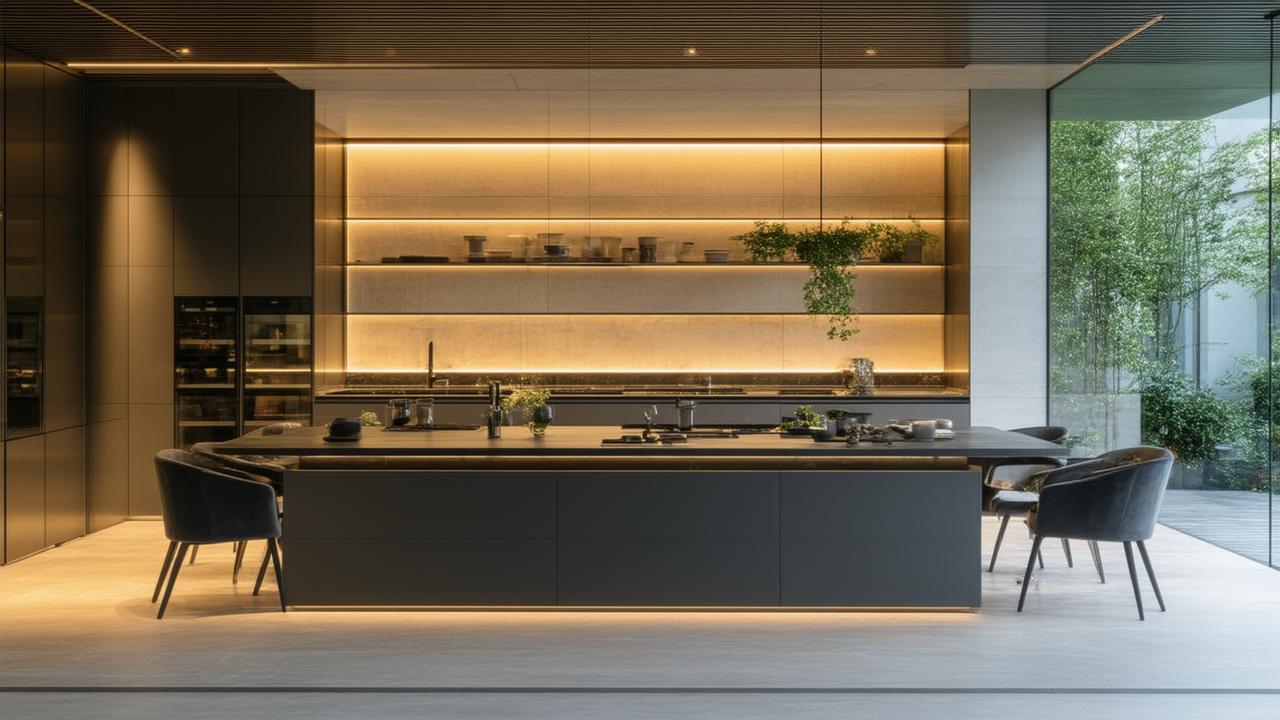
The first thing you notice when you walk into the house is what’s missing. No hulking rectangle in the middle of the kitchen. No island crowding the floor, collecting mail, backpacks, and cold cups of coffee. Instead, the room feels wide and calm, almost like a quiet clearing in a forest. Light slides across the floor. The counters look… free. And where you expect to see a solid block of cabinetry, there’s something else entirely—something lighter, more graceful, and unexpectedly inviting.
The Quiet Goodbye: Why Kitchen Islands Are Finally Fading
For two decades, the kitchen island has ruled the modern home like a small, practical monarch. It’s where we rolled out cookie dough, dropped our grocery bags, served wine, and watched kids do homework. But somewhere along the way, the island stopped feeling generous and started feeling a little like a traffic jam.
Contractors will tell you how often they hear the same complaints: “Our island is too big.” “We’re always bumping into each other.” “It blocks the view.” “It’s where everything piles up.” It’s not that islands were a mistake—they were a moment. A very particular response to open-plan living: break down the walls, then anchor the emptiness with something substantial.
Now, as homes evolve again, that heavy anchor is loosening. We’re cooking more, moving more, and craving spaces that adapt to us instead of demanding we walk around them. In 2026, the next wave of kitchen design is not about making the island bigger, grander, or more complicated. It’s about letting it go, and replacing it with something more fluid, more human, and surprisingly beautiful.
The 2026 Star: The Freestanding “Kitchen Table Hub”
Designers have started calling it different names: the kitchen table hub, the mobile prep table, the floating worktable. Whatever term catches on, the idea is the same—a shift from heavy, built-in islands to lighter, freestanding tables that blur the line between furniture and workspace.
Imagine a long, elegant table sitting at the heart of your kitchen, not bolted down, not boxed in with cabinetry. It’s at counter height or a touch lower, depending on how you live. It might have a slender drawer or two, or a shelf for baskets and bowls. Some are on discreet locking casters. Some sit solidly on refined wooden legs. But all share a few key traits: they’re open underneath, they invite people to sit, and they let light and air move through the room instead of damming it up.
This new “kitchen table hub” is less of a monument and more of a companion. It can be pushed aside to open the floor for a party. It can be pulled closer to the stove when you’re doing a big holiday meal. It has the informality of a table but the muscle of a work surface. And perhaps most importantly: it feels like a place to gather, not a block to walk around.
The Sensory Shift: How It Feels to Live Without an Island
The change isn’t just visual—it’s deeply sensory. Without the island, sound travels differently. Voices don’t get trapped behind a tall counter; they move easily from sink to stove to seating. Light travels differently, too. A freestanding table doesn’t chop the room in half, so morning sun can slide from window to wall in one clean stroke.
And then there’s how your body feels. No more constant sidestepping around corners, no more tight, L-shaped routes between fridge, sink, and cooker. Suddenly, your kitchen workflow becomes something softer, more circular. You can stand at the table, turn easily to the sink, pivot toward the oven without that familiar bump of hip against granite.
It also changes how guests move through your home. Instead of hovering on the “wrong side” of the island, feeling like they’re in your way, they have a natural place to land. They can sit. They can help. They can wander around the table with a glass in hand while you chop herbs, everyone facing inward rather than lined up like passengers at a check-in desk.
The Practical Magic: Why This Trend Is More Functional
At first glance, giving up an island sounds like a storage sacrifice. But the 2026 approach is smarter, not smaller. As architects and interior designers lean into this new layout, they’re rethinking the entire kitchen envelope to make every inch work harder.
- Base cabinets get deeper and better organized. Pull-outs, vertical dividers, corner carousels, and drawer-within-drawer systems reclaim space that was once awkward or inaccessible.
- Pantries are being upgraded. Instead of one cluttered cabinet, homeowners are adding slim pantry walls, shallow larders, or even tiny pantry niches hidden behind pocket doors.
- Appliances get tucked away thoughtfully. Under-counter fridges, drawer dishwashers, and compact wall ovens reduce the need for a massive central block of cabinetry.
The freestanding hub itself can still pull its weight: a narrow drawer for knives and linens, a hidden power strip for laptops and mixers, maybe a shelf at the base for mixing bowls. But it’s not overloaded. The point is flexibility.
This flexibility pays off in another way: cleaning. Without cabinets planted in the middle of the floor, sweeping and mopping are faster. No more crumbs accumulating where your broom can’t quite reach. The table’s legs leave the floor visually and physically open, making the whole space feel fresher and easier to maintain.
How the New Hub Compares to Traditional Islands
Here’s a quick look at how the 2026 kitchen table hub stacks up against the classic kitchen island:
| Feature | Traditional Kitchen Island | 2026 Kitchen Table Hub |
|---|---|---|
| Mobility | Fixed, built-in structure | Freestanding, sometimes movable |
| Visual Weight | Bulky, blocks sightlines | Light, airy, open below |
| Use | Primarily prep and storage | Prep, dining, work, gathering |
| Seating Experience | Bar-style, one side only | Around all sides, table-like |
| Adaptability Over Time | Hard to change without major renovation | Can be swapped, resized, or relocated |
The New Elegance: A Kitchen That Feels Like a Living Room
One of the most surprising effects of ditching the island is how much more “furnished” the kitchen feels. A freestanding table hub can be crafted from warm woods, softened edges, and even vintage pieces. Instead of more cabinetry, you get something that looks like it could have belonged to another room in the house—a writing desk, a farmhouse table, a sculptural console, reimagined for chopping boards and coffee cups.
This matters because the kitchen is no longer a backstage area. It’s where guests drift, where kids lean in with a story after school, where laptops open for late-night work. The new hub acknowledges this reality. It’s not a workbench disguised as furniture; it’s furniture that’s been quietly upgraded to handle kitchen work.
You might see a marble-topped oak table catching the morning light, with two counter stools on one side and a simple bench on the other. Or a sleek black steel frame supporting a pale stone slab that feels more like sculpture than cabinetry. The utility is there, but it’s wrapped in softness and tactility—the way your fingers follow the grain of the wood, the cool edge of stone, the linen of a draped runner on days when you’re not cooking at all.
➡️ The streak-free window-cleaning method that still works flawlessly even in freezing temperatures
➡️ The quick and effective method to restore your TV screen to like-new condition
➡️ Thousands of passengers stranded in USA as Delta, American, JetBlue, Spirit and others cancel 470 and delay 4,946 flights, disrupting Atlanta, Chicago, New York, Los Angeles, Dallas, Miami, Orlando, Boston, Detroit, Fort Lauderdale and more
➡️ The sleep pattern that predicts alzheimer’s risk 15 years before symptoms
➡️ These zodiac signs are destined for major prosperity in 2026, according to astrological forecasts
➡️ The RSPCA urges anyone with robins in their garden to put out this simple kitchen staple to help birds cope right now
➡️ The RSPCA urges anyone with robins in their garden to put out this simple kitchen staple today
Designing Your Own Island-Free Future
If you’re already picturing your kitchen without its island, you’re not alone. But how do you actually make the leap? Designers working on 2026-ready homes are following a few quiet rules.
- Start with circulation. Stand in your kitchen and imagine clear, wide routes: from door to fridge, fridge to sink, sink to cooker. Your hub should support those movements, not disrupt them.
- Right-size the table. Many islands are simply too big. The new hub often runs slimmer—think 70–90 cm wide rather than a hulking block—and just long enough to seat who you actually host on a Tuesday night, not a fantasy dinner party for twelve.
- Choose your height carefully. Counter-height hubs are great for prep, but a slightly lower, “true table” height can be better if you prioritize work, kids’ activities, or extended meals.
- Layer storage elsewhere. Add a tall pantry cabinet, a slim sideboard, or wall shelving to make up for lost island storage in a way that feels calm and considered.
- Keep the base open. Resist the urge to box your hub in with full cabinetry. The open space beneath is what keeps the room breathing.
And remember: this doesn’t have to be an all-or-nothing renovation. Some homeowners begin by pulling out a clumsy island and bringing in a sturdy, beautiful worktable in its place. Over time, they rework surrounding cabinets and lighting to complete the new look. The transformation often feels dramatic long before the last tweak is done.
The Emotional Heart of the 2026 Kitchen
When you strip away the trends, renderings, and buzzwords, what’s really happening is subtle: the kitchen is becoming more human again. The island, for all its usefulness, made us stand on one side or the other. It created a front-of-house and back-of-house, a cook and an audience.
The freestanding hub dissolves that invisible border. Everyone gathers around the same surface; there is no “right” side. Kids roll dough right next to where you chop. Someone sets out candles while another pours wine. A laptop, a coloring book, and a cutting board can comfortably coexist. The result is not just a better-looking space but a more forgiving, more generous one.
That’s why this 2026 shift isn’t just about aesthetic minimalism or design fashion. It’s about reclaiming the kitchen as a place where life actually happens—messy, shared, in motion. The island had a good run. But its quieter, lighter successor is already finding its way into homes where people want to move, gather, and breathe a little easier.
Frequently Asked Questions
Is getting rid of a kitchen island a mistake for resale value?
Not necessarily. As long as your kitchen remains functional with good storage, clear work zones, and a strong central hub, buyers often respond positively to the openness and flexibility of an island-free layout. The 2026 trend is leaning toward freestanding hubs, so thoughtful design can actually feel more current and appealing.
Can a freestanding kitchen table hub include a sink or cooktop?
Technically, yes, but most designers advise against it. Plumbing and gas lines limit mobility and add complexity. The strength of the new hub is its lightness and adaptability. Sinks and cooktops tend to work better along walls or peninsulas, while the hub remains a true multipurpose surface.
What if my kitchen is small—do I still skip the island?
In small kitchens, a bulky island often creates more problems than it solves. A narrow freestanding table, fold-out work surface, or movable cart can offer prep space without locking down circulation. Many compact kitchens feel significantly larger once the island is removed.
How do I make up for the storage I lose by removing an island?
Consider adding a tall pantry cabinet, deeper base drawers, or a slim sideboard along a nearby wall. Smart interior fittings—pull-outs, vertical dividers, and drawer organizers—often recover more usable storage than an overstuffed island ever did.
What materials work best for a kitchen table hub?
Hardwoods like oak, ash, or walnut paired with durable tops—sealed wood, stone, or composite—are popular. The key is choosing something that feels like real furniture but can handle spills, heat, and daily wear. Many people opt for a slightly softer, more tactile finish than traditional kitchen countertops to emphasize the hub’s dual role as a living and working surface.





