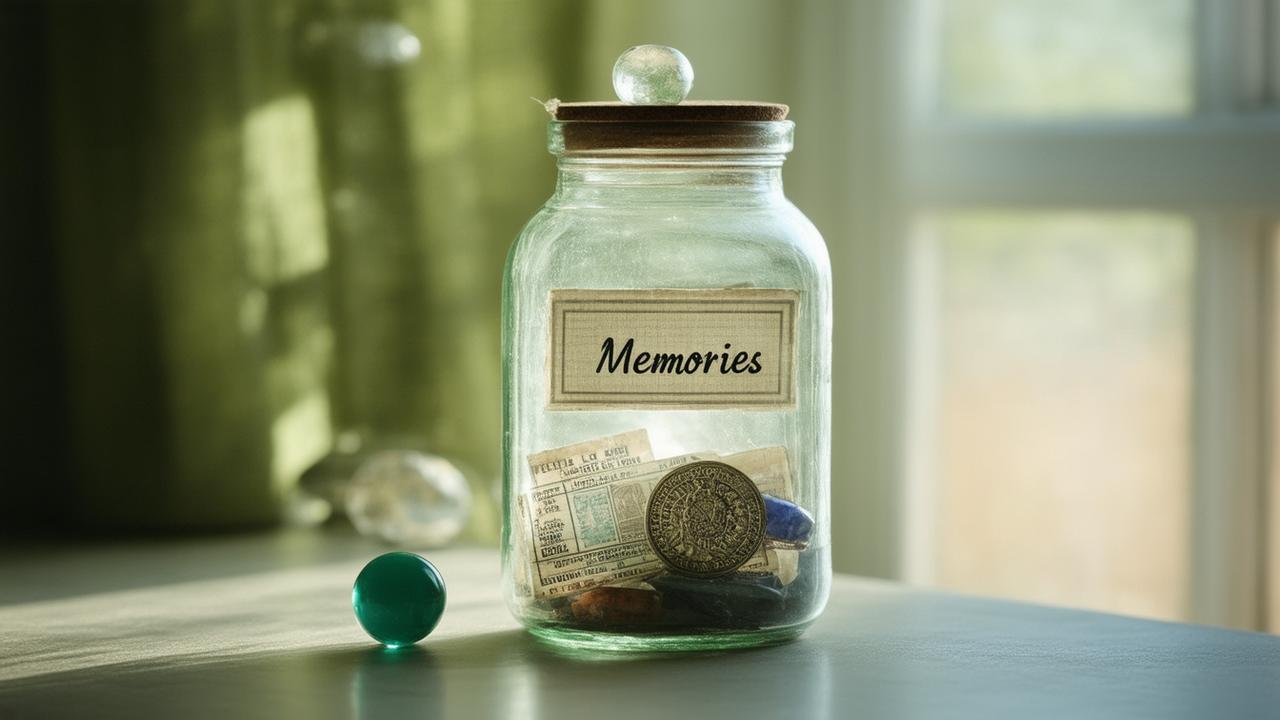
The vinyl crackles first. It’s faint, almost shy, until the needle settles into the groove and a familiar song you haven’t heard in fifty years pours into the room like sunlight under an old door. You know exactly which cousin always sang the chorus off-key. You remember the color of the record label. You remember where the skip is, just before the bridge. And if you’re nodding along already, there’s a good chance your memory is doing something quietly extraordinary for someone in their seventies.
The Secret Life of Long-Ago Moments
People like to joke about “senior moments,” those foggy seconds when a name disappears or the reason you walked into a room slips away. But memory is not a single lightbulb that flicks off with age; it’s a whole constellation. Some stars dim, others glow brighter. And for many in their seventies, the brightest stars are not yesterday’s appointments—they’re the moments from long ago that arrive in sharp, surprising detail.
Think about how this works for you. Close your eyes and pick a decade—maybe the 1950s, 60s, 70s, or 80s. Now notice how vivid some scenes still are: the tang of metal on your tongue from drinking out of a garden hose, the exact “clunk” of a TV dial, the way the streetlights painted slow orange halos on a freshly wet road. These aren’t just old facts rattling around; they’re emotional photographs your mind developed in a hidden darkroom and never quite put away.
Neuroscientists call this the “reminiscence bump”—the tendency to recall vivid memories from adolescence and early adulthood. But you don’t need a scientific term to know when a memory is alive. You can feel it in your body—the way your shoulders relax when you think of long summer evenings, the way your lips curl into an involuntary smile when you remember a prank from high school, the particular ache when you think of a voice you haven’t heard in half a century.
If you can still call up those decades-old flashes with surprising clarity, your mind may be working with more precision than you give it credit for. Here are ten kinds of moments from decades ago that, if you remember them in rich detail, quietly testify to a sharper-than-average memory in your seventies.
1. The First Big News Event That Stopped the World
Everyone has that “where were you when…?” moment. Maybe you remember standing in a living room while your parents stared at a black‑and‑white television, their faces unusually still. Perhaps it was the day a beloved leader was shot, or when astronauts first walked on the moon, or when a wall fell and a city suddenly felt less divided. Maybe it was the shock of a distant war that came roaring into your home through a radio speaker.
If you not only recall the news itself, but where you were standing, who spoke first, what the room smelled like—a pot roast in the oven, the wax of freshly polished floors—that is episodic memory at its finest. You’re not just retrieving a headline; you’re replaying a scene, complete with sensory details your brain archived decades ago without asking your permission.
2. The Texture of Childhood Freedom
The Long Walks and Longer Summers
There was a time when you left the house in the morning and didn’t come back until the streetlights hummed to life. If you can still trace your childhood walking routes in your mind—past the sagging fence on the corner, the barking dog three houses down, the candy store with the loose floorboard—that’s spatial memory at work, and it has stayed surprisingly faithful.
Maybe you remember the feel of gravel under your bare feet, just sharp enough to make you quicken your step, or the sticky line of melted popsicle down your wrist. You might recall how your mother’s voice carried down the block when she finally called you in, or the exact hiding spot in your favorite game of tag. The more specific those details, the more finely tuned your recall really is.
Simple Games, Complex Recall
Think of the games that needed no batteries, no screens, just a few kids and the right patch of sidewalk. Do you still know the rules of hopscotch, jacks, marbles, or that complicated clapping song you could do without thinking? If the sequence of steps, rhymes, or rules is still there when you mentally reach for it, that’s procedural memory—your brain quietly keeping instructions on file for decades.
3. The Soundtrack of Your Youth
When a Song is a Time Machine
Music has a way of soldering itself to memory. If you can hear the very first record you bought, not just the melody but the pop of the needle, the way the singer’s voice felt like someone opening a window in your chest, your brain is doing something impressive. You’re not simply remembering “I liked that song”; you’re reliving a moment in high fidelity.
Perhaps you still know which song was playing at your first school dance, and exactly how nervous you were, how your palms sweated, how your shirt collar felt too tight. Or the song that played on the car radio during a long family trip, crackling in and out of range as the landscape rolled by. Musical memory often stays strong even when other kinds of recall falter; if yours is still rich and specific, it’s a quiet strength worth noticing.
Voices That Never Quite Leave
There are other sounds too: the wooden thunk of a TV channel knob, the rushing whirr of a film projector on movie day at school, the clatter of a manual typewriter. If you can summon not just the sounds but how they felt—a kind of mechanical heartbeat in the room—you’re accessing small but intricate archives of sensory memory.
4. The Technology That Felt Like Magic
When “High-Tech” Meant Antennas and Dials
If you remember having to get up from the couch to change the channel, or adjust the antenna by twisting it just so while someone shouted, “There, hold it right there!” from the sofa, your brain is storing not just images but the choreography of a vanished era. You might recall the faint electric smell of a warming television set, the way the picture shrank into a bright dot when you turned it off.
Maybe the first calculator you saw seemed like witchcraft, or the arrival of a color television turned your living room into a theater. If you remember the tactile feel of the rotary dial phone under your fingers—the smooth circle, the satisfying drag back to zero—you’re accessing detailed motor and sensory memories that have remained intact for decades.
Your First Brush With “The Future”
For some, the first home computer or video game console arrived like a small spaceship. Do you remember the hum of the machine, the way the screen glowed in a dark room, the little ritual of loading a game or floppy disk? That kind of memory isn’t just nostalgia; it’s evidence your mind is still able to flip open very specific, long‑closed files.
5. The Feel of Family Rituals
The Table That Held a Whole World
Think of a holiday meal from decades ago. If you can conjure the table in your mind—who sat where, which aunt always brought the same casserole in the same chipped dish, where the gravy invariably spilled—that’s complex memory at work. The more distinctly you see the pattern on the tablecloth or smell the steam when the oven door opened, the sharper your recall likely is.
Maybe you remember the exact sound of your father’s chair scraping back, or the way your grandmother folded her napkin just so. You might even recall arguments, jokes, the way the room grew softer and slower after dessert. Each layer you can still access—sight, sound, feeling—marks a memory system that, despite the passing years, remains finely threaded.
Small Gestures, Lasting Imprints
There are the quiet moments too: the way a parent tucked the blanket around your shoulders, the smell of a certain brand of soap, the roughness or softness of a particular hand. If you can remember how that hand felt in yours as you crossed the street forty, fifty, sixty years ago, it is because your brain recognized it as important and stored it carefully. The survival of those tiny, tender details is not ordinary for everyone your age; it’s a sign of resilience.
➡️ Lidl is set to launch a Martin Lewis–approved gadget next week, arriving just in time to help households get through winter
➡️ Inheritance law shake-up confirmed: a new reform arriving in February will significantly change the rules for heirs
➡️ Just six minutes of darkness: get ready for the longest eclipse of the century set to briefly turn day into night
➡️ Hang it by the shower: the clever bathroom hack that eliminates moisture and keeps your space fresh
➡️ If your dog gives you its paw, it’s not to play or say hello : animal experts explain the real reasons
➡️ Hairdresser reveals hard truth about short hair for women over 50 that many won’t want to hear
➡️ Helping restaurant servers clear your table is not kindness it is a disturbing sign of your real personality
6. The Way the World Used to Look
Streets That Have Vanished, But Not For You
Your hometown, or the city where you came of age, may have changed beyond recognition. Malls that felt endless are gone; fields became parking lots; the corner store is now a glass-and-metal pharmacy. Yet if you can still walk the old streets in your mind—naming what used to be on each corner, recalling which shopkeeper always slipped you an extra piece of candy—your spatial and visual memory is doing amazing, quiet work.
You might remember the grainy glow of streetlamps before LED lights, the hand-painted signs over storefronts, the particular shade of the movie theater’s carpet. Perhaps you can still picture the bus ticket design, or the uniforms your teachers wore. These tiny pieces of a vanished world linger in your mind like pressed flowers between the pages of a book.
Everyday Objects Turned Artifacts
If you can still recall the weight of a glass milk bottle, the way the metal cap peeled back with a soft pop, or the smell of a freshly mimeographed school worksheet, you’re holding onto sensory traces that time usually erodes. Those details are meaningful: they tell you your brain has preserved texture, smell, and subtle impressions with unusual care.
7. Ten Memory Moments That Quietly Prove Your Mind Is Still Sharp
Not all seventy‑year‑olds can remember these kinds of scenes clearly. If you can, it might be worth giving yourself more credit. Here are ten types of long‑ago moments that, if they feel vivid and specific to you even now, suggest your memory has stayed remarkably agile.
| # | Memory Moment | What It Says About Your Memory |
| 1 | Where you were during a major historic event (down to small details) | Strong episodic memory and emotional imprint |
| 2 | Exact childhood walking routes and neighborhood landmarks | Robust spatial and visual memory |
| 3 | The first record, cassette, or CD you bought and how it sounded | Durable musical and emotional recall |
| 4 | The feel of using a rotary phone, typewriter, or early TV dial | Well-preserved motor and sensory memory |
| 5 | Holiday meals from decades ago, including who sat where | Complex social and contextual recall |
| 6 | The rules and rhythms of childhood games and clapping songs | Strong procedural and sequence memory |
| 7 | The layout of your childhood home, room by room | Detailed spatial and object memory |
| 8 | The smell and feel of specific everyday objects (milk bottles, school paper) | Resilient sensory memory |
| 9 | Exact phrases or sayings from parents, teachers, or friends | Strong verbal and linguistic recall |
| 10 | Your first independent trip (alone or with friends) and its route, sounds, and feelings | Rich integration of emotion, place, and narrative |
You might not remember what you had for lunch two days ago—but if your mind can still stroll down a 1960s street, hear a 1970s song in full color, or smell a long‑closed bakery on the corner, that’s not failure. That’s specialization. Your brain has chosen to guard some things fiercely.
None of this is to say memory never changes with age; it does. But being in your seventies with detailed, layered recollections from decades ago suggests that, in important ways, your internal archivist is still on the job—careful, devoted, and far more capable than you might assume on the days you misplace your glasses.
FAQs
Does remembering things from long ago mean my memory is “better than average” for my age?
If you can vividly recall multiple detailed moments from decades ago—especially with sensory richness and emotional nuance—that often indicates stronger-than-average long‑term memory for someone in their seventies. Everyone is different, but rich, specific recall is generally a positive sign.
Why do I remember the distant past better than recent events?
This is very common. Emotionally important experiences from youth are stored deeply and often revisited over a lifetime. Recent, everyday details may not be as emotionally charged, so your brain doesn’t prioritize them in the same way. That doesn’t automatically mean something is wrong; it can simply reflect what your mind considers most meaningful.
Is it normal to forget names or why I walked into a room at my age?
Yes, occasional lapses like forgetting a name or the reason you entered a room are extremely common as we get older. Attention, stress, and distraction play big roles. When your long‑term, story‑rich memories remain intact, those small hiccups usually say more about normal aging than about serious decline.
Can I strengthen my memory in my seventies?
You can often support and sharpen memory at any age by staying mentally engaged, physically active, socially connected, and curious. Reminiscing in detail—telling stories, writing them down, or sharing them with family—can also reinforce existing memories and keep them accessible.
When should I be concerned about my memory?
If you (or people close to you) notice frequent confusion, getting lost in familiar places, major changes in language or personality, or difficulty managing daily tasks you handled easily before, it’s wise to speak with a healthcare professional. Strong long‑ago memories are encouraging, but they don’t replace proper medical evaluation if new, troubling symptoms appear.





