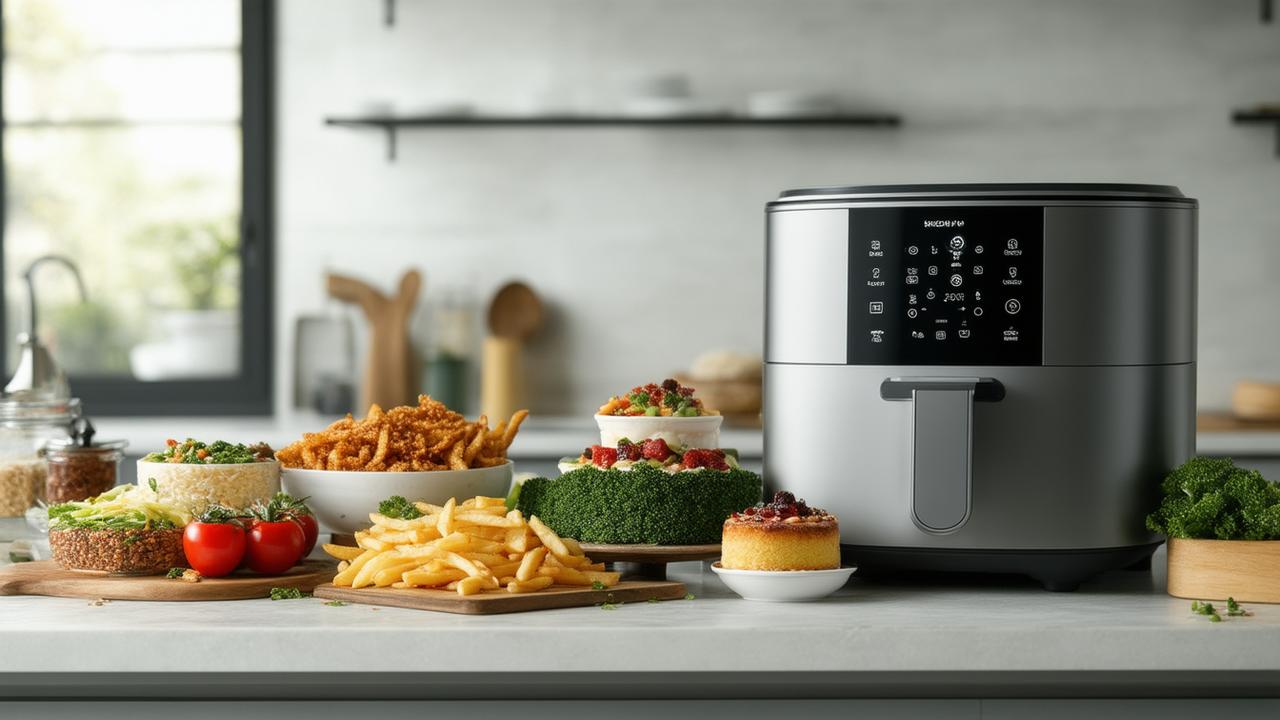
The first time I heard it, the sound reminded me of distant rain: a soft, rhythmic hiss punctuated by the occasional sigh of escaping steam. I wasn’t in a forest cabin or on some misty mountainside—just standing in my small city kitchen at 7 p.m., barefoot on cool tiles, staring at a squat, gleaming box on my counter. The air fryer that had loyally crisped my frozen fries and late-night snacks sat sulking in a corner, half-hidden behind a roll of paper towels. Center stage now belonged to this new creature: a multi-cooker that claimed to roast, bake, steam, slow cook, sauté, dehydrate, broil, ferment, pressure cook, and, yes, air fry. Nine methods in one. A sort of culinary Swiss army knife humming under my kitchen’s yellow light.
The Evening the Air Fryer Lost Its Crown
The air fryer had been my pandemic companion. It had turned soggy leftovers into crispy miracles and gave me the illusion of eating “healthier” while still drowning everything in hot sauce. But somewhere along the way, its limitations started to show. It could crunch, sure, but could it gently steam dumplings without drying them out? Could it coax tough cuts of meat into melting tenderness? Could it slowly bubble a stew all afternoon while I went out for a walk by the river? Not so much.
That’s when I met this new machine—part pressure cooker, part oven, part patient grandmother stirring a pot all day. The first night I used it, I set a chicken inside, brushed with olive oil, lemon, garlic, and a pinch of smoked paprika. I could hear subtle changes in the whir of the fan and the low rumble of heat surging through the chamber. The kitchen filled with the smell of Sunday dinners past: roast chicken, crisp skin, the faint perfume of thyme. Only this wasn’t a slow, all-day ordeal. The bird emerged golden, moist, and finished in less time than it took me to water the plants and choose a movie.
My old air fryer never did that. It was loud, a bit crude, all blast and sizzle. This new thing? It felt…smarter. Gentler when it needed to be. Fierce when it had to be. And very quickly, it turned into something both mundane and quietly revolutionary: the reason I stopped defaulting to delivery apps.
The 9 Cooking Methods That Changed Weeknight Dinners
One of the sneaky joys of a multi-function cooker is how it slowly rewires your brain. Suddenly, a bag of lentils or a bruised eggplant doesn’t look like a burden; it looks like an opportunity. Below is how those nine methods unfold in day-to-day life—less like features on a box and more like distinct personalities you can call on, depending on your hunger and mood.
1. Air Frying: The Familiar Crunch, Only Quieter
Let’s be honest: this is the mode most of us care about at first. The crunchy fries, the cauliflower wings, the re-crisped pizza slices that taste dangerously close to fresh. The difference here is that air frying isn’t the only trick. It’s just one chapter.
When you slide in a tray of sweet potato wedges, the fan hums and hot air swirls in tight, invisible tornadoes, finding every edge and surface. The result? That same satisfying crackle when you bite in—but without needing a whole separate device on your counter. And because the heat in a multi-cooker is often more even and contained, the fries brown more consistently, less prone to those frustrating burnt tips and pale centers.
2. Pressure Cooking: Time Bends in the Kitchen
There’s something almost eerie about opening the lid after thirty minutes and finding a stew that tastes like it simmered all day. Pressure cooking feels like cheating time. The liquid inside boils at higher temperatures, forcing flavors deeper into every grain of rice, every fiber of meat.
Picture this: it’s a Tuesday, you’re exhausted, and you’ve remembered—too late—that you soaked chickpeas. In the old world, you’d push them back into the pantry and reach for crackers. In this new world, they become a fragrant chickpea curry in under an hour, the sauce thick and clinging, the chickpeas tender with just the right amount of bite. You ladle it over rice and eat at the table, not hunched over your phone waiting for a delivery driver’s name to pop up.
3. Slow Cooking: The Gentle, All-Day Murmur
On certain days, speed feels wrong. You want your home to smell like something delicious is happening, slowly, in the background. Slow cook mode is that long, quiet conversation between ingredients and time.
In the morning, you toss in onions, carrots, beans, maybe a tough cut of beef. A few herbs. A splash of stock. Then you walk away. By late afternoon, a savory perfume leaks into the hallway outside your apartment door. The stew waits patiently, deep and mellow. When you raise the lid, steam curls around your face, fogging your glasses. The beef falls apart at the touch of a spoon, the beans are creamy, the broth is layered with flavors you can’t quite separate. You just know it tastes like “home,” even if home has always been takeout containers and plastic cutlery until now.
4. Steaming and Sautéing: From Whisper to Sizzle
Most of these multi-cookers come with a steam rack and a sauté function, and together, they’re oddly transformative. Steaming feels like a forest walk: gentle, humid, almost therapeutic. You stack fresh green beans, or dumplings, or delicate fish over water. Minutes later, they emerge bright, tender, glistening—no slick of oil, no shriveled edges.
Then there’s sautéing: the lively crackle when onions hit hot metal, the moment garlic sizzles and releases that almost nutty aroma. You can build flavor right in the pot—no separate pan, no extra dishes. Onions go soft and sweet, spices bloom, tomato paste darkens and grows complex. Then you switch modes, slap the lid on, and let pressure or slow cook take over. It’s layering, but with fewer tools and far less chaos.
5. Baking, Roasting, Broiling, and Dehydrating: The Miniature Oven That Could
Call it a mini-oven, but it behaves with the confidence of a full-size. Cakes rise in a moist, even heat that protects against the dreaded dry crumb. Roasted vegetables come out blistered at the edges, sweet within. Broiled dishes—like cheesy gratins or lasagna tops—get that caramelized, bubbling finish you’d normally beg your main oven to handle.
Then there’s dehydrating: a quieter, slower magic. Apple slices turn leathery and sweet, their sugars concentrated. Kale crisps into light, shattering chips. Cherry tomatoes wrinkle into tiny flavor bombs for tossing into salads or pasta. It feels like putting time on a low flame, letting it slowly and kindly evaporate.
| Cooking Method | What It’s Best For | Texture & Result |
|---|---|---|
| Air Fry | Fries, wings, veggies, reheating pizza | Crispy outside, tender inside |
| Pressure Cook | Stews, beans, tough meats, quick soups | Deep flavor, very tender, fast |
| Slow Cook | Chili, braises, all-day soups | Mellow, rich, gently cooked |
| Steam | Fish, vegetables, dumplings | Moist, bright, clean flavors |
| Sauté | Onions, aromatics, browning meat | Caramelized, flavorful base |
| Bake/Roast | Cakes, veggies, whole chicken | Even browning, moist interior |
| Broil | Gratins, cheese toppings, quick charring | Bubbly, charred, caramelized tops |
| Dehydrate | Fruit chips, herbs, veggie snacks | Chewy or crisp, concentrated flavor |
From Gadget to Quiet Companion
At some point, the novelty wears off. The blinking screen stops feeling futuristic; it just becomes the thing you reach for when you’re hungry. Yet in that quiet shift, something deeper happens in your relationship with food.
You start shopping differently. Instead of eyeing pre-made meals, you reach for raw ingredients that call out possibilities: the heavy comfort of a bag of potatoes, the green promise of broccoli, a tray of chicken thighs. You know—almost instinctively—how each can transform with the right mode. The question becomes less “What can I microwave?” and more “What do I feel like making?”
You also waste less. That half head of cauliflower? Toss it with oil and spices, air fry it into caramelized florets, and suddenly it’s the best thing on your plate. Those apples going soft in the fruit bowl? Slice and dehydrate them into tart-sweet snacks that last all week. Even stale bread gets a second life: toasted into crunchy, golden croutons under the broil setting, ready to float idly in tomorrow’s soup.
Goodbye Single-Job Gadgets, Hello Kitchen Ecosystem
The air fryer is still a marvel, but it’s a specialist. It does one thing very well. The new multi-cooker, though, feels like a small ecosystem built into a single shell: heat, pressure, air, time, all negotiating inside a thick metal pot. The machine asks you a simple question every time you turn it on: How do you want this to become food?
➡️ The streak-free window-cleaning method that still works flawlessly even in freezing temperatures
➡️ The quick and effective method to restore your TV screen to like-new condition
➡️ Thousands of passengers stranded in USA as Delta, American, JetBlue, Spirit and others cancel 470 and delay 4,946 flights, disrupting Atlanta, Chicago, New York, Los Angeles, Dallas, Miami, Orlando, Boston, Detroit, Fort Lauderdale and more
➡️ The sleep pattern that predicts alzheimer’s risk 15 years before symptoms
➡️ These zodiac signs are destined for major prosperity in 2026, according to astrological forecasts
➡️ The RSPCA urges anyone with robins in their garden to put out this simple kitchen staple to help birds cope right now
➡️ The RSPCA urges anyone with robins in their garden to put out this simple kitchen staple today
For a small kitchen, this matters. Counter space is real estate. That old air fryer’s bulky basket and single-purpose design start to feel indulgent when you’ve met a gadget that sears, steams, simmers, crisps, and bakes in the same footprint. Fewer cords. Fewer things to clean. Fewer impulsive plastic appliances bought in a rush and abandoned in a cabinet.
And beyond the practicality, there’s something strangely grounding about it. Cooking stops being a production that requires perfect pans and gleaming knives and a giant oven. It becomes a series of simple, manageable acts: open lid, season, choose mode, walk away, come back to the smell of something worth sitting down for.
A New Ritual in a Small Kitchen
Most nights now, I cook with the window cracked open, no matter the season. I like the way the humidity of steam or pressure-cooked broth drifts into the cool outside air. I like the low whir of the fan, the gentle clicks as the machine shifts from one intensity to another. The old air fryer watches from the shelf by the pantry, a retired sprinter who once dominated quick snacks but can no longer keep up with these more complex marathons.
On the counter, the multi-cooker sits like a patient friend. It doesn’t demand technique or perfect timing. It forgives. It holds heat. It waits for you. You toss in ingredients half an hour before your hunger peaks, trusting that, by the time you’re truly ready to eat, the food will be ready, too—flavors melded, textures dialed in, aromas filling the small world of your kitchen.
So yes, the air fryer era was fun, and crunchy, and occasionally life-changing. But this new chapter goes beyond frying. It’s about reclaiming time, softening the edges of weeknights, and discovering that a box of buttons and metal can quietly nudge you back toward cooking that feels more like living than hustling.
Frequently Asked Questions
Is a multi-cooker really better than a standalone air fryer?
It depends on how you cook. If you mostly reheat and crisp frozen foods, a basic air fryer might be enough. If you want to pressure cook, slow cook, steam, bake, and still air fry in one appliance, a multi-cooker offers far more versatility and can replace several gadgets at once.
Does the air-fry mode in a multi-cooker work as well as a dedicated air fryer?
In most modern models, the air-fry mode is comparable, especially for home use. You might notice slightly different basket shapes or capacities, but the crisping, browning, and speed are usually very similar.
Can I really bake cakes and bread in it?
Yes. Many multi-cookers handle cakes, quick breads, and small loaves well because they retain moisture and provide even heat. You’ll typically use a smaller pan that fits inside the pot, and you may need to adjust baking times compared to a traditional oven.
Is it complicated to learn all nine cooking methods?
Most devices are designed with simple presets and clear buttons. You can start with just one or two modes—like pressure cook and air fry—and gradually explore the others. After a few meals, switching modes becomes second nature.
Can a multi-cooker replace my oven and stovetop?
For many everyday meals, yes, it can stand in for both. You can sauté, simmer, roast, and bake in one place. However, if you often cook for large groups or enjoy using multiple pans at once, your oven and stovetop will still be useful partners rather than true replacements.





